

Aaron Nagel – Classical Technique Reimagined Through Street Pop Art & Graffiti Artwork
Aaron Nagel is an American contemporary artist whose oil paintings have redefined what it means to merge classical fine art methods with the raw edge of modern Street Pop Art & Graffiti Artwork. Self-taught and highly disciplined, Nagel crafts meticulously rendered portraits that channel the compositional sophistication of Renaissance masters, while integrating the iconography, attitudes, and visual signatures of urban and pop culture. His work explores the boundaries of sensuality, spirituality, and psychological presence, often placing powerful female figures in settings where beauty is both objectified and deconstructed. Each painting functions like a slow-burning confrontation, charged with symbolism and mood, resisting immediate categorization while undeniably rooted in pop and street-influenced visual culture.
From Subculture to Studio: Nagel’s Transition from Music to Paint
Aaron Nagel’s early years were not centered in traditional art academies but emerged through subcultural creative lanes. He first gained recognition as the guitarist and founding member of the American ska-punk band Link 80 in the 1990s. His immersion in the independent music scene shaped his aesthetics—raw, unapologetic, and socially attuned. As his career evolved, Nagel left music to pursue visual art with a deep commitment to oil painting, teaching himself through study and repetition. His entry into the world of visual expression came through graphic design and digital illustration, but the tactile discipline of oil on canvas became his signature. The transition from punk roots to high-finish oil portraiture is not abandonment—it is evolution. His punk origins still pulse through his subject matter, emotional tones, and refusal to conform to institutional expectations.
Female Form and Psychological Weight in Street Pop Art & Graffiti Artwork
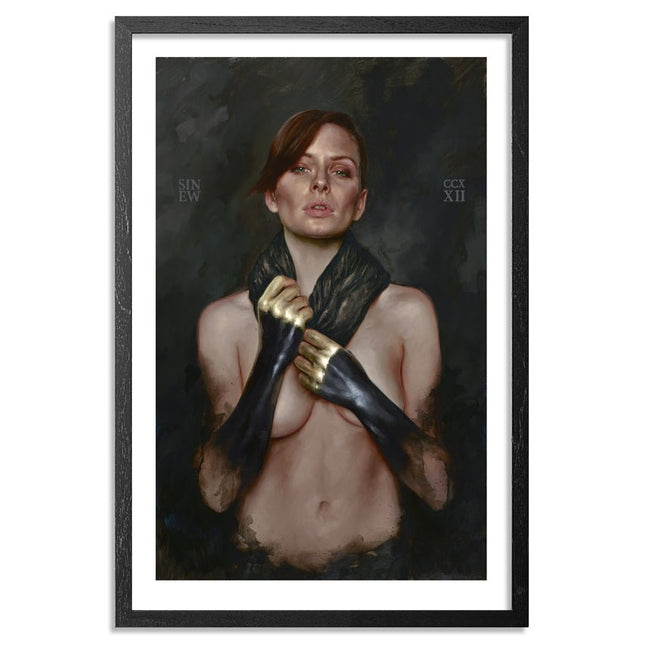
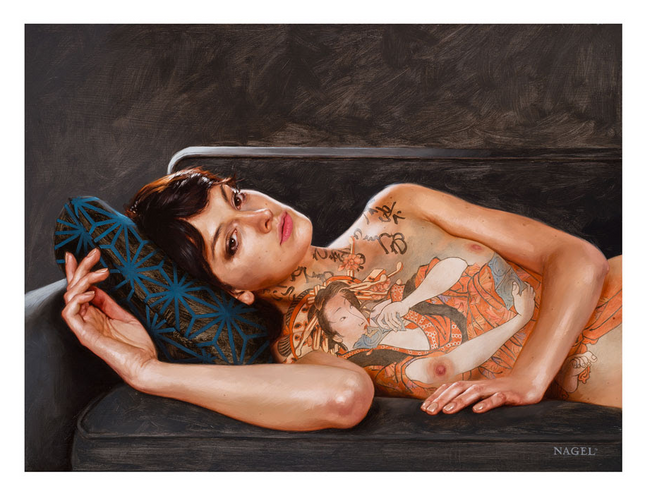
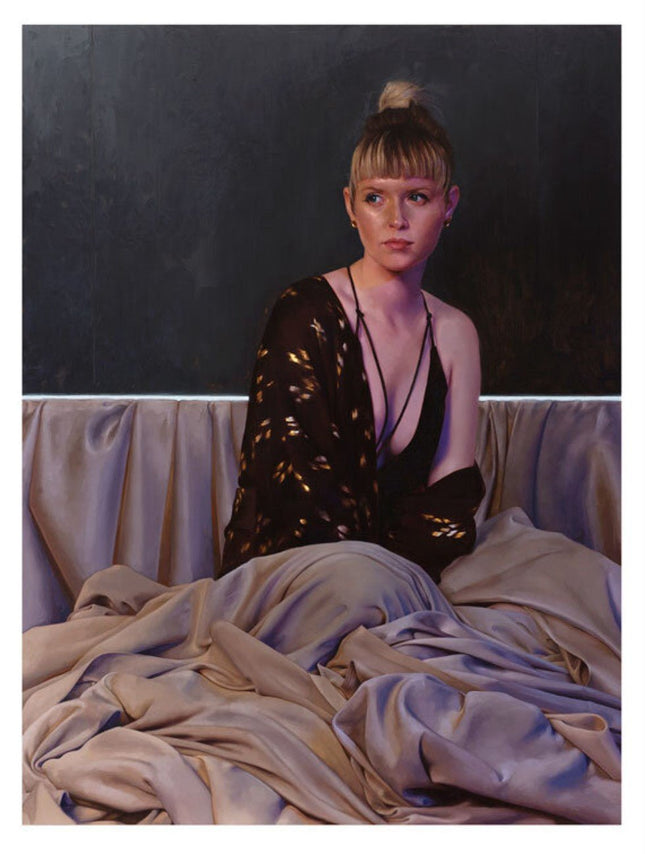
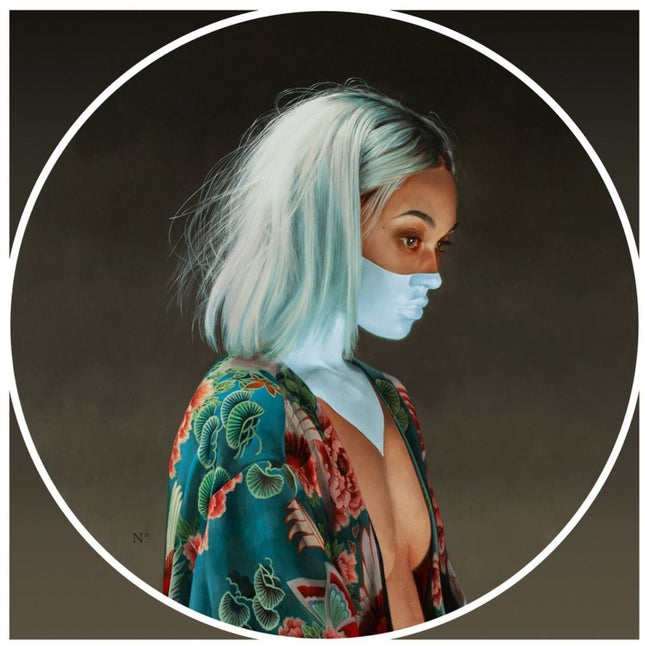
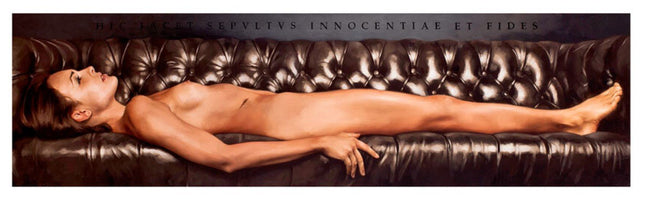
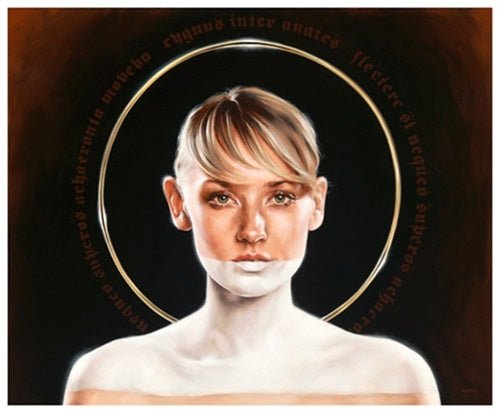
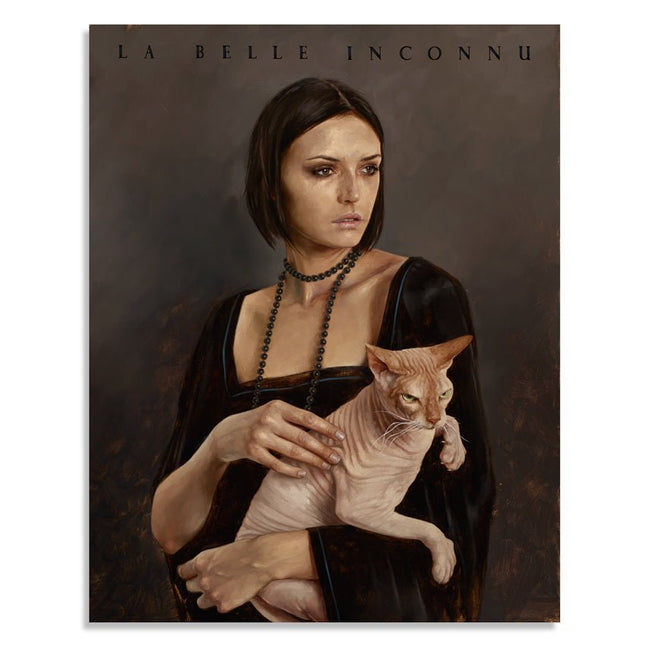
A defining element of Aaron Nagel’s body of work is his persistent focus on the female figure, not as a passive muse, but as an active agent of strength and introspection. His portraits often feature nude or semi-clothed women posed with symbolic props, sharp gazes, and composure that is disarming in its quiet authority. These subjects defy voyeurism by confronting it. Their carefully rendered skin, luminous under soft lighting, invites attention but denies possession. They are timeless yet culturally anchored, caught between the sacred and the profane. Within the framework of Street Pop Art & Graffiti Artwork, this aesthetic places Nagel alongside artists who question how the body, particularly the female body, is displayed and consumed in a media-saturated world. He offers counter-narratives through oil paint, using the beauty of the medium to challenge superficial consumption.
Material Precision and a Painter’s Devotion to Discipline
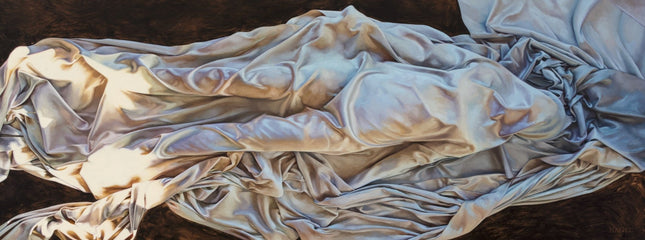
Nagel’s commitment to oil painting is a defining element of his practice. He works on linen mounted to wood panels, a format favored for its archival quality and capacity for precision. His use of chiaroscuro lighting, fine glazing, and layered transparency reflects a respect for traditional European techniques, yet his compositions are distinctly modern. Backgrounds are often subdued to allow the human presence to dominate, and the overall atmosphere leans toward introspective minimalism. Despite their quietness, Nagel’s paintings carry a kind of charged stillness, a confrontation not through action but through intensity. As part of the Street Pop Art & Graffiti Artwork landscape, his presence is unique—more painterly than graphic, more contemplative than performative, yet no less shaped by the cultural friction that defines the genre. Aaron Nagel proves that rebellion can exist in restraint, and that high craft can be a form of visual resistance.