Activism & Protest

1 artwork

  • Shoplifters Welcome Large Format Silkscreen Print by Shepard Fairey x Jamie Reid

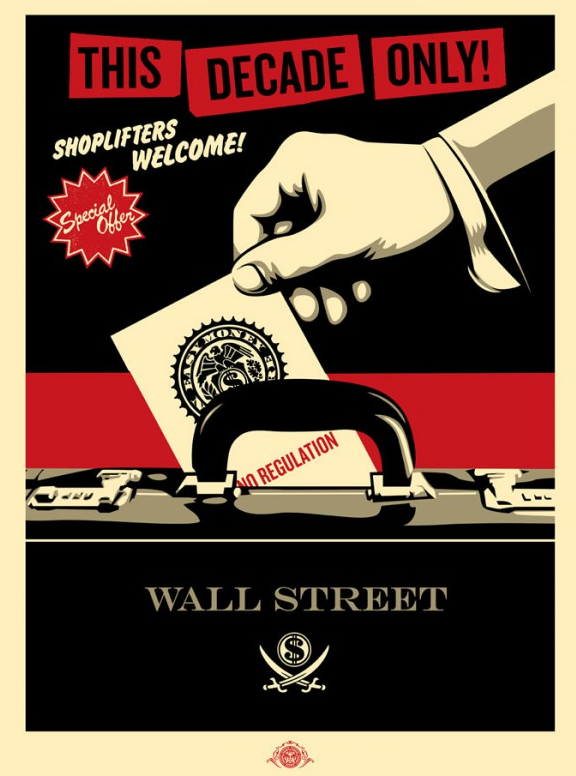
    Shepard Fairey- OBEY Shoplifters Welcome Large Format Silkscreen Print by Shepard Fairey x Jamie Reid

    Shoplifters Welcome Large Format Red Black Silver Silkscreen Print by Shepard Fairey- OBEY x Jamie Reid Hand-Pulled Screen Print on Cream Speckletone Art Paper Limited Edition Pop Street Art Artwork. 2012 Signed & Numbered Limited Edition of 50 Artwork Size 26x34.5 Created to Commemorate Reid's Ragged Kingdom Exhibition, March 16 to April 14, 2012. Shows a Hand Removing Laws From A Brief Case Infering Wall Street Money Regulations. "Jamie has been one of my biggest influences, and I'm honored that we worked on some collaborative images for the show. The new images deal with the mutual interests of Jamie and I, addressing the timeless problems of corruption and wealth inequality, but tie into the current themes of Occupy Wall Street and the dead end of fossil fuel consumption." -Shepard Fairey. Shepard Fairey and Jamie Reid: Art as Social Commentary In collaboration with Jamie Reid, the "Shoplifters Welcome Silkscreen Print" by Shepard Fairey is a powerful example of how street pop art and graffiti artwork can encapsulate and critique social and economic issues. This piece, a limited edition print, was created for the "Ragged Kingdom" exhibition from March 16 to April 14, 2012. It has become a significant work in street art for its bold political statement. The artwork depicts a hand removing a document labeled "MONEY" from a briefcase, a visual representation of deregulation, particularly within the context of Wall Street. This act is set against an offer for 'shoplifters,' a satirical nod to the notion that the financial elite operates under a different set of rules than the average person. The print's striking use of the phrase "THIS DECADE ONLY!" further emphasizes the timely nature of the message, suggesting a window of opportunity for unchecked financial behavior. Art Reflecting the Times: Occupy Wall Street and Beyond Shepard Fairey's statement about the collaboration with Jamie Reid highlights their shared focus on corruption and wealth inequality themes, notably echoed by the Occupy Wall Street movement. The movement, which started in 2011, brought widespread attention to these issues, and Fairey and Reid's work provided a visual commentary that resonated with the public sentiment of the time. The artwork not only represents the artists' perspectives but also serves as a historical marker of the socio-economic climate of the early 2010s. The "Shoplifters Welcome" print is a prime example of how street pop art and graffiti artwork can transcend the boundaries of traditional art by directly engaging with social commentary. Fairey, known for his provocative approach, and Reid, with his history of punk aesthetic, combine their styles to create a piece that is as aggressive as it is artistic. The limited edition nature of the print, signed and numbered by Fairey, adds to its allure as a collectible item, even as it challenges the structures of economic power. In creating this print, Fairey and Reid employ the aesthetic of propaganda, utilizing bold colors and stark contrasts to draw attention to their message. The choice of silkscreen printing, a technique closely associated with street art due to its mass production capabilities, further ties the work to the grassroots nature of its messages. It is a medium that allows the artwork to be disseminated widely, mirroring the spread of ideas central to movements like Occupy Wall Street. The "Shoplifters Welcome" print is a testament to the enduring power and relevance of street pop art and graffiti artwork in contemporary discourse. It is a reminder that art can be an intelligent tool for social critique, reflecting the issues of its time and prompting conversations that can lead to change. Through their collaborative efforts, Fairey and Reid have created more than just a visual piece; they have crafted a narrative that challenges viewers to consider the imagery's deeper implications and question the status quo.

    $3,032.00

Activism & Protest Graffiti Street Pop Artwork

Activism & Protest in Street Pop Art & Graffiti Artwork

Activism and protest have been central themes in the evolution of Street Pop Art & Graffiti Artwork, transforming public walls, abandoned structures, and gallery spaces into platforms of social resistance. From anti-authoritarian messages sprayed on city infrastructure to vividly illustrated demands for justice in silkscreen editions, this genre has long been a visual voice for the voiceless. Artists from diverse backgrounds have used their creative skills to spotlight issues such as war, police brutality, gender inequality, environmental degradation, and systemic racism. The potency of the work comes from its placement, language, and accessibility. Art tied to activism often appears outside conventional museum settings, making its message immediate and unavoidable for those navigating urban landscapes. The democratic nature of graffiti and the reproducibility of pop art techniques have allowed artists to disseminate politically charged imagery across cities and continents.

The Visual Language of Dissent

Street Pop Art & Graffiti Artwork uses a distinct visual language to communicate urgency and resistance. Symbols such as raised fists, barbed wire, chains, riot shields, megaphones, and bold typography are frequently integrated into murals, posters, and stencils. Artists utilize repetition, contrast, and iconography to achieve maximum impact with minimal elements. A single stencil of a child holding a sign, or a mass-produced silkscreen poster declaring freedom or revolution, can provoke thought, galvanize action, and attract media attention. This visual shorthand makes the art instantly recognizable and resonates with audiences regardless of language. Shepard Fairey, Banksy, JR, and other internationally known figures have used these methods to inject their political views into mainstream conversations while maintaining the raw edge of graffiti and street culture.

Historical Movements and Urban Resistance

Throughout the decades, activist street art has mirrored and amplified grassroots movements around the world. During the 1960s and 1970s, protest art surged with anti-Vietnam War imagery and calls for civil rights in the United States. In South Africa, slogans and anti-apartheid murals emerged under great risk. More recently, movements such as Occupy Wall Street, Black Lives Matter, and climate justice campaigns have drawn strength from graffiti artists and street pop printmakers who create bold visuals that spread rapidly through social media and public installations. Walls and subway tunnels have been reclaimed as spaces of dialogue where art acts as both a megaphone and a historical document. The street itself becomes a gallery, archive, and battleground for competing narratives of power and resistance.

The Role of the Artist as Agitator and Ally

Street Pop Art & Graffiti Artwork does not just reflect activism; it actively shapes public consciousness. Artists become agitators, allies, and educators, often blurring the line between creator and protester. By embedding messages in neighborhoods, on apparel, and in limited edition prints, they create a continuity between street-based activism and contemporary fine art. Many artists work collaboratively with communities, contributing visual support to rallies, printing posters for marches, and painting murals that honor victims or amplify demands for justice. The urgency and repetition found in protest chants find visual parallels in repeated motifs and layered wheat-paste campaigns. This dynamic relationship between activism and visual art underscores how deeply connected public creativity is to political action, and how Street Pop Art & Graffiti Artwork continues to influence culture through direct confrontation with injustice.

Footer image

© 2025 Sprayed Paint Art Collection,

    • Amazon
    • American Express
    • Apple Pay
    • Bancontact
    • Diners Club
    • Discover
    • Google Pay
    • iDEAL
    • Mastercard
    • PayPal
    • Shop Pay
    • Visa

    Login

    Forgot your password?

    Don't have an account yet?
    Create account