Advertising & Brands

8 artworks

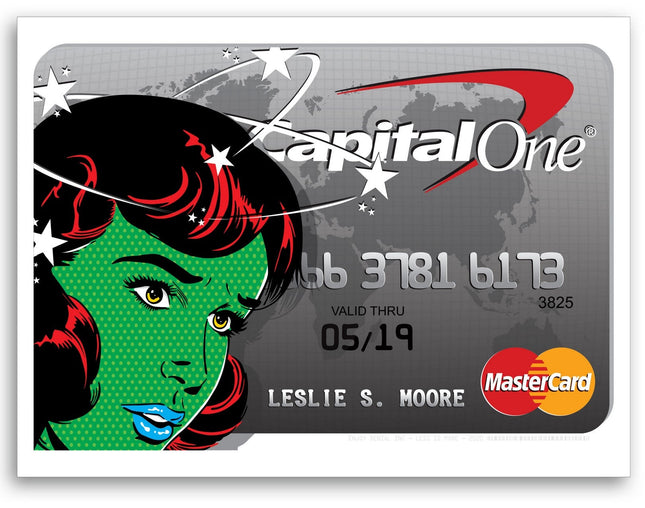
  • Credit Limit Less is More Archival Print by Denial- Daniel Bombardier

    Denial- Daniel Bombardier Credit Limit Less is More Archival Print by Denial- Daniel Bombardier

    Credit Limit- Less is More Limited Edition Archival Pigment Fine Art Print on 290gsm MOAB Fine Art Paper by Legend Street Art and Modern Pop Culture Artist Denial. 2020 Credit Limit- Less is More Credit Card Themed Money Art. Numbered, Signed, Stamped on Reverse, Edition of 25, 24x18, Archival Pigment Print on 290gsm MOAB Fine Art Paper. Credit Limit: Less is More by Denial Credit Limit: Less is More is an engaging archival pigment fine art print by Canadian street pop art and graffiti artist Daniel Bombardier, also known as Denial. This artwork, part of his Credit Limit series, is a bold critique of consumer culture, financial dependency, and the pervasive influence of branding in modern society. Created in 2020, the piece measures 24x18 inches and is printed on 290gsm MOAB fine art paper, ensuring the highest level of detail and vibrancy. Each piece is part of a limited edition of 25, individually signed, numbered, and stamped on the reverse, making it a prized collectible among art enthusiasts and collectors. The Visual Commentary of Less is More Less is More transforms the familiar design of a credit card into a provocative artwork that challenges societal norms and values. The central figure, a woman with green skin and a melancholic expression, is a striking pop art reimagination. Her stylized appearance, complete with halftone patterns and bold colors, evokes the graphic aesthetic of mid-century comic books. The credit card design features branding and elements that are cleverly altered to reflect Denial’s critique of consumerism and the contradictions inherent in the phrase less is more. The world map in the background hints at the global reach of financial systems and their influence on individual lives. By combining these elements, the piece offers a layered exploration of the emotional and cultural impact of materialism. Denial’s Unique Artistic Approach Daniel Bombardier’s work is celebrated for its ability to combine humor, satire, and pop culture references into thought-provoking pieces. Less is More exemplifies his skill in turning everyday objects into vehicles for social commentary. The use of a credit card as the foundation of the artwork speaks to the ubiquity of consumerism and its impact on identity and values. Denial’s meticulous attention to detail, from the crispness of the archival pigment print to the dynamic interplay of colors, ensures that the piece is both visually stunning and thematically rich. His fusion of street pop art and graffiti artwork continues to challenge audiences to rethink their relationship with consumer culture. The Cultural Significance of Credit Limit: Less is More Less is More captures the paradoxical relationship between material aspirations and the psychological toll of consumerism. It critiques the notion of equating financial success with personal fulfillment, highlighting the emotional dissonance that often accompanies the pursuit of wealth. As part of the Credit Limit series, this artwork reinforces Denial’s commentary on the systems and ideologies that shape modern life. The limited edition nature of the piece underscores its exclusivity and value as a work of art that not only resonates aesthetically but also sparks critical conversations. Denial’s ability to blend bold visuals with profound messages ensures that Less is More remains a standout piece in the world of contemporary street pop art and graffiti artwork.  

    $385.00

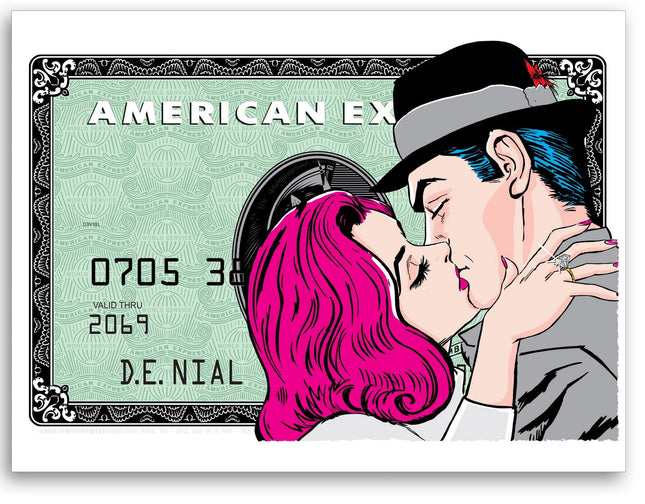
  • Credit Limit Until Debt Do Us Part Print by Denial- Daniel Bombardier

    Denial- Daniel Bombardier Credit Limit Until Debt Do Us Part Print by Denial- Daniel Bombardier

    Credit Limit- Until Debt Do Us Part Limited Edition Archival Pigment Fine Art Print on 290gsm MOAB Fine Art Paper by Legend Street Art and Modern Pop Culture Artist Denial. 2020 Credit Limit- Until Debt Do Us Part Credit Card Themed Money Art. Numbered, Signed, Stamped on Reverse, Edition of 25, 24x18, Archival Pigment Print on 290gsm MOAB Fine Art Paper. Credit Limit: Until Debt Do Us Part by Denial Credit Limit: Until Debt Do Us Part is a thought-provoking archival pigment fine art print created by Canadian street pop art and graffiti artist Daniel Bombardier, known professionally as Denial. Released in 2020, this piece is part of the artist’s iconic Credit Limit series, which critiques consumerism and the deeply ingrained relationship between love, marriage, and financial dependency. Measuring 24x18 inches and printed on 290gsm MOAB fine art paper, this limited edition artwork is signed, numbered, and stamped on the reverse, with only 25 prints available. The piece combines striking visuals and sharp social commentary, making it a standout example of Denial’s signature style. Exploring Love and Consumerism Through Pop Art Until Debt Do Us Part features a romantic embrace between a couple overlaid onto a design inspired by an American Express credit card. The juxtaposition of love and financial commitment highlights the often-overlooked monetary dimension of relationships. The couple’s intimate pose, rendered in vibrant colors and comic book-style linework, conveys passion and tenderness. However, the backdrop of a credit card serves as a stark reminder of the financial realities that can influence and complicate relationships. This duality of emotion and materialism invites viewers to reflect on the cultural and personal implications of merging love with economic obligations. Denial’s Unique Artistic Approach Daniel Bombardier’s work is celebrated for its fusion of pop culture imagery with critical social commentary. Until Debt Do Us Part exemplifies his ability to repurpose everyday symbols into powerful artistic statements. The American Express-inspired design underscores the pervasive role of financial institutions in modern life, while the romantic imagery adds an emotional depth that resonates with audiences. Denial’s use of archival pigment printing ensures that the artwork maintains its vibrant colors and fine details, while the 290gsm MOAB paper enhances its visual and tactile quality. By combining elements of street pop art and graffiti artwork, Denial creates a piece that is both visually engaging and intellectually stimulating. The Cultural Relevance of Until Debt Do Us Part This artwork speaks to the complex intersections of love, marriage, and consumer culture. By framing a romantic moment within the context of financial dependency, Denial critiques the societal pressures that often intertwine emotional and economic commitments. The limited edition nature of the piece adds to its significance, making it a coveted item for collectors and enthusiasts of street pop art and graffiti artwork. Until Debt Do Us Part is a poignant reminder of the ways in which financial systems influence our most personal relationships, solidifying Denial’s reputation as a leading voice in contemporary art. Through its bold visuals and provocative themes, this artwork challenges viewers to reconsider the dynamics of love and debt in a materialistic world.  

    $385.00

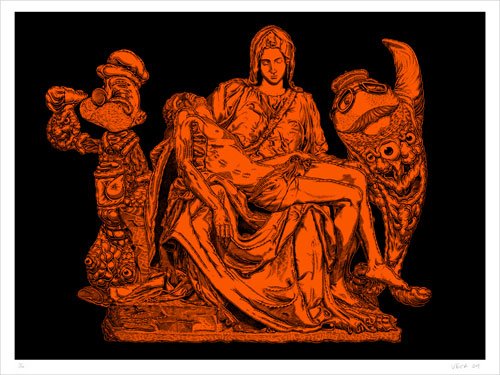
  • My Mary Silkscreen Print by Mark Dean Veca

    Mark Dean Veca My Mary Silkscreen Print by Mark Dean Veca

    My Mary 2-Color Hand-Pulled Limited Edition Silkscreen Print on Fine Art Paper by Mark Dean Veca Rare Street Art Famous Pop Artwork Artist.

    $533.00

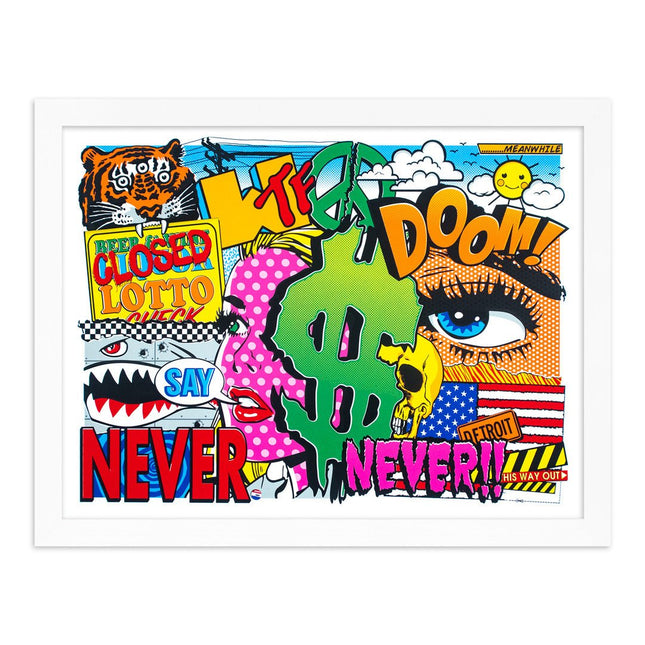
  • Never Say Never! Silkscreen Print by Denial- Daniel Bombardier

    Denial- Daniel Bombardier Never Say Never! Silkscreen Print by Denial- Daniel Bombardier

    Never Say Never! Limited Edition 12-Color Hand-Pulled Silkscreen Print on Fine Art Paper by Denial Graffiti Street Artist Modern Pop Art. 2020 Signed Limited Edition of 100 Artwork Size 24x18 DENIAL is a Canadian artist whose work critiques consumerism and the human condition. Though based in Windsor Ontario, DENIAL spends much of the year traveling and exhibiting throughout Canada and USA, having done solo shows in Los Angeles, Chicago, Detroit, New York, Toronto and Vancouver. Denial is a Canadian artist who experiments with aerosol and stencil art, while his main fields of interest are consumerism, politics and the human condition in today’s society. Since the culture of graffiti was gaining more and more popularity in the US and Europe, the taggers had to be increasingly original in order to stand out. The signatures became bigger, more stylized and more colorful.

    $385.00

  • Credit Limit Bank of Ugh-Merica Archival Print by Denial- Daniel Bombardier

    Denial- Daniel Bombardier Credit Limit Bank of Ugh-Merica Archival Print by Denial- Daniel Bombardier

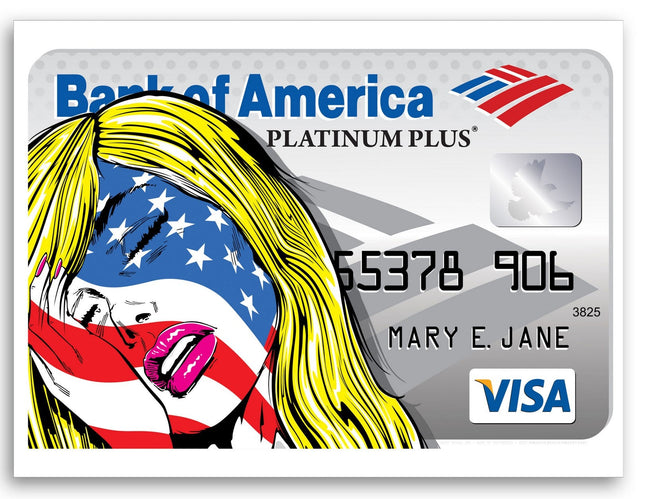
    Credit Limit- Bank of Ugh-Merica Limited Edition Archival Pigment Fine Art Print on 290gsm MOAB Fine Art Paper by Legend Street Art and Modern Pop Culture Artist Denial. Credit Limit- Bank of Ugh-Merica Credit Card Themed Money Art. Numbered, Signed, Stamped on Reverse, Edition of 25, 24x18, Archival Pigment Print on 290gsm MOAB Fine Art Paper. Credit Limit: Bank of Ugh-Merica by Denial Credit Limit: Bank of Ugh-Merica is a powerful archival pigment fine art print created by street pop art and modern culture artist Daniel Bombardier, known as Denial. This artwork, released in a limited edition of 25, reflects Denial's sharp critique of consumerism and the financial systems that dominate modern life. Printed on 290gsm MOAB fine art paper, this 24x18-inch piece combines vivid colors, pop culture references, and satirical imagery to challenge the viewer’s perception of wealth, credit, and societal values. Each print is signed, numbered, and stamped on the reverse, making it a highly collectible piece within the street pop art and graffiti artwork community. The Visual Commentary on Consumerism Credit Limit: Bank of Ugh-Merica transforms the iconic design of a credit card into a biting critique of financial systems and American consumer culture. The central figure—a woman with the American flag painted across her face—symbolizes the allure and burden of patriotism tied to economic identity. Her exaggerated expression conveys disillusionment, mirroring the emotional weight of consumer debt and financial dependence. The replacement of the credit card’s typical branding with Denial’s satirical take highlights the disconnect between the promises of prosperity and the realities of economic inequality. This artwork encapsulates the power of street pop art to deliver meaningful social commentary through familiar visual cues. Denial’s Approach to Modern Pop Culture Art Daniel Bombardier, a Canadian artist, has built a career on critiquing consumerism, politics, and societal norms through his street pop art and graffiti artwork. Credit Limit: Bank of Ugh-Merica exemplifies his signature style of combining bold graphic elements with thought-provoking themes. By appropriating the imagery of a credit card—a symbol of wealth and status—Denial invites viewers to reconsider the systems they take for granted. His meticulous attention to detail, from the crisp archival pigment print to the high-quality MOAB fine art paper, ensures that the message is delivered with both clarity and impact. The Cultural Relevance of Credit Limit This artwork resonates in an era where conversations about economic disparity, debt, and consumer habits are more relevant than ever. Credit Limit: Bank of Ugh-Merica not only critiques the structures that perpetuate inequality but also questions the cultural obsession with material wealth and financial power. The limited edition nature of this piece enhances its significance, making it a statement of both artistic and cultural value. As a representation of Denial’s ability to merge humor, critique, and pop culture into a cohesive and impactful artwork, this piece stands as a testament to the enduring power of street pop art and graffiti artwork in challenging societal norms.  

    $385.00

  • Credit Limit Chase Your Tail Archival Print by Denial- Daniel Bombardier

    Denial- Daniel Bombardier Credit Limit Chase Your Tail Archival Print by Denial- Daniel Bombardier

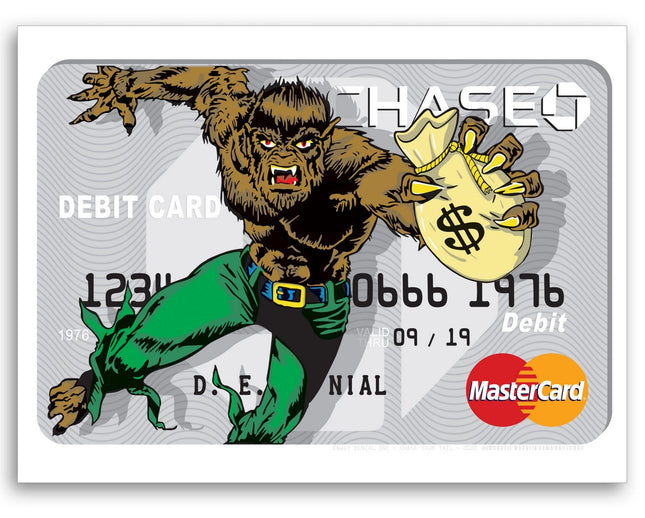
    Credit Limit- Chase Your Tail Limited Edition Archival Pigment Fine Art Print on 290gsm MOAB Fine Art Paper by Legend Street Art and Modern Pop Culture Artist Denial. Credit Limit- Chase Your Tail Credit Card Themed Money Art. Numbered, Signed, Stamped on Reverse, Edition of 25, 24x18, Archival Pigment Print on 290gsm MOAB Fine Art Paper. Credit Limit: Chase Your Tail by Denial Credit Limit: Chase Your Tail is a striking example of Denial’s ability to fuse humor, critique, and nostalgia into a powerful statement through street pop art and graffiti artwork. This 24x18-inch archival pigment fine art print is part of a limited edition of 25, each one numbered, signed, and stamped on the reverse, printed on 290gsm MOAB fine art paper. Created by Canadian artist Daniel Bombardier, also known as Denial, this work continues his exploration of consumer culture and societal constructs, blending pop culture references with biting social commentary. The design uses the format of a credit card to critique financial systems and human behavior in a consumer-driven world. Thematic Depth and Symbolism Chase Your Tail reimagines a credit card with a fantastical twist, featuring a ferocious werewolf clutching a bag of money. This imagery encapsulates the relentless pursuit of wealth and the predatory nature of financial systems. The werewolf, a symbol of transformation and untamed instinct, serves as a metaphor for the primal and often destructive drives behind consumerism. The card's design, with its playful alteration of familiar branding, highlights the endless cycle of chasing financial stability while remaining ensnared in debt and materialism. This artwork invites viewers to reflect on the personal and societal consequences of these pursuits, all while maintaining the bold and accessible aesthetic of street pop art. Denial’s Artistic Perspective Daniel Bombardier’s work is celebrated for its wit, visual appeal, and ability to critique contemporary issues. Chase Your Tail exemplifies his talent for transforming everyday symbols into powerful artistic statements. By incorporating the universally recognizable format of a credit card, Denial draws attention to the ways in which consumer culture shapes identity and behavior. His use of vibrant colors and graphic elements reflects the influence of graffiti artwork, while the meticulous details of the archival pigment print demonstrate his commitment to quality. This combination of high craftsmanship and provocative themes is a hallmark of Denial’s approach to modern street pop art. The Cultural Impact of Chase Your Tail Chase Your Tail resonates with audiences by addressing themes of greed, power, and the cyclical nature of consumerism. It critiques the financial systems that perpetuate inequality and the cultural obsession with wealth, presenting these ideas in a format that is both accessible and impactful. The limited edition nature of the print enhances its value as a collectible, while the artwork’s message remains relevant in a world increasingly dominated by credit, debt, and economic disparity. This piece is a testament to Denial’s ability to use street pop art and graffiti artwork as a means of questioning societal norms and sparking critical conversations.  

    $385.00

  • Credit Limit Chasing The Blues Archival Print by Denial- Daniel Bombardier

    Denial- Daniel Bombardier Credit Limit Chasing The Blues Archival Print by Denial- Daniel Bombardier

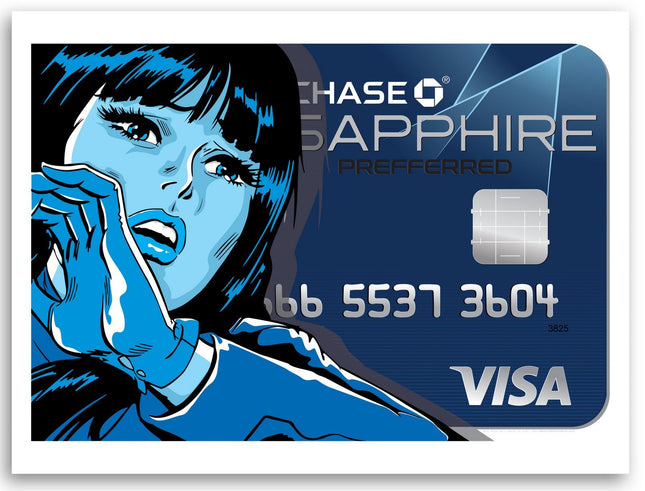
    Credit Limit- Chasing The Blues Limited Edition Archival Pigment Fine Art Print on 290gsm MOAB Fine Art Paper by Legend Street Art and Modern Pop Culture Artist Denial. 2020 Credit Limit- Chasing The Blues Credit Card Themed Money Art. Numbered, Signed, Stamped on Reverse, Edition of 25, 24x18, Archival Pigment Print on 290gsm MOAB Fine Art Paper. Credit Limit: Chasing The Blues by Denial Credit Limit: Chasing The Blues is a provocative archival pigment fine art print by Daniel Bombardier, professionally known as Denial. This artwork, created in 2020, is part of his iconic Credit Limit series, which critiques consumer culture and the psychological toll of financial systems. The piece measures 24x18 inches and is printed on 290gsm MOAB fine art paper, known for its exceptional quality and durability. As part of a limited edition of 25, each print is signed, numbered, and stamped on the reverse, ensuring its exclusivity and appeal to collectors of street pop art and graffiti artwork. The Visual Language of Chasing The Blues Chasing The Blues takes the familiar design of a credit card and transforms it into a striking visual metaphor for the emotional and financial burdens associated with modern consumerism. The central figure—a distressed woman rendered in vibrant blue hues—emphasizes the emotional toll of chasing financial stability in an increasingly debt-driven world. Her expression of anxiety and despair contrasts sharply with the sleek, corporate design of the credit card backdrop. By juxtaposing these elements, Denial critiques the illusion of luxury and freedom often associated with credit and highlights the hidden struggles it entails. The attention to detail and bold graphic style make this piece both visually arresting and thematically compelling. Denial’s Artistic Vision Daniel Bombardier is a Canadian artist whose work often explores themes of consumerism, capitalism, and societal constructs. Chasing The Blues exemplifies his ability to use humor, irony, and pop culture imagery to deliver powerful critiques. The use of a credit card as the central motif reflects his talent for repurposing everyday objects into thought-provoking works of art. Denial’s fusion of street pop art and graffiti artwork aesthetics results in pieces that are accessible yet deeply impactful. The archival pigment printing on high-quality MOAB paper ensures the vibrancy and longevity of his work, making it a standout piece in any collection. The Cultural Relevance of Credit Limit: Chasing The Blues Chasing The Blues resonates in a society where financial anxiety and material aspirations often go hand in hand. By blending corporate symbolism with raw human emotion, Denial invites viewers to question the cost of consumerism and the pressures of modern economic systems. This artwork serves as both a critique and a reflection of the pervasive influence of credit and debt in contemporary life. As part of a limited edition, it holds significant value not only as a collectible piece of art but also as a cultural artifact that captures the struggles of its time. Denial’s work continues to challenge conventions and spark dialogue, solidifying his position as a leading figure in street pop art and graffiti artwork.  

    $385.00

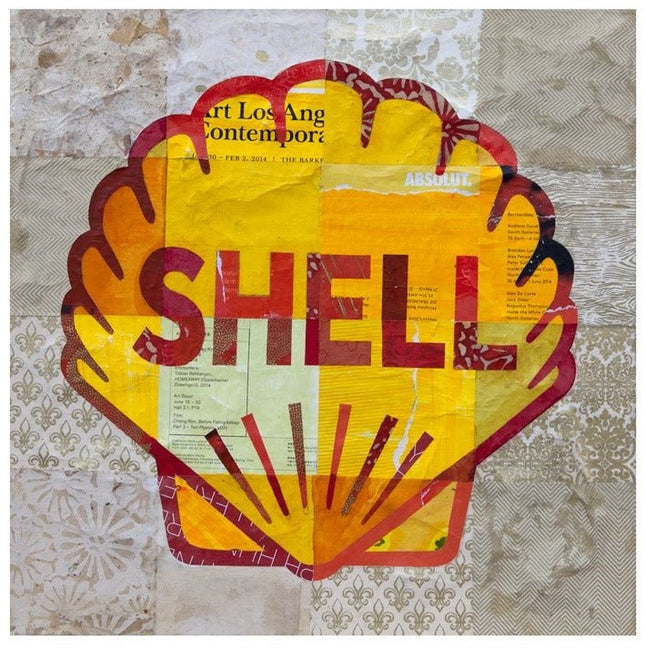
  • Shell PP Archival Pigment Print by Cey Adams

    Cey Adams Shell PP Archival Pigment Print by Cey Adams

    Shell PP Printers Proof Limited Edition Archival Pigment Prints on 310gsm Fine Art Paper by Cey Adams Graffiti Street Artist Modern Pop Art. PP Printers Proof Signed & Marked PP Limited Edition Artwork Size 18x18 Shell Archival Print by Cey Adams "The whole idea behind my Trusted Brands series was that I wanted to revisit many of the iconic logos of my youth to reconnect to familiar things. These pieces are mostly made of handmade fiber papers from India and Nepal. I wanted to do something rivaling my friends who used spray paint and connected with my graffiti roots, but I didn't want to do what everybody else did. I thought it would be interesting to challenge myself to use a medium I have never used before, and collage spoke to me." - Cey Adams. Cey Adams' "Shell" - A Convergence of Branding and Art Cey Adams, a foundational figure in graffiti and street pop art, presents a compelling piece in his "Shell PP Printers Proof Limited Edition." This work is part of Adams' "Trusted Brands" series, where he revisits the emblematic logos that marked his youth. The print, an 18x18 archival pigment on fine art paper, showcases his exploration into collage, setting him apart from his contemporaries who favored spray paint. This piece is a Printer's Proof, signed and marked by Adams, adding a layer of exclusivity and collectibility. Adams' choice to use handmade fiber papers from India and Nepal lends an organic texture that contrasts with the commercial sharpness of the Shell logo. His work is a nod to nostalgia and a dialogue between past and present, consumerism and craftsmanship. The "Shell" piece stands out as a testament to Adams' ability to innovate within his graffiti roots while pushing the boundaries of his artistic expression. In Adams' own words, his college journey was challenging to escape the graffiti norm. His "Trusted Brands" series, including the "Shell" print, reflects this personal and artistic quest to connect with familiar symbols uniquely, embodying the essence of modern pop art within the urban landscape.

    $913.00

Advertising & Brands Graffiti Street Pop Artwork

 The Intersection of Advertising, Brands, and Street Art

Advertising through street graffiti art is a controversial practice that has been debated for many years. On the one hand, it is a creative way to promote products and services unconventionally. On the other hand, others see it as a violation of public spaces and a form of visual pollution. One of the main concerns with advertising in street graffiti art is that it can be seen as a form of corporate co-optation of a grassroots movement. Graffiti art has historically been associated with political dissent, social commentary, and artistic expression. Some argue that using this medium to promote commercial interests undermines the authenticity and integrity of the art form.
Furthermore, advertising through street graffiti art can be seen as a violation of public spaces. The relationship between advertising, brands, and street art has evolved dramatically, with each element borrowing from and influencing the others. Street Pop Art & Graffiti Artwork, once seen as a form of rebellion against mainstream culture and commercialization, has now, in many instances, become a tool for that very commercial world it once stood against. This intersection has given rise to a fascinating dialogue within the art community about street art's role in advertising and the commodification of brands. Street artists have long appropriated logos, slogans, and other corporate branding elements to critique consumer culture and the pervasiveness of advertising in public spaces. This appropriation often involves subverting brand imagery or using it in ironic ways to challenge the messages conveyed by corporations. This form of artistic expression serves to reclaim public spaces from the clutches of corporate advertising and spark conversations about consumerism's impact on society.

Brands Embracing Street Art Aesthetics

Conversely, brands have increasingly sought to harness the authenticity and 'cool' factor associated with street art. By commissioning street artists to create murals or to design products, brands aim to tap into the youth market and align themselves with the values associated with street culture. This collaboration has brought street art into the mainstream and has provided street artists with new platforms to showcase their work. However, it has also raised questions about the commercialization of an art form that was traditionally anti-establishment and has prompted discussions about the balance between artistic integrity and commercial success. The collaboration between street artists and brands can lead to a symbiotic relationship where artists gain exposure and financial support. In contrast, brands benefit from the association with the cutting-edge and socially conscious image of street art. However, it can also lead to accusations of selling out and diluting the subversive power that street art can wield.

Advertising as Inspiration for Street Art

In pop art, the influence of advertising and branding has always been evident, with artists like Andy Warhol turning the imagery of consumer goods into high art. Street artists have continued this tradition, using the techniques and aesthetics of advertising in their work. This can involve mimicking the slick production values of commercial billboards or adopting the language of advertising to convey an anti-consumerist or anti-corporate message. Advertising and branding provide a rich source of material for street artists to critique, and in doing so, they mirror contemporary society's values and priorities. By co-opting brands' imagery, street artists can comment on issues ranging from globalization to environmental degradation, making their work relevant and accessible to a broad audience. Graffiti art is often created without permission from property owners or city authorities and can be seen as vandalism. This raises questions about the ethics of using public spaces to promote commercial interests, mainly if done without consent. Despite these concerns, there are some arguments in favor of advertising through street graffiti art. For one, it can be seen as a creative way to reach a young and urban audience. Street art is often seen as edgy and calm, and by using this medium to promote products and services, companies can tap into this cultural currency.
Moreover, advertising through street graffiti art can be seen as a way to support and encourage emerging artists. Companies can commission artists to create graffiti art that incorporates their products or branding, providing a platform for these artists to showcase their talents and gain exposure.
In conclusion, advertising through street graffiti art is a controversial practice that raises questions about the ethics of using public spaces to promote commercial interests. While there are arguments in favor of this approach, there are also concerns about its impact on the authenticity of the art form and the use of public spaces. Ultimately, it is up to individual companies to decide whether this strategy aligns with their values and goals.

Cultural Implications of Branding in Street Art

The use of branding in street art also has more profound cultural implications. It reflects the increasingly blurred lines between high and low cultures, art and commerce, and public space and advertising billboards. In a world where consumers are constantly bombarded with advertising messages, street art incorporating branding can either contribute to the visual noise or cut through it with a powerful message. For street artists, the challenge is to use the imagery of advertising to enhance their message rather than undermine it. For brands, the challenge is to engage with street art in a way that is respectful and understanding of its history and ethos. As street art grows in popularity and visibility, the relationship between advertising, brands, and street art will undoubtedly continue to evolve, raising new questions and sparking fresh debates within the art world.
Footer image

© 2025 Sprayed Paint Art Collection,

    • Amazon
    • American Express
    • Apple Pay
    • Bancontact
    • Diners Club
    • Discover
    • Google Pay
    • iDEAL
    • Mastercard
    • PayPal
    • Shop Pay
    • Visa

    Login

    Forgot your password?

    Don't have an account yet?
    Create account