Advertising & Brands

1 artwork

  • Special Offer Original Spray Paint Acrylic Painting by Ben Frost

    Ben Frost Special Offer Original Spray Paint Acrylic Painting by Ben Frost

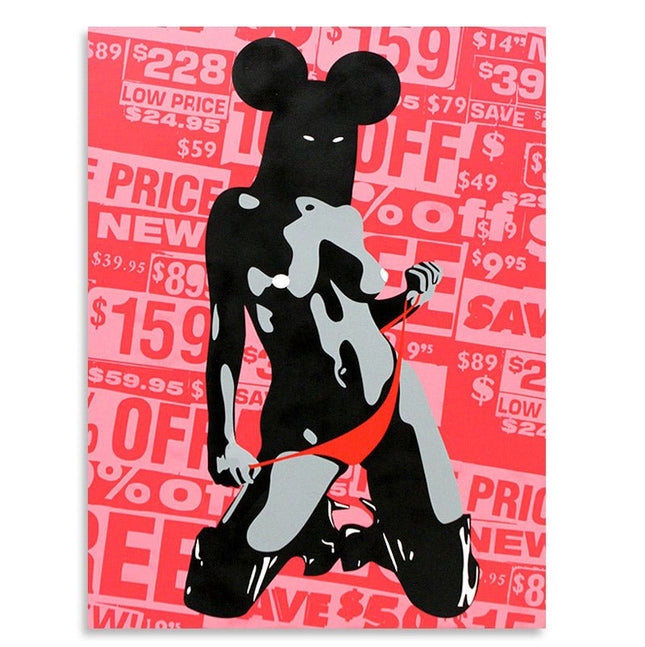
    Special Offer Company of Thieves Original Painting Spray Paint, Acrylic and Mixed Media On Wood Panel by Ben Frost Graffiti Street Artist Modern Pop Art. 2013 Signed Original Acrylic & Spray Paint Painting Artwork Size 24x32 Special Offer Company of Thieves by Ben Frost: A Bold Exploration of Consumerism in Street Pop Art & Graffiti Artwork Special Offer Company of Thieves by Ben Frost is a striking original painting that blends spray paint, acrylic, and mixed media on a wood panel, capturing the disruptive energy of Street Pop Art & Graffiti Artwork. Created in 2013, this signed original measures 24x32 inches and showcases Frost's signature technique of fusing provocative imagery with consumer advertising. In this piece, a masked figure reminiscent of a famous cartoon character poses against a chaotic background filled with sale tags, price reductions, and marketing slogans. Frost manipulates the visual language of consumerism to confront the viewer with uncomfortable truths about the commodification of the human body and the pervasive influence of branding on modern identity. The Construction and Thematic Power Behind Special Offer Company of Thieves Ben Frost's use of spray paint and acrylic creates a visually aggressive texture that complements the jarring content of Special Offer Company of Thieves. The bold red and pink sale signage backdrop amplifies the sense of urgency and seduction that underpins modern consumer marketing tactics. Over this chaotic scene, Frost places a stark black and grey figure, partially painted and adorned with minimal red fabric, pulling at her clothing in a suggestive manner. The figure's head, shaped like mouse ears, adds an unsettling pop culture reference, linking innocence and corporate branding with overt sexuality. Frost’s work forces viewers to confront the exploitative dynamics often hidden beneath glossy advertising and sanitized entertainment. His layered use of mixed media reinforces the fragmentation of identity in consumer culture, a powerful hallmark of Street Pop Art & Graffiti Artwork. Ben Frost’s Role as a Leading Voice in Modern Street Pop Art & Graffiti Artwork Ben Frost, born in Australia, has consistently pushed the boundaries of Street Pop Art & Graffiti Artwork through his fearless critique of advertising, pharmaceutical industries, and entertainment culture. His art draws from the familiar yet distorts it to reveal the underlying absurdities and contradictions of contemporary life. In Special Offer Company of Thieves, Frost exemplifies this approach by turning commercial symbols into a backdrop for rebellion and introspection. His vivid use of color, juxtaposition of icons, and aggressive presentation demand active engagement rather than passive viewing. Frost’s ability to provoke thought and discomfort through humor and distortion has solidified his position as one of the foremost artists in the evolution of modern pop-influenced graffiti and street art. The Cultural and Artistic Importance of Special Offer Company of Thieves Special Offer Company of Thieves holds significant value as a piece of Street Pop Art & Graffiti Artwork that directly engages with contemporary issues of consumer exploitation and commodification. The choice of a wood panel as the base gives the piece a durable, street-like quality, while the combination of spray paint and acrylic layers adds depth and vitality. The deliberate clash between the figure and the chaotic pricing background captures the overload of stimuli that defines modern advertising and consumer experience. Signed by Ben Frost, this 2013 original painting remains a critical work that not only reflects the aesthetic evolution of street pop art but also challenges audiences to question the narratives sold to them daily through media and commerce.

    $8,404.00

Advertising & Brands Graffiti Street Pop Artwork

 The Intersection of Advertising, Brands, and Street Art

Advertising through street graffiti art is a controversial practice that has been debated for many years. On the one hand, it is a creative way to promote products and services unconventionally. On the other hand, others see it as a violation of public spaces and a form of visual pollution. One of the main concerns with advertising in street graffiti art is that it can be seen as a form of corporate co-optation of a grassroots movement. Graffiti art has historically been associated with political dissent, social commentary, and artistic expression. Some argue that using this medium to promote commercial interests undermines the authenticity and integrity of the art form.
Furthermore, advertising through street graffiti art can be seen as a violation of public spaces. The relationship between advertising, brands, and street art has evolved dramatically, with each element borrowing from and influencing the others. Street Pop Art & Graffiti Artwork, once seen as a form of rebellion against mainstream culture and commercialization, has now, in many instances, become a tool for that very commercial world it once stood against. This intersection has given rise to a fascinating dialogue within the art community about street art's role in advertising and the commodification of brands. Street artists have long appropriated logos, slogans, and other corporate branding elements to critique consumer culture and the pervasiveness of advertising in public spaces. This appropriation often involves subverting brand imagery or using it in ironic ways to challenge the messages conveyed by corporations. This form of artistic expression serves to reclaim public spaces from the clutches of corporate advertising and spark conversations about consumerism's impact on society.

Brands Embracing Street Art Aesthetics

Conversely, brands have increasingly sought to harness the authenticity and 'cool' factor associated with street art. By commissioning street artists to create murals or to design products, brands aim to tap into the youth market and align themselves with the values associated with street culture. This collaboration has brought street art into the mainstream and has provided street artists with new platforms to showcase their work. However, it has also raised questions about the commercialization of an art form that was traditionally anti-establishment and has prompted discussions about the balance between artistic integrity and commercial success. The collaboration between street artists and brands can lead to a symbiotic relationship where artists gain exposure and financial support. In contrast, brands benefit from the association with the cutting-edge and socially conscious image of street art. However, it can also lead to accusations of selling out and diluting the subversive power that street art can wield.

Advertising as Inspiration for Street Art

In pop art, the influence of advertising and branding has always been evident, with artists like Andy Warhol turning the imagery of consumer goods into high art. Street artists have continued this tradition, using the techniques and aesthetics of advertising in their work. This can involve mimicking the slick production values of commercial billboards or adopting the language of advertising to convey an anti-consumerist or anti-corporate message. Advertising and branding provide a rich source of material for street artists to critique, and in doing so, they mirror contemporary society's values and priorities. By co-opting brands' imagery, street artists can comment on issues ranging from globalization to environmental degradation, making their work relevant and accessible to a broad audience. Graffiti art is often created without permission from property owners or city authorities and can be seen as vandalism. This raises questions about the ethics of using public spaces to promote commercial interests, mainly if done without consent. Despite these concerns, there are some arguments in favor of advertising through street graffiti art. For one, it can be seen as a creative way to reach a young and urban audience. Street art is often seen as edgy and calm, and by using this medium to promote products and services, companies can tap into this cultural currency.
Moreover, advertising through street graffiti art can be seen as a way to support and encourage emerging artists. Companies can commission artists to create graffiti art that incorporates their products or branding, providing a platform for these artists to showcase their talents and gain exposure.
In conclusion, advertising through street graffiti art is a controversial practice that raises questions about the ethics of using public spaces to promote commercial interests. While there are arguments in favor of this approach, there are also concerns about its impact on the authenticity of the art form and the use of public spaces. Ultimately, it is up to individual companies to decide whether this strategy aligns with their values and goals.

Cultural Implications of Branding in Street Art

The use of branding in street art also has more profound cultural implications. It reflects the increasingly blurred lines between high and low cultures, art and commerce, and public space and advertising billboards. In a world where consumers are constantly bombarded with advertising messages, street art incorporating branding can either contribute to the visual noise or cut through it with a powerful message. For street artists, the challenge is to use the imagery of advertising to enhance their message rather than undermine it. For brands, the challenge is to engage with street art in a way that is respectful and understanding of its history and ethos. As street art grows in popularity and visibility, the relationship between advertising, brands, and street art will undoubtedly continue to evolve, raising new questions and sparking fresh debates within the art world.
Footer image

© 2025 Sprayed Paint Art Collection,

    • Amazon
    • American Express
    • Apple Pay
    • Bancontact
    • Diners Club
    • Discover
    • Google Pay
    • iDEAL
    • Mastercard
    • PayPal
    • Shop Pay
    • Visa

    Login

    Forgot your password?

    Don't have an account yet?
    Create account