Advertising & Brands

5 artworks

  • Obey Long Playing AP Silkscreen Print by Shepard Fairey- OBEY

    Shepard Fairey- OBEY Obey Long Playing AP Silkscreen Print by Shepard Fairey- OBEY

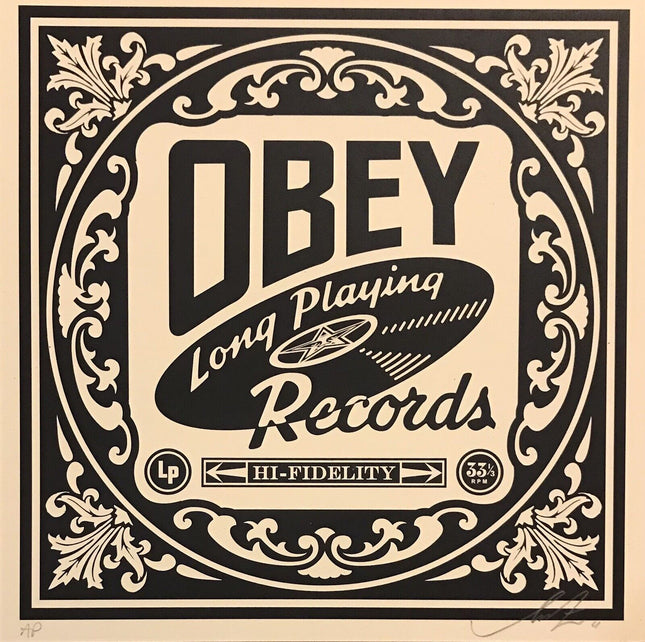
    Obey Long Playing AP Dance Floor Riot Silkscreen Print by Shepard Fairey- OBEY Artist Proof Hand-Pulled 1-Color Screen Print on Fine Art Paper Limited Edition Graffiti Pop Street Artwork. AP Artist Proof 2011 Signed & AP Marked Limited Edition Artwork Size 13x13 "Long before I knew about art galleries or even street art, I was excited about album cover art, if only because it was the visual counterpart to the music on the records I loved. Album covers conjured a euphoric association with the listening experience. Most of my earliest home-made tee shirts were stencils based on punk album covers… No matter how much I love art, or try to convince myself of its relevance in society, the fact remains that music is a lot cooler and way more able to reach people’s hearts and minds… but I’m a populist and I look at it this way: I may not play an instrument, but I’m gonna rock it hard as nails anyway. With my art I try to capture the same energy and spirit that makes music so powerful and democratic. REVOLUTIONS is a celebration of all the great music and accompanying art that has inspired me over the years." -Shepard Fairey Obey Long Playing AP by Shepard Fairey: A Fusion of Music and Street Pop Art The Obey Long Playing Artist Proof silkscreen print by Shepard Fairey is a striking homage to the enduring influence of music on visual culture. Created in 2011, this limited-edition Artist Proof measures 13 by 13 inches and is hand-pulled as a one-color screen print on fine art paper. Signed and marked as an Artist Proof by Fairey, the print is a part of his Revolutions series, which celebrates the intersection of music and art. Through its bold, monochromatic design, this artwork captures the timeless appeal of vinyl records and the cultural legacy they represent. The design prominently features a stylized vinyl record encased in a decorative frame with ornate flourishes. The bold typography reading Obey Long Playing Records evokes the aesthetic of vintage album covers, blending nostalgia with Fairey’s contemporary Street Pop Art sensibilities. The intricate detailing in the border contrasts with the minimalist central image, creating a composition that is both visually dynamic and conceptually rich. This piece reflects Fairey’s deep connection to music as a driving force in his art, highlighting the shared energy and accessibility of music and street art. Music as a Visual and Cultural Inspiration Shepard Fairey’s connection to music runs deep, influencing much of his work, including Obey Long Playing. Growing up immersed in the punk rock scene, Fairey drew inspiration from the DIY ethos and rebellious spirit of the music. This influence is evident in his bold graphics and use of stencils, techniques rooted in the graffiti art tradition. In this piece, Fairey channels the energy and democracy of music into a visual form, celebrating its ability to unite people and transcend boundaries. The vinyl record featured in the design symbolizes a golden era of music, where physical albums and cover art played a crucial role in defining an artist’s identity. Fairey’s choice to emphasize this cultural artifact speaks to his admiration for the tangible connection between music and its audience. The print serves as a tribute to the artistry of album design and its ability to evoke powerful emotions, much like the music it represents. The Craft of Silkscreen Printing Obey Long Playing is a testament to Shepard Fairey’s mastery of the silkscreen printing process. Each print is meticulously hand-pulled, ensuring a high level of precision and quality. The one-color design allows for bold contrasts and sharp details, highlighting the intricacies of the decorative border and the clean lines of the central typography. Printed on fine art paper, the piece has a refined finish that enhances its visual impact and durability. The Artist Proof designation adds an element of rarity and exclusivity to this work, often representing the initial versions of a print used to refine the design. Fairey’s dedication to the silkscreen medium reflects his commitment to the traditions of graffiti and street art, where stenciling and hand-printing are integral to the art form. This choice of medium further emphasizes the tactile and authentic qualities that define Fairey’s work. Shepard Fairey: A Voice in Street Pop Art and Graffiti Artwork Shepard Fairey, an American artist and activist, has become synonymous with Street Pop Art and Graffiti Artwork. Known for his iconic designs that blend cultural commentary with bold aesthetics, Fairey’s work often draws on his love of music, particularly punk and hip-hop. Obey Long Playing exemplifies this connection, serving as both a celebration of music’s cultural significance and a reflection of its influence on Fairey’s art. Through his Revolutions series, Fairey explores the symbiotic relationship between music and visual art, creating works that resonate across generations. Obey Long Playing stands out as a powerful tribute to the legacy of vinyl records, blending nostalgia with modern artistic techniques. Fairey’s ability to capture the energy and spirit of music in visual form cements his place as a leading figure in contemporary Street Pop Art and Graffiti Artwork.

    $285.00

  • Breatharian Giclee Print by Victo Ngai

    Victo Ngai Breatharian Giclee Print by Victo Ngai

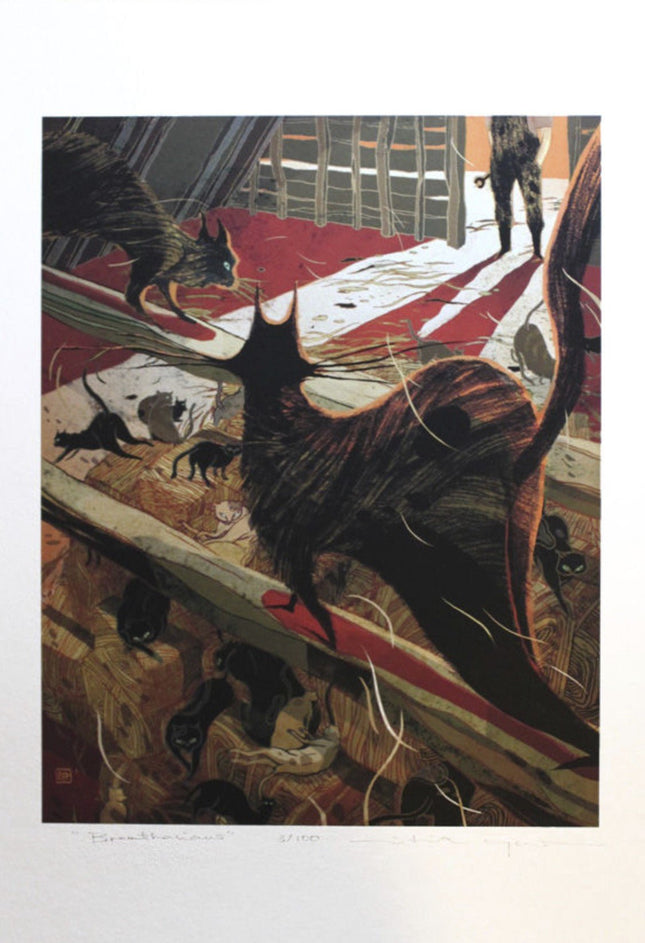
    Breatharian Artwork Giclee Limited Edition Fine Art Print on 100% Cotton Hahnemühle Museum Etching Paper by Pop Culture Graffiti Artist Victo Ngai. Callan Wink's short story "Breatharian" artwork was in the New Yorker magazine. Due to how this artwork was made and stored by the artist, many of Ngai's older prints contain slight yellowing to the extreme upper and lower white margin that extends about 1mm. This does not effect the image at all and the prints are perfect besides this.

    $262.00

  • El Halcon del Mar Pink Archival Print by Stinkfish

    Stinkfish El Halcon del Mar Pink Archival Print by Stinkfish

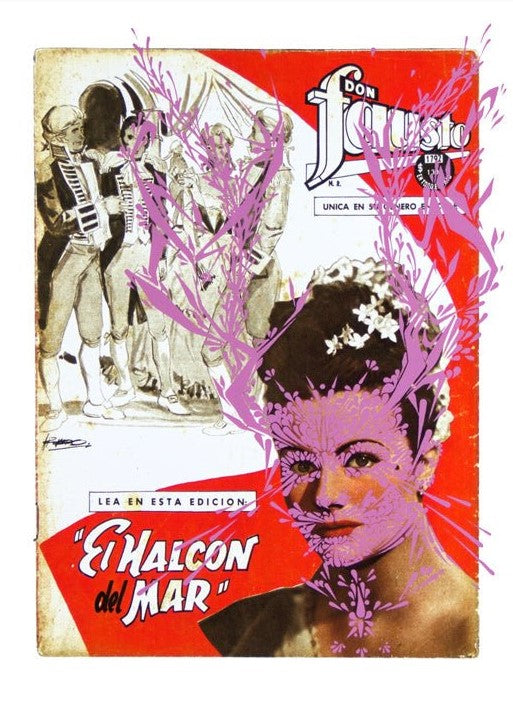
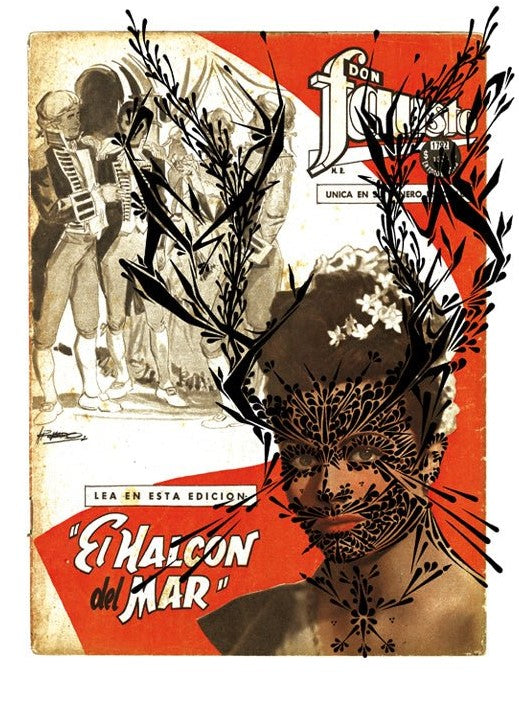
    El Halcon del Mar- Pink Limited Edition Archival Pigment Prints with Black Screen Print on 310gsm Fine Art Paper by Stinkfish Graffiti Street Artist Modern Pop Art. "I found this magazine in a second-hand bookstore in downtown Bogota. I used a traditional ink fine marker over the magazine cover. It is a Chilean magazine from 1959.I usually draw over these kinds of surfaces, like vintage records and magazine covers. It's inspired by my street works, I work on portraits mixed with freehand styles with a spray can." - Stinkfish

    $323.00

  • El Halcon del Mar Black Archival Print by Stinkfish

    Stinkfish El Halcon del Mar Black Archival Print by Stinkfish

    El Halcon del Mar- Black Limited Edition Archival Pigment Prints with Black Screen Print on 310gsm Fine Art Paper by Stinkfish Graffiti Street Artist Modern Pop Art. "I found this magazine in a second-hand bookstore in downtown Bogota. I used a traditional ink fine marker over the magazine cover. It is a Chilean magazine from 1959.I usually draw over these kinds of surfaces, like vintage records and magazine covers. It's inspired by my street works, I work on portraits mixed with free hand styles with a spray can." - Stinkfish

    $134.00

  • El Halcon del Mar Blue Archival Print by Stinkfish

    Stinkfish El Halcon del Mar Blue Archival Print by Stinkfish

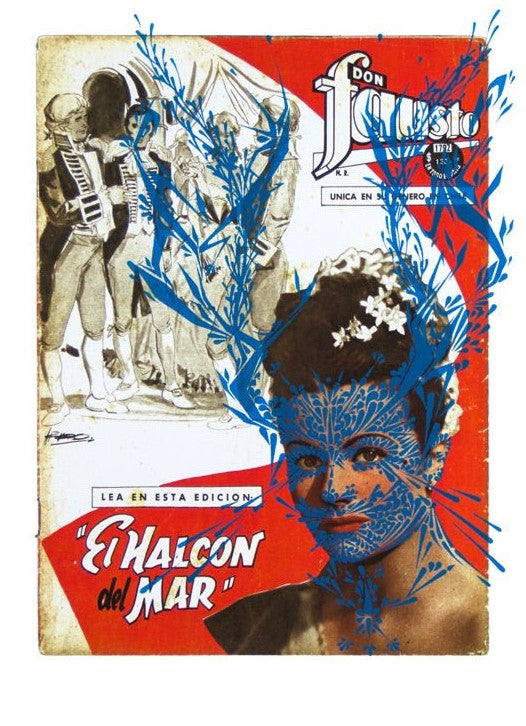
    El Halcon del Mar- Blue Limited Edition Archival Pigment Prints with Black Screen Print on 310gsm Fine Art Paper by Stinkfish Graffiti Street Artist Modern Pop Art. "I found this magazine in a second-hand bookstore in downtown Bogota. I used a traditional ink fine marker over the magazine cover. It is a Chilean magazine from 1959.I usually draw over these kinds of surfaces, like vintage records and magazine covers. It's inspired by my street works, I work on portraits mixed with freehand styles with a spray can." - Stinkfish Small dings or digs in the paper along top white margins that do not penetrate paper. Minimal. Affixed to Black Board, Unframed.

    $125.00

Advertising & Brands Graffiti Street Pop Artwork

 The Intersection of Advertising, Brands, and Street Art

Advertising through street graffiti art is a controversial practice that has been debated for many years. On the one hand, it is a creative way to promote products and services unconventionally. On the other hand, others see it as a violation of public spaces and a form of visual pollution. One of the main concerns with advertising in street graffiti art is that it can be seen as a form of corporate co-optation of a grassroots movement. Graffiti art has historically been associated with political dissent, social commentary, and artistic expression. Some argue that using this medium to promote commercial interests undermines the authenticity and integrity of the art form.
Furthermore, advertising through street graffiti art can be seen as a violation of public spaces. The relationship between advertising, brands, and street art has evolved dramatically, with each element borrowing from and influencing the others. Street Pop Art & Graffiti Artwork, once seen as a form of rebellion against mainstream culture and commercialization, has now, in many instances, become a tool for that very commercial world it once stood against. This intersection has given rise to a fascinating dialogue within the art community about street art's role in advertising and the commodification of brands. Street artists have long appropriated logos, slogans, and other corporate branding elements to critique consumer culture and the pervasiveness of advertising in public spaces. This appropriation often involves subverting brand imagery or using it in ironic ways to challenge the messages conveyed by corporations. This form of artistic expression serves to reclaim public spaces from the clutches of corporate advertising and spark conversations about consumerism's impact on society.

Brands Embracing Street Art Aesthetics

Conversely, brands have increasingly sought to harness the authenticity and 'cool' factor associated with street art. By commissioning street artists to create murals or to design products, brands aim to tap into the youth market and align themselves with the values associated with street culture. This collaboration has brought street art into the mainstream and has provided street artists with new platforms to showcase their work. However, it has also raised questions about the commercialization of an art form that was traditionally anti-establishment and has prompted discussions about the balance between artistic integrity and commercial success. The collaboration between street artists and brands can lead to a symbiotic relationship where artists gain exposure and financial support. In contrast, brands benefit from the association with the cutting-edge and socially conscious image of street art. However, it can also lead to accusations of selling out and diluting the subversive power that street art can wield.

Advertising as Inspiration for Street Art

In pop art, the influence of advertising and branding has always been evident, with artists like Andy Warhol turning the imagery of consumer goods into high art. Street artists have continued this tradition, using the techniques and aesthetics of advertising in their work. This can involve mimicking the slick production values of commercial billboards or adopting the language of advertising to convey an anti-consumerist or anti-corporate message. Advertising and branding provide a rich source of material for street artists to critique, and in doing so, they mirror contemporary society's values and priorities. By co-opting brands' imagery, street artists can comment on issues ranging from globalization to environmental degradation, making their work relevant and accessible to a broad audience. Graffiti art is often created without permission from property owners or city authorities and can be seen as vandalism. This raises questions about the ethics of using public spaces to promote commercial interests, mainly if done without consent. Despite these concerns, there are some arguments in favor of advertising through street graffiti art. For one, it can be seen as a creative way to reach a young and urban audience. Street art is often seen as edgy and calm, and by using this medium to promote products and services, companies can tap into this cultural currency.
Moreover, advertising through street graffiti art can be seen as a way to support and encourage emerging artists. Companies can commission artists to create graffiti art that incorporates their products or branding, providing a platform for these artists to showcase their talents and gain exposure.
In conclusion, advertising through street graffiti art is a controversial practice that raises questions about the ethics of using public spaces to promote commercial interests. While there are arguments in favor of this approach, there are also concerns about its impact on the authenticity of the art form and the use of public spaces. Ultimately, it is up to individual companies to decide whether this strategy aligns with their values and goals.

Cultural Implications of Branding in Street Art

The use of branding in street art also has more profound cultural implications. It reflects the increasingly blurred lines between high and low cultures, art and commerce, and public space and advertising billboards. In a world where consumers are constantly bombarded with advertising messages, street art incorporating branding can either contribute to the visual noise or cut through it with a powerful message. For street artists, the challenge is to use the imagery of advertising to enhance their message rather than undermine it. For brands, the challenge is to engage with street art in a way that is respectful and understanding of its history and ethos. As street art grows in popularity and visibility, the relationship between advertising, brands, and street art will undoubtedly continue to evolve, raising new questions and sparking fresh debates within the art world.
Footer image

© 2025 Sprayed Paint Art Collection,

    • Amazon
    • American Express
    • Apple Pay
    • Bancontact
    • Diners Club
    • Discover
    • Google Pay
    • iDEAL
    • Mastercard
    • PayPal
    • Shop Pay
    • Visa

    Login

    Forgot your password?

    Don't have an account yet?
    Create account