Anime

4 artworks

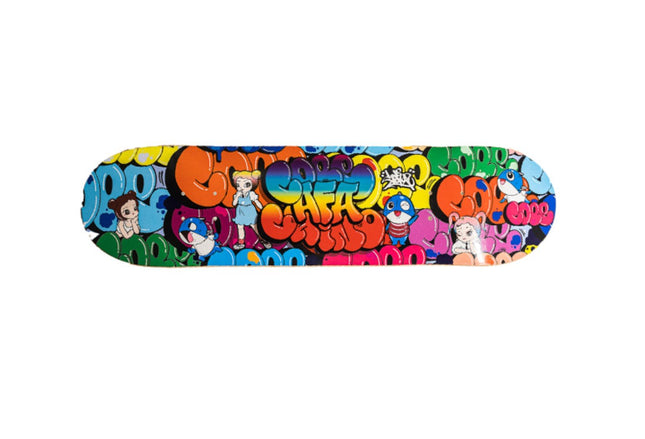
  • Time Travel Skateboard Deck Art by Cope2- Fernando Carlo

    Cope2- Fernando Carlo Time Travel Skateboard Deck Art by Cope2- Fernando Carlo

    Time Travel Deck Fine Art Limited Edition Archival Pigment Print Transfer on Cold Pressed Steep Natural Skateboard Deck by Street Artwork Graffiti Artist COPE2 x Afa Annfa x Chino Lam. 2021 Time Travel Skateboard Size: 80 x 20cm Editions of 100, numbered.

    $359.00

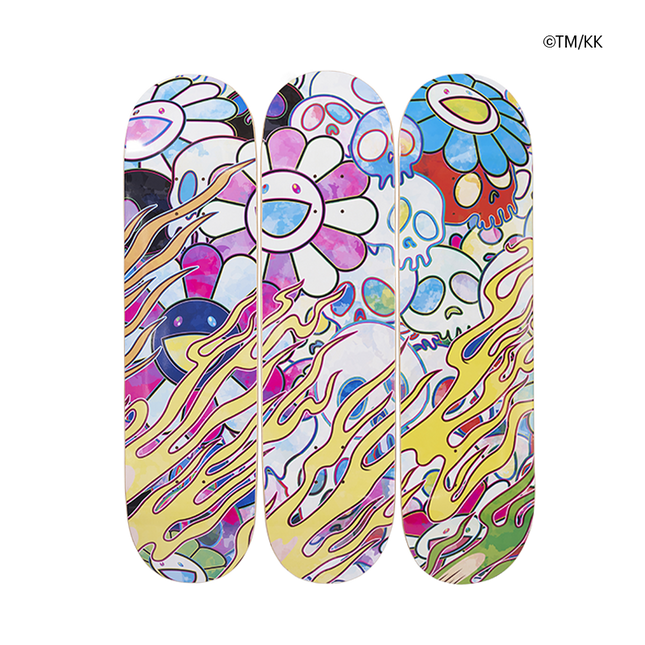
  • Flaming Skull Skateboard Art Deck Set by Takashi Murakami TM/KK

    Takashi Murakami TM/KK Flaming Skull Skateboard Art Deck Set by Takashi Murakami TM/KK

    Flaming Skull Skateboard Art Deck Set by Takashi Murakami TM/KK Limited Edition Archival Print on Wood Skateboard Deck by Street Artwork Graffiti Artist. 2018 Limited Edition Skateboard Artwork Size 8x31 Skateboard Art Deck Brand New Perfect Condition Flaming Skull Skateboard Art Deck Set by Takashi Murakami: Skate Culture Icons in Street Pop Art & Graffiti Artwork Flaming Skull Skateboard Art Deck Set by Takashi Murakami is a 2018 limited edition triptych consisting of three 8 x 31 inch wood skateboard decks printed with a vibrant archival design. Issued through TM/KK and presented in brand new condition, this piece transforms the visual motifs of Murakami’s Superflat style into a collectible surface rooted in both urban rebellion and fine art tradition. The work features his signature smiling flowers and neon skulls engulfed in candy-colored flames, creating a frenetic collision of joy, death, and energy. It exemplifies the aesthetic and cultural fusion at the heart of Street Pop Art & Graffiti Artwork. Murakami, born in Japan in 1962, is known globally for reimagining Japanese kawaii culture through contemporary art. In Flaming Skull, his recurring iconography is pushed to maximum saturation. The decks explode with pastel flames that dance between pinks, yellows, and blues, consuming and encircling the now-iconic wide-eyed flowers and stylized skulls. These elements are not randomly placed. The skulls nod to the transience of life while the grinning flowers, usually symbols of peace and cuteness, now float among the burning chaos. The contrast between innocence and destruction becomes a central visual tension. The skate decks act as both art objects and emblems of resistance, reinforcing how Murakami's work translates fluidly between gallery settings and street culture. Superflat Meets Skate: Murakami's Surfaces of Power The use of skateboard decks as a medium adds another dimension to Murakami’s Superflat philosophy, which compresses visual depth and collapses distinctions between high art and commercial design. In the Flaming Skull set, the decks function not only as a canvas but also as a cultural object—a symbol of countercultural identity, mobility, and rebellion. Skateboards have historically served as both mode of transport and personal billboard, making them ideal platforms for artwork that is as expressive as it is political. Murakami’s designs, printed seamlessly across the three decks, maintain a sense of cohesion while taking advantage of the vertical format and curvature unique to skateboards. His combination of illustrative clarity and chaotic form aligns with the structure of street graphics, often characterized by repetition, exaggeration, and intense color. Flaming Skull is not static. It evokes speed, spontaneity, and movement—qualities inherent to skateboarding and to graffiti. Symbolic Language and the Visual Noise of Urban Life This work amplifies Murakami’s ongoing exploration of symbolism, pop culture, and emotional intensity. The juxtaposition of flames and floral motifs mirrors how graffiti writers tag over advertisements, blending commercial and underground languages into something personal and uncontrollable. The skulls invoke cycles of life and death without morbidity, depicted in luminous tones that transform fear into fantasy. By placing these forms in riotous layers, Murakami crafts a surface that feels as alive as a street wall—an artwork where every inch pulses with energy and intention. Flaming Skull, like much of Murakami’s work, resists easy categorization. It channels anime aesthetics while referencing traditional Japanese painting. It uses joyful motifs in unsettling ways, exposing the volatility of contemporary life. The work's chaotic harmony is reflective of Street Pop Art & Graffiti Artwork, where cultural clutter becomes the material of revolution and emotional response. Takashi Murakami’s Street-Level Reach through Skateboard Art Murakami’s Flaming Skull Skateboard Art Deck Set encapsulates the global crossover between contemporary art and street expression. While he is firmly established within the art world, his use of materials like skateboards speaks to a different kind of power—one rooted in youth culture, physical movement, and accessible rebellion. These decks, though never meant to be ridden, carry the spirit of resistance and creativity that defines the spaces they visually occupy. By applying his most recognizable visual codes to skate culture artifacts, Murakami ensures that his work remains relevant, mobile, and responsive. Flaming Skull is a kinetic masterpiece of Street Pop Art & Graffiti Artwork, linking life’s fragility to joy, flame, and speed through a perfectly executed limited edition. It is not just decoration; it is a message burned into wood.

    $1,500.00

  • Sharp Tooth Bear Skateboard Art Deck Set by Takashi Murakami TM/KK

    Takashi Murakami TM/KK Sharp Tooth Bear Skateboard Art Deck Set by Takashi Murakami TM/KK

    Sharp Tooth Bear ComplexCon Skateboard Art Deck Set by Takashi Murakami TM/KK Limited Edition Archival Print on Wood Skateboard Deck by Street Artwork Graffiti Artist. 2019 Limited Edition Skateboard Artwork Size 8x31 Skateboard Art Deck Brand New Perfect Condition 3x Deck Set Sharp Tooth Bear ComplexCon Skateboard Art Deck Set by Takashi Murakami: Pop Icons Reimagined in Street Pop Art & Graffiti Artwork The Sharp Tooth Bear ComplexCon Skateboard Art Deck Set by Takashi Murakami is a 2019 limited edition release featuring archival pigment print transfer on a triptych of 8 x 31 inch natural wood skateboard decks. Distributed under Murakami’s TM/KK studio label and unveiled at ComplexCon, this set presents his iconic character Mr. DOB in a surreal, floating constellation of multicolored spheres and sharply jagged smiles. The artwork is pristine in condition and masterfully designed to span across all three decks, forming one unified image that vibrates with movement and mischief. A hallmark of Murakami’s crossover between high-concept Japanese art and subversive street aesthetics, this edition continues his exploration of visual identity through the lens of Street Pop Art & Graffiti Artwork. Mr. DOB, Murakami’s long-standing alter ego and mascot figure, is featured here in its more evolved and chaotic form. Multiple Mr. DOB heads orbit across a gradient background shifting from teal blue to pale yellow, creating a dreamy atmosphere that clashes with the aggressive, shark-like teeth and multicolor psychedelic eyes embedded in each orb. These elements produce a feeling of both playful celebration and psychological unease. With influences from anime, manga, consumer branding, and the emotional dissonance of modern visual culture, Murakami’s sharp-toothed icon becomes both character and critique. His precise lines and cartoon-like distortion transform each floating head into a symbolic vessel for contemporary overstimulation and cultural fragmentation. Skate Culture Meets Pop Surrealism in Limited Edition Form Takashi Murakami’s choice to present this piece as a skateboard deck set is deliberate. Skate decks have long existed at the intersection of function and rebellion. In Street Pop Art & Graffiti Artwork, the skateboard is more than a tool—it is a symbol of self-expression, disruption, and the tension between movement and visual impact. By translating his most recognizable character onto a surface born in subculture, Murakami activates new dimensions of accessibility and statement. The Sharp Tooth Bear set preserves the tactile honesty of the street while simultaneously operating as a luxury fine art object. The curved verticality of the decks allows the floating spheres to appear as if drifting in weightlessness, emphasizing the detachment and surveillance often associated with Murakami’s characters. Each panel maintains detail while contributing to the whole, creating a mural-like composition that bridges studio art and skate shop graffiti. The production quality—high-fidelity archival pigment on wood—maintains the integrity of the image while reinforcing its collectible status. These decks are built for permanence but born from a culture that values ephemerality. Character Mutation as Language in Murakami’s Visual System The recurring use of Mr. DOB across Murakami’s work symbolizes transformation, commercial identity, and visual overload. In the Sharp Tooth Bear deck set, the character’s expression is twisted into multiple forms, with exaggerated eyes, swirling patterns, and sharp jaws creating a sense of multiplicity and instability. This reflects a broader theme in Street Pop Art & Graffiti Artwork where characters become signatures, avatars, and mythologies that evolve in public. Like graffiti tags, these characters act as a calling card—but Murakami amplifies them with color theory, compositional harmony, and emotional duality. Floating heads with smiles and snarls occupy the liminal space between joy and chaos. Their bright exteriors mask the grotesque, creating a paradox central to the experience of modern pop culture. These figures float in a void, disconnected yet expressive, much like the fractured media landscape Murakami so frequently interrogates. The decks tell a story of cultural mutation and psychological saturation through line, hue, and repetition. Takashi Murakami’s Skate Decks as Contemporary Cultural Icons Takashi Murakami, born in Japan in 1962, continues to challenge and redefine what Street Pop Art & Graffiti Artwork can be. His skate deck releases at ComplexCon push the boundaries of medium, bringing fine art to surfaces with street-level power. The Sharp Tooth Bear deck set serves as an entry point into Murakami’s philosophy of Superflat—where depth is compressed and visual meaning expands. With this 2019 release, Murakami reinforces that characters like Mr. DOB are not just visual gimmicks, but sophisticated tools for exploring the artificial, the emotional, and the psychedelic in a world oversaturated with imagery. These decks are not just collectibles—they are symbols of how visual art can mutate, float, and bite, all while maintaining a smile. They are the painted echoes of pop consciousness frozen in motion, crafted with intent, color, and a sharp set of teeth.

    $1,500.00

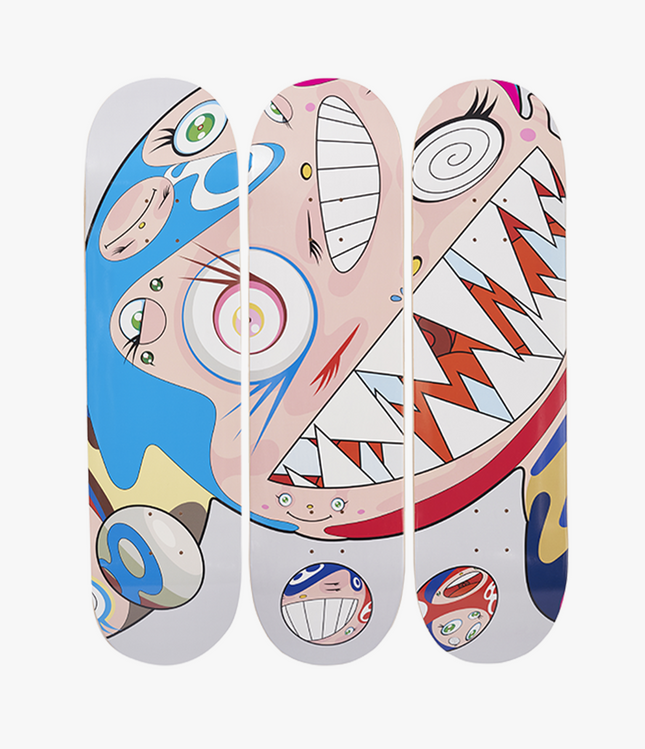
  • Flying Dob Skateboard Art Deck Set by Takashi Murakami TM/KK

    Takashi Murakami TM/KK Flying Dob Skateboard Art Deck Set by Takashi Murakami TM/KK

    Flying Dob Skateboard Art Deck Set by Takashi Murakami TM/KK Limited Edition Archival Print on Wood Skateboard Deck by Street Artwork Graffiti Artist. 2018 Limited Edition Skateboard Artwork Size 8x31 Skateboard Art Deck Brand New Perfect Condition Flying Dob Skateboard Art Deck Set by Takashi Murakami: Japanese Iconography in Street Pop Art & Graffiti Artwork Flying Dob Skateboard Art Deck Set by Takashi Murakami is a limited edition fine art print on a triptych of 8 x 31 inch wood skateboard decks released in 2018 under the TM/KK studio imprint. Each deck presents a fragment of Murakami’s character Dob, whose energetic expression and surreal construction define a central part of his aesthetic vocabulary. This set, presented in brand new condition, merges Murakami’s globally recognized Superflat style with the raw and accessible surface of skate culture, making it a striking example of how contemporary Street Pop Art & Graffiti Artwork continues to evolve across unconventional platforms. Dob, often interpreted as Murakami’s mascot and alter ego, appears here with swirling eyes, massive teeth, and an explosive palette of electric blues, bubblegum pinks, whites, and reds. The visual design is disorienting and deliberately chaotic, characteristic of Murakami’s embrace of manga, anime, and Japanese commercial iconography. The composite image sprawls across all three decks, turning the set into both an art object and a collector’s item, fully blurring the lines between gallery art and functional street design. The decision to print this work on skate decks expands the accessibility and display potential of Murakami’s work while honoring the rebellious traditions of the surfaces it inhabits. Takashi Murakami and the Language of Commercial Surrealism Takashi Murakami, born in Japan in 1962, has spent decades exploring the visual intersections of fine art, commercial aesthetics, and youth culture. He developed the Superflat movement, which challenges the hierarchy of high versus low art and elevates cartoon, decorative, and commercial imagery into fine art contexts. Flying Dob exemplifies this practice, especially when seen on skate decks—objects traditionally aligned with underground subculture, athleticism, and anti-establishment messaging. Here, the decks function as mobile canvases that carry both the spirit of the street and the curated precision of contemporary design. Murakami’s use of the Dob character is complex. Part mascot, part warning, part self-portrait, Dob morphs across Murakami’s body of work as a representation of power, innocence, and uncontrollable emotion. In this composition, the fractured presentation across three decks intensifies the character’s chaotic energy. The large, angular teeth and swirling eyes become distorted by the deck separation, echoing how identity and perception are often fractured in consumer and digital culture. This psychological tension is core to both Murakami’s art and the visual language of Street Pop Art & Graffiti Artwork, which uses distortion, repetition, and vivid color to provoke response and invite inquiry. Street Surfaces and Contemporary Collector Culture Printing fine art on skateboards is not just a stylistic decision but a cultural one. Skate decks have long served as mobile billboards for self-expression, political graphics, and underground illustration. Murakami’s use of this surface format brings his work into dialogue with the visual codes of skater rebellion and DIY print culture. It also echoes the way graffiti and street art elevate everyday materials into lasting visual statements. The decks become a new kind of art print—limited, tactile, and tied to a specific youth-driven history. Flying Dob Skateboard Art Deck Set participates in the cultural practice of displaying what once existed solely in motion. It turns utility into symbol. This transformation reflects how Street Pop Art & Graffiti Artwork frequently subverts expectations—taking skateboards off the street and into the gallery while maintaining their attitude and visual punch. Murakami’s contribution amplifies this exchange by injecting his polished, commercial aesthetic into a medium traditionally associated with grit and destruction. Murakami’s Position in Street Pop Art & Graffiti Artwork Takashi Murakami stands as one of the few living artists whose practice fluidly spans fashion, merchandise, museum exhibition, and street influence without compromising complexity. The Flying Dob Skateboard Art Deck Set is a distilled example of his ability to fuse cultural layers into singular pieces that speak to mass media, personal mythology, and symbolic power. His work does not parody street culture; it contributes to it by redefining how characters, products, and art coexist in shared visual ecosystems. This set, with its razor-sharp execution and chaotic elegance, is both playful and unsettling. It demonstrates how Murakami continues to influence the direction of Street Pop Art & Graffiti Artwork while grounding it in Japanese visual tradition and hypermodern critique. Flying Dob is not simply a design—it is a statement rendered in wood, color, and fragmentation, made to be both ridden and revered.

    $1,500.00

Anime Graffiti Street Pop Artwork

Understanding the Influence of Anime in Street Pop Art and Graffiti Artwork

Anime has had a significant impact on various forms of art, including graffiti art and pop art. Graffiti and pop art are known for their vibrant colors, bold lines, and striking imagery, and anime's distinctive style lends itself well to these artistic movements. In graffiti art, anime characters often create intricate and eye-catching murals on buildings and other public spaces. These murals can range from small tags and stickers to large-scale works of art that cover entire walls. Some graffiti artists incorporate anime characters into their work to express their love for the art form or to make a statement about society and culture. In pop art, anime has influenced many artists who incorporate Japanese culture and style elements into their work. Pop art often involves taking everyday objects and elevating them to the level of high art, and anime characters and imagery are a natural fit for this style. Many pop artists use bright, bold colors and exaggerated forms to create eye-catching works of art that draw inspiration from anime and manga. Anime has had a significant impact on graffiti and pop art, inspiring artists worldwide to incorporate its unique style and imagery into their work. Whether through graffiti murals on city walls or pop art paintings in galleries, anime continues to influence contemporary art significantly. Anime, a style of animation that originated in Japan, has made a significant impact globally, notably in street pop art and graffiti artwork. This cultural phenomenon transcends traditional boundaries of artistic expression, blending intricate storytelling with unique visual styles. The influence of anime in street art and graffiti is evident in various urban landscapes, where artists use its distinct characteristics to create vibrant, thought-provoking pieces that resonate with diverse audiences. Street pop art and graffiti artwork, often seen as forms of rebellion or social commentary, find a kindred spirit in anime. Anime's rich narratives often explore complex themes such as identity, technology, and the human condition, which street artists frequently incorporate into their work. The integration of anime into street pop art and graffiti has given these art forms a new dimension, allowing artists to communicate more profound messages through a blend of visual symbolism and narrative depth.

Anime Visual Style in Street Pop Art and Graffiti Artwork

The visual style of anime is characterized by its vivid colors, exaggerated features, and dynamic compositions. These elements ideally suit the bold and expressive nature of street pop art and graffiti. Artists who draw inspiration from anime tend to incorporate its signature big eyes, vibrant color palettes, and dramatic shading into their murals and pieces. This fusion creates a striking visual impact on the viewers, making the artwork more engaging and accessible, especially to younger audiences already familiar with anime culture. Moreover, the globalization of anime has contributed to its popularity and acceptance in street art. With the internet and digital media rise, anime has reached a wider audience, influencing artists and viewers across different cultures and backgrounds. This global reach has led to the creation of street art and graffiti that celebrates the art form and uses it to bridge cultural divides. Murals depicting famous anime characters or scenes can be found in various cities worldwide, serving as cultural landmarks and points of connection for fans and artists alike. Another aspect of anime's influence on street pop art and graffiti is how it challenges traditional artistic norms. Anime often pushes the boundaries of imagination, creating worlds that defy reality. Street artists, in turn, adopt this approach to challenge conventional perceptions of art and public space. By incorporating fantastical elements and imaginative scenarios inspired by anime, these artists turn ordinary walls and urban spaces into canvases for storytelling and creative expression.
Furthermore, the thematic diversity of anime allows street artists to explore a wide range of subjects. From action-packed adventures and romantic tales to deep psychological dramas, anime covers a spectrum of genres. This versatility is reflected in various street art and graffiti inspired by anime, where each piece can convey different moods and stories. Whether it's a mural that captures the high-energy action of shonen anime or a subtle piece reflecting the emotional depth of a slice-of-life series, the influence of anime enables street artists to cater to a broad audience with varying tastes and interests. The impact of anime on street pop art and graffiti artwork is a testament to its cultural significance and artistic value. Anime has not only influenced the aesthetic and thematic aspects of these art forms but has also played a role in their evolution and global reach. By infusing street art and graffiti with its unique visual style and narrative depth, anime has helped these art forms connect with a broader audience, offering new perspectives and experiences. As anime continues to grow in popularity, its influence on street art and graffiti will likely expand, further enriching these vibrant and dynamic artistic communities.
Footer image

© 2025 Sprayed Paint Art Collection,

    • Amazon
    • American Express
    • Apple Pay
    • Bancontact
    • Diners Club
    • Discover
    • Google Pay
    • iDEAL
    • Mastercard
    • PayPal
    • Shop Pay
    • Visa

    Login

    Forgot your password?

    Don't have an account yet?
    Create account