Bunny Rabbit

2 artworks

  • Dissection Of The White Rabbit AP Archival Print by Nychos

    Nychos Dissection Of The White Rabbit AP Archival Print by Nychos

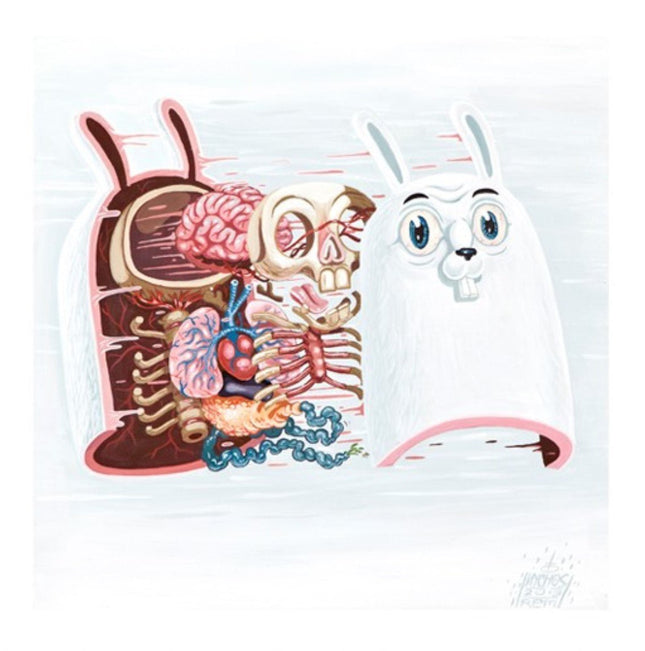
    Dissection Of The White Rabbit Limited Edition Archival Pigment Print on 300gsm Museum Natural Fine Art Paper by Nychos Graffiti Street Artist Modern Pop Art. AP Artist Proof 2013Signed & Marked AP Artwork Size 16x16 "I painted this piece in January of this year, right before I went to Hawaii for Pow Wow. It was also featured in my recent solo show in Italy, showcasing some of my recent dissections. The concept is based on the graphical graffiti throw-up I have been doing since around 2005, but I had to do a dissection of this one! The image is now Rabbit Eye Movement's main (REM) logo. REM started as a street art concept based in Vienna, but I always saw the Rabbit Eye Movement as an homage to all the "rabbits" out there being" active in the urban art movement; it doesn't matter what mission they are following. The movement grew, and REM expanded to establish the REM ARTSPACE. This place addresses national and international artists from genres like graffiti, urban illustration, street art, lowbrow, and pop culture imagery. It allows individual and collective creativity to open minds and cultivate passionate inspiration." - Nychos. Nychos' "Dissection of The White Rabbit": A Modern Pop Art Phenomenon In the contemporary urban landscape, few art pieces have captured the imagination as vividly as "Dissection of The White Rabbit" by Nychos, the illustrious graffiti street artist. This limited edition archival pigment print on 300gsm Museum Natural Fine Art Paper stands as a hallmark of modern pop art and a defining piece within the street pop art and graffiti artwork genre. Created as an artist proof (AP) in 2013, this 16x16 artwork weaves complex narratives of biology, mythology, and urban culture into a single, striking, and thought-provoking canvas. Nychos: Anatomical Explorations and Urban Narratives Nychos, renowned for his unique approach to street art, employs a distinctive technique of anatomical dissection in his work. "Dissection of The White Rabbit" is a prime example, presenting a rabbit split down the middle to reveal the intricate workings of its internal organs. This piece was conceived in January of that year, just as Nychos was preparing to attend Pow Wow in Hawaii, and subsequently became a centerpiece in his solo show in Italy. Nychos's work delves into the layers that compose living beings, reflecting a deep fascination with what lies beneath the surface. By marrying the graphic energy of graffiti throw-ups with the precise detail of dissections, Nychos has forged a new path in street pop art. The artwork also functions as the emblem for the Rabbit Eye Movement (REM), a concept originating from the streets of Vienna. Nychos envisions REM as a tribute to the 'rabbits' of the urban art movement, symbolizing the active participants in this burgeoning cultural scene, regardless of their mission. REM has since evolved to establish the REM ARTSPACE. This creative hub celebrates a variety of genres, from graffiti and urban illustration to street art, lowbrow, and pop culture imagery. This space is dedicated to fostering individual and collective creativity and serves as a bastion for the free exchange of ideas, ensuring the progression and inspiration of artists worldwide. The Impact and Legacy of Nychos' Work The influence of "Dissection of The White Rabbit" extends beyond its visual impact. It embodies Nychos' profound effect on the street art scene, illustrating the transformative power of visual arts in urban spaces. The work is a representation of the artist's technical prowess and a symbol of his commitment to challenging the traditional boundaries of street pop art and graffiti artwork. As the primary logo for the Rabbit Eye Movement, it has become synonymous with a global network of artists dedicated to advancing the cause of street art. Through his work and the establishment of REM ARTSPACE, Nychos has played a pivotal role in shaping the dialogue around street art and its place in the broader spectrum of contemporary art. In essence, "Dissection of The White Rabbit" is more than just a piece of art; it is a cornerstone of Nychos' artistic and cultural contribution. This piece encapsulates the dynamism and versatility of street pop art and graffiti artwork, demonstrating how such works can simultaneously educate, inspire, and provoke thought. As Nychos' fame continues to rise and his works continue to captivate audiences around the globe, the legacy of his white rabbit, dissected and displayed, stands as an enduring symbol of the power and potential of street art.

    $279.00

  • Sale -15% The Welcomer Soul Rider Sculpture by Dulk- Antonio Segura Donat

    Dulk- Antonio Segura Donat The Welcomer Soul Rider Sculpture by Dulk- Antonio Segura Donat

    Soul Rider The Welcomer Limited Edition Polyresin Sculpture Artwork by Legendary Fine Art Artist Dulk- Antonio Segura Donat. 2023 Limited Edition of 100 Artwork Size Painted cast resin 14 5/8 × 9 × 9 in | 37.1 × 22.9 × 22.9 cm  A limited edition of 100 pieces, they all come numbered with COA (Certificate of Authenticity) in a wooden box. New in Box. The Welcomer Soul Rider by Dulk: Whimsy and Symbolism in Street Pop Art & Graffiti Artwork The Welcomer Soul Rider is a surreal polyresin sculpture created by Antonio Segura Donat, the Spanish fine art and street pop artist known globally as Dulk. Part of his Soul Rider series, this piece channels Dulk’s signature mythology through playful forms and symbolic characters rooted in fantasy, ecology, and layered storytelling. Perched atop a polka-dotted mushroom pedestal, a candy-colored creature combining features of a rabbit, unicorn, and fantasy familiar stands poised, while another character, masked and horned, rides upon its back with a trumpet raised in mid-call. This imaginative and theatrical composition fuses theatricality and allegory in a format that merges narrative depth with toy-like precision, making it a striking example of Street Pop Art & Graffiti Artwork in three-dimensional form. The main figure wears a twisted unicorn horn, oversized spiraled eyes, and a jester-like collar, blending animal innocence with ceremonial significance. Its expression is frozen in blissful confusion, a hallmark of Dulk’s emotional ambiguity. Its pink body contrasts with the cool tones of the mushroom base, which includes hidden characters and details such as a small caterpillar clinging to its edge. The rear rider, with elongated ears and acorn-shaped headwear, wears a black mask and raises a musical instrument as if announcing an arrival. This dynamic scene evokes ritual, procession, and a sense of surreal celebration, offering a playful yet haunting narrative about identity, transformation, and observation. Symbolic Storytelling and Playful Dissonance in Dulk’s Visual World Dulk’s work often explores duality: light and shadow, celebration and extinction, innocence and decay. In The Welcomer Soul Rider, the characters feel as if summoned from a forgotten folklore or alternate realm, their features exaggerated yet precise. The pastel palette softens their eccentricity, giving them an approachable presence while maintaining mystery. The visual language combines influences from street art, classic fairytales, and ecological allegory. Like many of Dulk’s works, this sculpture poses more questions than it answers, inviting viewers to decipher its meanings through emotion and imagination. The mushroom base plays an important role as a symbol of regeneration and hidden ecosystems. It functions as both throne and stage. The oversized lock at the bottom of the mushroom base suggests something magical or secret beneath the surface. Dulk often uses such visual cues to suggest that there is more to the world than meets the eye. The mask worn by the trumpet bearer hints at themes of identity and voice, possibly symbolizing guardianship, ceremony, or disguise. These objects and forms speak to the layered complexity often found in Street Pop Art & Graffiti Artwork, where surface whimsy conceals subtextual urgency. Dulk’s Role in Sculptural Storytelling within Street Pop Art Antonio Segura Donat has emerged as a defining voice in the contemporary scene, merging his roots in muralism with a sculptural practice that transforms flat wall narratives into tangible objects. The Welcomer Soul Rider exemplifies how his storytelling transcends media, maintaining the emotional clarity and visual humor of his murals while exploring texture, volume, and space. The piece feels like a paused scene in an unwritten fable, both frozen in time and full of momentum. The sculpture aligns with the ethos of Street Pop Art & Graffiti Artwork by maintaining accessibility and visual immediacy while challenging conventions of fine art through character design, symbolic layering, and satirical edge. Dulk’s aesthetic borrows from animated films, street iconography, and folklore, resulting in a style that is deeply personal yet universally engaging. His work encourages reflection on environmentalism, empathy, and the fantastical narratives we carry within. The Welcomer Soul Rider as Collectible Myth and Emotional Totem The Welcomer Soul Rider is more than decorative sculpture—it functions as an emotional totem, a modern myth encased in resin. Dulk’s attention to posture, color, and prop placement ensures that the viewer is engaged from every angle, discovering new meanings and hidden figures with each turn. This piece joins the growing trend of character-based fine art sculptures that draw influence from the street while evolving into gallery-caliber works. Whether experienced as a standalone figure or part of the wider Soul Rider series, The Welcomer carries a distinct voice. It calls softly but persistently, echoing Dulk’s artistic message: protect imagination, embrace duality, and celebrate those who carry stories through the chaos of our modern world. Through characters that are strange yet familiar, Dulk builds a universe that speaks fluently in the language of Street Pop Art & Graffiti Artwork while remaining unmistakably his own.

    $1,300.00 $1,100.00

Bunny Rabbit

Bunny Rabbit Imagery in Contemporary Art

The bunny rabbit has hopped into the heart of street pop art and graffiti, becoming an enduring motif used by artists to explore themes ranging from innocence and purity to the subversion of these ideals. Often imbued with a soft and endearing quality, these creatures are reimagined within the urban art context to communicate a wide array of messages.

Pop Art's Adoption of the Bunny Rabbit

In pop art, the bunny rabbit often appears as an icon of commercialization, reminiscent of mascots used in marketing. Artists like Jeff Koons have elevated the bunny to high art, playing with materials and scale to challenge perceptions of value and artistry. In contrast, street artists might stencil, spray, or paste bunnies onto urban surfaces, juxtaposing innocence against the backdrop of the concrete jungle.

Symbolism and Interpretation

Within the framework of street and pop art, bunnies can symbolize everything from rebirth and new beginnings to the vulnerability of nature in the face of urban expansion. Some artists use the rabbit to make political statements, while others revel in the playful and whimsical aspects that the imagery naturally evokes.

Techniques and Aesthetic Choices

The depiction of bunnies in street art varies from hyper-realistic to abstract, with each artist bringing their unique style and technique to the forefront. The medium of choice—be it spray paint, wheatpaste, or stencils—further dictates the aesthetic, allowing for a diverse representation of this common theme.

The Bunny in the Urban Art Landscape

As a subject in the urban art landscape, the bunny rabbit continues to evolve, with artists worldwide adapting its image to speak to contemporary societal issues or to add beauty and intrigue to the streets. It is a motif that resonates globally, transcending cultural and linguistic barriers.

Footer image

© 2025 Sprayed Paint Art Collection,

    • Amazon
    • American Express
    • Apple Pay
    • Bancontact
    • Diners Club
    • Discover
    • Google Pay
    • iDEAL
    • Mastercard
    • PayPal
    • Shop Pay
    • Visa

    Login

    Forgot your password?

    Don't have an account yet?
    Create account