
Cannabis Marijuana & Weed

6 artworks

  • Kuma OG Chase Flocked Amarillo Verde Prisoner Art Toy by Luke Chueh

    Luke Chueh Kuma OG Chase Flocked Amarillo Verde Prisoner Art Toy by Luke Chueh

    Kuma OG Chase Flocked Amarillo Verde The Prisoner Drug Bear Kickstarter Art Toy by Luke Chueh Limited Edition Vinyl Collectible Artwork by Street Graffiti Artist. 2017 Limited Edition Artwork of 62 with Cotton, Bag, and Tube. Based on Luke Chueh's original painting, The Prisoner ponders captivity in its many forms—physical, mental, or pharmaceutical. Ultra Rare Kickstarter Exclusive Chase Flocked Edition. Kuma OG Chase Flocked Amarillo Verde The Prisoner by Luke Chueh: Ultra Rare Emotional Artifact in Street Pop Art & Graffiti Artwork Kuma OG Chase Flocked Amarillo Verde The Prisoner is an ultra rare vinyl art toy by Luke Chueh, released in 2017 as a Kickstarter exclusive. Limited to only 62 pieces, this special edition is a flocked version of the Amarillo Verde Kuma OG figure, making it one of the most sought-after variants in The Prisoner series. Packaged in a green translucent prescription-style container with printed labeling, cotton interior, and protective bag, the figure mimics both the aesthetic and implication of medical confinement. The Prisoner, originally based on Chueh’s emotionally resonant painting, contemplates psychological, physical, and pharmaceutical imprisonment. Rendered in a mossy textured green flocking, the bear’s soft tactile surface contrasts dramatically with its somber pose—arms wrapped tightly around its knees, seated and emotionally closed off. This contrast emphasizes the disconnect between exterior softness and internal suffering, a hallmark of Street Pop Art & Graffiti Artwork. Flocking as Texture for Trauma and Visual Irony What distinguishes this edition is the flocking—a velvety texture that adds an uncanny softness to an otherwise emotionally heavy piece. This tactile surface transforms the object into something that feels almost comforting to touch, even while it visually portrays pain, dependency, and confinement. The figure’s colorway, a vivid Amarillo Verde green, echoes the medical cannabis dispensary aesthetic, subtly referencing alternative forms of chemical escape. The labeled container marks the strain as Kuma OG, a fictionalized nod to both cannabis culture and the ongoing dialogue around self-medication. By placing the bear in a tube labeled as a product and strain, Chueh uses humor and stark visual metaphors to dissect how trauma and emotional pain are commodified. These layered meanings, delivered through minimalist sculptural forms and smart packaging, place this piece firmly within the canon of Street Pop Art & Graffiti Artwork. Luke Chueh’s Quiet Revolution in Designer Art Toys Luke Chueh, a Los Angeles-based artist known for his distinctive character design and emotional storytelling, has redefined the role of designer toys in contemporary art. His work draws heavily from personal experiences with mental health, cultural identity, and psychological conflict. The bear figure featured in The Prisoner series is a signature motif that Chueh uses to convey raw, unspoken emotion. Through posture and minimal expression, the bear becomes an avatar for the fragile states people often endure in silence. This flocked version adds an additional layer of irony and depth, turning a painful emotional narrative into a soft and seemingly huggable object. Chueh’s fusion of toy design, sculpture, and emotional realism continues to influence the Street Pop Art & Graffiti Artwork movement by proving that vulnerability can be conveyed through the smallest, most deceptively simple forms. Kickstarter Exclusivity and Cultural Significance As one of only 62 pieces produced, the Kuma OG Chase Flocked Amarillo Verde edition holds exceptional cultural and collector value. Its release through Kickstarter ties the work directly to the support of fans and collectors who align with the deeper message of The Prisoner series. The prescription-themed packaging serves as more than a protective shell—it is part of the narrative structure, symbolizing institutional control, pharmaceutical normalization, and the quiet despair of chemically managed pain. This edition does not just exist as a display item; it exists as a statement. It represents the intersection of mental health, medication culture, and consumer aesthetics in modern society. Within the framework of Street Pop Art & Graffiti Artwork, Luke Chueh’s limited editions become small-scale monuments to the emotional complexity of human experience—objects of art that carry as much weight in meaning as they do in cultural presence.

    $500.00

  • Kuma Kush The Prisoner Cannabis Drug Bear Art Toy by Luke Chueh

    Luke Chueh Kuma Kush The Prisoner Cannabis Drug Bear Art Toy by Luke Chueh

    Kuma Kush The Prisoner Cannabis Drug Bear Art Toy by Luke Chueh Limited Edition Vinyl Collectible Artwork by Street Graffiti Artist. 2017 Limited Edition Artwork of 300 with Cotton, Bag, and Tube. Based on Luke Chueh's original painting, The Prisoner ponders captivity in its many forms—physical, mental, or pharmaceutical. Post-traumatic stress disorder is a mental health problem that can develop after experiencing or witnessing a life-threatening event like combat, natural disaster, car accident, or sexual assault. And the dependency on prescription medications such as Percocet has led to widespread addiction problems. Kuma Kush The Prisoner by Luke Chueh: Cannabis and Emotional Captivity in Street Pop Art & Graffiti Artwork Kuma Kush The Prisoner is a limited edition vinyl art toy created by Los Angeles-based artist Luke Chueh in 2017. Produced in a run of 300 pieces, each figure comes housed in a green translucent prescription-style container with a cotton bag and printed label that mimics cannabis dispensary packaging. This collectible is part of Chueh’s The Prisoner series, which adapts his original painting into three-dimensional vinyl form. The figure features a seated bear, legs folded, arms wrapped tightly around its knees, and head lowered in a pose of silent withdrawal. This turquoise green edition—nicknamed Kuma Kush—shifts the narrative focus toward cannabis as a coping mechanism, inviting reflection on the psychological implications of alternative medication and emotional dependency. Deeply rooted in the language and symbolism of Street Pop Art & Graffiti Artwork, this piece turns a seemingly cute figure into a deeply evocative emotional sculpture. Color, Form, and Packaging as Social Commentary The choice of a green plastic tube traditionally associated with cannabis storage turns the bear into a commentary on escapism, self-medication, and the search for relief from psychological pain. The strain title, Kuma Kush, plays off both pop culture and medical terminology, combining a playful exterior with a serious undertone. Chueh’s bear figure, rendered in a mint green hue, is static and introspective, trapped in both its physical posture and the symbolic enclosure of the container. The aesthetic is clean, minimal, and emotionally weighted. This visual restraint is a core part of the artwork’s impact—Chueh uses silence and stillness to speak volumes. The bear is not a mascot but a vessel, representing the emotional burden many carry in silence. By situating the toy inside medical-themed packaging, Chueh makes the container an extension of the piece, turning object presentation into a narrative device consistent with the provocative nature of Street Pop Art & Graffiti Artwork. Luke Chueh and the Art of Emotional Exposure Luke Chueh has become a leading voice in contemporary pop and street-influenced art through his exploration of mental health, addiction, and vulnerability. His iconic bear figures have become universal symbols of struggle, designed to elicit empathy without the need for words. In Kuma Kush The Prisoner, Chueh introduces cannabis culture into his ongoing narrative about emotional suppression and dependency. This is not a celebration or condemnation of cannabis but an observation on how individuals turn to substances—legal or otherwise—to cope with trauma, anxiety, and post-traumatic stress disorder. Chueh’s approach is neither cynical nor romanticized. It exists within the gray areas where emotion, coping, and survival intersect, which places his work at the forefront of Street Pop Art & Graffiti Artwork that engages social issues through emotionally resonant design. The Prisoner Series as Art Object and Cultural Reflection Kuma Kush The Prisoner functions as both a collectible and a statement, its limited release of 300 making it both rare and conceptually potent. The figure, while small in scale, delivers a message that expands far beyond its dimensions. It sits not just in display cases but in the minds of viewers, acting as a quiet companion to those navigating emotional heaviness. Through minimalist form and emotionally charged symbolism, Luke Chueh elevates the collectible vinyl toy to a piece of psychological sculpture. As part of the Street Pop Art & Graffiti Artwork movement, the Prisoner series—and this Kuma Kush edition in particular—demonstrates how visual art can confront difficult truths about medication, trauma, and human vulnerability without sacrificing aesthetic simplicity or emotional clarity.

    $350.00

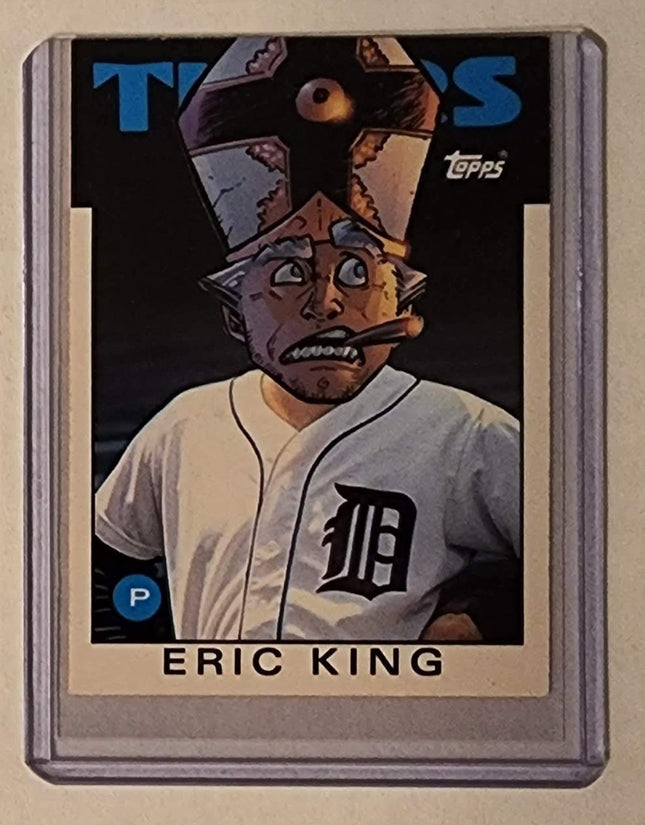
  • Eric King Pope Joint Tigers Original Collage Baseball Card Art by Pat Riot

    Pat Riot Eric King Pope Joint Tigers Original Collage Baseball Card Art by Pat Riot

    Eric King/ Pope Joint- Tigers Unique Hand-Embellished Collage Mixed Media on Vintage Baseball Card by Pat Riot. 2014 Stamped original Mixed Media Layered on Real MLB Topps Vintage Card With Pop Art Like: Eric King/ Pope Joint- Tigers

    $24.00

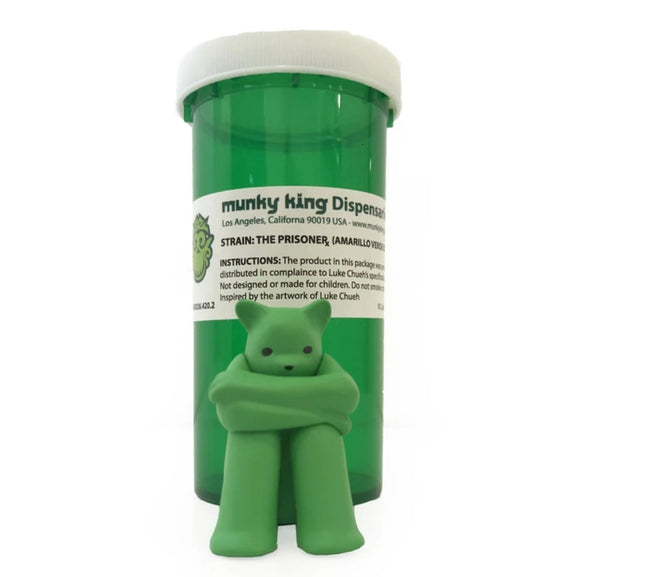
  • Kuma OG Amarillo Verde The Prisoner Drug Bear Art Toy by Luke Chueh

    Luke Chueh Kuma OG Amarillo Verde The Prisoner Drug Bear Art Toy by Luke Chueh

    Kuma OG The Prisoner Amarillo Verde Drug Bear Art Toy by Luke Chueh Limited Edition Vinyl Collectible Artwork by Street Graffiti Artist. 2017 Limited Edition Artwork of 438 with Cotton, Bag, and Tube. Based on Luke Chueh's original painting, The Prisoner ponders captivity in its many forms—physical, mental, or pharmaceutical. Post-traumatic stress disorder is a mental health problem that can develop after experiencing or witnessing a life-threatening event like combat, natural disaster, car accident, or sexual assault. And the dependency on prescription medications such as Percocet has led to widespread addiction problems. Kuma OG The Prisoner Amarillo Verde by Luke Chueh: Vinyl Expression of Emotional Confinement in Street Pop Art & Graffiti Artwork Kuma OG The Prisoner Amarillo Verde is a limited edition vinyl art toy created in 2017 by Luke Chueh, a Los Angeles-based artist known for blending dark emotional themes with clean, accessible design. This version of The Prisoner was produced in a run of 438 pieces and includes a cotton-lined pouch and a green prescription-style tube container, enhancing the toy’s commentary on medication, dependency, and the struggles of mental health. Inspired by Chueh’s original painting, The Prisoner represents a bear-like character locked in a pose of despair, hugging its knees with its head down. This green vinyl edition, subtitled Amarillo Verde, extends the series’ reflection on the psychological entrapment many face as a result of trauma and modern pharmaceutical culture, while contributing to the visual language of Street Pop Art & Graffiti Artwork. Pharmaceutical Symbolism and Emotional Language in a Vinyl Medium The Amarillo Verde colorway gives the piece a sterile, medicinal aesthetic, reinforced by its packaging in a translucent green prescription tube labeled with strain-like language. This not only ties the figure to the pharmaceutical world but also alludes to cannabis and alternative coping mechanisms. The bear's static, slumped position communicates resignation and detachment. Its form is simplified, yet every aspect—from its curved arms to its averted gaze—projects a vivid emotional landscape. The figure is not anthropomorphic in a traditional sense, but its expression is intensely human. By enclosing the figure in a mock prescription container, the artwork draws attention to how society addresses psychological pain: through containment and sedation, rather than resolution. Luke Chueh’s choice to use vinyl as the medium makes the figure both durable and intimate, offering a tactile presence that underscores its emotional weight. Luke Chueh and the Visual Narrative of Pain and Isolation Luke Chueh is a central figure in the art toy movement and Street Pop Art & Graffiti Artwork, using deceptively cute characters to explore profound emotional realities. Born in the United States, Chueh’s art frequently tackles depression, trauma, and the tension between inner life and external perception. The Prisoner series is a cornerstone of his commentary on mental health and pharmaceutical culture. This particular Amarillo Verde edition communicates a very specific kind of sadness—the kind masked by colorful pills and simplified diagnoses. It is deeply rooted in Chueh’s personal narrative and broader societal critique. The bear figure, repeated throughout his work, becomes an avatar for voiceless suffering, sitting quietly in its confinement, waiting for acknowledgment. This toy, though minimal in form, is maximal in meaning and speaks to the ability of street and pop artists to address contemporary crises through minimal, emotionally potent sculpture. The Prisoner as a Physical Object in the Vocabulary of Street Pop Art & Graffiti Artwork Kuma OG The Prisoner Amarillo Verde stands as a tactile commentary on mental health in an era of chemical coping. Each vinyl piece is packaged not only with care but with thematic intent—every element, from the labeling to the green plastic tube, reinforces the work’s conceptual core. It mirrors the experience of being prescribed and contained, offering a toy that acts as a physical artifact of emotional incarceration. It is not simply a figure to be displayed, but one to be felt and contemplated. Through his work, Luke Chueh continues to redefine how sculpture and collectible art can serve as powerful mediums for psychological expression. Within the evolving canon of Street Pop Art & Graffiti Artwork, this piece asserts that the most minimal forms often hold the deepest truths, inviting collectors and viewers to sit with the discomfort and recognize its weight.

    $320.00

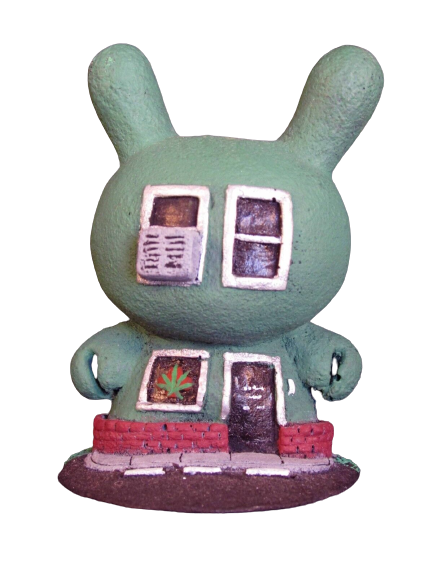
  • Cannabis Dispensary Original Dunny Town Art Toy by Task One

    Task One Cannabis Dispensary Original Dunny Town Art Toy by Task One

    Cannabis Dispensary Original Dunny Town Art Toy by Task One Kidrobot Vinyl & Plaster Art Toy Collectible Pop Artwork. 2013 Original Dunny Town Painted Plaster Kidrobot Custom Dunny Artwork Size Approximate 3x4 Town Cannabis Dispensary Original Dunny Art Toy by Task One Task One's Cannabis Dispensary Original Dunny Town Art Toy The "Cannabis Dispensary Original Dunny Town Art Toy" is a distinctive piece of work by the artist Task One, released in 2013, exemplifying his pioneering role in the art toy movement. This particular creation stands out as a symbol of the convergence between street pop art, graffiti artwork, and the burgeoning dialogue about cannabis culture. Task One, known for his customized Kidrobot Dunny figures, has crafted this piece with a keen eye for detail and a bold approach to subject matter, painting and sculpting with plaster to give life to a miniature replica of a cannabis dispensary in the form of a vinyl art toy. In this piece, Task One not only captures the essence of a cannabis dispensary's facade but also comments on the shifting societal perspectives towards marijuana. The storefront, complete with a cannabis leaf emblem and welcoming door, is a miniature homage to the dispensaries that have become commonplace in certain regions, reflecting broader changes in law and social attitudes. The Dunny, typically a blank, rabbit-like figure, is transformed into a canvas that challenges preconceptions about legality, medicine, and recreational drug use. Cultural Relevance and Artistic Innovation As an artist, Task One has consistently pushed the boundaries of the Dunny platform, utilizing it to explore and reflect on contemporary urban issues and themes. The "Cannabis Dispensary" is no exception; it's a piece that speaks to the heart of street pop art and graffiti artwork by taking a ubiquitous aspect of modern urban life and recontextualizing it within the art toy genre. This work is a clear reflection of the core values of street art—accessibility, community relevance, and a touch of the subversive. Furthermore, the collectible nature of this piece, being a limited edition release, adds to its allure for collectors keen to own artifacts at the intersection of art and cultural commentary. Task One's attention to the physical textures and colors of the dispensary, paired with the playful form of the Dunny, creates a collectible that is both a piece of pop artwork and a statement on contemporary societal shifts. Task One's "Cannabis Dispensary Original Dunny Town Art Toy" serves as a poignant narrative in the form of a collectible, embodying the ethos of street pop art where the lines between art, social commentary, and collectibility blur into a cohesive whole. This piece is a tribute to the unique aesthetic that Task One brought to the world of art toys and a snapshot of the cultural zeitgeist of its time. Task One's legacy endures through such works, influencing the dialogue within the street art community and among collectors of vinyl art toys worldwide.

    $310.00

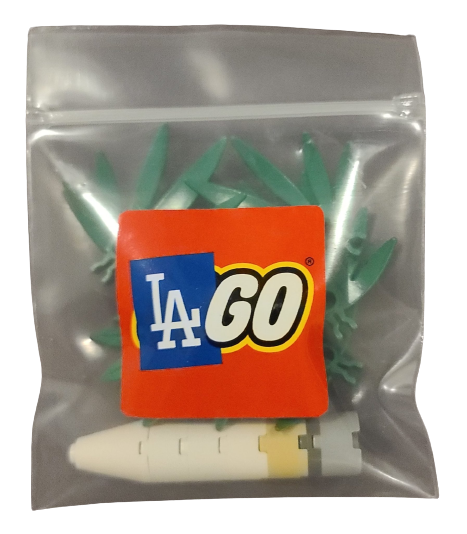
  • LAGO Dime Bag Marijuana Cannabis Lego Art Sculpture Object by Pat Riot

    Pat Riot LAGO Dime Bag Marijuana Cannabis Lego Art Sculpture Object by Pat Riot

    LAGO Dime Bag Limited Plastic Lego Cannabis Sculpture Artwork by graffiti street artist modern pop artist Pat Riot. Custom Bag Containing LAGO Joint and Cannabis Leafs, Strain Happy Place. Lego Like Artwork Resembling A Marijuana Cannabis Plant Clone. In Packaging.

    $165.00

Cannabis Marijuana & Weed Graffiti Street Pop Artwork

Cannabis, Marijuana & Weed in Street Pop Art & Graffiti Artwork

Cannabis has long served as a symbol of counterculture, rebellion, and creative liberation, making it a recurring and highly visible theme in Street Pop Art & Graffiti Artwork. From the politically charged murals of the 1970s to today’s designer vinyls and silkscreen editions, marijuana iconography has evolved from a taboo subject into a celebrated cultural motif. Artists working on city walls, skate decks, sticker packs, and gallery canvases often utilize marijuana imagery to explore ideas of freedom, identity, medicinal advocacy, and social justice. Leaf silhouettes, green color fields, rolling papers, and smoking figures have become instantly recognizable shorthand for themes of altered consciousness and anti-establishment sentiment.

Visual Language and the Iconography of Weed Culture

The cannabis leaf itself is one of the most reproduced images in street pop culture, found on graffiti stencils, paste-ups, and large-format murals across cities worldwide. Artists often merge this botanical form with pop symbols like cartoon eyes, flames, dollar signs, or celebrity portraits, creating a layered critique of capitalism, surveillance, and pleasure. Colors associated with marijuana culture—such as green, yellow, and black—are used not only for their aesthetic impact but to reinforce cultural alignment with reggae, hip-hop, and psychedelic art histories. Characters illustrated smoking joints or surrounded by clouds of smoke evoke both humor and introspection. Artists like Ron English and Buff Monster have integrated cannabis into surreal pop compositions, using it to exaggerate characters, soften social critique, and link lowbrow humor with high-art irony.

Cannabis and Subversive Messaging in Public Art

Beyond visual aesthetics, cannabis-themed Street Pop Art & Graffiti Artwork has historically served as a mode of protest. When marijuana was still criminalized across most regions, graffiti incorporating marijuana leaves or slogans was often layered with risk, symbolizing defiance of institutional control. It was not just a plant but a political badge of dissent. As legalization has expanded, artists have begun incorporating dispensary aesthetics and packaging references into their work, drawing attention to the commercialization of something once outlawed. Pop art portraits of politicians holding blunts or satirical dispensary ads are part of a new wave of visual critique. These images comment on hypocrisy and shifting cultural norms while continuing to honor weed as a tool of creative empowerment.

From Illegality to Legitimacy in Contemporary Art

As cannabis use has entered mainstream legality in many parts of the world, its role in Street Pop Art & Graffiti Artwork has shifted from subculture to commercial aesthetic. High-end galleries now feature cannabis-themed installations, limited-edition weed-inspired silkscreen prints, and collectible figures holding joints or bongs. Art toys and designer sculptures from artists like Sket One or Vandul often include stylized references to weed culture. Meanwhile, muralists and sticker artists continue to celebrate cannabis not only as a lifestyle icon but as a symbol of personal agency, mental escape, and historical struggle. Whether in raw tags or professionally framed pieces, the presence of marijuana remains a vibrant, evolving subject in the world of street-influenced pop visual language.

Footer image

© 2025 Sprayed Paint Art Collection,

    • Amazon
    • American Express
    • Apple Pay
    • Bancontact
    • Diners Club
    • Discover
    • Google Pay
    • iDEAL
    • Mastercard
    • PayPal
    • Shop Pay
    • Visa

    Login

    Forgot your password?

    Don't have an account yet?
    Create account