Child & Children
-
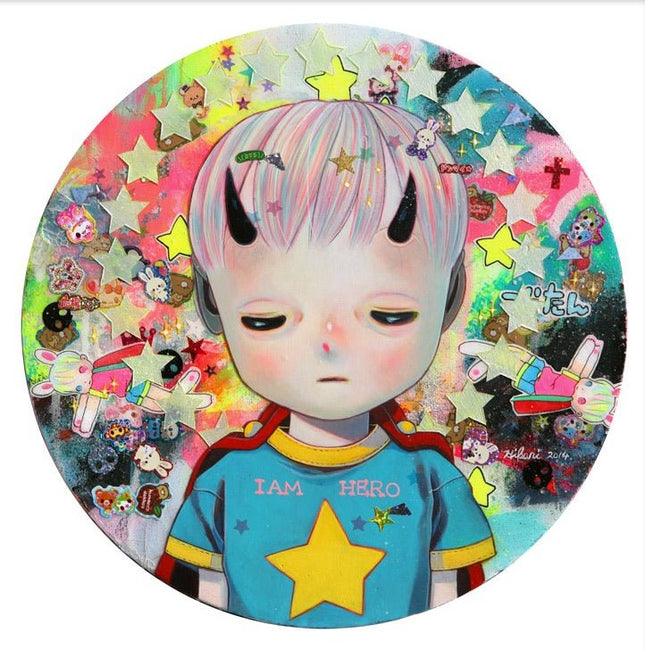
Hikari Shimoda Solitary Child 3 Archival Print by Hikari Shimoda
Solitary Child 3 Limited Edition Archival Pigment Prints on 310gsm Fine Art Paper by Hikari Shimoda Graffiti Street Artist Modern Pop Art. 2016 Signed & Numbered Limited Edition of 50 Artwork Size 12x12 "Solitary Child is a series of works, focused on my original theme of the inevitability of the Apocalypse. In this series, I am offering a new savior for humankind- she is a magical girl (Solitary Child #1) and a little boy hero (Solitary Child #3). In the world of my paintings, humanity has perished, as seen in the collage background, where there is an expressed chaos throughout. In these images, my saviors have come upon the dying human race. After the death of man, the world has found some relief from the turmoil that he has brought upon it. Meanwhile, mankind selfishly dreams of newfound happiness in his afterlife. In the mythology of my work, as humanity is destroyed, only one figure remains and that is the Messiah represented as a child. The magical girl was the first to be left alone after humanity was destroyed, left to deal with the despair and damage he left behind. Her eyes are shining and sparkling, but her stare is blank. In contrast, my hero’s eyes are closed ever so gently. To him, everything in the world is very chaotic and overwhelming. He feels all of its happiness, despair, hope, sadness, everything… in such a state, even the world’s savior must shut his eyes to it." - Hikari Shimoda Solitary Child 3 Archival Pigment Print by Hikari Shimoda Solitary Child 3 by Hikari Shimoda is a vivid embodiment of emotional symbolism and post-apocalyptic narrative rendered through the lens of Japanese Street Pop Art & Graffiti Artwork. Released in 2016 as a signed and numbered archival pigment print limited to 50 editions, the artwork measures 12x12 inches and is printed on 310gsm fine art paper. This circular piece, like its counterpart Solitary Child 1, presents a child as a spiritual savior in the wake of humanity’s collapse. However, where the magical girl of the first installment gazes outward with shining eyes, Solitary Child 3 closes his eyes to the world, weighed down by its chaos and sorrow. The Child Hero as a Symbol of Emotional Overload The central figure is a young boy depicted with softly closed eyes, a vacant expression, and flushed cheeks. His pale, almost ghostlike complexion contrasts with the electric vibrancy of the chaotic collage behind him. The boy wears a star-laden shirt with the phrase I AM HERO emblazoned across the chest. This phrase is not a declaration of ego but a burden of responsibility in a world shattered by human error. With small black horns rising from his head and a solemn composure, the character straddles the line between innocence and burdened divine messenger. Hikari Shimoda’s universe exists in a fantastical space where childlike visuals are infused with heavy existential themes. The surrounding background in Solitary Child 3 is littered with neon stars, stickers, anime-inspired creatures, and cultural flotsam. The visual chaos symbolizes the overstimulation of modern society and the debris left behind after its collapse. The messianic child stands amid this wreckage, absorbing it all in quiet contemplation. Unlike heroes who fight with swords or powers, this savior’s resistance lies in his inward emotional experience. Aesthetic Tension Between Kawaii and Catastrophe Shimoda blends traditional Japanese pop culture imagery with deeply contemporary anxieties. The work’s aesthetic borrows heavily from kawaii sensibilities—cute characters, colorful motifs, childlike wonder—but it is filtered through a lens of apocalypse, grief, and spiritual ambiguity. The character is not smiling. His closed eyes speak to a need to shut out the pain of the world, even as he must stand as its redeemer. The artist challenges the viewer to question what innocence means when it exists in the shadow of destruction, and what heroism requires when the world has already ended. Pop Iconography Transformed Through Spiritual Narrative Solitary Child 3 situates itself within the new wave of Street Pop Art & Graffiti Artwork by merging painterly techniques, manga aesthetics, and conceptual symbolism. Hikari Shimoda’s work challenges traditional Western ideas of what children represent in visual culture. Here, the child is not naive or oblivious but rather deeply aware, spiritually complex, and emotionally overwhelmed. The use of archival pigment print on heavy fine art paper preserves both the vibrancy and the texture of the original, allowing collectors to experience the intimacy and power of Shimoda’s vision. This print serves as a profound statement within Shimoda’s mythological continuum. It reminds the viewer that amid ruin, the last figure standing is not a politician or warrior, but a child—silent, enduring, and burdened with the sorrow of a fallen world.
$298.00
-
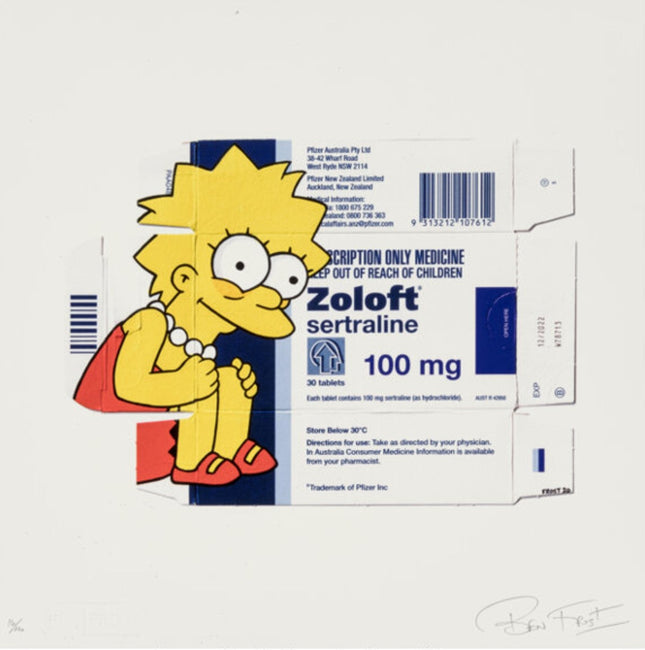
Ben Frost Social Distancing Archival Print by Ben Frost
Social Distancing Simpsons Archival Pigment Fine Art Limited Edition Print on 310gsm Bauhaus Cotton Rag Paper by Artist Ben Frost, Street Pop Art Graffiti. 2020 Signed & Numbered Limited Edition of 40 Artwork Size 12x12. Ben Frost (b. 1975) Social Distancing, 2020 Archival digital print on Bauhaus Cotton Rag Stock paper 12 x 12 inches (30.5 x 30.5 cm) (sheet) Ed. 40 is signed and numbered in pencil along the lower edge and published by the artist. Intersecting Pop Culture and Social Commentary Ben Frost's "Social Distancing Simpsons" archival pigment fine art print is a piercing examination of contemporary society through the lens of street pop art and graffiti. This limited edition print, numbered and signed, reflects Frost's unique and often controversial approach to his art, blending pop culture icons with subversive messaging. Created in 2020, "Social Distancing Simpsons" is a compelling artwork set against the backdrop of a global pandemic, a time when social distancing became a ubiquitous part of life. By incorporating a familiar character from "The Simpsons," Frost taps into the collective consciousness and comments on the impact of societal changes on popular culture. The choice of using archival digital print on Bauhaus Cotton Rag Stock paper, a high-quality material, ensures that the vibrancy of the piece and the precision of its details are preserved. The image of the Simpson's character juxtaposed with a pharmaceutical label indicates Frost's style, often involving the fusion of disparate elements to create a jarring yet thought-provoking visual statement. This 12 x 12 inches print is a perfect square that captures the essence of Frost's artistic statement: a critique of consumerism, mental health, and the pharmaceutical industry. Ben Frost's Signature Style Frost's work is characterized by his unflinching willingness to confront and challenge viewers with uncomfortable truths about modern life. In "Social Distancing Simpsons," the collision of the cartoon world with the stark reality of medication speaks to a generation that finds solace in nostalgia while grappling with present-day anxieties. With its limited edition of 40, the artwork becomes a collector's piece, a snapshot of an era defined by isolation and the search for connection. Reflection of Street Pop Art and Graffiti Frost's art is a reflection of street pop art and graffiti in its directness and its utilization of visual language that is immediate and accessible. Incorporating street art aesthetics into fine art prints blurs the lines between high art and more democratic expressions in urban environments. "Social Distancing Simpsons" is a testament to the power of this genre to communicate beyond words, offering a visual critique that is both universal and deeply personal. In summary, "Social Distancing Simpsons" by Ben Frost is more than just an artwork; it is a commentary on the times, a mirror held up to the complexities and contradictions of contemporary life. Through his expert blending of pop culture references with cutting social commentary, Frost solidifies his place as a significant voice in street pop art and graffiti artwork. This piece, in particular, stands as a poignant reminder of 2020, capturing the essence of a moment that has left an indelible mark on society.
$684.00
-
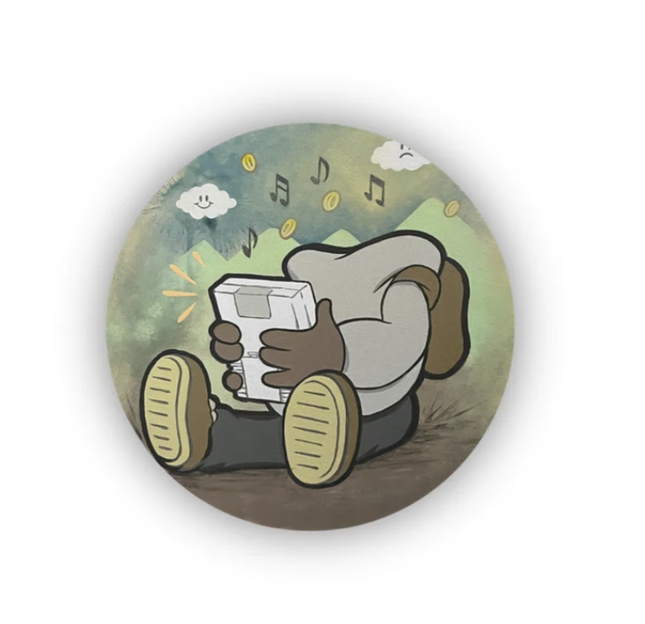
Vandul Gameboi Vandul Original Acrylic Painting by Vandul
Gameboi Vandul Original Acrylic Painting by Vandul One of a Kind Artwork on Round Stretched Canvas by Street Art Pop Artist. 2022 Signed Original Round Acrylic Original Painting Size 12x12 The Artistic Essence of Vandul's "Gameboi Vandul" in Street Pop Art Culture In the vibrant landscape of street pop art, few pieces capture the playful spirit and reflective nostalgia quite like "Gameboi Vandul," an original acrylic painting by the street artist known simply as Vandul. This one-of-a-kind artwork, created in 2022, is a signed original that brings graffiti art's aesthetic and pop culture sensibilities into a harmonious visual experience. Presented on a 12x12 inch round stretched canvas, Vandul's piece is a compact yet powerful expression of street art's influence on modern pop artistry. "Gameboi Vandul" is not just a painting; it's a cultural statement that blends the vintage charm of handheld gaming with the raw edge of street art. The artwork depicts a character engrossed in a game, surrounded by a serene outdoor scene that contrasts with the urban grittiness often associated with graffiti. The choice of a round canvas breaks traditional boundaries, just as street pop art breaks conventional artistic norms. The circular shape adds a dynamic element, guiding the eye inward to the focal point — the character and his gaming device — and reflecting the immersive nature of both art and play. Vandul's Creative Process and Impact on Street Art Vandul's creative process involves a deep understanding of the cultural icons that resonate across generations. "Gameboi Vandul" takes a widely recognized emblem of youth and technology — the Gameboy — and reimagines it through the lens of street pop art. The artist's use of acrylic paints gives the piece a brightness and depth often seen in graffiti artwork, with bold lines and solid colors that pop against the canvas. Vandul's work is known for its ability to evoke a sense of nostalgia while commenting on the present, and this piece is no exception. His commitment to authenticity and originality underscores the impact of Vandul's work on the street art scene. His pieces often feature characters that are both a reflection of himself and the broader human experience. In "Gameboi Vandul," the character's engrossment in the game serves as a metaphor for the escapism in art and gaming. The artwork resonates with viewers who find solace in life's simple pleasures, suggesting a universal connection that street pop art and graffiti artwork excel in portraying. Collectibility and Significance of "Gameboi Vandul" As a collectible, "Gameboi Vandul" is significant in street pop art. Vandul's decision to release the painting as a limited signed original adds to its exclusivity and appeal as a collector's item. The artwork symbolizes the fusion between contemporary street art and pop culture, making it desirable for fans of both genres. Vandul's work, with its distinctive style and thoughtful composition, continues to contribute to the narrative of street pop art as a form of valuable and impactful artistic expression. In an art market where street pop art and graffiti artwork are gaining increasing recognition and value, Vandul's "Gameboi Vandul" stands out as a testament to the enduring allure of street-inspired creations. The painting's presence in the art community serves as a reminder of the expressive power of visual art, the importance of preserving cultural memories, and the unifying aspects of shared experiences, be it through gaming or the appreciation of art. In the more excellent discourse of street pop art, Vandul's "Gameboi Vandul" is a compelling illustration of how artists can bridge the gap between street culture and the refined space of galleries. The artwork captures the playful essence of street art, the connectivity of pop culture, and the artist's personal touch, making it a vibrant addition to the contemporary art scene. Vandul's work exemplifies the potential of street pop art to transcend its origins, creating a dialogue that stretches across time, culture, and the very definition of art itself.
$554.00
-
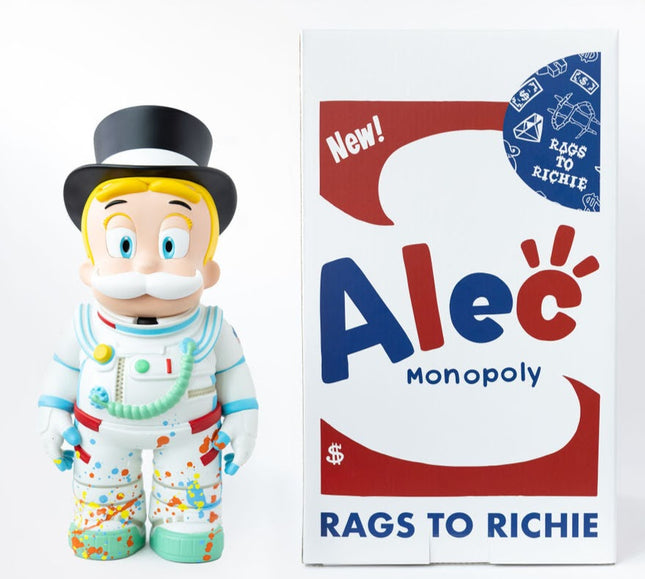
Alec Monopoly Brand Space Man Richie Hand Finished HPM Art Toy by Alec Monopoly Brand
Space Man Richie Hand Finished HPM Art Toy by Alec Monopoly Brand Limited Edition Vinyl Sculpture Collectible Artwork by Pop Street Artist. 2023 Hand Painted Finish Limited Edition of 250 HPM Artwork Size 6x12 New In Box Stamped/Printed We are thrilled to present to the world the prodigious work of Alec Monopoly, as he unveils “Space Man Richie,” the inaugural Art Collectible meticulously crafted solely for his “Rags to Richie” NFT Community. This exquisitely constructed Art Figure epitomizes innovation and ingenuity, and is poised to revolutionize and expand the horizons of Phygital Art, a burgeoning genre that seamlessly blends the physical and digital realms. “Space Man Richie” draws inspiration from the much-celebrated and venerated character within the “Rags to Richie” universe. The "Legendary" Space Man Richie character has captured imaginations with its whimsical and adventurous persona. What makes this art figure truly stand out is the attention to detail, and the incorporation of signature elements from its lineage; it is embellished with the emblematic Rags to Richie logo, which is proudly stamped on the foot of the character. This seminal release marks an unprecedented convergence of Web3 and Blue Chip Art. Web3, or the decentralized web, represents the new era of internet technologies that are based on blockchain, while Blue Chip Art refers to high-value and esteemed artworks that are often considered safe investment bets. By bridging these domains, Alec Monopoly illustrates how innovative technologies can amalgamate with traditional art forms to create a new wave of collectibles that resonate across a diverse audience. To add another layer of depth and context to Space Man Richie, Alec Monopoly collaborated with the acclaimed Director An Le, who has curated an animated short film to introduce this character. Through captivating visuals and storytelling, An Le’s film serves as a gateway into the enthralling world of Space Man Richie, giving viewers an insight into the character’s origins, adventures, and what it symbolizes within the broader “Rags to Richie” universe. Furthermore, true to Alec Monopoly’s commitment to excellence and creativity, “Space Man Richie” is enclosed in an outer box that has been fastidiously designed by Alec himself. This box is not just a protective covering; it is a work of art in its own right. It pays tribute to one of the legends of the art world, Andy Warhol, and his celebrated Brillo Box. This inclusion adds a rich historical touch and serves as a homage to the art world's heritage. Additionally, it doubles as a complementary piece of art, which can be proudly displayed alongside the Space Man Richie figure, thereby elevating the aesthetic value of the entire ensemble. With the introduction of “Space Man Richie,” Alec Monopoly has deftly blended creativity, technology, and tradition to present a collectible that transcends boundaries. This piece is not just an art figure; it is a statement, a tribute, and a testament to the limitless possibilities of art in the modern era.
$3,380.00 $2,873.00
-
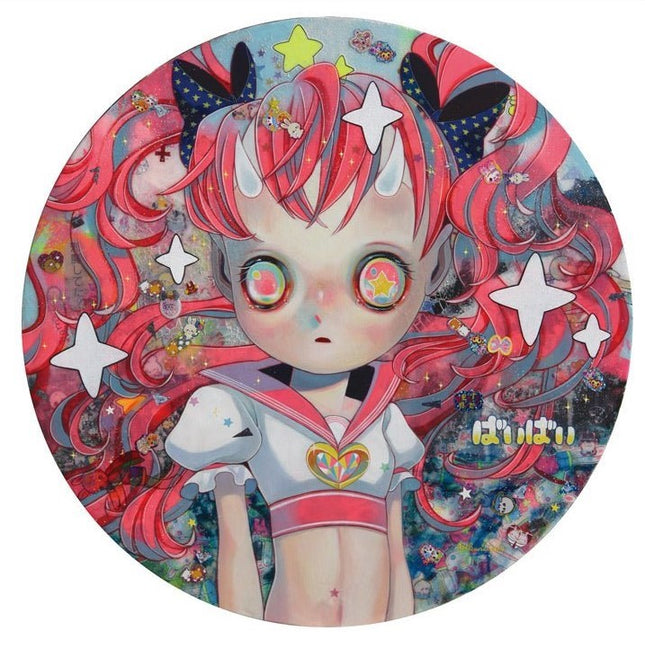
Hikari Shimoda Solitary Child 1 Archival Print by Hikari Shimoda
Solitary Child 1 Limited Edition Archival Pigment Prints on 310gsm Fine Art Paper by Hikari Shimoda Graffiti Street Artist Modern Pop Art. 2016 Signed & Numbered Limited Edition of 50 Artwork Size 12x12 "Solitary Child is a series of works, focused on my original theme of the inevitability of the Apocalypse. In this series, I am offering a new savior for humankind- she is a magical girl (Solitary Child #1) and a little boy hero (Solitary Child #3). In the world of my paintings, humanity has perished, as seen in the collage background, where there is an expressed chaos throughout. In these images, my saviors have come upon the dying human race. After the death of man, the world has found some relief from the turmoil that he has brought upon it. Meanwhile, mankind selfishly dreams of newfound happiness in his afterlife. In the mythology of my work, as humanity is destroyed, only one figure remains and that is the Messiah represented as a child. The magical girl was the first to be left alone after humanity was destroyed, left to deal with the despair and damage he left behind. Her eyes are shining and sparkling, but her stare is blank. In contrast, my hero’s eyes are closed ever so gently. To him, everything in the world is very chaotic and overwhelming. He feels all of its happiness, despair, hope, sadness, everything… in such a state, even the world’s savior must shut his eyes to it." - Hikari Shimoda Solitary Child 1 Archival Pigment Print by Hikari Shimoda Solitary Child 1 is a haunting yet luminous work by Japanese artist Hikari Shimoda, executed as a limited edition archival pigment print on 310gsm fine art paper in 2016. Measuring 12x12 inches and part of a signed and numbered edition of only 50 pieces, the print is an exemplary artifact of modern Street Pop Art & Graffiti Artwork. Hikari Shimoda’s visual language is deeply influenced by anime, manga, and the traditions of Japanese pop culture, yet she transcends those frameworks by embedding layered commentary on psychological turmoil, existential despair, and the fractured identity of post-apocalyptic innocence. A Childlike Messiah in a Dystopian Aftermath Solitary Child 1 features a central character presented with almost overwhelming intensity: a young girl in a magical girl costume with heart motifs and sailor-style attire. Her pink and red hair bursts outward, saturated with visual energy, covered in stars and cosmic motifs. The round composition suggests a window into another dimension, one that has already processed the collapse of humanity. Her large, glowing eyes, rendered with 3D-like chromatic effects, stare blankly ahead, neither judgmental nor mournful. This emptiness is intentional, a thematic thread in Shimoda’s work meant to evoke both detachment and forced resilience. Within the background—a swirling collage of detritus, symbols, and abstract fragments—the chaos of a forgotten civilization bleeds through. Shimoda situates her character as both witness and survivor. The child does not weep for the world but exists beyond it, as its last remnant or perhaps as its reluctant redeemer. Her eyes, sparkling with galaxies and stars, are full of wonder and terror. Her small frame is juxtaposed against the density of visual information around her, reminding the viewer that she is no longer a child in the traditional sense but a totem for hope, destruction, memory, and transcendence. The Narrative of the Apocalypse and Magical Realism This print is part of Shimoda’s larger Solitary Child series, which contemplates the inevitable downfall of humankind and the rise of symbolic children as messianic figures. Her use of magical girl archetypes and child heroes blends contemporary kawaii aesthetics with harrowing existential themes. The result is a visual paradox: alluring and innocent on the surface, but deeply reflective of societal failure, emotional vacancy, and the search for meaning after cultural ruin. Solitary Child 1 is more than a work of visual pop; it is a philosophical reflection clothed in vibrant, hallucinogenic textures. A Singular Voice in Pop Apocalyptic Visual Language Hikari Shimoda’s Solitary Child 1 stands at the intersection of anime fantasy, pop aesthetics, and postmodern emotional realism. Printed with extraordinary precision on archival paper, the piece balances delicate brush textures with high-impact digital color precision. Each work in the edition is hand-signed and individually numbered, preserving its place in the limited pantheon of collectible Street Pop Art & Graffiti Artwork. As Shimoda continues to rise in global prominence, pieces like Solitary Child 1 serve as portals into her richly imagined mythos—where apocalyptic desolation and magical innocence collide to question what it means to save a world that cannot save itself.
$298.00
-
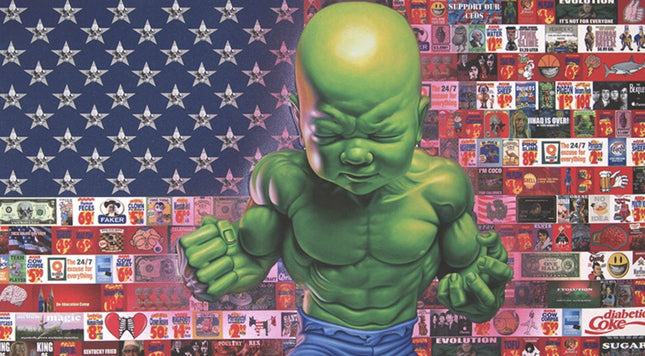
Ron English- POPaganda All-American Temper Tot HPM Embellished Giclee Print by Ron English- POPaganda
All-American Temper Tot Artwork Giclee w/ HPM Airbrush Spray Paint Embleshment Limited Edition Print on Fine Art Paper by Pop Culture Graffiti Artist Ron English- POPaganda. Hand-painted multiple with airbrush spray embellishment around the Hulk-like Temper Tot. Created to celebrate the mural that Ron created on the Houston Bowery Wall in NYC.
$360.00