


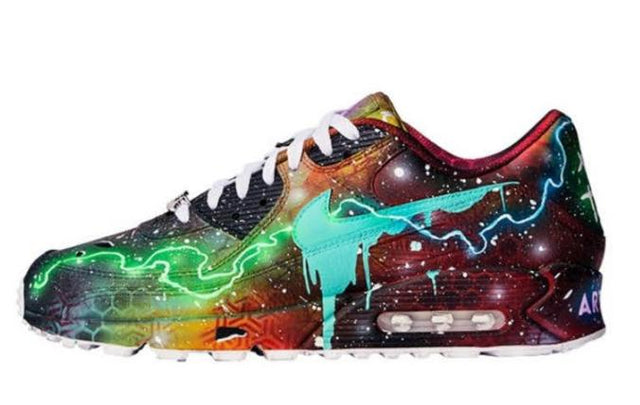
Shoes, Sneakers & Clothing Graffiti Street Art Fashion
Sneakers have become a popular subject in both graffiti art and pop art. Here's a brief overview of how they have been incorporated into these art forms: Graffiti Art: Sneakers have long been a favorite subject of graffiti artists, who use them as a canvas for their designs. Often, sneakers are depicted on a larger-than-life scale and decorated with vibrant colors, patterns, and designs. Some graffiti artists use sneakers to comment on consumer culture, while others appreciate the aesthetic of these iconic shoes. Pop Art: In pop art, sneakers often symbolize consumer culture and mass production. Artists like Andy Warhol and Roy Lichtenstein incorporated images of sneakers into their artwork, often emphasizing the graphic design and branding of the shoes. Other pop artists have used sneakers as a way to explore ideas of youth culture and fashion. Graffiti Art: In addition to using sneakers as a canvas for their designs, graffiti artists have also been known to create murals or installations featuring oversized sneakers. For example, the Brazilian artist Eduardo Kobra created a mural in New York City's Bryant Park that depicted a giant sneaker with a colorful design. Graffiti artists have also used sneakers to make political statements, such as in the case of the French artist Ludo, who created a mural of a Nike shoe with a missile attached to it to comment on the role of corporations in war. Pop Art: Pop artists have incorporated images of sneakers into their work in various ways. Andy Warhol, for example, created a series of prints featuring the Converse All-Star sneaker. On the other hand, Roy Lichtenstein used sneakers to explore the visual language of advertising, incorporating bold graphic elements and text into his paintings. Other pop artists, such as Keith Haring, have used sneakers to express street culture and youth fashion ideas. In recent years, sneakers have become even more prominent in art, with major museums and galleries hosting exhibitions dedicated to the subject. For example, the Brooklyn Museum hosted a show in 2015 called "The Rise of Sneaker Culture" that explored the history and cultural significance of sneakers, while the Saatchi Gallery in London hosted a show in 2019 called "Beyond the Streets" that featured works by graffiti artists and street artists, many of which featured sneakers as a motif.
The Intersection of Fashion and Street Pop Art
Shoes and clothing have long served as essential expressions of identity and culture, and in the realm of Street Pop Art and Graffiti Artwork, they assume a particularly poignant role. The urban landscape serves as a canvas not just for murals and tags but for the sartorial choices of its inhabitants, who often draw inspiration from the vibrant visuals of street art. The synergy between fashion and street art is symbiotic; each influences and reinterprets the other, creating a loop of inspiration that fuels the creative fires of both artists and designers. This relationship has led to the streets becoming a runway where everyday people exhibit the latest trends influenced by the art on the walls around them. Streetwear, in particular, has its roots deeply embedded in the soil of urban art. It is an aesthetic born out of necessity, practicality, and a desire to stand out, much like the Street Pop Art that colors the cities. The bold graphics, oversized silhouettes, and striking colors that define streetwear echo the characteristics of street art, creating a visual language shared by both. In this way, shoes and clothing become wearable art, a form of personal expression that allows individuals to project their tastes, beliefs, and affiliations.Cultural Dialogue Through Fashion and Graffiti
The dynamic discourse between shoes, clothing, and street art extends beyond aesthetics, delving into the cultural and political. Streetwear brands have often utilized the iconography of street art in their designs, sometimes directly collaborating with street artists to create pieces that carry a message. These messages can range from calls for social justice to celebrations of diversity, mirroring the often politically charged nature of Graffiti Artwork. This fusion of fashion and art brings the messages of the streets to a broader audience and adds a layer of depth to the clothing itself, transforming a hoodie or a pair of sneakers into a statement piece. Moreover, artists' use of shoes and apparel as mediums for their art has become increasingly prevalent. Customized sneakers and hand-painted jackets are familiar sights, especially in areas where the street art culture thrives. These pieces of clothing are treasured for their aesthetic appeal, uniqueness, and the artist's personal touch. In many cases, these customized items become collectors' pieces, sought after for their artistic value as much as their fashion statement.Impact of Street Art on Contemporary Fashion
The influence of Street Pop Art on contemporary fashion is unmistakable. Designers frequently draw inspiration from the work of street artists, incorporating elements of graffiti and pop art into their collections. This has led to a proliferation of street art-inspired motifs in mainstream fashion, with high-end and fast fashion brands adopting the streets' raw, edgy vibrance. The result is a blurring of lines between high art and everyday wear, with shoes and clothing becoming a canvas for artistic expression that is accessible to all. The collaboration between street artists and fashion brands has also resulted in a more inclusive approach to design. Street art is inherently democratic, often exploring themes of inclusivity and representation, and when these themes are translated into clothing, they contribute to a more diverse fashion landscape. Shoes and apparel inspired by Street Pop Art often challenge traditional norms and stereotypes, promoting a fashion ethos that is bold, inclusive, and expressive.Future Trends in Streetwear and Street Art
As street art continues gaining legitimacy and recognition in the art world, its relationship with fashion will likely deepen. The future may see even greater collaboration between street artists and fashion designers, with more brands recognizing the value of street art's raw and unfiltered aesthetic. Additionally, the rise of sustainable and ethical fashion parallels street art's grassroots, community-focused nature, suggesting a future where the convergence of shoes, clothing, and street art also encompasses a commitment to social and environmental responsibility. In essence, shoes and clothing within the context of Street Pop Art and Graffiti Artwork represent a powerful form of cultural expression that is continuously evolving. As we move forward, the symbiosis between fashion and street art promises to engender new forms of expression, challenge existing paradigms, and enrich the cultural landscape with vibrant, thought-provoking designs that resonate on the streets and beyond.
The Fashion of Graffiti Art & Street Art
Undoubtedly, the footwear industry s is one of the most profitable commercial fields. Sneaker shoes, in particular, thanks to partnerships with major artists, are increasingly seen as pieces of art rather than a plain pair of shoes. Today, more than ever, the sneaker market is thinking outside the box and invites artists to collaborate in producing a usually limited and, as a result, collective series of footwear. Brands like Vans, Nike, Adidas, and Converse have a long history of such partnerships. Street artists such as Mr. Brainwash STA, SH, and other artists (e.g., Andy Warhol and Keith Haring) team up with footwear brands; thus, the shoes' surface becomes their new canvas. This creates more relevance and a more significant engagement with the public, as purchasing such pairs is based on something other than practicality but mainly on the concept behind them. Shoes and clothing have been a popular subject in both graffiti art and pop art. In both art forms, they are often used as symbols of style, individuality, and identity. In graffiti art, shoes and clothing are often depicted to represent the unique style and identity of the artist or the culture they are a part of. Graffiti artists may use clothing and shoes to express their individuality, make a statement about their social and political views, or pay homage to a particular subculture or style. In pop art, shoes, and clothing are often used as symbols of consumer culture and the influence of advertising and marketing on society. Pop artists often depict products like shoes and clothing in their artwork to comment on the impact of consumerism and the commodification of everyday objects. Artists like Keith Haring and Jean-Michel Basquiat used clothing and shoes to explore race, identity, and class issues in their work. Haring, in particular, often used sneakers to symbolize urban culture and the importance of self-expression through personal style. In addition to being a symbol of style and identity, shoes and clothing can also be used to convey a specific message in graffiti and pop art. For example, wearing worn-out shoes or torn clothing could represent poverty or social inequality. In pop art, artists such as Andy Warhol and Roy Lichtenstein used shoes and clothing to explore the themes of mass production and the influence of consumer culture on society. Warhol famously created a series of screen prints featuring Campbell's soup cans and Brillo boxes, while Lichtenstein incorporated comic book images, including depictions of clothing and shoes, into his artwork. The use of shoes and clothing in graffiti and pop art has also influenced fashion and streetwear. Streetwear brands often incorporate graffiti-inspired designs and pop art-inspired graphics into their clothing lines, creating a fusion between fashion, art, and urban culture. In conclusion, shoes and clothing have played an essential role in graffiti and pop art, symbolizing style, identity, consumer culture, and social commentary. Their influence can still be seen today in art, fashion, and streetwear.