


Cookie Monster – Cultural Icon and Pop Satire in Street Pop Art & Graffiti Artwork
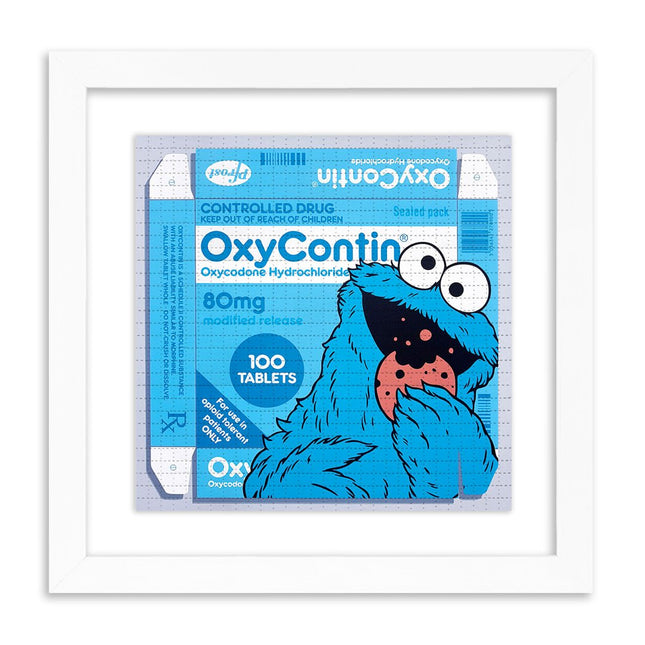
Cookie Monster, originally created by Jim Henson and introduced on American television in 1969 through Sesame Street, has grown far beyond children’s programming to become a recurring symbol in Street Pop Art & Graffiti Artwork. With his wild eyes, fuzzy blue fur, and singular obsession with cookies, the character has long captured the imagination of artists seeking to comment on consumption, identity, and childhood nostalgia. In urban art, Cookie Monster is often removed from his original context and reinterpreted as a vessel for both parody and social critique. His exaggerated traits—gluttony, impulse, and humor—make him a versatile figure for artists to explore themes of addiction, capitalism, and cultural decay through a lens that is familiar yet twisted.
From Television Mascot to Urban Myth
Street artists have frequently used Cookie Monster to challenge expectations and push boundaries. Often painted on brick walls, dumpsters, or alley corners, he appears in unauthorized murals, sticker bombs, and wheatpaste installations. Artists like Ron English and street collectives around the globe have manipulated his form, placing him in situations far removed from Sesame Street—eating money, tangled in police tape, or staring at a crumbling skyline. In these works, Cookie Monster becomes an anti-hero, a metaphor for unchecked desire or innocence corrupted by modern life. His googly eyes and insatiable appetite symbolize the absurdity of mass media and the saturation of commercial messaging. Within Street Pop Art & Graffiti Artwork, this shift from puppet to parody transforms him into a weapon of commentary, wielded through humor and visual contradiction.
Visual Language, Commercial Roots, and Artistic Subversion
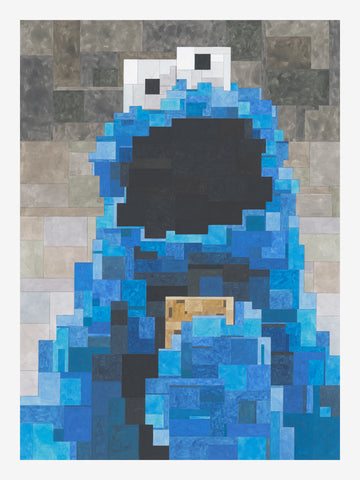
The character’s original design—simple shapes, vibrant color, and emotive expression—lends itself naturally to bold stencil work, silkscreen prints, and large-scale mural adaptations. Cookie Monster’s image often appears alongside other pop icons, fusing him with luxury logos, fast food branding, or iconic fine art references. This juxtaposition fuels the satirical nature of pop-infused graffiti, allowing artists to critique the very systems that helped produce such enduring mascots. By positioning Cookie Monster in high fashion outfits or next to political symbols, artists recast him as a puppet of modern culture—both product and protest. This practice is emblematic of Street Pop Art & Graffiti Artwork, which thrives on remixing symbols of comfort into vehicles of disruption.
Cookie Monster as a Canvas for Rebellion and Reflection
In the context of contemporary urban expression, Cookie Monster represents more than a children’s character. He is a mirror held up to a culture of consumption and commodification, made more powerful by the innocence he once represented. Whether rendered in wheatpaste collages or as part of a high-gloss giclee print, his image carries a legacy that artists tap into with layered intent. As part of the broader Street Pop Art & Graffiti Artwork tradition, Cookie Monster operates on multiple levels—comic relief, visual punchline, and social critique. His evolution from educational mascot to urban avatar underscores how deeply embedded such figures are in public consciousness and how effectively they can be retooled to express dissent, critique systems, and entertain through irony.