Designer Fashion

36 artworks

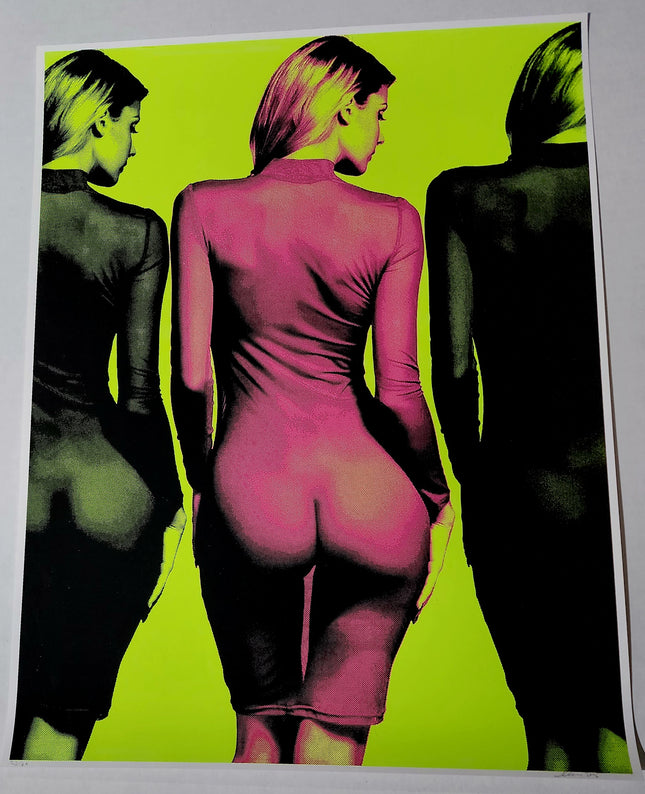
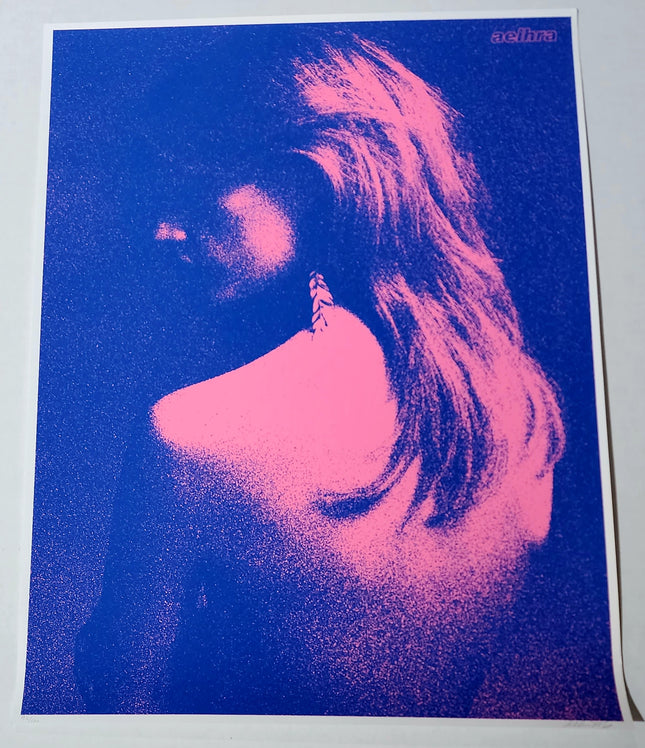
  • Behind You Silkscreen Print by Aelhra

    Aelhra Behind You Silkscreen Print by Aelhra

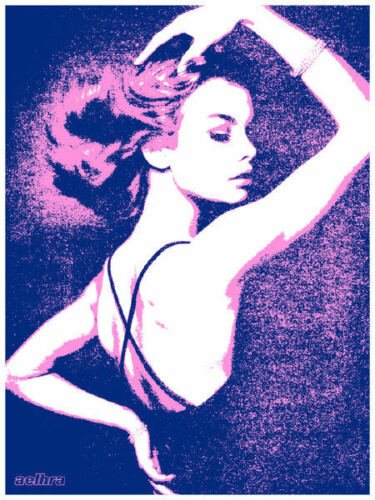
    Behind You Limited Edition 3-Color Hand-Pulled Silkscreen Print on Fine Art Paper by Aelhra Graffiti Street Artist Modern Pop Art. 2015 Signed & Numbered Limited Edition of 30 Artwork Size 18x24

    $218.00

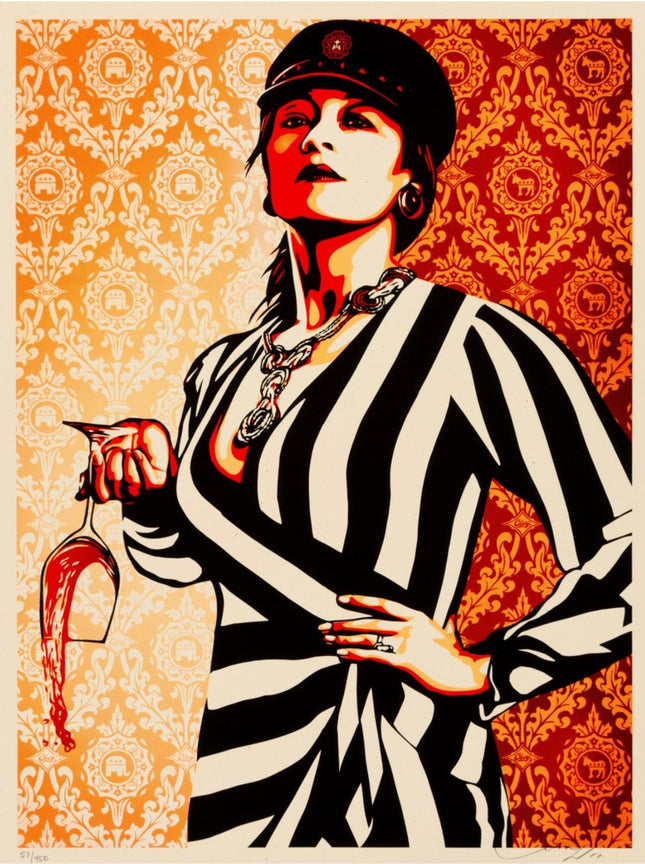
  • These Parties Disgust Me Silkscreen Print by Shepard Fairey- OBEY

    Shepard Fairey- OBEY These Parties Disgust Me Silkscreen Print by Shepard Fairey- OBEY

    These Parties Disgust Me 2-Color Hand-Pulled Limited Edition Silkscreen Print on Fine Speckletone Art Paper by Artist Shepard Fairey Street Art OBEY Artwork. 2010 Signed & Numbered Screen Print These Parties Disgust Me, 2010 Screenprint in colors on speckled cream paper 24 x 18 inches (61 x 45.7 cm) (sheet) Ed. 450 Signed, numbered and dated in pencil along the lower edge Published by Obey Giant, Los Angeles This image is loosely a sequel to the Peace Guard from 2008 and serves as a reminder that pushing for peace, ironically, requires a militant vigilance itself. I love the juxtaposition of seemingly contradictory symbols. Peace is victory without war. It’s a good day when you don’t have to use your A.K.! – Shepard

    $861.00

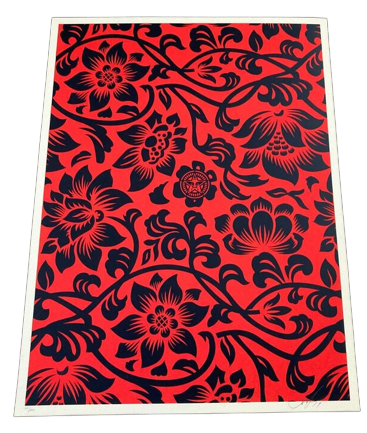
  • Floral Takeover 2017 Black Red Silkscreen Print by Shepard Fairey- OBEY

    Shepard Fairey- OBEY Floral Takeover 2017 Black Red Silkscreen Print by Shepard Fairey- OBEY

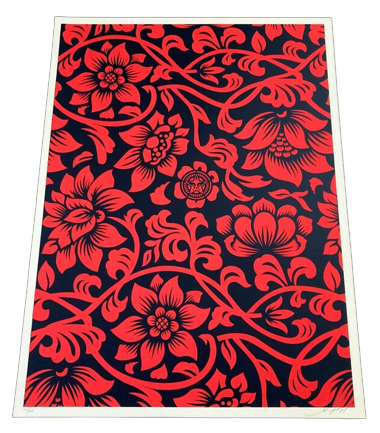
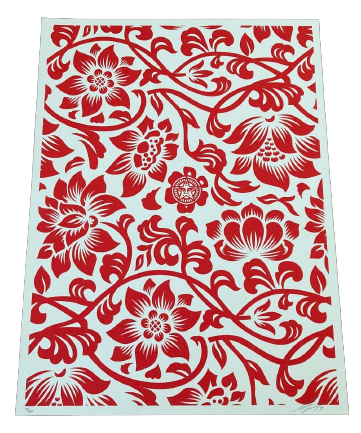
    Floral Takeover 2017 Black Red Silkscreen Print by Shepard Fairey- OBEY Hand-Pulled 2-Color on Cream Speckletone Fine Art Paper Limited Edition Artwork Obey Pop Culture Artist. 2017 Signed & Numbered Limited Edition of 200 Artwork Size 18x24 Silkscreen Print "I'm always creating new patterns for my street installs and fine art pieces. I used to buy discontinued wallpaper, but now I design and print my own. These look nice as stand-alone prints, not just repeat patterns, so I'm releasing a 200-print edition of four versions. Buy a couch to match… coming soon… just kidding!" -Shepard Fairey- OBEY. The "Floral Takeover 2017 Black Red Silkscreen Print" by Shepard Fairey encapsulates the interplay of aesthetics within Street Pop Art and graffiti Artwork, signifying a profound narrative through its intricate design and bold color scheme. This piece exemplifies how traditional elements can be transformed into a new cultural vocabulary that challenges and expands the boundaries of fine art. Featuring a rich, vibrant red background overlaid with a contrasting black floral pattern, the artwork is a striking visual statement that captures the viewer's attention. Shepard Fairey, a pivotal figure in the street art movement, often incorporates motifs that reflect social and political activism. His work is known for its ability to decorate and provoke thought and conversation, a characteristic quintessential to the graffiti art movement. Silkscreen printing allows for the precision and consistency necessary for disseminating his message, harkening back to his roots in skateboarding and punk rock culture, where screen-printed designs were a means of rebellion and identity. Silkscreen printing used in this artwork is also a nod to the pop art tradition, a method popularized by artists like Andy Warhol, who sought to erase the boundaries between 'high' art and 'low' cultural imagery. Fairey's "Floral Takeover" is a contemporary continuation of this tradition, seamlessly blending street art's spontaneity and edginess with pop art's mass appeal and commercial aesthetics. The result is a striking work of art that is accessible and deeply layered in meaning. Through this print, Fairey extends the dialogue of street art into the more permanent and collectible domain of fine art prints, allowing for the transitory nature of street graffiti to be preserved and appreciated over time. The artwork becomes an important cultural artifact, representing the ever-evolving landscape of Street Pop Art and graffiti Artwork, embodying the transformative power of art in public spaces and the ongoing conversation between art and society.

    $718.00

  • High Time- High All Day Giclee Print by Marwan Shahin

    Marwan Shahin High Time- High All Day Giclee Print by Marwan Shahin

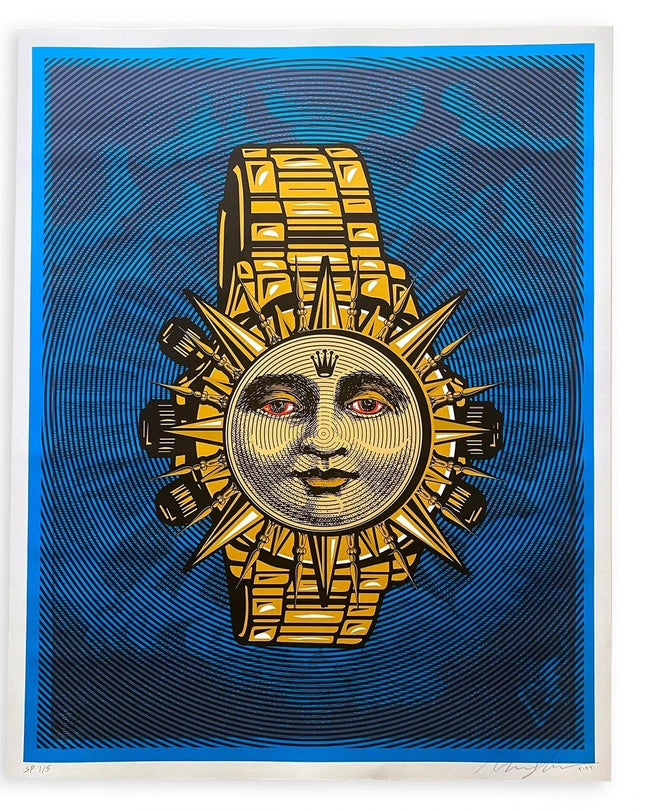
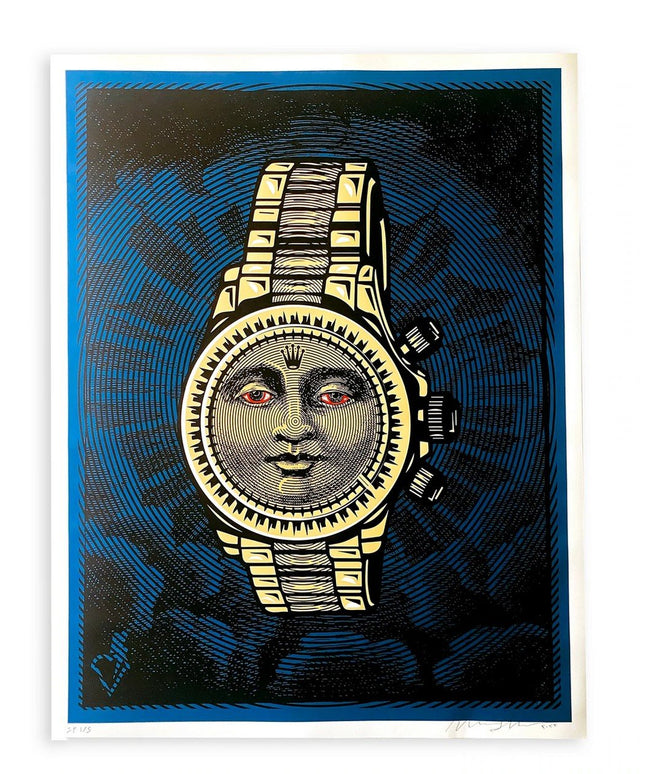
    High Time- High All Day Artwork Giclee Limited Edition Print on Photographique Rag Paper by Pop Culture Graffiti Artist Marwan Shahin. Marwan Shahin's "High All Day" Collectors edition of only 5 prints of each. From High Time series, Debuting in 2015, Released for the first time produced by Shahin Studios, released in celebration of the new year. Only 5 Available of each2015 18 inches x 22 inches Giclée on Photographique Rag Signed, Numbered, Embossed and Branded High Time: High All Day by Marwan Shahin – A Radiant Fusion of Time, Status, and Enlightenment High All Day is a standout piece from Marwan Shahin’s acclaimed High Time series, crafted in 2015 and released in an extremely limited edition of only five prints. Produced on 18 x 22 inch Photographique Rag paper and finished with Shahin’s signature embossing, branding, and numbering, this giclée print extends the series’ surreal reinterpretation of luxury timepieces as profound cultural and symbolic artifacts. In High All Day, Shahin replaces the watch dial with a celestial face encircled by golden rays, transforming the wristwatch into a sun deity—a visual metaphor for illumination, opulence, and modern obsessions with visibility and value. The radiant gold of the spiked bezel bursts outward like a sun crown, each point merging elements of a timepiece's mechanics with solar symbolism. At the center of the dial, the intricately detailed face gazes out hypnotically with spiral-rendered features and reddened eyes, echoing the dreamy haze found in High All Night. However, where High All Night explores the twilight haze of indulgence, High All Day evokes the blinding clarity of the spotlight—fame, materialism, and constant awareness. Time as Power, Time as Currency Marwan Shahin continues his exploration of modern symbolism through the framework of Street Pop Art & Graffiti Artwork. The work critiques the societal glorification of luxury, fame, and hyper-productivity. The gilded wristwatch—a universal symbol of affluence and achievement—is elevated into a mythic idol, reminiscent of both solar gods and corporate logos. The crown at the top of the watch dial references Rolex, reinforcing the link between luxury branding and cultural deification. This stylized anthropomorphization of the timepiece underscores the duality of time as both liberator and captor. The spiraling background, rendered in precise linework, creates a kinetic energy around the figure. The radial blue field suggests motion, light, and expansion, as if the sun-like figure is actively emitting influence. This energy resonates with Shahin’s intent to depict how fame and status radiate outward—both elevating and consuming those who orbit them. Graffiti Philosophy Meets Symbolic Precision As with the rest of the High Time series, High All Day is grounded in a meticulously detailed aesthetic. The symmetry of the design, the geometric rhythm of the band, and the finely etched facial features show Shahin’s background in architecture and classical draftsmanship. Yet it remains rooted in street pop culture through bold iconography and visual commentary. The glowing red eyes signal both fatigue and vigilance, implying that in today’s digital age, even daylight is infused with the pressure to perform and stay visible. This piece pushes the viewer to consider how contemporary society equates time with productivity, productivity with value, and visibility with validation. In this way, High All Day not only satirizes luxury watches but transforms them into a canvas for spiritual and sociopolitical critique. A Daylight Manifesto in Giclée Form Marwan Shahin’s High All Day serves as a radiant counterpoint to High All Night, reflecting the relentless pulse of daytime hustle and social exposure. With only five prints ever made, it offers rarity that mirrors the exclusivity it critiques. Both sacred and satirical, it merges ancient sun symbolism with modern material culture, making it a powerful artifact for collectors of contemporary street pop art. Through High All Day, Shahin continues his exploration of the ways humans personify time, idolize wealth, and seek transcendence through possession.

    $352.00

  • Sneaker Print Red Silkscreen Print by Skewville

    Skewville Sneaker Print Red Silkscreen Print by Skewville

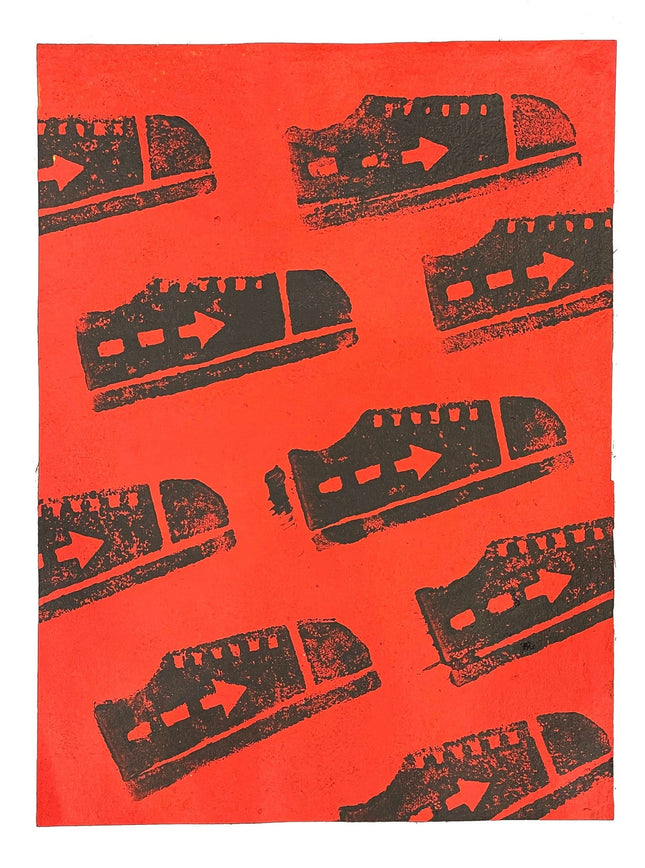
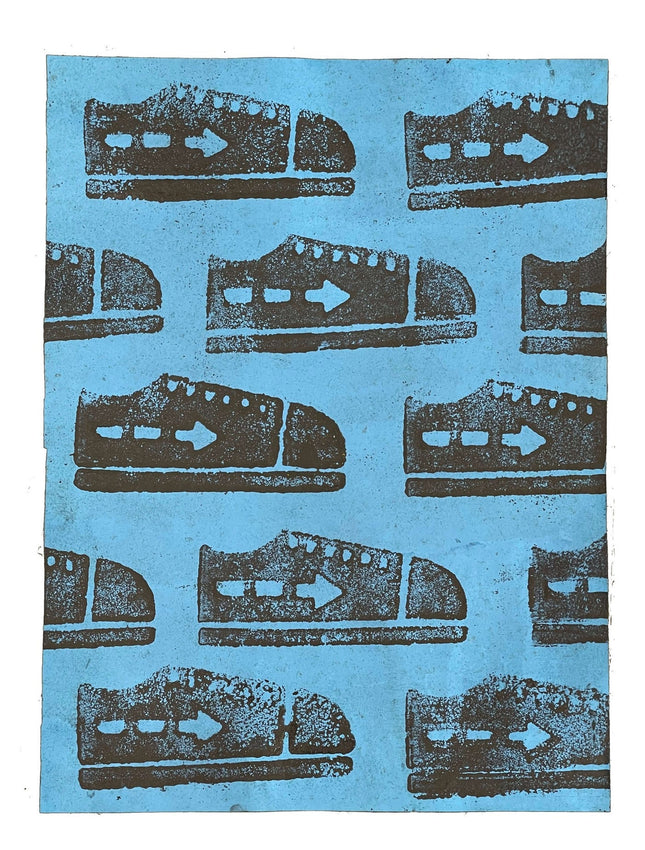
    Sneaker Print- Red 1-Color Hand-Pulled Limited Edition Silkscreen Print on Hand-Cut Organic Roofing Asphalt Felt by Graffiti Street Artist Skewville. 2020 Hand Signed & Numbered Limited Edition of 80 Artwork Tar Paper Size 18x24

    $218.00

  • Chunky Dunky Holographic Silkscreen Print by Eric Pagsanjan

    Eric Pagsanjan Chunky Dunky Holographic Silkscreen Print by Eric Pagsanjan

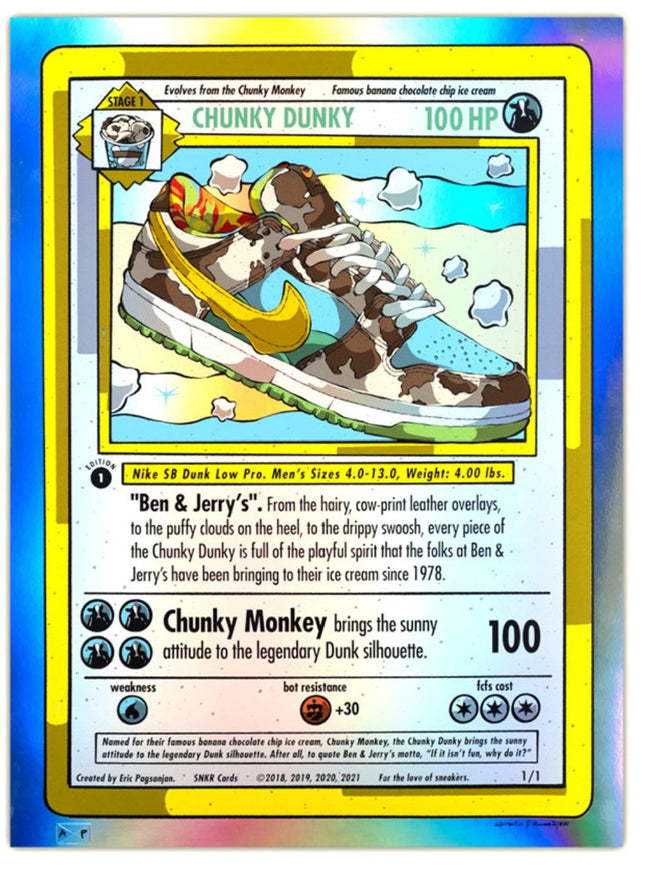
    Chunky Dunky- Holographic 13-Color Hand-Pulled Limited Edition Silkscreen Print on 10pt Rainbow Holographic Fine Art Paper by Eric Pagsanjan Rare Street Art Famous Pop Artwork Artist. 13-Color Screen Print on 10pt. Rainbow Holographic Fine Art Paper Size: 18 x 24 Inches Release: May 07, 2021 Run of: 15

    $352.00

  • Fresh Silkscreen Print by Jeff Boyes

    Jeff Boyes Fresh Silkscreen Print by Jeff Boyes

    Fresh 5-Color Hand-Pulled Metallic Ink Limited Edition Silkscreen Print on Fine Art Paper by Jeff Boyes Rare Street Art Famous Pop Artwork Artist. 5-color screenprint with metallic gold 18 x 18 inches numbered, limited edition of 50 inspired by The Fresh Prince of Bel Air

    $134.00

  • Artist's Model Green Silkscreen Print by Aelhra

    Aelhra Artist's Model Green Silkscreen Print by Aelhra

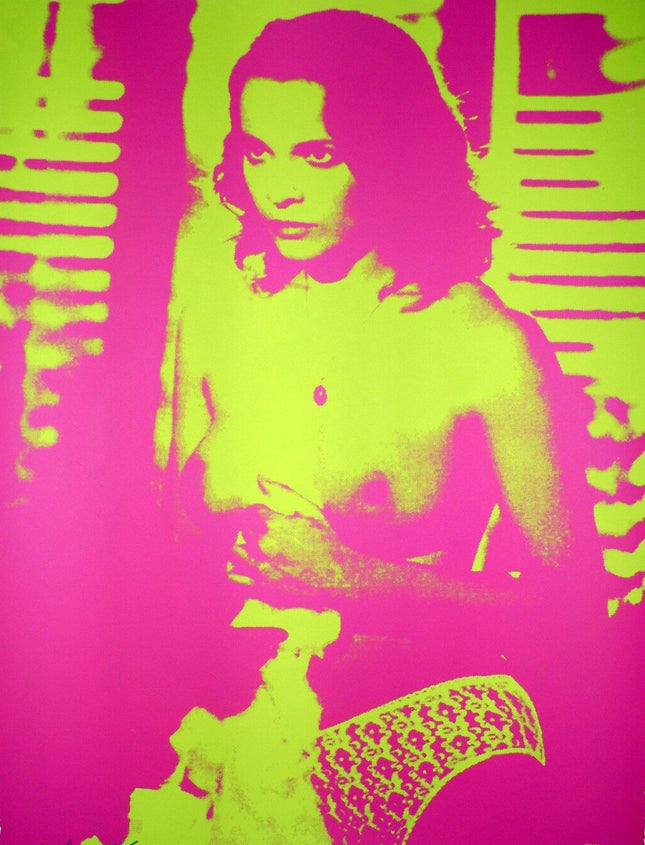
    Artist's Model- Green Limited Edition 2-Color Hand-Pulled Silkscreen Print on Fine Art Paper by Aelhra Graffiti Street Artist Modern Pop Art. 2014 Signed & Numbered Limited Edition of 30 Artwork Size 18x24

    $217.00

  • Vogue Black Silkscreen Print by Stinkfish

    Stinkfish Vogue Black Silkscreen Print by Stinkfish

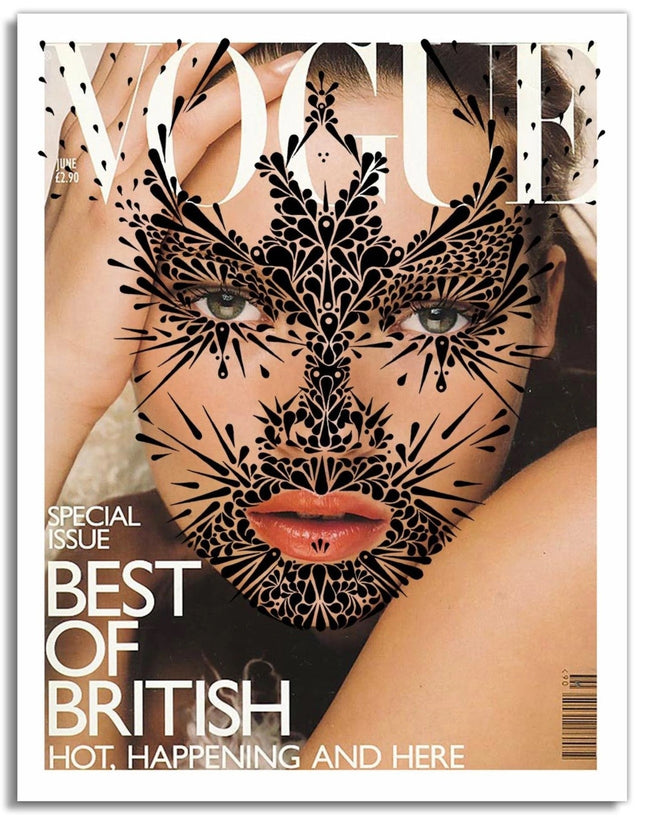
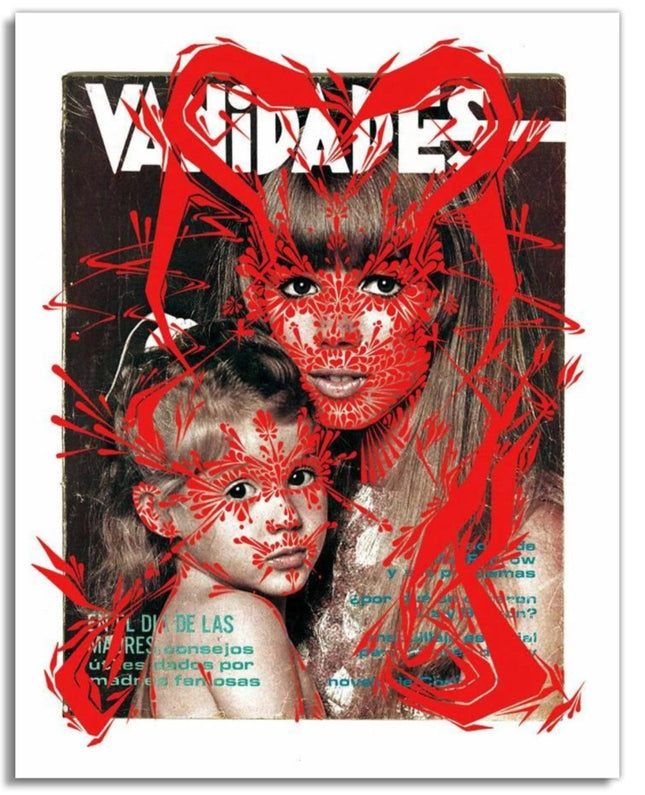
    Vogue- Black Hand-Pulled Limited Edition Silkscreen Print on Fine Art Paper by Stinkfish Rare Street Art Famous Pop Artwork Artist. 2015 Signed & Numbered Vogue by Stinkfish Screen Print Edition of 60 | Signed by the Artist Size: 18" x 24" City: Bogata, Colombia. The first release was based on a Spanish language magazine Stinkfish had found - the second is based on an English language magazine they had found for him. His lively detailing abstract redefines the glamor and beauty of Kate Moss. Stinkfish and the Evolution of Street Pop Art The Colombian street artist, Stinkfish has carved a unique space for himself in contemporary art. His works, often characterized by vibrant colors and intricate stencils, reflect the dynamic energy of street culture. One of his notable contributions to the art world is a limited edition silkscreen print on fine art paper titled "Vogue," a work that seamlessly blends street art's rawness with pop culture's polished aesthetics. This particular piece from Stinkfish pays homage to the iconography of fashion magazines, explicitly drawing inspiration from a Vogue cover. It's a rare street art piece that elevates the familiar image of a fashion model to a work of famous pop artwork. Created in 2015, this signed and numbered screen print is part of an exclusive series, with only 60 editions made available, each measuring 18" x 24". The art was conceptualized in Bogota, Colombia, and it represents a significant departure from Stinkfish's often more spontaneously created public murals. The Artistic Process Behind Stinkfish's "Vogue" The "Vogue" silkscreen print by Stinkfish is particularly notable for its process and backstory. The inception of the artwork is rooted in the discovery of a Spanish-language magazine that caught the artist's eye. Later, a second iteration was based on an English language magazine provided for him, suggesting a narrative that spans cultures and languages. This cross-cultural journey is central to understanding the piece, reflecting the globalized nature of both street art and fashion. The artwork showcases Stinkfish's signature style, with intricate black patterns overlaying the photograph, transforming the image into something more abstract and lively. The patterns vibrate with life, giving the piece a kinetic energy that redefines the glamour and beauty associated with the fashion model, reportedly Kate Moss. Stinkfish's work disrupts the conventional portrayal of fashion figures, infusing them with a rebellious and celebratory spirit. Impact and Significance of "Vogue" in Street Pop Art "Vogue" is a testament to street pop art's transformative power. Stinkfish's approach to the piece—taking a symbol of high culture and reinterpreting it through the lens of street art—challenges perceptions of value and beauty in the art world. By incorporating elements of graffiti artwork, the print becomes a commentary on the permeable boundaries between high and low culture, between the exclusive elite of fashion and the inclusive, democratic nature of street art. The limited edition nature of "Vogue" also speaks to the changing landscape of art collection. Traditionally, street art is ephemeral, often illegal, and created in the public eye. By transferring his work onto fine art paper and limiting its production, Stinkfish bridges the gap between the fleeting nature of street art and the permanence sought by collectors. This rare edition allows for broader access to his work and elevates the status of street art within the fine art market. Stinkfish's "Vogue": A Cultural Intersection Stinkfish's "Vogue" silkscreen print is much more than a collectible piece of art; it is a cultural artifact that embodies the intersection of diverse artistic worlds. It encapsulates the essence of street pop art and graffiti artwork while respecting the polished world of fashion. This print is not merely a representation of a fashion icon but a redefined image that challenges the viewer to see beyond the surface and appreciate street art's underlying vibrancy and complexity. As such, "Vogue" by Stinkfish is a significant contribution to the discourse on the value and place of street art in contemporary culture.

    $217.00

  • Covid No 19 Sarcelle Archival Print by Denial- Daniel Bombardier

    Denial- Daniel Bombardier Covid No 19 Sarcelle Archival Print by Denial- Daniel Bombardier

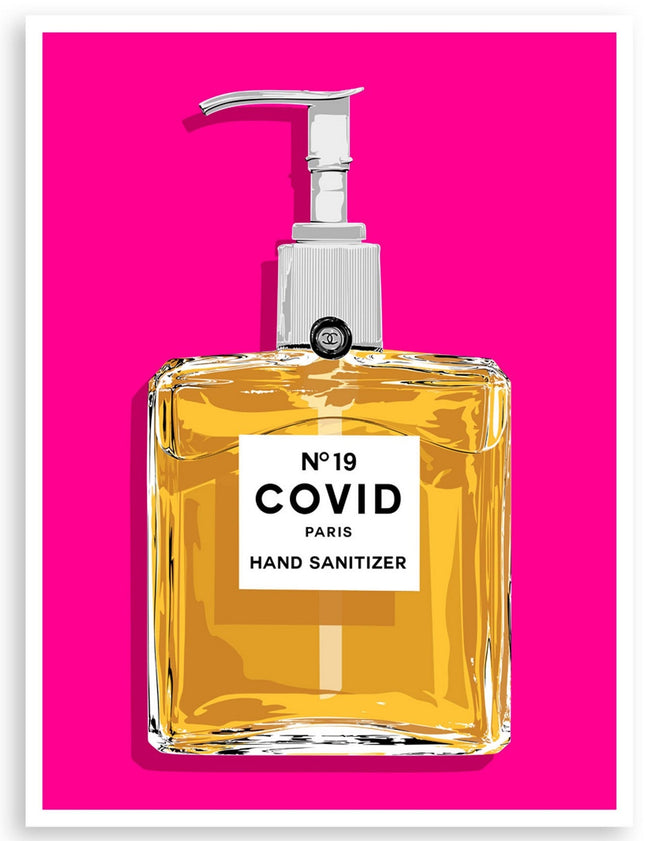
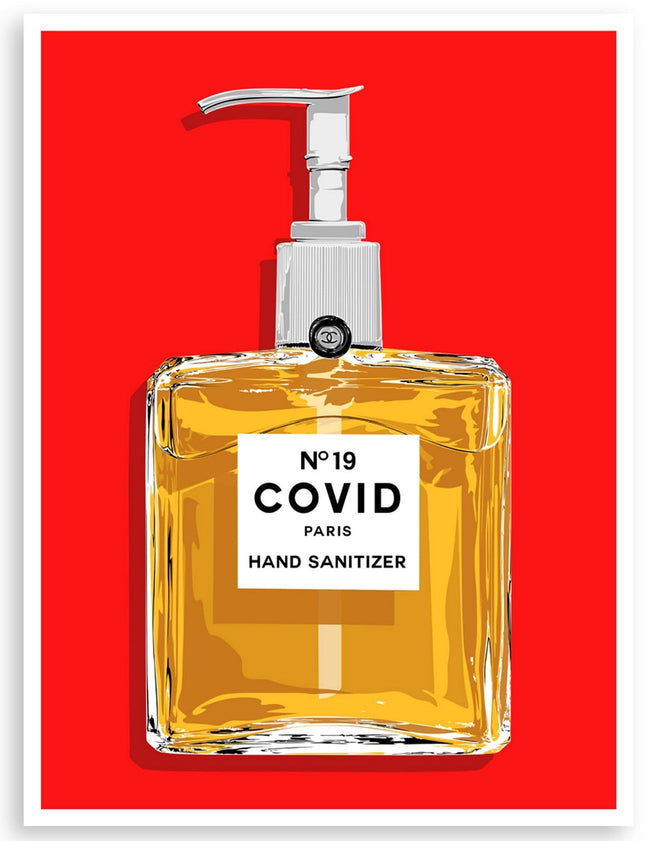
    Covid No 19- Sarcelle Limited Edition Archival Pigment Print on 290gsm MOAB Fine Art Paper by Graffiti Pop Art and Street Artist Denial. 2021 Signed & Numbered Limited Edition of 19 Sarcelle Covid19 Chanel Hand Sanitizer Virus Variant. Numbered, Signed, Stamped on Reverse Archival Pigment Print on MOAB Fine Art Paper 290 GSM Size 18" x 24" Denial’s COVID No. 19: Luxury Branding in the Age of Global Crisis Denial’s COVID No. 19 is a striking archival pigment print released in 2021 as a limited edition of 19, each hand-signed, numbered, and stamped on 290gsm MOAB fine art paper. The work appropriates the form of a Chanel No. 5 perfume bottle, replacing its iconic label with a fictional product name: COVID No. 19 Hand Sanitizer. Rendered with hyper-clean digital precision, the image reconfigures the aesthetics of high fashion to comment on the absurdities of pandemic-era consumerism. The hand sanitizer bottle is presented with all the visual authority of a luxury good, transforming an object of necessity into a parody of status and desire. At the core of this piece is a brutal cultural observation: during a global health emergency, everyday tools of survival—like sanitizer and masks—were elevated to symbols of identity, fashion, and economic access. Denial’s rebranding of Chanel’s perfume into a virus-era commodity confronts this shift head-on. The artwork doesn’t merely lampoon luxury—it reveals how systems of marketing can absorb trauma, repackage it, and sell it back to the public. The Chanel-style labeling is clinical yet elegant, a nod to how visual minimalism often masks corporate manipulation. Commercial Aesthetics as Subversive Weaponry Denial’s artistic strategy centers on the theft and recontextualization of commercial language. With COVID No. 19, the use of vector-sharp line work, realistic light reflections, and exacting product design mimics advertising to the point of deception. This imitation is intentional. The viewer is meant to initially read the image as authentic—something from a fashion magazine or cosmetics campaign—before the irony of the label snaps into focus. The dissonance between form and content invites a critique of the capitalist tendency to aestheticize suffering. This visual methodology ties directly into the ethos of Street Pop Art & Graffiti Artwork. Denial’s roots in unauthorized public messaging and subcultural image disruption remain present, even as the work exists in a fine art format. The absence of spray drips or rough textures does not diminish the rebellion. Instead, it retools the graphic language of commercial persuasion to undermine itself from within. What looks like a product pitch is, in fact, a visual accusation. The pandemic is not the subject—it is the branding of the pandemic that comes under fire. Street Pop Art as Pandemic Documentation COVID No. 19 operates as both satire and historical record. It captures a cultural moment when survival tools became luxury statements, when scarcity was linked to exclusivity, and when branding extended even to medical supplies. Denial’s artwork speaks to the way modern crises are not only experienced but marketed—how the fear of illness was filtered through the same systems that sell beauty, fashion, and lifestyle. The sanitizer bottle becomes a symbol not of protection, but of consumption. By fusing the iconography of fashion with the reality of a global pandemic, Denial forces the viewer to reconsider the boundaries between design and ethics, branding and survival. The visual simplicity of COVID No. 19 hides a layered indictment of how quickly commercial aesthetics can strip events of meaning. In the tradition of Street Pop Art & Graffiti Artwork, this piece turns familiar symbols against themselves, exposing the fragility of culture’s glossy surfaces when confronted with real human urgency.

    $313.00

  • Top Elite Faschions Silkscreen Print by Shepard Fairey- OBEY

    Shepard Fairey- OBEY Top Elite Faschions Silkscreen Print by Shepard Fairey- OBEY

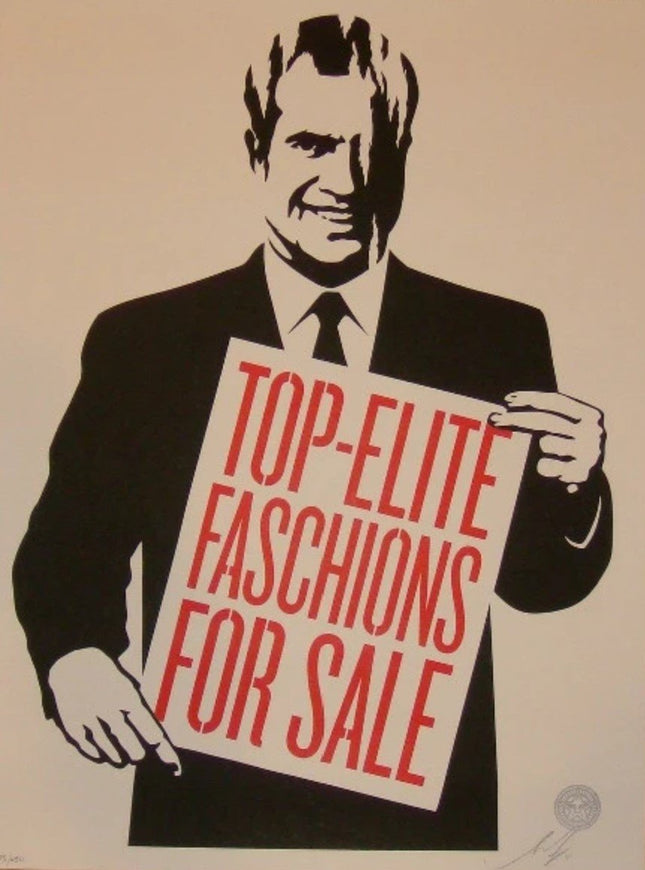
    Top Elite Faschions 2-Color Hand-Pulled Limited Edition Silkscreen Print on Fine Art Paper by Shepard Fairey Rare Street Art OBEY Pop Artwork Artist. 18 x 24 Screen Print Signed and Numbered Edition of 450, Signed and numbered by Shepard Fairey in pencil, this silkscreen art print is on medium weight off white colored paper.

    $384.00

  • Pattern of Corruption Black Gold AP Silkscreen Print by Shepard Fairey- OBEY x Cleon Peterson

    Shepard Fairey- OBEY Pattern of Corruption Black Gold AP Silkscreen Print by Shepard Fairey- OBEY x Cleon Peterson

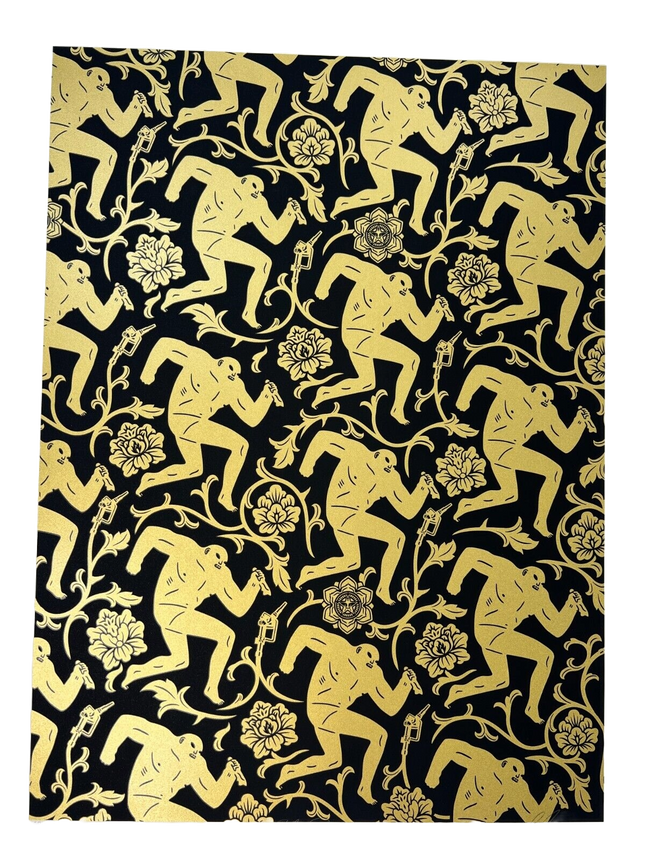
    Pattern of Corruption Black Gold AP Silkscreen Print by Shepard Fairey- OBEY x Cleon Peterson Artist Proof Hand-Pulled 2-Color Screen Print on Fine Art Paper Limited Edition Graffiti Pop Street Artwork. AP Artist Proof 2015 Signed & AP Marked Original Run Limited Edition of 150 Artwork Size 18x24 Repeating Image of Tribal Man With Bloody Knife and Lotus Flower Vine Pattern Silkscreen "Cleon Peterson and I recently collaborated on a mural in Miami’s Wynwood district and were happy enough with the end result to decide to make some limited edition screen prints inspired by the mural. Cleon and I both deal with the persistent themes of the fragility of society, human savagery, and corruption in our work. The image has a dichotomy in its hypnotic classical floral pattern with sinister elements woven into it, which caution the viewer to look deeper than an appealing surface presentation." - SHepard Fairey "Pattern of Corruption Black Gold" is a striking representation of the collaboration between two giants of the street art world, Shepard Fairey, best known for his OBEY campaign, and Cleon Peterson. As an AP Silkscreen print, this piece emphasizes the hand-crafted nature of their work, a detail that resonates deeply with enthusiasts of street and pop art. Shepard Fairey's iconic art has always challenged societal norms, provoking viewers to consider underlying complexities and contradictions present in contemporary society. Cleon Peterson, with his depictions of chaotic human interactions, similarly forces viewers to grapple with the darker underbelly of humanity. The inspiration behind this piece emerged from the mural the duo worked on together in Miami’s Wynwood district, a place renowned for its vibrant street art scene. It's evident in the AP Silkscreen print how their artistic styles and messages seamlessly intertwine. The meticulous detail of a tribal man brandishing a bloody knife juxtaposed with the lotus flower vine pattern invites introspection on the duality of human nature. The combination of tribal motifs with classical floral patterns not only alludes to a blending of the traditional with the contemporary but also serves as a cautionary tale. The surface beauty of the design may lure the viewer in, but as Fairey himself mentioned, the sinister undertones remind us to delve deeper and question the allure. A limited-edition release, with only 150 prints available, the artwork has achieved heightened significance among collectors and enthusiasts. The hand-pulled, two-color screen print on fine art paper stands as a testament to the dedication of the artists to their craft. The "Pattern of Corruption Black Gold" is not merely an artwork; it's a poignant commentary on society's fragility and the ever-present themes of corruption and human savagery, themes that both Fairey and Peterson have consistently explored in their works.

    $1,084.00

  • Covid No 19 Bleue Archival Print by Denial- Daniel Bombardier

    Denial- Daniel Bombardier Covid No 19 Bleue Archival Print by Denial- Daniel Bombardier

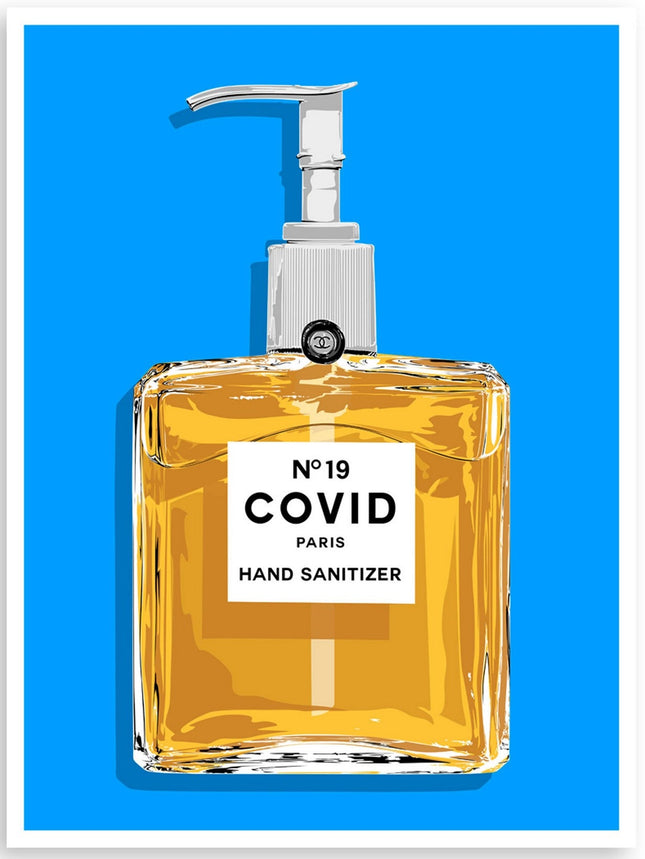
    Covid No 19- Bleue Limited Edition Archival Pigment Print on 290gsm MOAB Fine Art Paper by Graffiti Pop Art and Street Artist Denial. 2021 Signed & Numbered Limited Edition of 19 Bleue Covid19 Chanel Hand Sanitizer Virus Variant. Numbered, Signed, Stamped on Reverse Archival Pigment Print on MOAB Fine Art Paper 290 GSM Size 18" x 24" Denial’s COVID No. 19: Luxury Branding in the Age of Global Crisis Denial’s COVID No. 19 is a striking archival pigment print released in 2021 as a limited edition of 19, each hand-signed, numbered, and stamped on 290gsm MOAB fine art paper. The work appropriates the form of a Chanel No. 5 perfume bottle, replacing its iconic label with a fictional product name: COVID No. 19 Hand Sanitizer. Rendered with hyper-clean digital precision, the image reconfigures the aesthetics of high fashion to comment on the absurdities of pandemic-era consumerism. The hand sanitizer bottle is presented with all the visual authority of a luxury good, transforming an object of necessity into a parody of status and desire. At the core of this piece is a brutal cultural observation: during a global health emergency, everyday tools of survival—like sanitizer and masks—were elevated to symbols of identity, fashion, and economic access. Denial’s rebranding of Chanel’s perfume into a virus-era commodity confronts this shift head-on. The artwork doesn’t merely lampoon luxury—it reveals how systems of marketing can absorb trauma, repackage it, and sell it back to the public. The Chanel-style labeling is clinical yet elegant, a nod to how visual minimalism often masks corporate manipulation. Commercial Aesthetics as Subversive Weaponry Denial’s artistic strategy centers on the theft and recontextualization of commercial language. With COVID No. 19, the use of vector-sharp line work, realistic light reflections, and exacting product design mimics advertising to the point of deception. This imitation is intentional. The viewer is meant to initially read the image as authentic—something from a fashion magazine or cosmetics campaign—before the irony of the label snaps into focus. The dissonance between form and content invites a critique of the capitalist tendency to aestheticize suffering. This visual methodology ties directly into the ethos of Street Pop Art & Graffiti Artwork. Denial’s roots in unauthorized public messaging and subcultural image disruption remain present, even as the work exists in a fine art format. The absence of spray drips or rough textures does not diminish the rebellion. Instead, it retools the graphic language of commercial persuasion to undermine itself from within. What looks like a product pitch is, in fact, a visual accusation. The pandemic is not the subject—it is the branding of the pandemic that comes under fire. Street Pop Art as Pandemic Documentation COVID No. 19 operates as both satire and historical record. It captures a cultural moment when survival tools became luxury statements, when scarcity was linked to exclusivity, and when branding extended even to medical supplies. Denial’s artwork speaks to the way modern crises are not only experienced but marketed—how the fear of illness was filtered through the same systems that sell beauty, fashion, and lifestyle. The sanitizer bottle becomes a symbol not of protection, but of consumption. By fusing the iconography of fashion with the reality of a global pandemic, Denial forces the viewer to reconsider the boundaries between design and ethics, branding and survival. The visual simplicity of COVID No. 19 hides a layered indictment of how quickly commercial aesthetics can strip events of meaning. In the tradition of Street Pop Art & Graffiti Artwork, this piece turns familiar symbols against themselves, exposing the fragility of culture’s glossy surfaces when confronted with real human urgency.

    $313.00

  • Floral Takeover 2017 Cream Red Silkscreen Print by Shepard Fairey- OBEY

    Shepard Fairey- OBEY Floral Takeover 2017 Cream Red Silkscreen Print by Shepard Fairey- OBEY

    Floral Takeover 2017 Cream Red Silkscreen Print by Shepard Fairey- OBEY Hand-Pulled 2-Color on Cream Speckletone Fine Art Paper Limited Edition Artwork Obey Pop Culture Artist. 2017 Signed & Numbered Limited Edition of 200 Artwork Size 18x24 Silkscreen Print "I'm always creating new patterns for my street installs and fine art pieces. I used to buy discontinued wallpaper, but now I design and print my own. These look nice as stand-alone prints, not just repeat patterns, so I'm releasing a 200-print edition of four versions. Buy a couch to match… coming soon… just kidding!" -Shepard Fairey- OBEY. The "Floral Takeover 2017 Cream Red Silkscreen Print" is a significant entry in the oeuvre of Shepard Fairey, an artist whose work is synonymous with the intersection of Street Pop Art and graffiti Artwork. This piece is part of a limited edition of 200, each signed and numbered, denoting its value as a collectible. With dimensions of 18x24 inches, the silkscreen print is substantial enough to make a statement on any wall it adorns. Fairey, with his characteristic OBEY brand, has long been a provocateur, blending commercial art techniques with street art's subversive edge, and this work is a clear example of that fusion. Fairey's approach to creating new patterns for street installations and fine art pieces harks back to his early days when he would use discontinued wallpaper as a backdrop for his work. The transition to designing and printing his patterns demonstrates a progression in his artistic control and the evolution of his signature style. The 'Floral Takeover series showcases the artist's ability to adapt elements traditionally associated with interior design and repurpose them within the context of street art and pop culture. By doing so, Fairey blurs the lines between art as a purely aesthetic commodity and its function as a commentary on societal norms. In this print, Fairey plays with a cream speckle tone fine art paper that gives the work a textured, organic feel, contrasting with the precise and deliberate two-color silkscreen technique. The choice of cream as the base color amplifies the boldness of the red floral pattern, allowing the design to leap off the paper with a vivacity that captures the viewer's eye. The juxtaposition of color and form symbolizes Fairey's work, where contrast often serves as a visual metaphor for broader cultural and political contrasts. Moreover, the 'Floral Takeover' print series reflects Fairey's humor and his recognition of the interplay between art and the commercial world, as hinted at in his playful suggestion to "buy a couch to match." This statement encapsulates the artist's awareness of the commodification of art in pop culture and his role within that process. Through works like this, Fairey continues to challenge perceptions of what street art can be, bridging the gap between graffiti's rebel spirit and gallery pieces' polished finish.

    $718.00

  • High Time- High All Night Giclee Print by Marwan Shahin

    Marwan Shahin High Time- High All Night Giclee Print by Marwan Shahin

    High Time- High All Night Artwork Giclee Limited Edition Print on Photographique Rag Paper by Pop Culture Graffiti Artist Marwan Shahin. Marwan Shahin's "High All Night" Collectors edition of only 5 prints of each. From High Time series, Debuting in 2015, Released for the first time produced by Shahin Studios, released in celebration of the new year. Only 5 Available of each2015 18 inches x 22 inches Giclée on Photographique Rag Signed, Numbered, Embossed and Branded High Time: High All Night by Marwan Shahin – A Timepiece of Surrealism and Symbolic Luxury High All Night from Marwan Shahin’s High Time series is a limited edition giclée print that explores the fusion of luxury iconography with deeply symbolic visual storytelling. Released in 2015 and printed on 18 x 22 inch Photographique Rag paper, this artwork is part of an ultra-exclusive collector’s edition—just five prints exist, each signed, numbered, embossed, and branded by the artist. In this captivating piece, Shahin transforms a luxury wristwatch into a surreal portrait of time, identity, and indulgence. At the heart of the watch face lies a serene, almost celestial human visage, rendered with Shahin’s signature linework. The hypnotic spiral of concentric lines forming the face draws the viewer inward, suggesting a meditation on time as an infinite, psychedelic experience. The eyes glow with a reddish haze, implying both fatigue and euphoria—an embodiment of the High All Night title. The watch bezel is crowned with a reference to the Rolex coronet, placing the work firmly in the cultural orbit of status, consumerism, and power. Luxury Dissected Through the Lens of Street Pop Art Marwan Shahin’s visual language consistently challenges the viewer to re-evaluate societal values through the lens of street pop art and graffiti artwork. In High All Night, he uses the recognizable shape and prestige of a Rolex-style timepiece as a stand-in for themes of capitalist worship, eternal urgency, and the blurred line between high life and high mind. The aesthetic is sharp and deliberate, with bold blues and golds contrasted against spiraling black linework, capturing the cyclical nature of indulgence and repetition. By integrating the human face into the machinery of a watch, Shahin offers commentary on how time has become internalized—both a measure and a master. The red eyes framed within a luxury symbol evoke a culture caught between glamour and exhaustion, where time is both a drug and a debt. The visual metaphor pushes viewers to question what they are measuring with their time: productivity or experience, ambition or presence. Visual Storytelling Across Time Zones and States of Mind High All Night functions on multiple levels—as an homage to traditional craftsmanship, a critique of luxury culture, and a deeply symbolic expression of modern life. The hypnotic details recall both ancient Egyptian engravings and the precision of high-end horology, while the surreal face speaks to the human cost of keeping up with a relentless world. Shahin's decision to use fine art giclée printing enhances the tactile and tonal qualities of the work, creating a luminous, museum-quality piece that captures the nuances of his inking and shading. Unlike many works in the pop or graffiti art genre that rely on brashness or satire alone, Shahin’s High Time series offers layered depth. It invites introspection, yet its polished execution and visual clarity make it immediately arresting. The print's ultra-limited nature—a mere five copies—ensures that it becomes not only a meditation on rarity but also a rare object itself. A Timeless Reflection in the Face of the Clock Marwan Shahin’s High All Night reminds us that luxury is not always liberating, and time is not always linear. It is a portrait of an age where the watch on the wrist says as much about identity as it does about hours passed. In Shahin’s hands, the watch becomes a mirror, a face, and a symbol—watching us as much as we watch it. With this artwork, Shahin once again proves his ability to distill the spirit of contemporary culture into a single, unforgettable image that transcends trend and challenges perception.

    $352.00

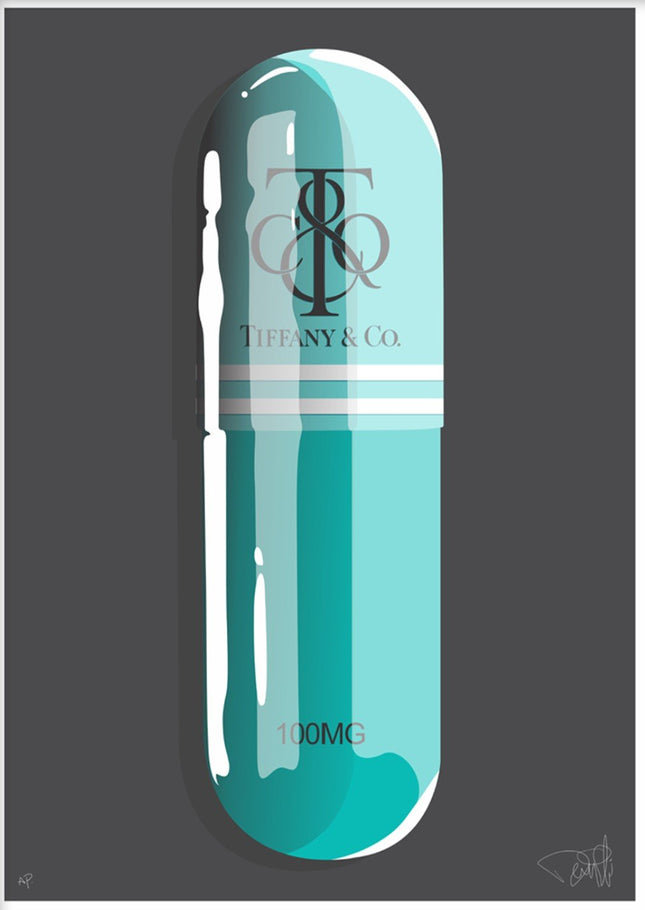
  • Fashion Addict Refill Tiffanys AP Archival Print by Denial- Daniel Bombardier

    Denial- Daniel Bombardier Fashion Addict Refill Tiffanys AP Archival Print by Denial- Daniel Bombardier

    Fashion Addict Refill- Tiffanys Limited Edition Archival Pigment Fine Art Print on 330gsm Canon Fine Art Paper by Legend Street Art and Modern Pop Culture Artist Denial. AP Artist Proof 2019 Signed Limited Edition of 100 Artwork Size 18x24 Tiffanys Designer Fashion Drug Pill. AP Artist Proof Numbered, Signed, Stamped on Reverse, Normal Edition of 100, 18x24, Archival Pigment Print on 330 GSM Canon Fine Art Paper. Denial’s art is strongly political and social since the artist takes specific positions against issues, such as capitalism, consumer culture, and advertisements. More importantly, the artist is aware of his choices and motivations: “I like to think of myself as activist pop art. How I relate with cartoons and graphics is a lot easier than I do with photo-realistic stuff" Another aspect of Denial's work is humor. His work is satirical, which, by definition, means that it uses humor as a confronting mechanism.

    $572.00

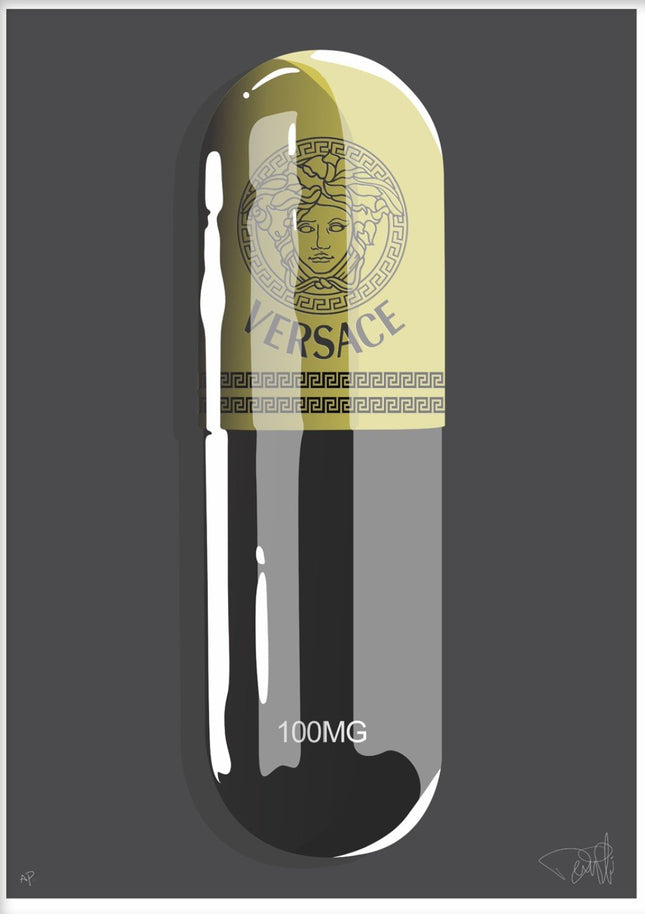
  • Fashion Addict Refill Versace 2 AP Archival Print by Denial- Daniel Bombardier

    Denial- Daniel Bombardier Fashion Addict Refill Versace 2 AP Archival Print by Denial- Daniel Bombardier

    Fashion Addict Refill- Versace 2 Limited Edition Archival Pigment Fine Art Print on 330gsm Canon Fine Art Paper by Legend Street Art and Modern Pop Culture Artist Denial. AP Artist Proof 2019 Signed Limited Edition of 100 Artwork Size 18x24 Versace 2 Designer Fashion Drug Pill. AP Artist Proof Numbered, Signed, Stamped on Reverse, Normal Edition of 100, 18x24, Archival Pigment Print on 330 GSM Canon Fine Art Paper. Essentially, Denial is satirizing the reality, which both he and us are experiencing, through some of the Western culture’s most emblematic symbols. Denial is utilizing cultural products with the intention to make a statement against the system, which gave birth to them. As a result, he re-contextualizes them and transforms them from commercial products to his cultural legacy.

    $572.00

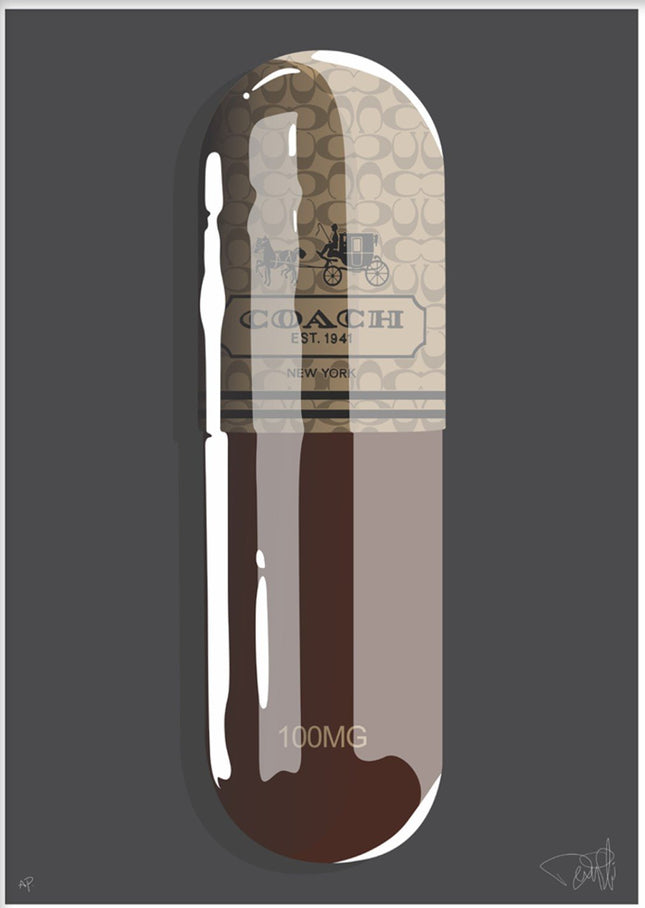
  • Fashion Addict Refill Coach AP Archival Print by Denial- Daniel Bombardier

    Denial- Daniel Bombardier Fashion Addict Refill Coach AP Archival Print by Denial- Daniel Bombardier

    Fashion Addict Refill- Coach Limited Edition Archival Pigment Fine Art Print on 330gsm Canon Fine Art Paper by Legend Street Art and Modern Pop Culture Artist Denial. AP Artist Proof 2019 Signed Limited Edition of 100 Artwork Size 18x24 Coach Designer Fashion Drug Pill. AP Artist Proof Numbered, Signed, Stamped on Reverse, Normal Edition of 100, 18x24, Archival Pigment Print on 330 GSM Canon Fine Art Paper. Denial is a Canadian artist who experiments with aerosol and stencil art, while his main fields of interest are consumerism, politics and the human condition in today’s society. Since the culture of graffiti was gaining more and more popularity in the US and Europe, the taggers had to be increasingly original in order to stand out. The signatures became bigger, more stylized and more colorful.

    $572.00

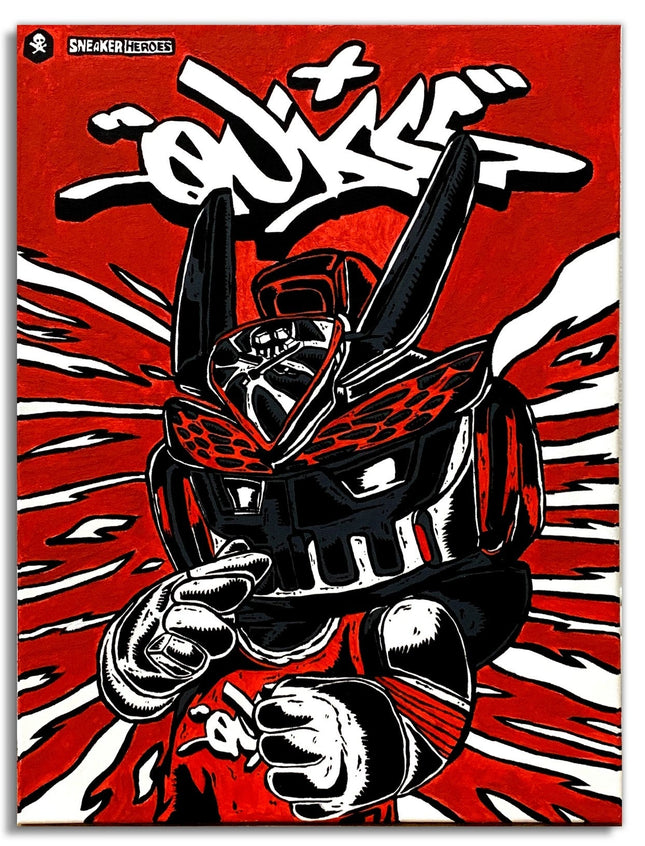
  • Quiccs x SneakerHereos Banned 1s Original Acrylic Painting by Eric Pagsanjan

    Eric Pagsanjan Quiccs x SneakerHereos Banned 1s Original Acrylic Painting by Eric Pagsanjan

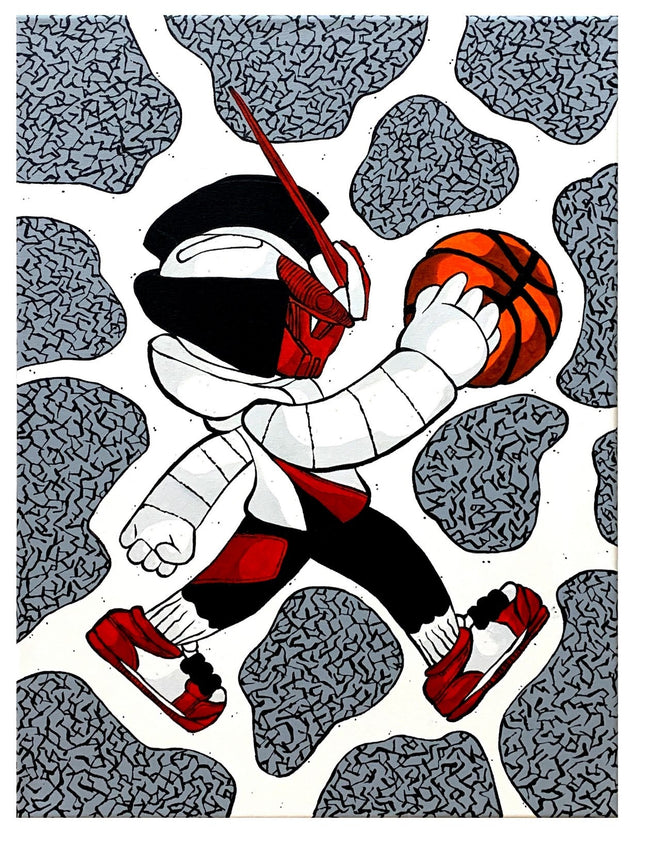
    Quiccs xSneakerHereos- Banned 1s Original One of a Kind Acrylic Painting Artwork on Stretched Canvas Panel by Popular Street Graffiti Artist Eric Pagsanjan. 2019 Quiccs x SneakerHereos - Original Painting Used As Comic Book Cover by Eric Pagsanjan Created Exclusively for NBA All-Star Weekend Pop-Up Acrylic on Stretched Canvas Panel Size: 18" x 24" x .75" "I hold respect and admiration for artists that create their own apparel. I’m a huge sneaker fan, and my personal collection is ever-growing. Combining my love for sneakers, the designers who make them, and comic-book style superheroes, I created a series of portraits dedicated to the designers that I consider to be incredible. To me, they are superheroes. They are ‘SneakerHeroes. Few shoes in the 30-plus-year history of the Air Jordan line are as infamous as the black and red Air Jordan 1. The sneaker—known as the 'Banned' Jordan 1—has been perennially important, from the mythology around its genesis to the fervor its retros inspire. Here's how it all happened. The story goes that Michael Jordan was fined $5,000 by the NBA every time he wore the shoes during their debut in 1984 because they broke the league's uniform rules. Nike capitalized on this, creating an ad campaign that played on that forbidden fruit quality..." -Eric Pagsanjan

    $712.00

  • Fashion Addict Refill Prada AP Archival Print by Denial- Daniel Bombardier

    Denial- Daniel Bombardier Fashion Addict Refill Prada AP Archival Print by Denial- Daniel Bombardier

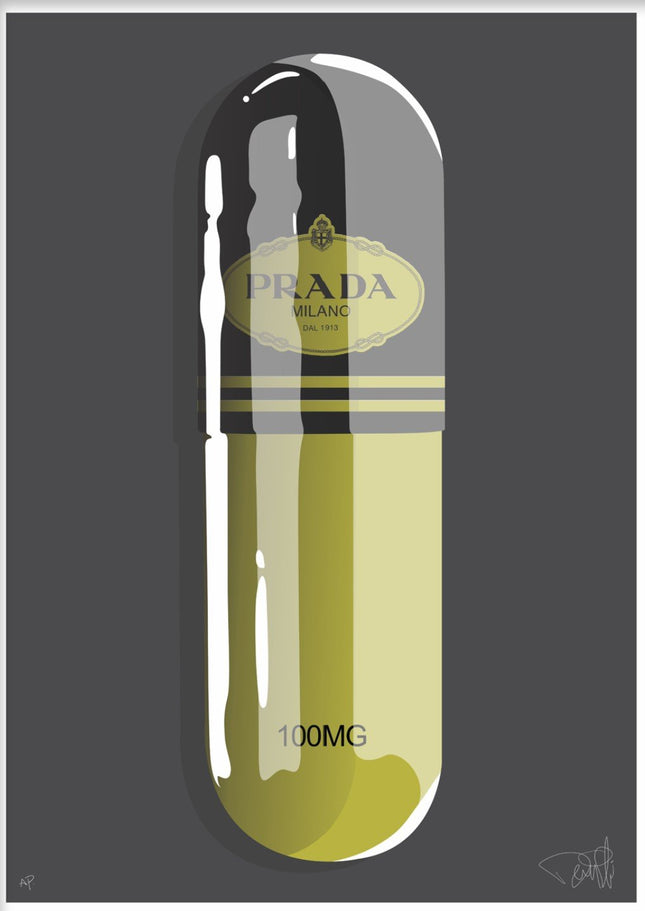
    Fashion Addict Refill- Prada Limited Edition Archival Pigment Fine Art Print on 330gsm Canon Fine Art Paper by Legend Street Art and Modern Pop Culture Artist Denial. AP Artist Proof 2019 Signed Limited Edition of 100 Artwork Size 18x24 Prada Designer Fashion Drug Pill. AP Artist Proof Numbered, Signed, Stamped on Reverse, Normal Edition of 100, 18x24, Archival Pigment Print on 330 GSM Canon Fine Art Paper. Denial has evolved as one the most prominent figures of contemporary pop artists, who nonetheless, continue to stay relevant and is interested in generating thought-provoking commentary. He has a long history of exploring the boundaries of appropriation, which he uses as a means of subverting the value of cultural products, imprinted in the collective memory of the Western civilization. His work, in other words, is inviting the viewer to re-imagine our dystopian society as a way of confronting it, with humor and irony as the biggest tools of the artist.

    $572.00

  • Taking Shade Giclee AP Artist Proof Print by Casey Weldon

    Casey Weldon Taking Shade Giclee AP Artist Proof Print by Casey Weldon

    Taking Shade Giclee AP Artist Proof Print by Casey Weldon Artwork Limited Edition Print on 290gsm Fine Art Paper Graffiti Modern Pop Street Artist. AP Artist Proof 2019 Signed & Marked AP Limited Edition of 40 Artwork Size 18x18

    $279.00

  • Beautiful Dreamer 2 Silkscreen Print by Aelhra

    Aelhra Beautiful Dreamer 2 Silkscreen Print by Aelhra

    Beautiful Dreamer 2 Limited Edition 2-Color Hand-Pulled Silkscreen Print on Fine Art Paper by Aelhra Graffiti Street Artist Modern Pop Art. 2010 Signed & Numbered Limited Edition of 100 Artwork Size 18x24

    $217.00

  • Covid No 19 Mauve Archival Print by Denial- Daniel Bombardier

    Denial- Daniel Bombardier Covid No 19 Mauve Archival Print by Denial- Daniel Bombardier

    Covid No 19- Mauve Limited Edition Archival Pigment Print on 290gsm MOAB Fine Art Paper by Graffiti Pop Art and Street Artist Denial. 2021 Signed & Numbered Limited Edition of 19 Mauve Covid19 Chanel Hand Sanitizer Virus Variant. Numbered, Signed, Stamped on Reverse Archival Pigment Print on MOAB Fine Art Paper 290 GSM Size 18" x 24" Denial’s COVID No. 19: Luxury Branding in the Age of Global Crisis Denial’s COVID No. 19 is a striking archival pigment print released in 2021 as a limited edition of 19, each hand-signed, numbered, and stamped on 290gsm MOAB fine art paper. The work appropriates the form of a Chanel No. 5 perfume bottle, replacing its iconic label with a fictional product name: COVID No. 19 Hand Sanitizer. Rendered with hyper-clean digital precision, the image reconfigures the aesthetics of high fashion to comment on the absurdities of pandemic-era consumerism. The hand sanitizer bottle is presented with all the visual authority of a luxury good, transforming an object of necessity into a parody of status and desire. At the core of this piece is a brutal cultural observation: during a global health emergency, everyday tools of survival—like sanitizer and masks—were elevated to symbols of identity, fashion, and economic access. Denial’s rebranding of Chanel’s perfume into a virus-era commodity confronts this shift head-on. The artwork doesn’t merely lampoon luxury—it reveals how systems of marketing can absorb trauma, repackage it, and sell it back to the public. The Chanel-style labeling is clinical yet elegant, a nod to how visual minimalism often masks corporate manipulation. Commercial Aesthetics as Subversive Weaponry Denial’s artistic strategy centers on the theft and recontextualization of commercial language. With COVID No. 19, the use of vector-sharp line work, realistic light reflections, and exacting product design mimics advertising to the point of deception. This imitation is intentional. The viewer is meant to initially read the image as authentic—something from a fashion magazine or cosmetics campaign—before the irony of the label snaps into focus. The dissonance between form and content invites a critique of the capitalist tendency to aestheticize suffering. This visual methodology ties directly into the ethos of Street Pop Art & Graffiti Artwork. Denial’s roots in unauthorized public messaging and subcultural image disruption remain present, even as the work exists in a fine art format. The absence of spray drips or rough textures does not diminish the rebellion. Instead, it retools the graphic language of commercial persuasion to undermine itself from within. What looks like a product pitch is, in fact, a visual accusation. The pandemic is not the subject—it is the branding of the pandemic that comes under fire. Street Pop Art as Pandemic Documentation COVID No. 19 operates as both satire and historical record. It captures a cultural moment when survival tools became luxury statements, when scarcity was linked to exclusivity, and when branding extended even to medical supplies. Denial’s artwork speaks to the way modern crises are not only experienced but marketed—how the fear of illness was filtered through the same systems that sell beauty, fashion, and lifestyle. The sanitizer bottle becomes a symbol not of protection, but of consumption. By fusing the iconography of fashion with the reality of a global pandemic, Denial forces the viewer to reconsider the boundaries between design and ethics, branding and survival. The visual simplicity of COVID No. 19 hides a layered indictment of how quickly commercial aesthetics can strip events of meaning. In the tradition of Street Pop Art & Graffiti Artwork, this piece turns familiar symbols against themselves, exposing the fragility of culture’s glossy surfaces when confronted with real human urgency.

    $313.00

  • Quiccs x SneakerHereos Jumpman Original Acrylic Painting by Eric Pagsanjan

    Eric Pagsanjan Quiccs x SneakerHereos Jumpman Original Acrylic Painting by Eric Pagsanjan

    Quiccs xSneakerHereos- Jumpman Original One of a Kind Acrylic Painting Artwork on Stretched Canvas Panel by Popular Street Graffiti Artist Eric Pagsanjan. 2019 QUICCS x SneakerHereos - Jumpman by Eric Pagsanjan Created Exclusively for NBA All-Star Weekend Pop-Up Acrylic on Stretched Canvas Panel Size: 18" x 24" x .75" "I hold respect and admiration for artists that create their own apparel. I’m a huge sneaker fan, and my personal collection is ever-growing. Combining my love for sneakers, the designers who make them, and comic-book style superheroes, I created a series of portraits dedicated to the designers that I consider to be incredible. To me, they are superheroes. They are ‘SneakerHeroes. Few shoes in the 30-plus-year history of the Air Jordan line are as infamous as the black and red Air Jordan 1. The sneaker—known as the 'Banned' Jordan 1—has been perennially important, from the mythology around its genesis to the fervor its retros inspire. Here's how it all happened. The story goes that Michael Jordan was fined $5,000 by the NBA every time he wore the shoes during their debut in 1984 because they broke the league's uniform rules. Nike capitalized on this, creating an ad campaign that played on that forbidden fruit quality..." -Eric Pagsanjan

    $712.00

  • Covid No 19 Rose Archival Print by Denial- Daniel Bombardier

    Denial- Daniel Bombardier Covid No 19 Rose Archival Print by Denial- Daniel Bombardier

    Covid No 19- Rose Limited Edition Archival Pigment Print on 290gsm MOAB Fine Art Paper by Graffiti Pop Art and Street Artist Denial. 2021 Signed & Numbered Limited Edition of 19 Rose Covid19 Chanel Hand Sanitizer Virus Variant. Numbered, Signed, Stamped on Reverse Archival Pigment Print on MOAB Fine Art Paper 290 GSM Size 18" x 24" Denial’s COVID No. 19: Luxury Branding in the Age of Global Crisis Denial’s COVID No. 19 is a striking archival pigment print released in 2021 as a limited edition of 19, each hand-signed, numbered, and stamped on 290gsm MOAB fine art paper. The work appropriates the form of a Chanel No. 5 perfume bottle, replacing its iconic label with a fictional product name: COVID No. 19 Hand Sanitizer. Rendered with hyper-clean digital precision, the image reconfigures the aesthetics of high fashion to comment on the absurdities of pandemic-era consumerism. The hand sanitizer bottle is presented with all the visual authority of a luxury good, transforming an object of necessity into a parody of status and desire. At the core of this piece is a brutal cultural observation: during a global health emergency, everyday tools of survival—like sanitizer and masks—were elevated to symbols of identity, fashion, and economic access. Denial’s rebranding of Chanel’s perfume into a virus-era commodity confronts this shift head-on. The artwork doesn’t merely lampoon luxury—it reveals how systems of marketing can absorb trauma, repackage it, and sell it back to the public. The Chanel-style labeling is clinical yet elegant, a nod to how visual minimalism often masks corporate manipulation. Commercial Aesthetics as Subversive Weaponry Denial’s artistic strategy centers on the theft and recontextualization of commercial language. With COVID No. 19, the use of vector-sharp line work, realistic light reflections, and exacting product design mimics advertising to the point of deception. This imitation is intentional. The viewer is meant to initially read the image as authentic—something from a fashion magazine or cosmetics campaign—before the irony of the label snaps into focus. The dissonance between form and content invites a critique of the capitalist tendency to aestheticize suffering. This visual methodology ties directly into the ethos of Street Pop Art & Graffiti Artwork. Denial’s roots in unauthorized public messaging and subcultural image disruption remain present, even as the work exists in a fine art format. The absence of spray drips or rough textures does not diminish the rebellion. Instead, it retools the graphic language of commercial persuasion to undermine itself from within. What looks like a product pitch is, in fact, a visual accusation. The pandemic is not the subject—it is the branding of the pandemic that comes under fire. Street Pop Art as Pandemic Documentation COVID No. 19 operates as both satire and historical record. It captures a cultural moment when survival tools became luxury statements, when scarcity was linked to exclusivity, and when branding extended even to medical supplies. Denial’s artwork speaks to the way modern crises are not only experienced but marketed—how the fear of illness was filtered through the same systems that sell beauty, fashion, and lifestyle. The sanitizer bottle becomes a symbol not of protection, but of consumption. By fusing the iconography of fashion with the reality of a global pandemic, Denial forces the viewer to reconsider the boundaries between design and ethics, branding and survival. The visual simplicity of COVID No. 19 hides a layered indictment of how quickly commercial aesthetics can strip events of meaning. In the tradition of Street Pop Art & Graffiti Artwork, this piece turns familiar symbols against themselves, exposing the fragility of culture’s glossy surfaces when confronted with real human urgency.

    $313.00

  • Floral Takeover 2017 Red Black Silkscreen Print by Shepard Fairey- OBEY

    Shepard Fairey- OBEY Floral Takeover 2017 Red Black Silkscreen Print by Shepard Fairey- OBEY

    Floral Takeover 2017 Red Black Silkscreen Print by Shepard Fairey- OBEY Hand-Pulled 2-Color on Cream Speckletone Fine Art Paper Limited Edition Artwork Obey Pop Culture Artist. 2017 Signed & Numbered Limited Edition of 200 Artwork Size 18x24 Silkscreen Print "I'm always creating new patterns for my street installs and fine art pieces. I used to buy discontinued wallpaper, but now I design and print my own. These look nice as stand-alone prints, not just repeat patterns, so I'm releasing a 200-print edition of four versions. Buy a couch to match… coming soon… just kidding!" -Shepard Fairey- OBEY. The "Floral Takeover 2017 Red Black Silkscreen Print" by Shepard Fairey encapsulates the interplay of aesthetics within Street Pop Art and graffiti Artwork, signifying a profound narrative through its intricate design and bold color scheme. This piece exemplifies how traditional elements can be transformed into a new cultural vocabulary that challenges and expands the boundaries of fine art. Featuring a rich, vibrant red background overlaid with a contrasting black floral pattern, the artwork is a striking visual statement that captures the viewer's attention. Shepard Fairey, a pivotal figure in the street art movement, often incorporates motifs that reflect social and political activism. His work is known for its ability to decorate and provoke thought and conversation, a characteristic quintessential to the graffiti art movement. Silkscreen printing allows for the precision and consistency necessary for disseminating his message, harkening back to his roots in skateboarding and punk rock culture, where screen-printed designs were a means of rebellion and identity. Silkscreen printing used in this artwork is also a nod to the pop art tradition, a method popularized by artists like Andy Warhol, who sought to erase the boundaries between 'high' art and 'low' cultural imagery. Fairey's "Floral Takeover" is a contemporary continuation of this tradition, seamlessly blending street art's spontaneity and edginess with pop art's mass appeal and commercial aesthetics. The result is a striking work of art that is accessible and deeply layered in meaning. Through this print, Fairey extends the dialogue of street art into the more permanent and collectible domain of fine art prints, allowing for the transitory nature of street graffiti to be preserved and appreciated over time. The artwork becomes an important cultural artifact, representing the ever-evolving landscape of Street Pop Art and graffiti Artwork, embodying the transformative power of art in public spaces and the ongoing conversation between art and society.

    $718.00

  • Covid No 19 Juane Archival Print by Denial- Daniel Bombardier

    Denial- Daniel Bombardier Covid No 19 Juane Archival Print by Denial- Daniel Bombardier

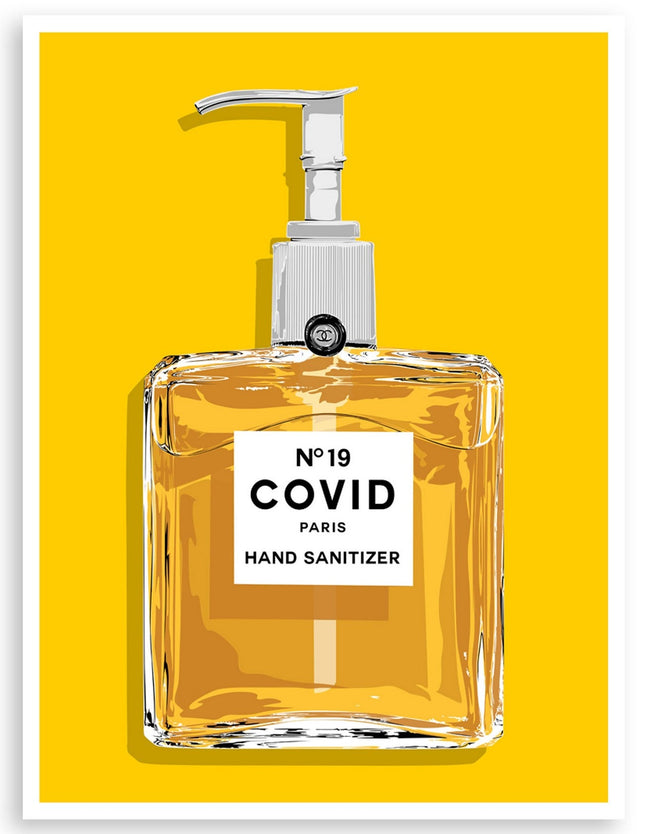
    Covid No 19- Juane Limited Edition Archival Pigment Print on 290gsm MOAB Fine Art Paper by Graffiti Pop Art and Street Artist Denial. 2021 Signed & Numbered Limited Edition of 19 Juane Covid19 Chanel Hand Sanitizer Virus Variant. Numbered, Signed, Stamped on Reverse Archival Pigment Print on MOAB Fine Art Paper 290 GSM Size 18" x 24" Denial’s COVID No. 19: Luxury Branding in the Age of Global Crisis Denial’s COVID No. 19 is a striking archival pigment print released in 2021 as a limited edition of 19, each hand-signed, numbered, and stamped on 290gsm MOAB fine art paper. The work appropriates the form of a Chanel No. 5 perfume bottle, replacing its iconic label with a fictional product name: COVID No. 19 Hand Sanitizer. Rendered with hyper-clean digital precision, the image reconfigures the aesthetics of high fashion to comment on the absurdities of pandemic-era consumerism. The hand sanitizer bottle is presented with all the visual authority of a luxury good, transforming an object of necessity into a parody of status and desire. At the core of this piece is a brutal cultural observation: during a global health emergency, everyday tools of survival—like sanitizer and masks—were elevated to symbols of identity, fashion, and economic access. Denial’s rebranding of Chanel’s perfume into a virus-era commodity confronts this shift head-on. The artwork doesn’t merely lampoon luxury—it reveals how systems of marketing can absorb trauma, repackage it, and sell it back to the public. The Chanel-style labeling is clinical yet elegant, a nod to how visual minimalism often masks corporate manipulation. Commercial Aesthetics as Subversive Weaponry Denial’s artistic strategy centers on the theft and recontextualization of commercial language. With COVID No. 19, the use of vector-sharp line work, realistic light reflections, and exacting product design mimics advertising to the point of deception. This imitation is intentional. The viewer is meant to initially read the image as authentic—something from a fashion magazine or cosmetics campaign—before the irony of the label snaps into focus. The dissonance between form and content invites a critique of the capitalist tendency to aestheticize suffering. This visual methodology ties directly into the ethos of Street Pop Art & Graffiti Artwork. Denial’s roots in unauthorized public messaging and subcultural image disruption remain present, even as the work exists in a fine art format. The absence of spray drips or rough textures does not diminish the rebellion. Instead, it retools the graphic language of commercial persuasion to undermine itself from within. What looks like a product pitch is, in fact, a visual accusation. The pandemic is not the subject—it is the branding of the pandemic that comes under fire. Street Pop Art as Pandemic Documentation COVID No. 19 operates as both satire and historical record. It captures a cultural moment when survival tools became luxury statements, when scarcity was linked to exclusivity, and when branding extended even to medical supplies. Denial’s artwork speaks to the way modern crises are not only experienced but marketed—how the fear of illness was filtered through the same systems that sell beauty, fashion, and lifestyle. The sanitizer bottle becomes a symbol not of protection, but of consumption. By fusing the iconography of fashion with the reality of a global pandemic, Denial forces the viewer to reconsider the boundaries between design and ethics, branding and survival. The visual simplicity of COVID No. 19 hides a layered indictment of how quickly commercial aesthetics can strip events of meaning. In the tradition of Street Pop Art & Graffiti Artwork, this piece turns familiar symbols against themselves, exposing the fragility of culture’s glossy surfaces when confronted with real human urgency.

    $313.00

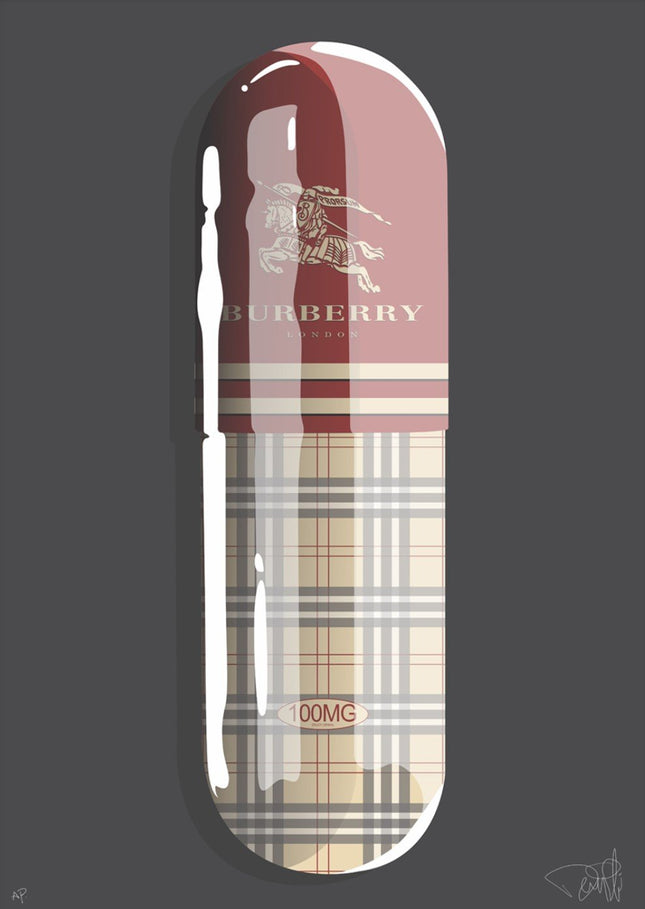
  • Fashion Addict Refill Burberry AP Archival Print by Denial- Daniel Bombardier

    Denial- Daniel Bombardier Fashion Addict Refill Burberry AP Archival Print by Denial- Daniel Bombardier

    Fashion Addict Refill- Burberry Limited Edition Archival Pigment Fine Art Print on 330gsm Canon Fine Art Paper by Legend Street Art and Modern Pop Culture Artist Denial. AP Artist Proof 2019 Signed Limited Edition of 100 Artwork Size 18x24 Burberry Designer Fashion Drug Pill. AP Artist Proof Numbered, Signed, Stamped on Reverse, Normal Edition of 100, 18x24, Archival Pigment Print on 330 GSM Canon Fine Art Paper. In the world of Denial, memory is important, because it is the basis of his work, as it nostalgically encourages the audience to engage with it. As a result, his art is as familiar, as it is disturbing because it reveals the most unsettling parts of society, the ones we are in a “denial” of. No matter its controversial history, graffiti is less and less viewed as a form of vandalism.

    $572.00

  • Covid No 19 Verte Archival Print by Denial- Daniel Bombardier

    Denial- Daniel Bombardier Covid No 19 Verte Archival Print by Denial- Daniel Bombardier

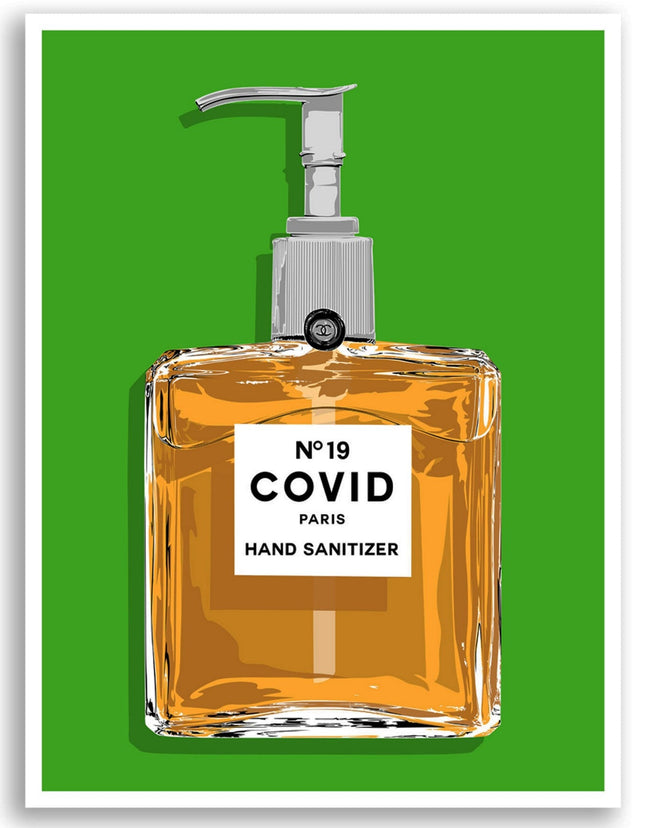
    Covid No 19- Verte Limited Edition Archival Pigment Print on 290gsm MOAB Fine Art Paper by Graffiti Pop Art and Street Artist Denial. 2021 Signed & Numbered Limited Edition of 19 Verte Covid19 Chanel Hand Sanitizer Virus Variant. Numbered, Signed, Stamped on Reverse Archival Pigment Print on MOAB Fine Art Paper 290 GSM Size 18" x 24" Denial’s COVID No. 19: Luxury Branding in the Age of Global Crisis Denial’s COVID No. 19 is a striking archival pigment print released in 2021 as a limited edition of 19, each hand-signed, numbered, and stamped on 290gsm MOAB fine art paper. The work appropriates the form of a Chanel No. 5 perfume bottle, replacing its iconic label with a fictional product name: COVID No. 19 Hand Sanitizer. Rendered with hyper-clean digital precision, the image reconfigures the aesthetics of high fashion to comment on the absurdities of pandemic-era consumerism. The hand sanitizer bottle is presented with all the visual authority of a luxury good, transforming an object of necessity into a parody of status and desire. At the core of this piece is a brutal cultural observation: during a global health emergency, everyday tools of survival—like sanitizer and masks—were elevated to symbols of identity, fashion, and economic access. Denial’s rebranding of Chanel’s perfume into a virus-era commodity confronts this shift head-on. The artwork doesn’t merely lampoon luxury—it reveals how systems of marketing can absorb trauma, repackage it, and sell it back to the public. The Chanel-style labeling is clinical yet elegant, a nod to how visual minimalism often masks corporate manipulation. Commercial Aesthetics as Subversive Weaponry Denial’s artistic strategy centers on the theft and recontextualization of commercial language. With COVID No. 19, the use of vector-sharp line work, realistic light reflections, and exacting product design mimics advertising to the point of deception. This imitation is intentional. The viewer is meant to initially read the image as authentic—something from a fashion magazine or cosmetics campaign—before the irony of the label snaps into focus. The dissonance between form and content invites a critique of the capitalist tendency to aestheticize suffering. This visual methodology ties directly into the ethos of Street Pop Art & Graffiti Artwork. Denial’s roots in unauthorized public messaging and subcultural image disruption remain present, even as the work exists in a fine art format. The absence of spray drips or rough textures does not diminish the rebellion. Instead, it retools the graphic language of commercial persuasion to undermine itself from within. What looks like a product pitch is, in fact, a visual accusation. The pandemic is not the subject—it is the branding of the pandemic that comes under fire. Street Pop Art as Pandemic Documentation COVID No. 19 operates as both satire and historical record. It captures a cultural moment when survival tools became luxury statements, when scarcity was linked to exclusivity, and when branding extended even to medical supplies. Denial’s artwork speaks to the way modern crises are not only experienced but marketed—how the fear of illness was filtered through the same systems that sell beauty, fashion, and lifestyle. The sanitizer bottle becomes a symbol not of protection, but of consumption. By fusing the iconography of fashion with the reality of a global pandemic, Denial forces the viewer to reconsider the boundaries between design and ethics, branding and survival. The visual simplicity of COVID No. 19 hides a layered indictment of how quickly commercial aesthetics can strip events of meaning. In the tradition of Street Pop Art & Graffiti Artwork, this piece turns familiar symbols against themselves, exposing the fragility of culture’s glossy surfaces when confronted with real human urgency.

    $313.00

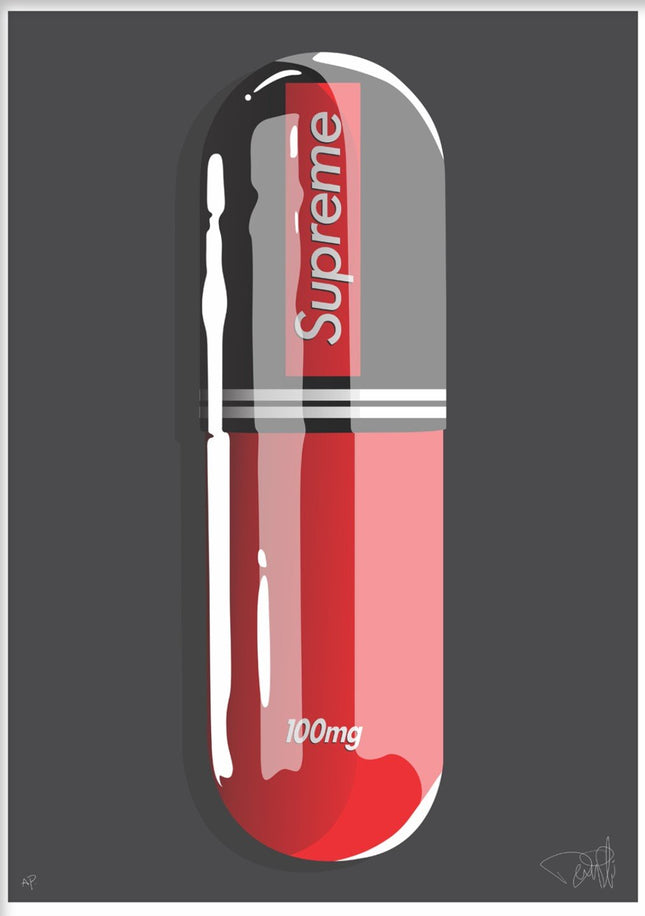
  • Fashion Addict Refill Supreme AP Archival Print by Denial- Daniel Bombardier

    Denial- Daniel Bombardier Fashion Addict Refill Supreme AP Archival Print by Denial- Daniel Bombardier

    Fashion Addict Refill- Supreme Limited Edition Archival Pigment Fine Art Print on 330gsm Canon Fine Art Paper by Legend Street Art and Modern Pop Culture Artist Denial. AP Artist Proof 2019 Signed Limited Edition of 100 Artwork Size 18x24 Supreme Designer Fashion Drug Pill. AP Artist Proof Numbered, Signed, Stamped on Reverse, Normal Edition of 100, 18x24, Archival Pigment Print on 330 GSM Canon Fine Art Paper. Essentially, Denial is satirizing the reality, which both he and us are experiencing, through some of the Western culture’s most emblematic symbols. Denial is utilizing cultural products with the intention to make a statement against the system, which gave birth to them. As a result, he re-contextualizes them and transforms them from commercial products to his cultural legacy.

    $572.00

  • Beautiful Dreamer 2016 Silkscreen Print by Aelhra

    Aelhra Beautiful Dreamer 2016 Silkscreen Print by Aelhra

    Beautiful Dreamer 2016 Limited Edition 2-Color Hand-Pulled Silkscreen Print on Fine Art Paper by Aelhra Graffiti Street Artist Modern Pop Art. 2016 Signed & Numbered Limited Edition of 100 Artwork Size 18x24

    $217.00

  • Covid No 19 Rouge Archival Print by Denial- Daniel Bombardier

    Denial- Daniel Bombardier Covid No 19 Rouge Archival Print by Denial- Daniel Bombardier

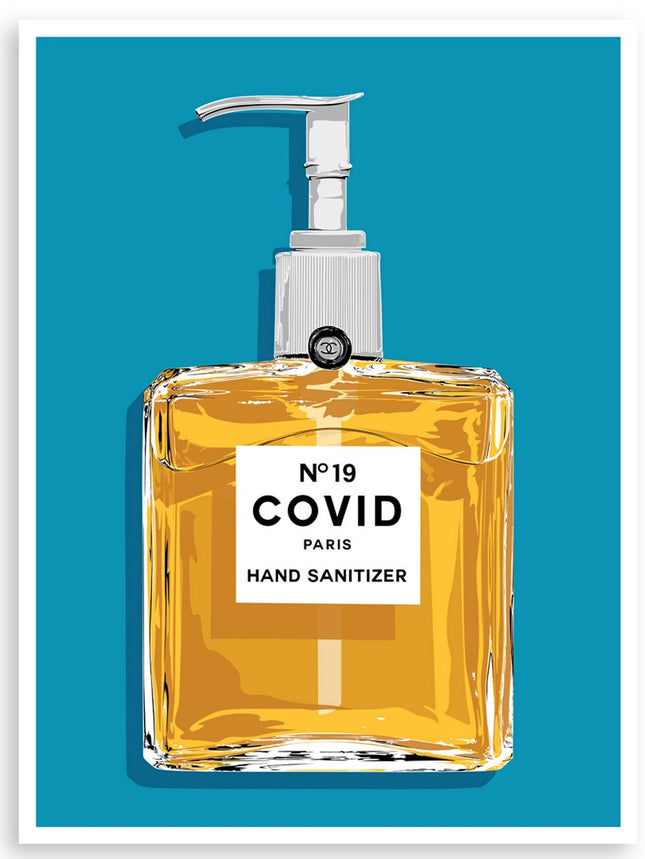
    Covid No 19- Rouge Limited Edition Archival Pigment Print on 290gsm MOAB Fine Art Paper by Graffiti Pop Art and Street Artist Denial. 2021 Signed & Numbered Limited Edition of 19 Rouge Covid19 Chanel Hand Sanitizer Virus Variant. Numbered, Signed, Stamped on Reverse Archival Pigment Print on MOAB Fine Art Paper 290 GSM Size 18" x 24" Denial’s COVID No. 19: Luxury Branding in the Age of Global Crisis Denial’s COVID No. 19 is a striking archival pigment print released in 2021 as a limited edition of 19, each hand-signed, numbered, and stamped on 290gsm MOAB fine art paper. The work appropriates the form of a Chanel No. 5 perfume bottle, replacing its iconic label with a fictional product name: COVID No. 19 Hand Sanitizer. Rendered with hyper-clean digital precision, the image reconfigures the aesthetics of high fashion to comment on the absurdities of pandemic-era consumerism. The hand sanitizer bottle is presented with all the visual authority of a luxury good, transforming an object of necessity into a parody of status and desire. At the core of this piece is a brutal cultural observation: during a global health emergency, everyday tools of survival—like sanitizer and masks—were elevated to symbols of identity, fashion, and economic access. Denial’s rebranding of Chanel’s perfume into a virus-era commodity confronts this shift head-on. The artwork doesn’t merely lampoon luxury—it reveals how systems of marketing can absorb trauma, repackage it, and sell it back to the public. The Chanel-style labeling is clinical yet elegant, a nod to how visual minimalism often masks corporate manipulation. Commercial Aesthetics as Subversive Weaponry Denial’s artistic strategy centers on the theft and recontextualization of commercial language. With COVID No. 19, the use of vector-sharp line work, realistic light reflections, and exacting product design mimics advertising to the point of deception. This imitation is intentional. The viewer is meant to initially read the image as authentic—something from a fashion magazine or cosmetics campaign—before the irony of the label snaps into focus. The dissonance between form and content invites a critique of the capitalist tendency to aestheticize suffering. This visual methodology ties directly into the ethos of Street Pop Art & Graffiti Artwork. Denial’s roots in unauthorized public messaging and subcultural image disruption remain present, even as the work exists in a fine art format. The absence of spray drips or rough textures does not diminish the rebellion. Instead, it retools the graphic language of commercial persuasion to undermine itself from within. What looks like a product pitch is, in fact, a visual accusation. The pandemic is not the subject—it is the branding of the pandemic that comes under fire. Street Pop Art as Pandemic Documentation COVID No. 19 operates as both satire and historical record. It captures a cultural moment when survival tools became luxury statements, when scarcity was linked to exclusivity, and when branding extended even to medical supplies. Denial’s artwork speaks to the way modern crises are not only experienced but marketed—how the fear of illness was filtered through the same systems that sell beauty, fashion, and lifestyle. The sanitizer bottle becomes a symbol not of protection, but of consumption. By fusing the iconography of fashion with the reality of a global pandemic, Denial forces the viewer to reconsider the boundaries between design and ethics, branding and survival. The visual simplicity of COVID No. 19 hides a layered indictment of how quickly commercial aesthetics can strip events of meaning. In the tradition of Street Pop Art & Graffiti Artwork, this piece turns familiar symbols against themselves, exposing the fragility of culture’s glossy surfaces when confronted with real human urgency.

    $313.00

  • Sneaker Print Blue Silkscreen Print by Skewville

    Skewville Sneaker Print Blue Silkscreen Print by Skewville

    Sneaker Print- Blue 1-Color Hand-Pulled Limited Edition Silkscreen Print on Hand-Cut Organic Roofing Asphalt Felt by Graffiti Street Artist Skewville. 2020 Hand Signed & Numbered Limited Edition of 80 Artwork Tar Paper Size 18x24

    $218.00

  • Wild Vanity Red Silkscreen Print by Stinkfish

    Stinkfish Wild Vanity Red Silkscreen Print by Stinkfish

    Wild Vanity- Red Hand-Pulled Limited Edition 5-Color Silkscreen Print on Cougar Natural Paper by Stinkfish Rare Street Art Famous Pop Artwork Artist. 2014 Signed & Numbered Wild Vanity by Stinkfish Screen Print Edition of 65 | Signed by the Artist Size: 18" x 22.5" City: Bogata, Colombia. Five color screenprint on Cougar Natural printed at FugScreens Studios, 18″ x 24″. Stinkfish's "Wild Vanity": A Vibrant Fusion in Street Pop Art "Wild Vanity" emerges as an exceptional creation from Stinkfish, an artist renowned for his vivid street pop art and graffiti artwork. This piece represents a striking amalgamation of the artist's signature stencil style with the vibrant color palette that often characterizes his work. Hand-pulled and limited to a series of 65, "Wild Vanity" is a five-color silkscreen print on Cougar Natural paper that showcases Stinkfish's exploration into the vibrancy of human features juxtaposed with the abstract patterns that define his artistic expression. Crafted in 2014 and sized at 18" x 22.5", "Wild Vanity" was brought to life at FugScreens Studios, known for its exceptional screenprinting work. The artist's choice of Cougar Natural paper—a high-quality, uncoated stock—serves as the perfect canvas for the print, ensuring that the colors remain vivid and the details sharp. Each hand-pulled print is signed and numbered by Stinkfish, offering a tangible connection to the artist's hand and vision. The Artistic Language of Stinkfish in "Wild Vanity" The artistic language Stinkfish employs in "Wild Vanity" is bold and subtle. The reds are not merely hues but are symbolic expressions of energy and passion. The silkscreen method allows for a layering effect that gives each color its own space to breathe while contributing to the overall unity of the piece. This technique indicates Stinkfish's roots in graffiti, a world where color, form, and space beautify com, communicate, and resonate with the onlooker. Stinkfish's work is often characterized by found photographs and images from the streets, which he recontextualizes by adding his distinctive stenciled patterns. "Wild Vanity" is no exception. The faces in the artwork appear to be lifted from an existing narrative, a snippet of a larger story that the viewer is invited to ponder. The overlay of intricate patterns across the faces transforms the subjects, commenting on the masks we wear and the identities we portray. Cultural Implications of "Wild Vanity" in Contemporary Art "Wild Vanity" stands at the crossroads of multiple cultural narratives. It is not just a visual feast but an artistic statement that delves into the essence of identity and perception in the modern world. Through the five-color silkscreen print, Stinkfish challenges the traditional boundaries between high art and street art, merging them into a singular expression that is both accessible and complex. The work's title, "Wild Vanity," hints at a critique of self-obsession and the constructed images prevalent in society. Using a fashion magazine cover as the foundation for this piece, Stinkfish engages in a dialogue with the viewer about the nature of beauty and the role of media in shaping our understanding of it. The wildness comes from the disruptive patterns that cascade over the faces, suggesting a tension between the natural human essence and the artificial veneer of societal standards. Collectibility and Influence of Stinkfish's Silkscreen Prints As a collectible, "Wild Vanity" represents an essential piece of Stinkfish's portfolio, encapsulating his distinct style and thematic concerns. The limited edition nature of the print makes it a coveted item for collectors and enthusiasts of street pop art. Stinkfish's influence extends beyond the street corners of Bogota, Colombia—his work is recognized globally, and pieces like "Wild Vanity" are pivotal in understanding the trajectory of his artistic journey. The print is also a testament to the evolution of street art into a recognized and celebrated form of fine art. By bringing the techniques and aesthetics of street art into the controlled environment of the studio and then onto fine art paper, Stinkfish bridges worlds, offering a piece that is as much at home in a gallery as on the streets. In the context of pop, street art, and graffiti artwork, "Wild Vanity" is a vibrant example of how these genres can intersect to create works that reflect contemporary culture and are timeless in their appeal. Stinkfish's ability to communicate through layers of color and pattern ensures that "Wild Vanity" will remain a significant and thought-provoking piece within the ever-evolving narrative of art.

    $217.00

  • Floral Takeover 2017 Red Cream Silkscreen Print by Shepard Fairey- OBEY

    Shepard Fairey- OBEY Floral Takeover 2017 Red Cream Silkscreen Print by Shepard Fairey- OBEY

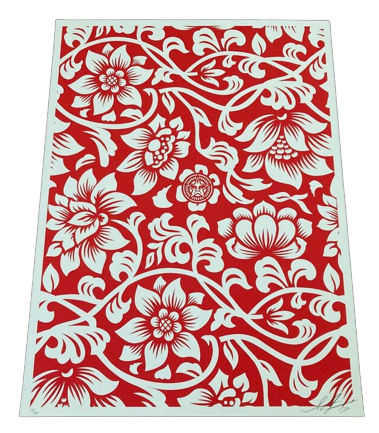
    Floral Takeover 2017 Red Cream Silkscreen Print by Shepard Fairey- OBEY Hand-Pulled 2-Color on Cream Speckletone Fine Art Paper Limited Edition Artwork Obey Pop Culture Artist. 2017 Signed & Numbered Limited Edition of 200 Artwork Size 18x24 Silkscreen Print "I'm always creating new patterns for my street installs and fine art pieces. I used to buy discontinued wallpaper, but now I design and print my own. These look nice as stand-alone prints, not just repeat patterns, so I'm releasing a 200-print edition of four versions. Buy a couch to match… coming soon… just kidding!" -Shepard Fairey- OBEY. The "Floral Takeover 2017 Red Cream Silkscreen Print" is a significant entry in the oeuvre of Shepard Fairey, an artist whose work is synonymous with the intersection of Street Pop Art and graffiti Artwork. This piece is part of a limited edition of 200, each signed and numbered, denoting its value as a collectible. With dimensions of 18x24 inches, the silkscreen print is substantial enough to make a statement on any wall it adorns. Fairey, with his characteristic OBEY brand, has long been a provocateur, blending commercial art techniques with street art's subversive edge, and this work is a clear example of that fusion. Fairey's approach to creating new patterns for street installations and fine art pieces harks back to his early days when he would use discontinued wallpaper as a backdrop for his work. The transition to designing and printing his patterns demonstrates a progression in his artistic control and the evolution of his signature style. The 'Floral Takeover series showcases the artist's ability to adapt elements traditionally associated with interior design and repurpose them within the context of street art and pop culture. By doing so, Fairey blurs the lines between art as a purely aesthetic commodity and its function as a commentary on societal norms. In this print, Fairey plays with a cream speckle tone fine art paper that gives the work a textured, organic feel, contrasting with the precise and deliberate two-color silkscreen technique. The choice of cream as the base color amplifies the boldness of the red floral pattern, allowing the design to leap off the paper with a vivacity that captures the viewer's eye. The juxtaposition of color and form symbolizes Fairey's work, where contrast often serves as a visual metaphor for broader cultural and political contrasts. Moreover, the 'Floral Takeover' print series reflects Fairey's humor and his recognition of the interplay between art and the commercial world, as hinted at in his playful suggestion to "buy a couch to match." This statement encapsulates the artist's awareness of the commodification of art in pop culture and his role within that process. Through works like this, Fairey continues challenging perceptions of what street art can be, bridging the gap between graffiti's rebel spirit and gallery pieces' polished finish.

    $718.00

  • Covid No 19 Orange Archival Print by Denial- Daniel Bombardier

    Denial- Daniel Bombardier Covid No 19 Orange Archival Print by Denial- Daniel Bombardier

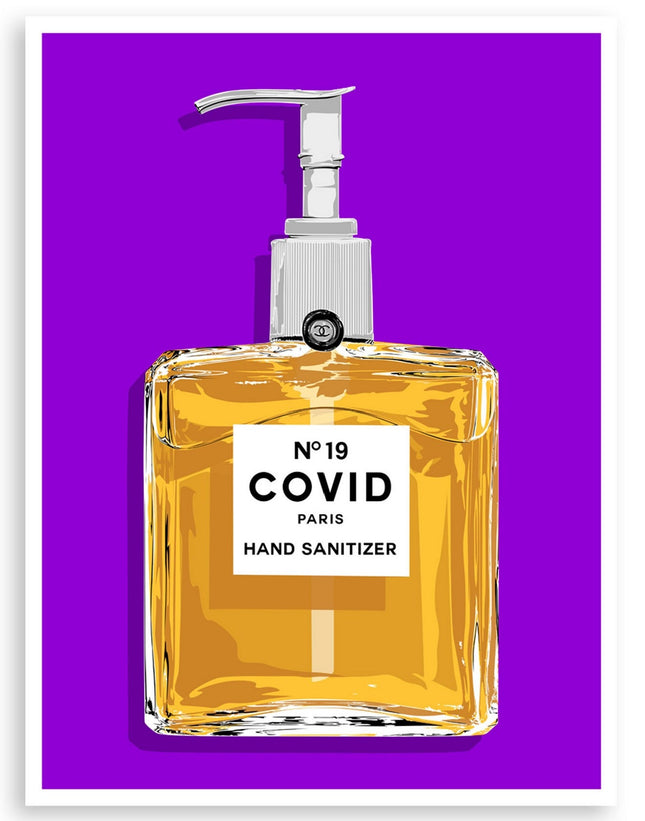
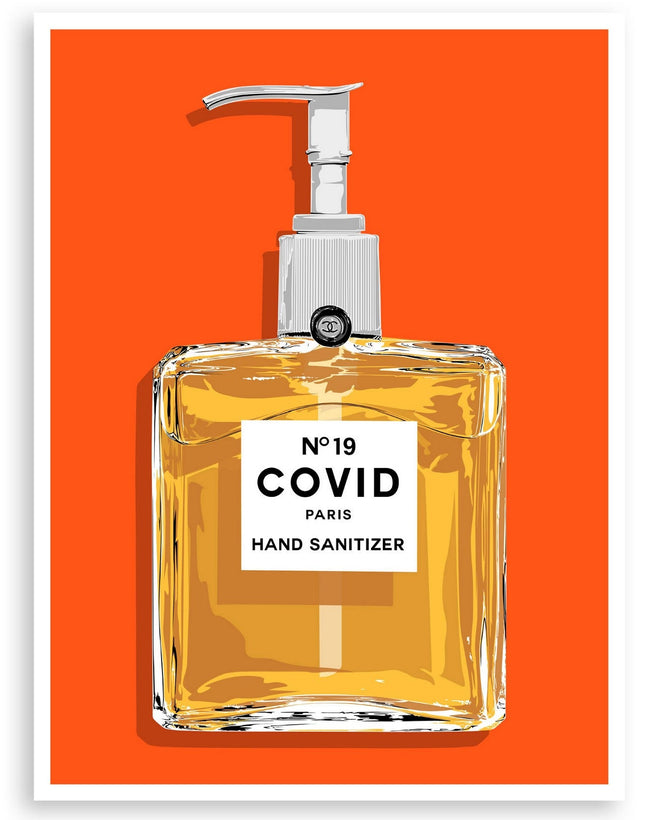
    Covid No 19- Orange Limited Edition Archival Pigment Print on 290gsm MOAB Fine Art Paper by Graffiti Pop Art and Street Artist Denial. 2021 Signed & Numbered Limited Edition of 19 Orange Covid19 Chanel Hand Sanitizer Virus Variant. Numbered, Signed, Stamped on Reverse Archival Pigment Print on MOAB Fine Art Paper 290 GSM Size 18" x 24" Denial’s COVID No. 19 Orange: Consumerism, Fear, and Satire in Street Pop Art Denial’s COVID No. 19 Orange exemplifies the collision of public crisis and luxury branding through the lens of Street Pop Art & Graffiti Artwork. Created in 2021 during the height of global pandemic anxiety, this 18 x 24 inch archival pigment print was produced on 290gsm MOAB fine art paper in a limited edition of 19. Each piece is hand-signed, numbered, and stamped on the reverse, reinforcing its exclusivity. At the center of the composition is a reimagined Chanel No. 5 perfume bottle, transformed into a hand sanitizer labeled COVID No. 19. Set against a bright orange background, the image invites immediate visual engagement while delivering sharp cultural critique. The bottle’s glassy elegance, chrome pump top, and minimalist white label echo the design cues of high-end fashion advertisements. Yet the label’s altered wording—replacing perfume with sanitizer, Paris with pandemic—twists the luxurious into the absurd. The reference to Chanel speaks to aspirations of sophistication and wealth, but Denial weaponizes that symbolism to comment on the commodification of fear. In this world, even a deadly virus is repackaged as a designer product. The hand sanitizer becomes a fashion accessory, fetishized through design while ignoring the broader human cost beneath its surface. Graffiti Logic Meets Capitalist Irony Denial, a Canadian street artist known for appropriating advertising language and luxury branding, uses graphic clarity and humor as a tool for subversion. His work often draws from corporate visual codes—clean typography, product rendering, billboard color schemes—but repurposes them with anti-capitalist intent. In COVID No. 19 Orange, the weapon of critique is the illusion of desirability. The orange backdrop evokes urgency and alertness, much like a hazard sign or emergency broadcast screen, while also standing in contrast to the cool minimalism of the bottle. The effect is both playful and jarring. This kind of satire aligns with graffiti’s traditional role as anti-establishment communication. While the piece itself is produced with fine art materials and gallery-grade printing methods, its message functions as cultural graffiti—tagging corporate aesthetics with disruptive truths. The slickness of the image mimics the very systems it critiques, blurring the line between participation and protest. Viewers are pulled into the illusion of glamour before recognizing its underlying emptiness. Street Pop Art as Pandemic-Era Social Commentary The use of the term COVID No. 19 instead of No. 5 cleverly mimics both pharmaceutical naming conventions and fashion industry branding. This linguistic mirroring is central to the piece’s impact, reinforcing how marketing language infiltrates even the most tragic aspects of public life. The pandemic is not just a health crisis—it’s rebranded, resold, and reimagined through consumer lenses. The art object, in this case, doubles as a time capsule for an era defined by both panic and product. COVID No. 19 Orange encapsulates the essence of Street Pop Art & Graffiti Artwork by leveraging familiar cultural symbols to confront uncomfortable realities. Denial does not paint the virus as a biological enemy but as a commodified spectacle. The artist’s reinterpretation of Chanel’s perfume bottle is more than parody—it is a declaration that even catastrophe can be co-opted into a luxury good. The work serves as both a critique of consumer culture and a mirror to the audience that consumes it, asking not just what we’re buying, but what’s being sold

    $313.00

Designer Fashion Graffiti Street Pop Artwork

Designer Fashion and Its Resonance with Street Pop Art

Designer fashion, often seen as the pinnacle of creativity and craftsmanship within the clothing industry, has found an unexpected but harmonious synergy with the raw, expressive nature of Street Pop Art and Graffiti Artwork. This intersection has sparked a dialogue between two seemingly disparate worlds, resulting in a fusion of high fashion with the gritty aesthetic of urban art. Designer brands, known for their meticulous attention to detail and innovative designs, have increasingly drawn inspiration from street art's vibrant visuals and social commentary. This has led to the creation of collections that embody graffiti's rebellious spirit and visual impact, bringing a fresh perspective to luxury fashion. The streets have become a source of inspiration for designers looking to infuse their creations with a sense of authenticity and edge that resonates with contemporary audiences. Street Pop Art, characterized by its bold color, graphic lines, and often provocative imagery, offers a rich palette from which designers can draw. Incorporating these elements into high-end fashion has given rise to garments that are visually striking and carry the subversive undertones of street culture. This blending of influences has challenged traditional notions of what designer fashion can be, expanding the creative horizons of the industry. Designer fashion as a topic in graffiti street pop art is an exciting fusion of two seemingly distinct art forms. This concept brings together the world of high fashion and street art's raw, urban energy, creating an exciting visual and cultural experience. Here are some key ideas to consider when exploring designer fashion in graffiti street pop art: Brand logos and motifs: Incorporating recognizable brand logos and motifs into graffiti street pop art can create striking visual effects. Artists might reimagine these elements in their unique style, playing with color, form, and texture to create something fresh and dynamic. Fashion icons: Pay homage to fashion icons such as designers, models, and other industry influencers by featuring their portraits or quotes within graffiti street pop art. This can serve as a tribute to those who have shaped the fashion world and bring a sense of history and personality to the artwork. Social commentary: Graffiti street pop art often contains messages or commentary on social, political, or economic issues. By incorporating these themes, artists could explore the fashion industry's impact on the environment, labor practices, or consumerism. Streetwear and fashion collaboration: Streetwear brands have increasingly collaborated with high fashion designers, blurring the lines between the two worlds. This creates an opportunity for graffiti street pop artists to draw inspiration from these partnerships and create art that reflects this fusion of styles. Visual elements: Incorporating elements of designer fashion, such as patterns, textiles, and silhouettes, into graffiti street pop art can result in intriguing visual compositions.

Impact and Influence of Street Aesthetics in Designer Fashion

The interplay between designer fashion and Street Pop Art goes beyond mere aesthetic appreciation; it is a cultural exchange that reflects the evolving landscape of art and society. The fashion industry's embrace of street art signifies a recognition of the cultural significance of this art form and its creators. It is an acknowledgment that the messages conveyed through graffiti and street art — often centered on themes of resistance, identity, and community — have a place within the narratives that designer fashion seeks to tell. In turn, street artists have found new canvases to display their work, with designer garments acting as mobile murals that traverse the global stage. This exchange is evident in the collaborations between prominent street artists and luxury fashion houses. These partnerships have produced iconic pieces where the artist's signature style is woven into the fabric of designer wear. These collaborations are not just commercial ventures; they are a form of mutual endorsement that lends authenticity to the fashion pieces and elevates the status of the street artist within the art world. The result is a collection that captures the zeitgeist, marrying the exclusivity of designer fashion with the inclusivity of street art. The impact of street aesthetics on designer fashion can be observed in the way that traditional luxury symbols are reimagined through the lens of street art. Iconic logos and patterns are reworked with a streetwise twist, infusing them with a new life that resonates with a younger, more diverse audience. This has led to the resurgence of some designer brands that have cleverly aligned themselves with the street art scene, tapping into its cultural capital to rejuvenate their image and appeal to a broader demographic.

Furthermore, the influence of Street Pop Art and Graffiti Artwork on designer fashion has led to a democratization of luxury fashion. Limited-edition releases, often featuring street art-inspired designs, have become highly coveted items, blurring the lines between high art and accessible fashion. This trend reflects a shift in the fashion industry towards more inclusive and varied expressions of creativity, where the value of a garment is enhanced by its artistic significance rather than just its brand name or price tag.

The Future of Designer Fashion in the Age of Street Art

As we look to the future, the relationship between designer fashion and street art appears poised for continued growth and exploration. The ongoing conversation between these two creative fields suggests a future where designer fashion increasingly incorporates street influences in design and its approach to marketing, brand storytelling, and customer engagement. Street art's potential to continue infusing designer fashion with new energy and relevance is vast, promising a dynamic and ever-evolving landscape for both industries. In essence, the convergence of designer fashion with Street Pop Art and Graffiti Artwork is a testament to the power of cross-disciplinary influences in driving innovation and cultural progression. It is a collaboration that celebrates diversity, challenges norms and reflects the spirit of the times. As designer fashion continues to weave the vibrancy of street art into its fabric, it not only enriches its narrative but pays homage to the art form that has become an indelible part of our urban environment and cultural identity. Artists can experiment with combining these elements to create a unique aesthetic that celebrates the beauty and creativity of fashion while maintaining the bold, edgy essence of street art. Fashion shows and events: Use the backdrop of fashion shows, events, and exhibitions to inspire graffiti street pop art. This can include capturing the energy, glamour, and spectacle of these events and highlighting specific moments, designs, or collections that resonate with the artist. Style subcultures: Drawing from the rich history of various style subcultures, such as punk, hip-hop, or grunge, artists can create graffiti street pop art, highlighting the influence of these movements on designer fashion. This approach can showcase the evolution of fashion and the interconnectedness of different styles. Mash-ups and remixes: Similar to how DJs mix tracks, graffiti street pop artists can "remix" elements of designer fashion by combining them in unconventional and surprising ways. This could involve juxtaposing high fashion with everyday items, blending styles from different periods or cultures, or reinterpreting classic designs through a contemporary lens. Interactive and experiential art: Graffiti street pop art can be transformed into interactive or experiential installations by incorporating elements of designer fashion. This might include creating immersive environments, allowing viewers to become a part of the artwork, or using technology to enhance the sensory experience. Artistic collaboration: Encouraging collaborations between graffiti street pop artists and fashion designers can lead to innovative and unexpected results. These partnerships can push the boundaries of both art forms, resulting in unique pieces that combine the best of both worlds. Collaborative projects might include designing limited-edition clothing or accessories, creating joint exhibitions, or developing public art installations. By exploring designer fashion as a topic in graffiti street pop art, artists can challenge traditional boundaries and spark conversations about the relationship between high fashion and street culture. This fusion of styles creates an opportunity for artists to express their creativity and make bold statements while celebrating the beauty, innovation, and influence of designer fashion. As graffiti street pop art continues to evolve, incorporating elements of designer fashion into its visual language can result in a vibrant and exciting artistic movement that reflects the ever-changing landscape of fashion and contemporary art.
Footer image

© 2025 Sprayed Paint Art Collection,

    • Amazon
    • American Express
    • Apple Pay
    • Bancontact
    • Diners Club
    • Discover
    • Google Pay
    • iDEAL
    • Mastercard
    • PayPal
    • Shop Pay
    • Visa

    Login

    Forgot your password?

    Don't have an account yet?
    Create account