Designer Fashion

8 artworks

  • High Fashion Goyard Blotter Print by Denial- Daniel Bombardier

    Denial- Daniel Bombardier High Fashion Goyard Blotter Print by Denial- Daniel Bombardier

    High Fashion Goyard Blotter Print by Denial- Daniel Bombardier Limited Edition Fine Art Archival Pigment Print Art on Perforated Blotter Paper. 2024 Signed & Numbered Limited Edition of 35 Archival Pigment Print on Perforated Blotter Paper Size: 7.5 x 7.5 Inches Release: April 19, 2024, Limited blotter editions are hand-perforated by Zane Kesey. High Fashion Goyard Blotter Print: A Study in Pattern, Prestige, and Pop Subversion The High Fashion Goyard blotter print by Canadian Street Pop Art & Graffiti Artwork artist Daniel Bombardier, professionally known as Denial, turns the exclusivity of the Goyard brand into a compact and compelling artwork. Released April 19, 2024, as part of a fine art edition limited to just 35 pieces, this archival pigment print on perforated blotter paper is both precise in execution and rebellious in concept. With hand-perforation by Zane Kesey, the work carries an underground aesthetic despite its clean luxury reference. The piece measures 7.5 x 7.5 inches and continues Denial’s acclaimed critique of consumer culture, pushing iconic fashion imagery into new zones of commentary and collection. From Luxury Trunks to Counterculture Paper: The Recontextualization of Goyard Founded in Paris in 1853, Goyard became a symbol of tailored refinement with its hand-painted chevron monogram pattern and elite clientele. Denial captures that storied branding and distills it into a new artistic form—a perforated sheet traditionally used for psychedelic blotter art. This transformation places the logo and signature motif into a setting charged with countercultural energy. The repeating Goyard pattern, once associated with aristocracy and heritage, is reimagined as a textured background for satire and critique. The shift from luggage canvas to blotter format creates a visual and conceptual rupture that aligns with the confrontational and reflective themes of Street Pop Art & Graffiti Artwork. Denial’s Commentary on Obsession, Branding, and Exclusivity Daniel Bombardier’s work often dissects themes of consumption, capitalism, and identity through the appropriation of logos and advertising imagery. With this Goyard piece, he expands that language by referencing how logos function like currency and power in culture. The repetition of the Goyard insignia mimics the hypnotic qualities of both mass marketing and altered states, while the fine detailing, contrast, and symmetry give it an aesthetic punch. Denial continues to use high fashion not as admiration but as a lens through which to view and question aspiration, desire, and value. This piece places Goyard—typically seen on the arms of global elite—into a context where ideas, not wealth, drive attention. A Limited Blotter Print Made for Today’s Cultural Shifts As part of a larger series interpreting luxury fashion houses through a rebellious fine art practice, the Goyard blotter print finds its place between gallery wall and cultural archive. The hand-signed and numbered edition affirms the physical object as a collector’s item, while the blotter format alludes to deeper layers of metaphor and transformation. Zane Kesey’s participation in perforating the sheets links it to historical acid blotter designs, amplifying the surreal juxtaposition. Denial’s Goyard print is not merely a remix—it’s a precise cultural critique in the language of Street Pop Art & Graffiti Artwork, celebrating design while questioning the systems that idolize it.

    $500.00

  • High Fashion Gucci Blotter Print by Denial- Daniel Bombardier

    Denial- Daniel Bombardier High Fashion Gucci Blotter Print by Denial- Daniel Bombardier

    High Fashion Gucci Blotter Print by Denial- Daniel Bombardier Limited Edition Fine Art Archival Pigment Print Art on Perforated Blotter Paper. 2024 Signed & Numbered Limited Edition of 35 Archival Pigment Print on Perforated Blotter Paper Size: 7.5 x 7.5 Inches Release: April 19, 2024, Limited blotter editions are hand-perforated by Zane Kesey. High Fashion Gucci Blotter Print by Denial High Fashion Gucci by Denial, also known as Daniel Bombardier, boldly merges the visual codes of luxury branding with the gritty defiance of Street Pop Art & Graffiti Artwork. This limited edition print, released in 2024 as part of a 35-print run, measures 7.5 x 7.5 inches and is crafted using archival pigment inks on perforated blotter paper. With each piece hand-perforated by Zane Kesey, the work is both a nod to countercultural history and a sharp cultural critique. Denial’s use of blotter paper as a canvas underscores a larger message about escapism, consumption, and image manipulation in modern society. Luxury Rewired Through a Subversive Lens Centered around the iconic Gucci logo and set against a repeating branded pattern, the artwork includes a coiled red, black, and white serpent slithering across the surface. The visual blend of opulence and danger makes a striking impression. This symbolic snake—long associated with temptation, rebellion, and transformation—amplifies the tension between consumer desire and critical awareness. Denial does not distort the branding. Instead, he amplifies it, forcing the viewer to engage with the familiarity of the logo in a completely different context. The very use of blotter paper, historically linked to psychedelics, adds layers of metaphor about perception, transformation, and cultural illusion. Gucci and the Aesthetic of Power Gucci’s visual identity has become shorthand for status and aspiration, and this is exactly what Denial calls into question. In a world where logos often carry more cultural weight than the products themselves, the artist draws attention to the machinery of branding and its influence over identity and expression. Through the lens of Street Pop Art & Graffiti Artwork, this piece makes Gucci’s signature motifs accessible but also provocative. It turns fashion into a format for critique rather than celebration, showing how luxury aesthetics can be hijacked and repurposed as contemporary iconography. Daniel Bombardier’s Ongoing Commentary Denial continues to explore the relationships between media, branding, and cultural behavior. Known for fusing bold color palettes with subversive imagery, his High Fashion Gucci print delivers both visual satisfaction and layered meaning. By working on perforated blotter paper, he reinforces a tactile history of underground movements and counter-narratives. This artwork fits within a larger pattern of Denial’s efforts to blur the line between commercial art and social commentary. It is not just a stylish nod to high fashion. It is a streetwise deconstruction of consumerist illusion. Each dot, logo, and symbol demands a second look—not for what it sells, but for what it questions.

    $500.00

  • High Fashion II Hermès Blotter Print by Denial- Daniel Bombardier

    Denial- Daniel Bombardier High Fashion II Hermès Blotter Print by Denial- Daniel Bombardier

    High Fashion II Hermès Blotter Print by Denial- Daniel Bombardier Limited Edition Fine Art Archival Pigment Print Art on Perforated Blotter Paper. 2024 Signed & Numbered Limited Edition of 35 Archival Pigment Print on Perforated Blotter Paper Size: 7.5 x 7.5 Inches Release: April 19, 2024, Limited blotter editions are hand-perforated by Zane Kesey. High Fashion II Hermès Blotter Print by Denial High Fashion II Hermès by Denial, also known as Daniel Bombardier, captures a sharp commentary on luxury consumerism through the lens of Street Pop Art & Graffiti Artwork. Released in 2024 as a limited edition of 35 signed and numbered archival pigment prints, this 7.5 x 7.5 inch piece is printed on perforated blotter paper and hand-perforated by Zane Kesey. The work uses the instantly recognizable Hermès Paris branding and vivid orange palette to highlight the intersection of wealth symbolism and artistic subversion. As with many of Denial’s works, the use of luxury fashion iconography is both a nod to aspirational culture and a critique of its grip on identity and self-worth. Fashion as Commodity and Canvas In this print, Denial transforms the Hermès packaging into an object of reflection. The orange field, carriage motif, and Parisian serif typography remain visually intact, yet their presence on blotter paper invites reinterpretation. In the hands of Denial, this branded imagery becomes more than decorative. It takes on a satirical tone, challenging viewers to consider how brands shape desire and value. By placing this on a medium traditionally linked to psychedelia and altered consciousness, the artist brings a new layer of irony—how deep are we in the trance of consumerism when luxury logos elicit emotional responses? Street Pop Art & Graffiti Artwork as a Response to Luxury Culture Daniel Bombardier is known for blending sleek graphic sensibilities with raw social critique. His work often engages with consumerism, capitalism, and surveillance culture, and the High Fashion II Hermès print continues this thread. The piece balances reverence for the aesthetic of high-end branding with an interrogation of its psychological influence. As with the best examples of Street Pop Art & Graffiti Artwork, this print disrupts traditional spaces by repurposing symbols of status into agents of visual dissent. It belongs to a growing lineage of works that reframe logos and designer marks as objects of conversation rather than worship. The Luxury Logo as Cultural Code High Fashion II Hermès does not dilute its message. It elevates it through contrast. The clash of street aesthetics and high fashion visuals builds a dialogue about power, visibility, and access. Hermès, a brand known for restraint and craftsmanship, is reimagined in a format associated with the underground and countercultural expression. This transformation reframes luxury as something no longer untouchable, but critically examined. Denial’s work acts as a graphic mirror, held up to a society shaped by what it consumes and what it chooses to idolize. Through this limited blotter edition, Denial fuses critique and craft into a square of paper that speaks volumes.

    $500.00

  • High Fashion Chanel Blotter Print by Denial- Daniel Bombardier

    Denial- Daniel Bombardier High Fashion Chanel Blotter Print by Denial- Daniel Bombardier

    High Fashion Chanel Blotter Print by Denial- Daniel Bombardier Limited Edition Fine Art Archival Pigment Print Art on Perforated Blotter Paper. 2024 Signed & Numbered Limited Edition of 35 Archival Pigment Print on Perforated Blotter Paper Size: 7.5 x 7.5 Inches Release: April 19, 2024, Limited blotter editions are hand-perforated by Zane Kesey. Chanel Reimagined in Street Pop Art & Graffiti Artwork The unmistakable double C logo of Chanel has long stood as a symbol of luxury, status, and timeless fashion, yet in the world of Street Pop Art & Graffiti Artwork, it takes on a new identity. Chanel, founded by Gabrielle Chanel in France during the early twentieth century, revolutionized fashion through clean lines and modern elegance. In the context of urban art, its pristine image is often recontextualized as a critique, satire, or celebration of wealth culture and identity. Artists like Daniel Bombardier, also known as Denial, use this emblem to explore the commodification of status and the blending of luxury and rebellion. Luxury Disrupted: Daniel Bombardier’s Artistic Commentary In 2024, Daniel Bombardier released a limited edition blotter paper artwork titled High Fashion Chanel. With an edition of only thirty-five, this archival pigment print was applied on hand-perforated blotter paper by Zane Kesey, a figure associated with psychedelic culture. The medium alone offers a layered context, hinting at altered states and counterculture movements. The bold Chanel logo dominates a minimalist yet highly repetitive background, turning the monogram pattern into both a celebration and subversion of consumerist branding. What traditionally represents refinement and class is reframed as something mass-produced and industrial, raising questions about the values consumers assign to logos and heritage. Visual Language and the Power of the Symbol The use of blotter paper in this edition is more than a stylistic decision. Its association with underground psychedelia adds another layer to the interpretation, aligning the visual impact of the work with ideas of transformation, critique, and satire. Bombardier is known for blending commercial aesthetics with provocative messages, and this Chanel print is no exception. The composition presents a clean layout that invites viewers to engage with how deeply symbols have embedded themselves into culture. The repetition of the Chanel monogram mimics advertising saturation, while the clean lines reference the brand's original design ethos, creating tension between reverence and critique. Street Pop Art & Graffiti Artwork Meets Fashion Iconography High Fashion Chanel reflects how street-level art forms engage with fashion not only as design but as commentary. This blotter print stands as both an homage and interrogation of luxury’s influence on identity, class, and aspiration. Denial’s work joins a broader conversation where fashion logos are used as tools for expression, resistance, or humor in urban visual culture. Through precise design, unexpected mediums, and intentional appropriation, Chanel’s image is reworked into something both familiar and radically transformed—making it an ideal subject within the language of Street Pop Art & Graffiti Artwork.

    $500.00

  • Miss Piggy On Ozempic Blotter Paper Archival Print by Ben Frost

    Ben Frost Miss Piggy On Ozempic Blotter Paper Archival Print by Ben Frost

    Miss Piggy On Ozempic Blotter Paper Archival Print by Ben Frost Limited Edition Fine Art Archival Pigment Print Art on Perforated Blotter Paper. 2025 Signed & Numbered Limited Edition of TBD Archival Pigment Print on Perforated Blotter Paper Size: 7.5 x 7.5 Inches Release: April 19, 2025 Limited blotter editions are hand-perforated by Zane Kesey. Miss Piggy On Ozempic by Ben Frost: Glamour, Medication, and Street Pop Satire Miss Piggy On Ozempic Blotter Paper Archival Print by Ben Frost, released in 2025, marks another unflinching entry in the artist’s exploration of pharmaceutical aesthetics and iconic pop culture. Printed as a limited edition archival pigment work on perforated blotter paper, this 7.5 x 7.5 inch artwork puts Miss Piggy—arguably the most flamboyant and body-conscious character of the Muppets—at the center of a satirical fusion between celebrity vanity and the contemporary obsession with weight-loss medication. Miss Piggy is rendered in her classic pink glamor with her signature lashes, pearls, and sass, juxtaposed against the stark commercial design of Ozempic packaging. With references to semaglutide, prescription labels, and the inflated price of American healthcare, the work pokes at society’s increasing reliance on aesthetic pharmaceuticals. Street Pop Art & Graffiti Artwork Meets Medical Consumerism Ben Frost, known for his bold and controversial use of commercial packaging as visual canvas, turns pharmaceutical branding into a narrative device. With Miss Piggy as the character choice, the message becomes sharply ironic. The collision of children’s entertainment with adult insecurities about beauty, size, and control echoes throughout the composition. This piece is not just parody but visual critique, challenging the public’s relationship with health marketed as vanity and the commodification of self-worth. The format of the blotter paper, perforated and collectible, reinforces the idea of medication as a consumable culture artifact—something to be taken, divided, shared, or used for identity shaping. The Role of Feminine Icons in Street Pop Narratives Miss Piggy’s exaggerated femininity and status as a cultural diva are cleverly subverted in this composition. Her character becomes a visual metaphor for the endless pursuit of image perfection. Ben Frost’s work often questions who sets those standards and who profits from them. Here, the packaging of a once-niche diabetes medication now popularly associated with cosmetic weight loss becomes the modern-day pedestal on which icons are propped and critiqued. This collision of corporate design and animated star power builds tension between innocence and commodification, using Street Pop Art & Graffiti Artwork methods to satirize how quickly culture recycles its idols and issues. Blotter Medium and Psychedelic Provocation Produced in collaboration with Zane Kesey, who hand-perforated the blotter editions, the piece subtly nods to counterculture and the history of mind-altering media. While Ozempic is marketed as a drug for bodily transformation, the print format itself references altered states of awareness. The use of a pop icon like Miss Piggy elevates the print to a statement not just about beauty standards, but about consumption itself—whether it's drugs, fame, or cartoon nostalgia. Miss Piggy On Ozempic is a sharp-edged satire of cultural priorities in an era of performative wellness and image engineering. It is loud, subversive, and unmistakably Frost.

    $550.00

  • High Fashion I Louis Vuitton Blotter Print by Denial- Daniel Bombardier

    Denial- Daniel Bombardier High Fashion I Louis Vuitton Blotter Print by Denial- Daniel Bombardier

    High Fashion I Louis Vuitton Archival Blotter Paper Print by Denial- Daniel Bombardier Limited Edition Fine Art Archival Pigment Print Art on Perforated Blotter Paper. 2024 Signed & Numbered Limited Edition of 35 Archival Pigment Print on Perforated Blotter Paper Size: 7.5 x 7.5 Inches Release: April 19, 2024, Limited blotter editions are hand-perforated by Zane Kesey. Luxury Satirized in Street Pop Art & Graffiti Artwork High Fashion I Louis Vuitton by Denial, the alias of Canadian artist Daniel Bombardier, is a limited edition archival pigment print presented on perforated blotter paper. Released in April 2024 in an edition of 35, this work merges the aesthetics of luxury branding with a provocative medium traditionally associated with underground psychedelic culture. The iconic Louis Vuitton monogram and checkerboard pattern are front and center, layered in a meticulous design that plays with status, obsession, and commodification. Each edition is hand-perforated by Zane Kesey, creating a textural and conceptual connection between art, counterculture, and consumption. Daniel Bombardier’s Weaponized Iconography Daniel Bombardier has long explored the themes of consumerism and propaganda through his Street Pop Art & Graffiti Artwork. Under the name Denial, his pieces critique mass media, brand worship, and political manipulation. High Fashion I Louis Vuitton continues this practice by spotlighting a fashion house that represents wealth and global prestige. Bombardier’s use of a blotter sheet format, with its history in psychedelic counterculture and illicit print art, directly confronts the polished commercialism of high fashion. The tension between drug ephemera and elite design language becomes a visual statement about escapism, identity, and class divisions. Blotter Paper as Cultural Canvas The use of blotter paper is not just stylistic—it is symbolic. In the underground art world, perforated blotters serve as miniature canvases for satire and resistance. When applied to corporate logos or social icons, they become critiques of power and conformity. This edition's precision printing and clean finish contrast sharply with its renegade medium. Bombardier subverts the traditional format by maintaining luxury’s polished aesthetic while embedding it in a context known for anti-establishment expression. Each square of the print, though undosed, carries the historical weight of psychedelia and the DIY ethos of protest art. Reclaiming Commercial Imagery through Street Pop Commentary High Fashion I Louis Vuitton is a synthesis of controlled craftsmanship and critical commentary. The fusion of luxury branding with the modular form of blotter tabs invites questions about replication, status, and the ritual of purchasing identity. This is not simply appropriation; it is transformation. In the hands of Denial, Louis Vuitton’s visual empire becomes a satirical map, charting the boundaries between aspiration and illusion. Within the context of Street Pop Art & Graffiti Artwork, this piece asserts that nothing is above reinterpretation—not even fashion’s most sacred icons.

    $500.00

  • High Fashion Burberry Blotter Print by Denial- Daniel Bombardier

    Denial- Daniel Bombardier High Fashion Burberry Blotter Print by Denial- Daniel Bombardier

    High Fashion Burberry Blotter Print by Denial- Daniel Bombardier Limited Edition Fine Art Archival Pigment Print Art on Perforated Blotter Paper. 2024 Signed & Numbered Limited Edition of 35 Archival Pigment Print on Perforated Blotter Paper Size: 7.5 x 7.5 Inches Release: April 19, 2024, Limited blotter editions are hand-perforated by Zane Kesey. Burrrrberrrrry as Reimagined in Street Pop Art & Graffiti Artwork Daniel Bombardier, professionally known as Denial, continues his cultural deconstruction of luxury symbolism with the 2024 release of the High Fashion Burberry blotter print. This limited edition artwork is executed on perforated blotter paper, a material long associated with counterculture and psychedelic art. Hand-perforated by Zane Kesey and measuring 7.5 by 7.5 inches, the print merges high fashion branding with street-level critique. Featuring a warped reinterpretation of the Burberry logo as Burrrrberrrrry, this piece questions the constructed prestige of fashion houses through the lens of Street Pop Art & Graffiti Artwork. The distinctive Burberry tartan and iconic equestrian knight emblem remain central, but their presentation is filtered through a playful, disruptive, and highly subversive artistic voice. Subverting Heritage Branding Through Satire and Street Culture The Burberry brand, established by Thomas Burberry in England in 1856, has cultivated an image synonymous with British sophistication and functional elegance. In Denial's version, this legacy is visually distorted. The stretched-out text exaggerates the branding to the point of absurdity, effectively dismantling its seriousness. The classic beige, red, and black plaid—a symbol of high fashion and sometimes rebellious subculture—dominates the lower half of the composition, emphasizing the duality of its place in culture as both exclusive and imitated. Denial’s use of humor and repetition transforms the logo into something excessive and ironic, echoing the ways luxury fashion often finds itself commodified and memed within internet and street-based creative spaces. Denial’s Commentary on Consumer Fetishism and Art Commodification Denial’s High Fashion series critiques not just the fashion industry but also the commodification of everything, including art itself. By printing these designs on blotter paper, a medium associated with the underground and mind-altering experience, Denial intentionally blurs the line between commercial branding and counterculture. This tension is at the heart of Street Pop Art & Graffiti Artwork—where luxury logos are often repurposed as statements on mass consumption, wealth, and identity. Denial does not simply parody Burberry but recontextualizes its meaning within an art form that thrives on social commentary and subversive aesthetics. The piece becomes an invitation to question what gives a brand its power, and who has the right to disrupt that image. Burberry in the Crosshairs of Visual Dissent By placing Burberry within the structure of limited-edition blotter art, Denial reframes the brand not as an untouchable institution but as a malleable object within the hands of the public. This act is in keeping with the ethos of graffiti and street art, which often refuse to respect boundaries imposed by property, power, or prestige. Artists like Denial leverage these visuals not for homage but to expose the artificial layers beneath luxury. The High Fashion Burberry blotter print serves both as a collectible artwork and a critique wrapped in aesthetic appeal, reminding viewers that in the world of Street Pop Art & Graffiti Artwork, no icon is too sacred to remix.

    $500.00

  • Hoodie Blotter Paper Archival Print by Luke Chueh

    Luke Chueh Hoodie Blotter Paper Archival Print by Luke Chueh

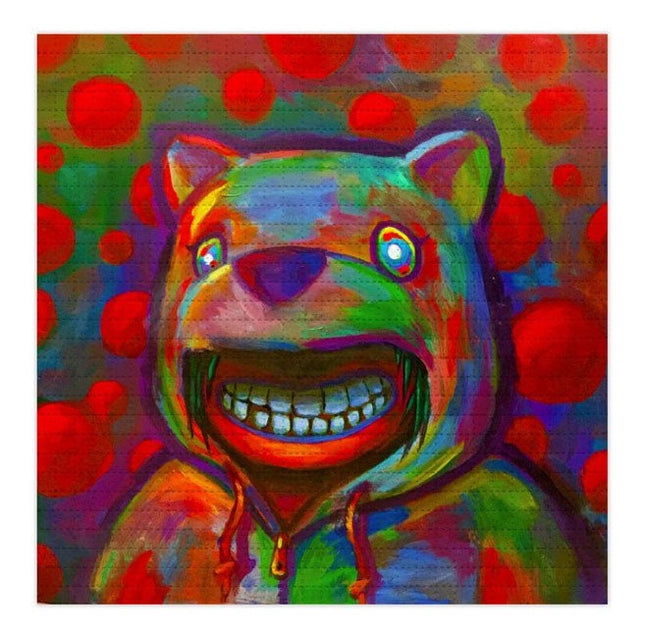
    Hoodie Blotter Paper Limited Edition Archival Pigment Print Art on Perforated Blotter Paper by Luke Chueh pop culture LSD artwork. "Psychedelic substances definitely had a major role in the development of my popular 'bear' character. Back when I was in college, my best friend and I had an experience that inspired us to run around my house declaring we were Care Bears. I was christened 'Luke Bear,' and my friend, 'Jaime Bear.' Nicknames that have stuck till this day. Fast forward to when I moved to Los Angeles. I wanted to create a character that could readily represent me. Even after more than a decade, a bear was the obvious choice." - Luke Chueh

    $524.00

Designer Fashion Graffiti Street Pop Artwork

Designer Fashion and Its Resonance with Street Pop Art

Designer fashion, often seen as the pinnacle of creativity and craftsmanship within the clothing industry, has found an unexpected but harmonious synergy with the raw, expressive nature of Street Pop Art and Graffiti Artwork. This intersection has sparked a dialogue between two seemingly disparate worlds, resulting in a fusion of high fashion with the gritty aesthetic of urban art. Designer brands, known for their meticulous attention to detail and innovative designs, have increasingly drawn inspiration from street art's vibrant visuals and social commentary. This has led to the creation of collections that embody graffiti's rebellious spirit and visual impact, bringing a fresh perspective to luxury fashion. The streets have become a source of inspiration for designers looking to infuse their creations with a sense of authenticity and edge that resonates with contemporary audiences. Street Pop Art, characterized by its bold color, graphic lines, and often provocative imagery, offers a rich palette from which designers can draw. Incorporating these elements into high-end fashion has given rise to garments that are visually striking and carry the subversive undertones of street culture. This blending of influences has challenged traditional notions of what designer fashion can be, expanding the creative horizons of the industry. Designer fashion as a topic in graffiti street pop art is an exciting fusion of two seemingly distinct art forms. This concept brings together the world of high fashion and street art's raw, urban energy, creating an exciting visual and cultural experience. Here are some key ideas to consider when exploring designer fashion in graffiti street pop art: Brand logos and motifs: Incorporating recognizable brand logos and motifs into graffiti street pop art can create striking visual effects. Artists might reimagine these elements in their unique style, playing with color, form, and texture to create something fresh and dynamic. Fashion icons: Pay homage to fashion icons such as designers, models, and other industry influencers by featuring their portraits or quotes within graffiti street pop art. This can serve as a tribute to those who have shaped the fashion world and bring a sense of history and personality to the artwork. Social commentary: Graffiti street pop art often contains messages or commentary on social, political, or economic issues. By incorporating these themes, artists could explore the fashion industry's impact on the environment, labor practices, or consumerism. Streetwear and fashion collaboration: Streetwear brands have increasingly collaborated with high fashion designers, blurring the lines between the two worlds. This creates an opportunity for graffiti street pop artists to draw inspiration from these partnerships and create art that reflects this fusion of styles. Visual elements: Incorporating elements of designer fashion, such as patterns, textiles, and silhouettes, into graffiti street pop art can result in intriguing visual compositions.

Impact and Influence of Street Aesthetics in Designer Fashion

The interplay between designer fashion and Street Pop Art goes beyond mere aesthetic appreciation; it is a cultural exchange that reflects the evolving landscape of art and society. The fashion industry's embrace of street art signifies a recognition of the cultural significance of this art form and its creators. It is an acknowledgment that the messages conveyed through graffiti and street art — often centered on themes of resistance, identity, and community — have a place within the narratives that designer fashion seeks to tell. In turn, street artists have found new canvases to display their work, with designer garments acting as mobile murals that traverse the global stage. This exchange is evident in the collaborations between prominent street artists and luxury fashion houses. These partnerships have produced iconic pieces where the artist's signature style is woven into the fabric of designer wear. These collaborations are not just commercial ventures; they are a form of mutual endorsement that lends authenticity to the fashion pieces and elevates the status of the street artist within the art world. The result is a collection that captures the zeitgeist, marrying the exclusivity of designer fashion with the inclusivity of street art. The impact of street aesthetics on designer fashion can be observed in the way that traditional luxury symbols are reimagined through the lens of street art. Iconic logos and patterns are reworked with a streetwise twist, infusing them with a new life that resonates with a younger, more diverse audience. This has led to the resurgence of some designer brands that have cleverly aligned themselves with the street art scene, tapping into its cultural capital to rejuvenate their image and appeal to a broader demographic.

Furthermore, the influence of Street Pop Art and Graffiti Artwork on designer fashion has led to a democratization of luxury fashion. Limited-edition releases, often featuring street art-inspired designs, have become highly coveted items, blurring the lines between high art and accessible fashion. This trend reflects a shift in the fashion industry towards more inclusive and varied expressions of creativity, where the value of a garment is enhanced by its artistic significance rather than just its brand name or price tag.

The Future of Designer Fashion in the Age of Street Art

As we look to the future, the relationship between designer fashion and street art appears poised for continued growth and exploration. The ongoing conversation between these two creative fields suggests a future where designer fashion increasingly incorporates street influences in design and its approach to marketing, brand storytelling, and customer engagement. Street art's potential to continue infusing designer fashion with new energy and relevance is vast, promising a dynamic and ever-evolving landscape for both industries. In essence, the convergence of designer fashion with Street Pop Art and Graffiti Artwork is a testament to the power of cross-disciplinary influences in driving innovation and cultural progression. It is a collaboration that celebrates diversity, challenges norms and reflects the spirit of the times. As designer fashion continues to weave the vibrancy of street art into its fabric, it not only enriches its narrative but pays homage to the art form that has become an indelible part of our urban environment and cultural identity. Artists can experiment with combining these elements to create a unique aesthetic that celebrates the beauty and creativity of fashion while maintaining the bold, edgy essence of street art. Fashion shows and events: Use the backdrop of fashion shows, events, and exhibitions to inspire graffiti street pop art. This can include capturing the energy, glamour, and spectacle of these events and highlighting specific moments, designs, or collections that resonate with the artist. Style subcultures: Drawing from the rich history of various style subcultures, such as punk, hip-hop, or grunge, artists can create graffiti street pop art, highlighting the influence of these movements on designer fashion. This approach can showcase the evolution of fashion and the interconnectedness of different styles. Mash-ups and remixes: Similar to how DJs mix tracks, graffiti street pop artists can "remix" elements of designer fashion by combining them in unconventional and surprising ways. This could involve juxtaposing high fashion with everyday items, blending styles from different periods or cultures, or reinterpreting classic designs through a contemporary lens. Interactive and experiential art: Graffiti street pop art can be transformed into interactive or experiential installations by incorporating elements of designer fashion. This might include creating immersive environments, allowing viewers to become a part of the artwork, or using technology to enhance the sensory experience. Artistic collaboration: Encouraging collaborations between graffiti street pop artists and fashion designers can lead to innovative and unexpected results. These partnerships can push the boundaries of both art forms, resulting in unique pieces that combine the best of both worlds. Collaborative projects might include designing limited-edition clothing or accessories, creating joint exhibitions, or developing public art installations. By exploring designer fashion as a topic in graffiti street pop art, artists can challenge traditional boundaries and spark conversations about the relationship between high fashion and street culture. This fusion of styles creates an opportunity for artists to express their creativity and make bold statements while celebrating the beauty, innovation, and influence of designer fashion. As graffiti street pop art continues to evolve, incorporating elements of designer fashion into its visual language can result in a vibrant and exciting artistic movement that reflects the ever-changing landscape of fashion and contemporary art.
Footer image

© 2025 Sprayed Paint Art Collection,

    • Amazon
    • American Express
    • Apple Pay
    • Bancontact
    • Diners Club
    • Discover
    • Google Pay
    • iDEAL
    • Mastercard
    • PayPal
    • Shop Pay
    • Visa

    Login

    Forgot your password?

    Don't have an account yet?
    Create account