Drawing Original Artwork
-
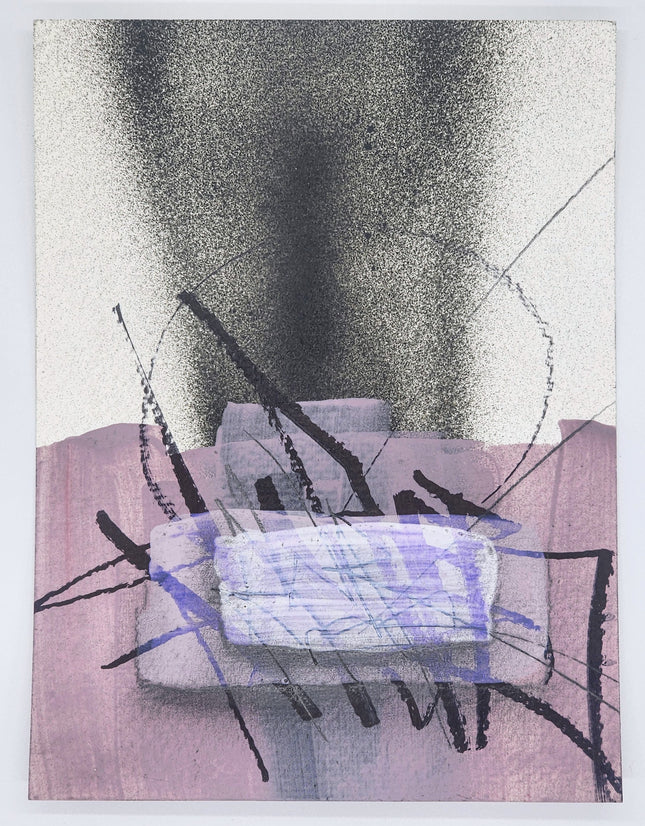
Saber White Washed Purple Tag HPM Unique Marker Artwork by Saber
White Washed Purple Tag HPM Mixed Media Unique by Saber Hand-Painted Marker on Fine Art Paper Graffiti Street Artist Modern Pop Art. 2023 Signed & Numbered Mixed Unique Edition Original Series Edition of 40 HPM Hand-Drawn Mixed Media, Spray Paint, Acrylic Paint, Markers & Permanent Markers Tag Artwork Size 6x8 Mini Drawing on Thick Fine Art Paper. Exploring the Essence of Street Pop Art and Graffiti Artwork Street Pop Art and Graffiti Artwork represent a vibrant and dynamic fusion of underground street culture with pop art's colorful and bold aspects. This unique blend has emerged as a significant movement within the contemporary art scene, capturing the essence of urban life and its pulsating energy. The movement is characterized by its rebellious spirit, often breaking free from the constraints of traditional art forms and expressing a raw, unfiltered view of society. White Washed Purple Tag HPM Mixed Media Unique by Saber The piece titled "White Washed Purple Tag HPM Mixed Media Unique" by the artist Saber is a quintessential example of this art form. Saber, a renowned American graffiti artist, Ryan Weston Shook, has played a pivotal role in bringing graffiti and street art into the gallery space. Born in 1976, Saber remains an influential figure in the street art community, known for his distinctive style that often features a dynamic use of color, bold tags, and an edgy aesthetic that resonates with the ethos of street culture. The artwork itself is a hand-painted marker on fine art paper that exudes street art's raw energy and spontaneity. The mixed media piece is part of a unique original series comprising an edition of 40 hand-drawn mixed media works. Saber's use of spray paint, acrylic paint, markers, and permanent markers culminates in an artwork that is visually striking and tactile in its layered application of materials. The piece's dimensions, a modest 6x8, may seem small, but the impact of the artwork is substantial. The compact size encapsulates the immediacy of graffiti art, where space is often at a premium, and artists must convey their message concisely and powerfully. The thick fine art paper serves as a testament to the durability and permanence of the art form, much like the walls that bear the weight of urban storytelling. Artistic Significance and Cultural Impact Saber's "White Washed Purple Tag" is a testament to the cultural impact of street pop art and graffiti artwork. By taking the art from the alleys and train cars onto fine art paper, the artist has elevated the perception of graffiti, allowing it to be appreciated as a form of social commentary and as a legitimate and sophisticated art form. The mixed media aspect of the piece showcases the versatility and innovativeness of street artists, who often have to adapt to various environments and use available materials. The technique of whitewashing, often used by city authorities to cover up graffiti, is reappropriated in this piece to serve as a canvas, creating a stark contrast with the vibrant purple tag. This reclamation symbolizes street artists' struggle in their quest for recognition and the right to public space. The purple tag, a signature of Saber's work, is not merely a name but a statement of identity, a bold declaration of existence in a constantly changing and evolving world. In the context of modern pop art, Saber's work is a bridge between street culture and high art, reflecting the changing attitudes towards what is considered valuable and worthy of attention in the art world. His works are collected and admired for their aesthetic appeal and their ability to capture the zeitgeist of an increasingly urbanized, digitized, and diverse generation. The presence of this piece within the collection of mixed media works serves as a reminder of the transformative power of art. It celebrates individuality and creativity, encouraging viewers to look beyond the surface and find beauty in the messages and stories often overlooked or dismissed. The "White Washed Purple Tag HPM Mixed Media Unique" is not just an artwork; it is a piece of cultural history, a slice of urban life, and a beacon of artistic rebellion.
$109.00
-
Woes Martin Woebot Japanese Water Color Sketch Original Drawing by Woes Martin
Woebot Japanese Water Color Sketch Original Drawing by Woes Martin on Fine Art Paper Modern Street Pop Artwork. 2023 Signed Original Watercolor Paint and Pen Drawing Size 6x8 Woebot: Japanese Watercolor Sketch by Woes Martin Woebot, a 2023 original watercolor and pen drawing by Woes Martin, captures the distinct blending of modern street pop art and graffiti culture with a traditional fine art approach. The piece, measuring 6x8 inches, is rendered on fine art paper, giving it both an intimate scale and an elegant presentation. Known for his stylized, bear-like characters often referred to as "Woebots," Woes Martin has established himself as a significant figure in the street art world, particularly for his ability to blend graffiti techniques with a softer, more traditional artistic aesthetic. The Evolution of Woes Martin's Woebot in Street Pop Art Woes Martin, an American-born artist with deep ties to both Hawaiian and global street art culture, has been developing his iconic Woebot characters for many years. These characters, often depicted as large, lumbering bear-like creatures, evoke a range of emotions, from fierce aggression to deep melancholy. In Woebot, the watercolor sketch offers a softer, more contemplative side to the character, highlighting Woes Martin’s versatility as an artist. The Woebot is a staple in Woes’ body of work, acting as a bridge between the emotional rawness often associated with street art and the accessibility of pop culture. In this particular sketch, the Woebot is drawn with minimal line work, using soft brushstrokes and delicate shading. The watercolor medium gives the piece a loose, fluid quality, allowing the Woebot to appear both detailed and abstract at the same time. This approach is characteristic of Woes Martin’s ability to play with different forms of media and create art that feels simultaneously ephemeral and bold. In the world of street pop art and graffiti artwork, the repetition of characters like Woebot holds significance. Similar to how iconic graffiti tags become synonymous with an artist’s identity, Woes’ characters serve as a personal mark, leaving an impression that goes beyond the canvas or wall. The Woebot character is a reflection of both the artist’s emotional state and the larger emotional palette of human experience, depicted through the lens of street art aesthetics. Japanese Watercolor and Pen: A Unique Medium for Street Art While Woes Martin is often associated with bold graffiti murals and street art, the use of Japanese watercolor and pen in Woebot demonstrates the artist’s range and adaptability. Watercolor, traditionally seen as a delicate and refined medium, contrasts with the gritty, urban connotations of graffiti. Yet, in this piece, Woes expertly marries the two, using the fluidity of watercolor to create a sense of movement and depth within the Woebot figure, while the pen adds a crispness and definition to the sketch. The subtlety of the watercolor medium in this work allows Woes Martin to explore the more tender, vulnerable aspects of his characters. While his larger murals often depict Woebots in powerful, aggressive poses, this small-scale watercolor sketch presents the character in a more introspective light. The soft washes of color give the Woebot an almost ghostly appearance, as if it is emerging from or disappearing into the paper. The minimalistic approach of the piece reinforces the emotional weight that the Woebot carries, making the viewer focus on the expressions and posture of the character, rather than the elaborate details often found in larger street art pieces. Street Pop Art Meets Fine Art Paper One of the most striking aspects of Woebot is the use of fine art paper as the medium’s surface. Fine art paper, often associated with classical painting and drawing, contrasts with the urban, raw surfaces typically used in street pop art and graffiti. By choosing fine art paper for this work, Woes Martin brings the world of graffiti into the domain of traditional fine art. This creates a juxtaposition between the refined and the rebellious, the formal and the informal. The choice of paper also enhances the texture of the piece, as watercolor tends to interact with fine art paper in unique ways. The way the paint soaks into the paper, leaving behind soft, organic edges, contrasts with the sharp, deliberate pen strokes. This creates a tension between precision and spontaneity, which is central to much of Woes Martin’s work. As in graffiti, where speed and improvisation are key, this sketch demonstrates Woes’ ability to work quickly while still maintaining control over the final image. In the context of street pop art, the choice of fine art materials like watercolor and paper elevates the form, suggesting that the aesthetic value of graffiti and street art should be considered on par with more traditional art forms. By using these materials, Woes Martin challenges the boundaries between high art and street culture, inviting the viewer to reconsider what constitutes “fine art” and how street culture can be represented in such a space. Emotional Depth and Character in Graffiti Artwork The emotional depth of Woes Martin’s work is what sets him apart in the world of graffiti and street pop art. While many graffiti artists focus on tags or abstract forms, Woes’ focus on character design allows him to explore more complex emotional narratives. The Woebot character, in its various forms, acts as a surrogate for the artist’s emotions, as well as a reflection of the viewer’s own emotional experiences. In this 2023 sketch, the Woebot’s expression and body language suggest feelings of contemplation or sadness, contrasting with the aggressive energy often associated with street art. The composition of the piece also speaks to Woes Martin’s mastery of form and space. Despite the small size of the sketch, the Woebot figure dominates the page, its large, rounded shapes taking up most of the space. This gives the character a sense of weight and presence, despite the minimalist nature of the drawing. The viewer is drawn into the Woebot’s world, invited to empathize with its quiet, reflective mood. Ultimately, Woebot is a powerful example of how street pop art can convey deep emotional truths through simple, yet effective, imagery. Woes Martin’s combination of graffiti-inspired line work, Japanese watercolor techniques, and fine art materials creates a unique visual language that speaks to the evolving nature of street art. As the boundaries between street art and fine art continue to blur, artists like Woes Martin are at the forefront of pushing these genres forward, showing that street pop art can be as emotionally resonant and technically skilled as any traditional form of art. In conclusion, Woebot is a testament to Woes Martin’s ability to bring the raw energy of street pop art into the more refined realm of fine art, while maintaining the emotional depth and character-driven focus that has made him a standout in the graffiti world.
$298.00
-
Atomik Hello There Orange Original Spray Paint Art Can by Atomik
Hello There Orange Original Spray Paint Art Can by Atomik Sculpture Drawing Artwork by Iconic Pop Culture Modern Artist. 2025 Signed Original Magic Marker Atomik Orange Smiling Face Reclaimed Spray Paint Can Painting Artwork Size 3x8 Hello There, Orange Original Spray Paint Art Can by Atomik The Hello There Orange Original Spray Paint Art Can by Atomik is a distinct piece of Street Pop Art & Graffiti Artwork that exemplifies the artist’s commitment to transforming ordinary objects into personalized statements of identity and expression. Created in 2025 and signed by the artist, this artwork is drawn directly on a reclaimed spray paint can using a magic marker. The work features the iconic grinning orange face that has become synonymous with Atomik’s visual language. With bold black linework over a used Montana spray can, the piece merges the raw energy of graffiti materials with the intimate immediacy of a hand-drawn illustration. Atomik’s instantly recognizable orange face peeks forward with oversized, cartoonish eyes and a mischievous smile, encapsulating the spirit of his Miami-based street art heritage. Reclaiming the Tools of Expression as Art Objects Spray paint cans are a staple in graffiti and street art culture. They are tools of resistance, freedom, and self-expression. Atomik’s decision to turn a spray can into the canvas itself reflects a deeper ethos in Street Pop Art & Graffiti Artwork. Rather than discarding the medium once emptied, he reclaims it—transforming the functional into the collectible. The resulting artwork stands as both an homage to graffiti’s tactile process and a rebellion against traditional notions of fine art. Every dent, scratch, and warning label on the can becomes part of the finished aesthetic, grounding the orange character in the lived reality of street-level artmaking. This practice not only preserves a piece of graffiti history but recasts it as a standalone object worthy of admiration and discourse. The Smiling Orange and the Miami Identity The smiling orange has its roots in Atomik’s personal response to the demolition of Miami’s beloved Orange Bowl stadium, a landmark of civic pride. Atomik reimagined the orange as a graffiti character that pays tribute while asserting a uniquely Floridian flavor. Over the years, it has appeared on freight trains, abandoned buildings, and murals, becoming one of the most widely recognized characters in contemporary graffiti. On this specific spray paint can, the orange floats in contrast against a sea of fine print, warnings, and hazard symbols. This juxtaposition of regulatory text and unruly character speaks to the tension between control and freedom, legality and expression. It also reflects the artist’s ongoing commentary on reclaiming space and materials for cultural storytelling. Graffiti as Sculpture and Collectible Commentary This hand-drawn reclaimed can is not only a visual piece but a sculptural one. The cylindrical form allows the artwork to live in three dimensions, giving viewers the opportunity to see how street art evolves when it enters a more permanent and collectible format. Unlike traditional canvas or digital prints, the use of the spray can physically and conceptually connects the viewer to the graffiti process. Atomik’s signature on the base further authenticates the piece, anchoring it in his artistic lineage and practice. As Street Pop Art & Graffiti Artwork continues to push boundaries, works like the Hello There Orange Spray Can stand at the forefront, showing that even a once-discarded object can become a celebrated artifact when touched by the right artist’s hand.
$225.00
-
Atomik Hungry Eyes Original Pen Pencil Paint Drawing by Atomik
Hungry Eyes Original Pen Pencil Paint Drawing by Atomik Modern Street Pop Artwork. 2025 Signed Original Ink Paint Pencil Graphite on Paper Drawing Size 5x8 of the Famous Miami Florida Atomik Orange. Hungry Eyes Original Drawing by Atomik: A Raw Expression of Graffiti Culture in Street Pop Art The 2025 piece titled Hungry Eyes by Miami-based graffiti artist Atomik is a potent example of raw Street Pop Art & Graffiti Artwork captured in traditional media. Known globally for his animated orange character, Atomik channels his origins from the streets of Florida into this expressive 5x8 inch work executed in pen, pencil, ink, and white paint on paper. The drawing preserves the energetic curves, exaggerated facial features, and strong iconography that define his visual language, yet it diverges by focusing on depth, texture, and mood rather than public wall space or train cars. This signed original holds particular weight because it brings Atomik’s explosive style into a more intimate and tactile dimension, highlighting the same mischievous gaze and stylized emotion that viewers typically encounter on a city wall or boxcar. The Miami Influence and the Evolution of Atomik’s Orange Atomik, born and based in Miami, Florida, has been a key figure in the visual evolution of graffiti across the southeastern United States. His signature orange character was born out of a tribute to a lost local landmark—the Miami Orange Bowl—and has since morphed into a universal symbol of urban rebellion, humor, and resilience. Hungry Eyes strips down that icon into its most fundamental parts. Drawn with ballpoint pen, graphite, and accented with sharp white strokes, this piece introduces nuance and technique often overlooked in outdoor works. Swirls and crosshatch marks surround and define the facial contours, merging classical drawing skills with street sensibility. The background of kraft-tone paper gives the composition a raw, unpolished energy, consistent with the artist’s handstyle and sense of immediacy. Even in this format, the image demands attention as if it were wheatpasted across a city block. Street Pop Art Translated to Fine Drawing While Atomik’s graffiti legacy is built upon bright enamel hues and fatcap spray lines across highly visible surfaces, Hungry Eyes functions as an alternate lens into the graffiti psyche—quiet, detailed, and full of coded visual emotion. The angular ink strokes channel years of tagging and can control, while the whimsical circular gradients embedded in the eyes mimic bubble letters and aerosol flares. The use of hand-drawn highlights instead of reflective gloss draws from a comic-book aesthetic while simultaneously staying grounded in graffiti's DIY tradition. This drawing proves that Street Pop Art & Graffiti Artwork can exist with just as much presence and weight on paper as it does on steel or concrete. Signature and Collectibility in Contemporary Street Art The reverse of the artwork is inscribed in pencil with the artist’s signature, a stylized flourish of the name Atomik and the date 25. This mark authenticates the piece not only in terms of authorship but also as a deliberate object within the continuum of street artist editions and originals. Collectors and fans of graffiti culture recognize works like Hungry Eyes as evidence that street artists are not limited to spray paint and murals. Atomik’s ability to transfer his identity onto fine art media makes this piece a collector-worthy addition for any serious archive of modern graffiti or pop-inspired street visuals. The drawing stands as a reminder that graffiti is not only about location or defiance—it is about mark-making, identity, and the ability to repurpose commercial and personal symbols into resonant visual statements.
$300.00
-
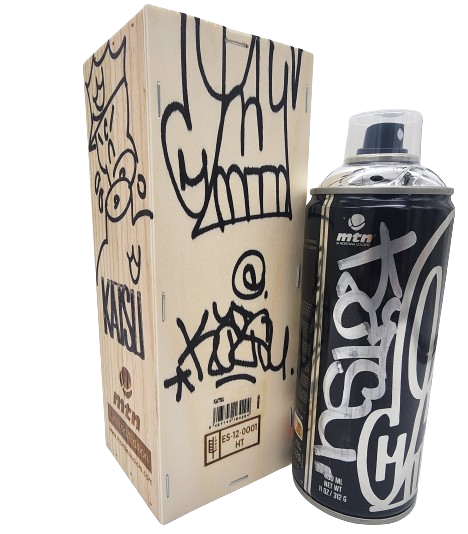
Katsu Katsu Tagged Signed Silver Chrome Spray Paint Can Artwork by Montana MTN
Katsu Hand Tagged & Signed Silver Chrome Spray Paint Can Artwork by Montana MTN Limited Edition Crossover. 2023 Signed Katsu Silver Chrome Spray Paint Can Signed Box Limited Edition of ??? Out of 500 Artwork Size 3x8 Can. Both can and wooden boxes are hand-signed, tagged, and drawn on with spray paint. The Katsu Hand Tagged & Signed Silver Chrome Spray Paint Can is a collectible piece that melds the rebellious spirit of graffiti with the exclusivity of limited edition art. Presented in a partnership with Montana MTN, a brand synonymous with high-quality spray paint favored by street artists worldwide, this 2023 release encapsulates the essence of urban art in a tangible form. Encased within a wooden box, each spray paint can measure 3x8 inches and comes hand-signed by the artist Katsu, a pseudonymous figure revered in the underground art community. The signing of the can and the box not only authenticates each piece but also incorporates Katsu's signature style directly onto the objects, making every edition unique. This series, limited to an undisclosed number out of 500, stands as a coveted item for collectors and enthusiasts of street culture. The iconic Katsu tag, typically seen in public spaces as an act of reclaiming territory and self-expression, is recontextualized here as a collectible art form. This crossover between street and collectible art challenges traditional perceptions of graffiti as mere vandalism, elevating it to a form of pop art that can be admired and owned. The chrome finish on the cans reflects the quintessential look of graffiti art as it glistens on city walls, capturing the fleeting nature of such works, which often disappear as quickly as they appear. Each can and box, adorned with spray paint, carries the gritty textures and raw aesthetic found on the streets, offering a piece of the urban landscape to be appreciated within the sanctity of personal spaces. It's a dialogue between the artist and the collector, a signed contract that art is not confined to galleries and museums but is all around us, in the alleys and on the boulevards, alive in the places we pass every day. This series by Katsu and Montana MTN immortalizes the transient art of tagging, granting permanence to what is typically ephemeral and providing a narrative of contemporary art's evolution.
$620.00
-
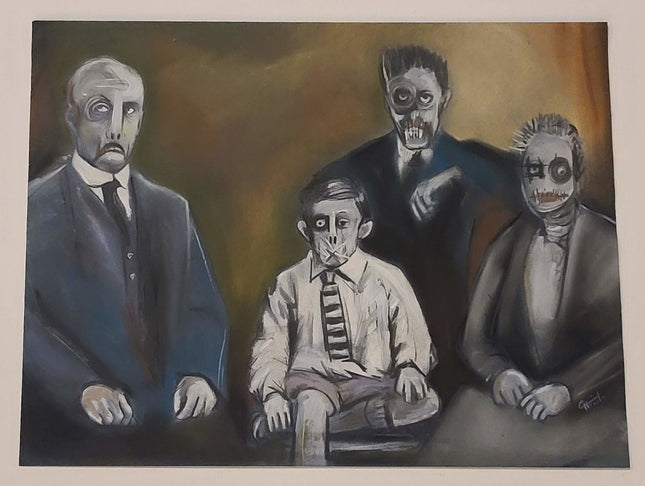
Christabel Christo Perfect Family Original Drawing by Christabel Christo
Perfect Family One of a Kind Original Pastel Graphite Drawing Artwork on Paper by Popular Street Graffiti Artist Christabel Christo. Signed 2010 10.5x8 Perfect Family Original Drawing by Christabel Christo
$323.00
-
RAE BK Leppard Shirt Original Mixed Media Drawing by RAE BK
Leppard Shirt Original Mixed Media Drawing by RAE BK on Cardstock Paper Modern Street Pop Artwork. 2022 Signed Original Markers & Permanent Markers, Graphite & Colored Pencils, Ink, Mixed Media Drawing Size 5x8 Leppard Shirt by RAE BK – Fragmented Form and Emotional Texture in Street Pop Art & Graffiti Artwork Leppard Shirt is a 2022 original mixed media drawing by Brooklyn-based artist RAE BK, executed on 5 x 8 inch cardstock using markers, permanent markers, graphite, colored pencils, and ink, along with additional collage-like material accents. This one-of-a-kind piece showcases RAE BK’s spontaneous, layered, and emotionally coded visual language. Dominated by a bold abstract figure drawn in thick black linework with uneven features, the composition plays with portraiture in an intentionally fractured and expressive way. Facial elements are repeated, distorted, or echoed, while the shirt’s spotted pattern—a nod to the title—is rendered in blotched marks that drift between representation and symbolic texture. This work exists as both a drawing and an artifact, operating in the aesthetic chaos that defines Street Pop Art & Graffiti Artwork. Expressionist Energy in Character and Surface RAE BK’s figures are never clean or symmetrical—they are built from scratch, corrected in real-time, and imbued with raw, unfiltered emotion. In Leppard Shirt, the central face feels unstable, yet confident in its presence. The oversized nose, simplified eyes, and curved mouth are layered over washes of smudged material, creating a portrait that feels emotional rather than literal. The repetition of the face motif in miniature—like echoes or iterations—suggests memory or commentary. The artwork does not offer a resolved figure but rather a psychological imprint, drawn with urgency and spontaneity. This sense of emotional immediacy is what places RAE BK’s character work firmly within the tradition of Street Pop Art & Graffiti Artwork, where lines are as much about rhythm and response as they are about control. Collage Elements and Material Disruption The presence of mixed materials—including glitter, adhered objects, and what appears to be a barcode label—transforms the surface into a textural conversation between image and object. The artist uses the tools of the street—found fragments, improvised layers, raw media—and compresses them into a work on paper that feels sculptural and alive. These tactile additions don’t just decorate the page—they rupture it. They serve as interruption, symbol, and critique all at once. Glitter becomes a distortion. Tape becomes a gesture. The result is a drawing that functions like a wall paste-up or found tag—a message delivered in parts, open to interpretation but packed with presence. The layering and mark-making fuse into a visual field of controlled chaos, echoing the layered reality of urban experience and artistic survival. RAE BK and the Language of Urban Artifact RAE BK’s Leppard Shirt is a miniature yet complete embodiment of his larger practice—an intuitive blend of emotional abstraction, coded symbols, and reclaimed visual language. The piece doesn’t ask to be understood in a linear way. It exists as a document of feeling, a collision of internal narrative and found reality. His approach embraces imperfection, trusting the materials and their placement to speak louder than polished composition. As part of Street Pop Art & Graffiti Artwork, this drawing is a reminder that small-scale work can carry the same intensity and commentary as a mural or installation. RAE BK continues to create not from a need for explanation but from a place of urgency, rhythm, and resistance—giving paper, like city walls, the power to carry voices that refuse to be ignored.
$575.00