Europe
-
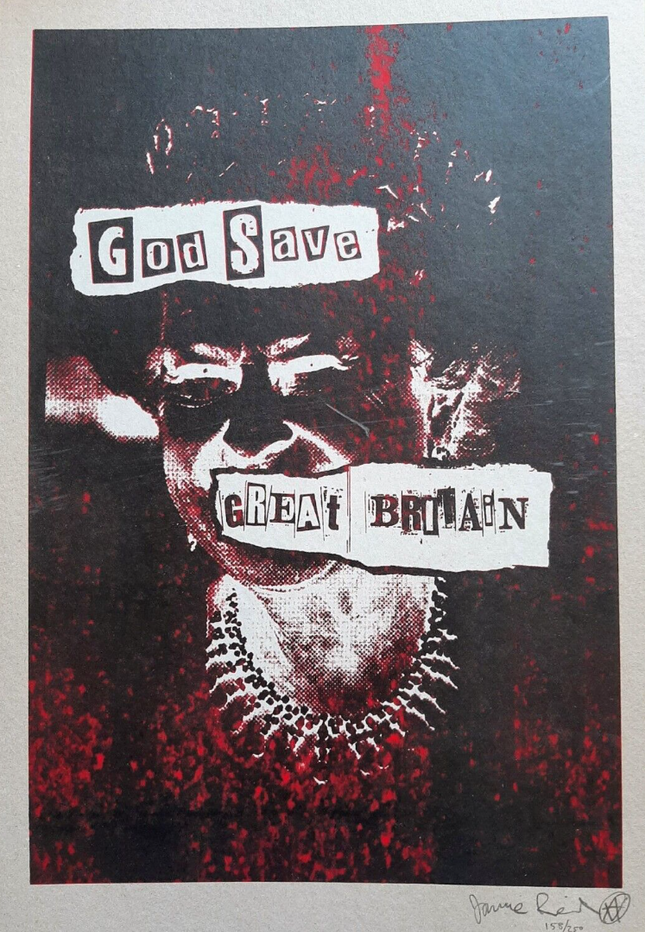
Jamie Reid Queen In Blood Diamonds Negative Silkscreen Print by Jamie Reid
Queen In Blood Diamonds Negative Silkscreen Print by Jamie Reid Hand-Pulled on Wove Fine Art Paper Limited Edition Artwork. 2020 Signed & Numbered Limited Edition of 250 Artwork Size 17x24.5 Silkscreen Print of Elizabeth II Queen of England In Demonic Style With Words "God Save Great Britain" Art Car Boot Fair Edition Queen In Blood Diamonds: Negative Silkscreen Print by Jamie Reid The Queen In Blood Diamonds silkscreen print by Jamie Reid, produced in 2020, is a provocative and thought-provoking example of street pop art. Measuring 17x24.5 inches, this limited edition artwork features a bold depiction of Queen Elizabeth II with demonic undertones and the message God Save Great Britain superimposed on her image. Reid, a British artist known for contributing to the punk movement, notably through his work with the Sex Pistols, continues his tradition of rebellious and politically charged artwork with this striking print. Limited to 250 signed and numbered editions, this piece exemplifies the blending of iconic symbols and social commentary defining street pop and graffiti art. The Queen and the Iconography of Power in Street Pop Art In this particular silkscreen, Reid aims at one of the most iconic figures of modern British history: Queen Elizabeth II. The queen has long symbolized British power, empire, and tradition. However, Reid's depiction is far from a respectful portrait. Instead, the queen's face is rendered in an almost demonic, grotesque style, with dark red and black tones accentuating the sinister undertones of the piece. The term Blood Diamonds in the title invokes the historical controversy surrounding the British Empire's involvement in exploiting colonial resources, often at the cost of human lives. Reid's work here critiques the monarchy's complicity in these injustices. The phrase God Save Great Britain in this context starkly contrasts the typical reverence shown toward the British monarchy. It evokes the infamous slogan God Save the Queen, which Jamie Reid first subverted in his earlier work with the Sex Pistols. His use of cut-out, ransom-note-style letters in this print creates an atmosphere of disruption, a common technique in street pop art and graffiti artwork. This approach challenges the viewer to question established narratives of national identity, power, and loyalty to the crown. Hand-Pulled Silkscreen: A Process of Rebellion The process of creating this limited edition piece further aligns with the ethos of street pop art and graffiti. Each print in this series is hand-pulled on fine art wove paper, meaning no two prints are identical. This manual technique adds a layer of authenticity and rawness to the artwork. In a world increasingly dominated by mass production, hand-pulled prints maintain a sense of individuality and craftsmanship, much like the street murals and graffiti tags found in urban environments. Reid's background in graphic design and political activism informs the aesthetic choices in this print. The silkscreen technique allows for bold, flat areas of color, which are characteristic of pop art. At the same time, the rough texture of the print, with its distressed quality, echoes the ephemeral nature of graffiti. The dark red splatters in the background evoke blood, reinforcing the message of imperial exploitation and violence. The contrast between the smooth, almost glossy appearance of the queen's face and the chaotic, gritty background symbolizes the disparity between the polished image of royalty and the harsh realities of history. Punk, Pop, and Political Street Art Jamie Reid's involvement with the punk movement is essential to understanding this piece's political and rebellious nature. In the late 1970s, his designs for the Sex Pistols, including the iconic God Save the Queen cover, used collage techniques, ransom-note typography, and defaced images of British symbols to protest against the establishment. The Queen In Blood Diamonds continues this legacy of punk subversion, where art serves as a form of resistance and provocation. This print also embodies the characteristics of street pop art and graffiti's confronaggressiveand use of public, recognizable symbols. As a figurehead of the establishment, the queen becomes a target for critique. Much like street art and graffiti, which often reclaim public spaces for the people, this print seeks to reclaim cultural symbols to question and dismantle the status quo. Reid's use of the queen in this manner invites viewers to rethink their assumptions about authority and tradition, much like graffiti artists challenge the sanitized spaces of the modern city. The demonic style in which Reid renders the queen's face can also be linked to the tradition of grotesque satire in British art, which dates back to artists like William Hogarth. By distorting the features of one of the most recognizable faces in the world, Reid transforms her from a symbol of stability and continuity into a symbol of corruption and complicconspiracytorical violence. The bright red splashes evoke the violence of bloodshed, while the grinning expression adds a layer of unsettling irony to the piece. Limited Edition and the Significance of the 2020 Release This limited edition of 250 prints was produced in 2020, a year marked by significant social and political upheaval worldwide. In the context of the global pandemic, rising protests against systemic racism, and increased scrutiny of historical injustices, Queen In Blood Diamonds becomes a powerful statement about the need to confront uncomfortable truths about history and power. The year 2020 also saw renewed debates over the legacy of colonialism, with many calling for greater accountability and reparations for the crimes committed in the name of empire. Reid's decision to produce this piece during such a turbulent time adds another layer of urgency to its message. By releasing this print in 2020, Reid ensures that the themes of exploitation, power, and resistance remain as relevant as ever. In this context, the queen is not just a historical figure but a symbol of the enduring structures of authority that continue to shape our world today. As with much of Reid's work, this piece is not merely a work of art but a call to action, a visual protest that demands a response from its audience. Queen In Blood Diamonds by Jamie Reid is a powerful example of street pop and graffiti artwork. It blends the iconic with the grotesque, using the figure of Queen Elizabeth II to critique the legacy of British imperialism and the ongoing injustices that stem from it. Through its hand-pulled silkscreen process, bold use of color, and politically charged imagery, the print stands as both a piece of art and a statement of defiance.
$750.00
-
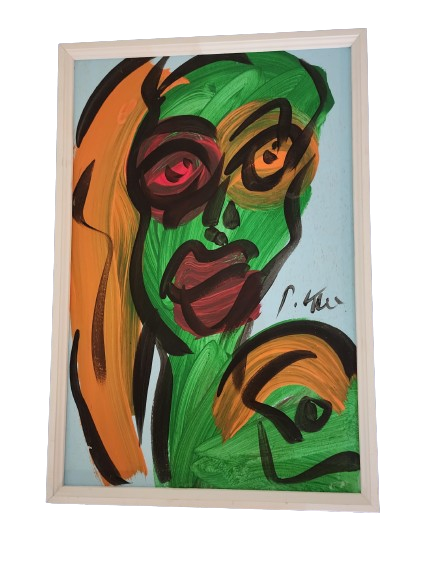
Peter Keil Woman 84 Green Orange Original Oil Painting by Peter Keil
Woman 84 Green Orange Original Oil Painting by Peter Keil One of a Kind Artwork on Framed Masonite Panel by The Wild Man of Berlin, a Famous Contemporary Artist. 1984 Signed by Peter Keil & Dated Oil Painting on Masonite Panel Original Artwork Size 16.5x24.5. All of Peter Keil's Art Used Thick Paint & Some Paint Flaking May Be Present Due to the Age and Nature of His Work. Painting of Green & Orange Long-Haired Stylistic Women Head Bust. Embracing the Vivid Essence of Peter Keil's Portraiture "Woman 84 Green Orange" is an original oil painting by Peter Keil, an artist famed for his energetic and dynamic style, often referred to as The Wild Man of Berlin. His 1984 creation is unique on a framed Masonite panel, showcasing his signature expressionist strokes. The artwork measures 16.5x24.5 inches and is a vibrant depiction of a woman's head bust, characterized by a vivid interplay of green and orange hues. Keil's signature and the date are prominently displayed, confirming the authenticity and period of this one-of-a-kind work. Peter Keil's artwork is renowned for its bold use of color and the impasto technique, where thick paint is applied to create a textured surface rich in depth and intensity. This particular painting, with its striking color contrasts and stylized representation, is a testament to Keil's ability to capture more than the physical likeness of his subjects. Instead, he conveys a sense of the subject's inner life, evoking emotion and narrative through the abstracted form. The Dynamic Influence of Street Pop Art and Graffiti on Keil's Work The influence of street pop art and graffiti artwork is evident in how Keil's "Woman 84 Green Orange" painting communicates directly and powerfully. The artwork is imbued with a sense of immediacy often found in street art, where the viewer is confronted with bold imagery in public spaces. Like much street art, Keil's painting is a visual spectacle and an interactive experience that invites the viewer to engage with the piece on a deeper level. As with many of Keil's works, the thick layers of paint have resulted in some flaking over the years, which adds to the character and story of the piece. This natural aging process is a reminder of the work's journey through time and is akin to the weathering of outdoor murals and graffiti, which often change and degrade as part of their life cycle. "Woman 84 Green Orange" by Peter Keil is a powerful embodiment of his artistic vision, merging street art's raw expression with the sophistication of oil painting. With its distinctive style and emotional resonance, Keil's work continues to captivate collectors and art lovers, securing his place as a notable figure in contemporary art.
$676.00