
Food & Eating

2 artworks

  • Naivety Scene Era 10 Original Marker Drawing Canvas by Blake Jones

    Blake Jones Naivety Scene Era 10 Original Marker Drawing Canvas by Blake Jones

    Naivety Scene Era 12 Original Marker Drawing on Canvas Framed by Blake Jones Modern Street Pop Artwork. 2019 Signed Framed Original Color Marker Hand Drawing Size 7.75x10.25 Naivety Scene Era 12 by Blake Jones – Hand-Drawn Whimsy in Street Pop Art & Graffiti Artwork Naivety Scene Era 12 is a 2019 original framed marker-on-canvas drawing by American artist Blake Jones, measuring 7.75 x 10.25 inches. Known for his dynamic, character-driven compositions and bold use of line and color, Jones brings a sense of uninhibited joy and hyperactive imagination to this piece. Executed entirely with color markers by hand, the artwork presents a freeform universe of creatures, objects, and doodles rendered in a collage-like explosion. Framed cleanly in white to contrast with the visual energy inside, the piece delivers an immediate sense of personality and motion. This one-of-a-kind original draws from the playful absurdity of children’s art while integrating the conscious repetition and symbolic layering found in Street Pop Art & Graffiti Artwork. Character Clutter and Controlled Chaos The surface of Naivety Scene Era 12 is a kaleidoscope of cartoonish forms—bright-eyed ghosts, barking dogs, melting ice cream cones, alligator teeth, lightning bolts, and wild-eyed humanoid faces—each drawn with unique flair and outlined in vivid color. These figures inhabit the space with no obvious hierarchy, emphasizing the democratic and improvisational nature of Jones’s work. Every inch of the canvas is utilized, producing a densely populated environment that feels simultaneously random and intentional. Some characters are drawn in black and white, while others burst in neons and pastels. The mix of expressive gestures, graphic patterns, and text elements like YO and CALIENTE provides multiple entry points for interpretation. It’s not a narrative; it’s a moment of visual play, inviting the viewer to explore without boundaries. This strategy fits squarely within Street Pop Art & Graffiti Artwork, where image-making is as much about energy and vibe as it is about message. Marker as Medium, Process as Performance Blake Jones’s use of markers as the primary medium reinforces the raw and spontaneous quality of the piece. Unlike digital work or painting, marker allows for a level of immediacy and texture that reflects hand movement and personal expression. The layering of color, the visible overlaps, and the variance in pressure and line weight speak to a process that is direct and unfiltered. The artist’s restraint in working within a compact canvas size adds to the intensity of the piece, forcing every form to interact and react within tight constraints. This kind of live, intuitive creation is rooted in sketchbook culture and graffiti blackbook traditions, where artists rapidly generate ideas, shapes, and energy with whatever tools are available. Jones translates that into finished work that retains all the freshness of a spontaneous session. Visual Joy and Cultural Remix from Blake Jones Blake Jones continues to build a visual language that blurs the line between outsider drawing, studio illustration, and graffiti spontaneity. In Naivety Scene Era 12, the artist celebrates the imperfections of instinct, the humor of randomness, and the beauty of clutter. He delivers a composition that rejects minimalism in favor of abundance, noise, and expression. The framed format elevates the chaotic imagery, giving it gallery presence while maintaining its raw emotional accessibility. As part of Street Pop Art & Graffiti Artwork, this original drawing exemplifies how art can exist in both casual and collectible forms, reminding viewers that even the simplest gestures—when repeated and refined—can form complex universes. Blake Jones doesn’t just draw pictures. He builds ecosystems of feeling, gesture, and graphic play where everything belongs, nothing is sacred, and joy is the only rule.

    $1,000.00

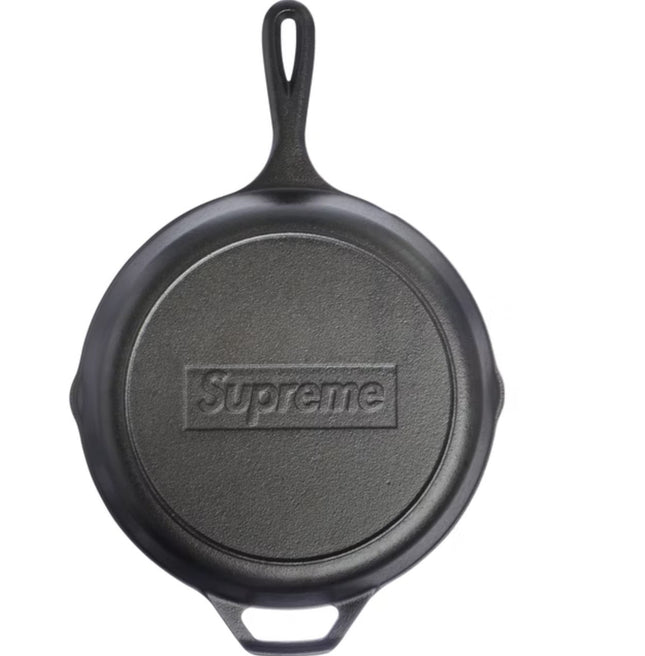
  • Lodge 10.25 Cast Iron Skillet Art Object by Supreme

    Supreme Lodge 10.25 Cast Iron Skillet Art Object by Supreme

    Supreme Lodge 10.25" Cast Iron Skillet Limited Edition Designer Art Object Collectible Artwork S22 Supreme released this Supreme Lodge 10"" Cast Iron Skillet, alongside several other new accessories, as a part of their Spring/Summer 2022 Week 1 delivery. This Cast Iron Skillet features a 10.25" diameter and a Supreme logo is embossed on the bottom. Displayed

    $219.00

Food & Eating Street Pop Art & Graffiti Artwork

Culinary Motifs in Street Pop Art and Graffiti Artwork

Food and eating, universal experiences intrinsic to human existence, have long served as rich subjects for artists, capturing their times' social and cultural ethos. In the domains of Street Pop Art and Graffiti Artwork, these motifs take on vibrant new life, reflecting the every day and the celebratory through bold colors, exaggerated forms, and the inherent commentary of the art forms. This artistic depiction of food not only tantalizes the senses but also symbolizes various aspects of culture, economy, and social dynamics. Food iconography in Street Pop Art is often amplified to hyperbolic proportions, mirroring contemporary society's consumerist culture and mass production of edibles. Here, artists may employ bright, attention-grabbing palettes and large-scale representations to mimic the overload of sensory information in advertising and media. Graffiti art, traditionally rebellious and provocative, can transform food into a symbol of societal consumption or a tool of critique, addressing issues like fast food culture, global hunger, or the commodification of natural resources. As Street Pop Art and Graffiti Artwork often operate in public spaces, depicting food and eating in these genres also directly engages with the community. These works can become interaction points, where the familiar subject of food invites viewers to engage with the art. These eliciting reactions range from hunger to humor to reflection on their eating habits and food sources.

Artistic Representation of Food in Urban Landscapes

Food-related graffiti becomes part of the city's visual and cultural fabric in urban landscapes, where the art of the street is as integral to the environment as the buildings and the bustling crowds. Artists might take a ubiquitous element of urban dining—like a slice of pizza or a hot dog—and elevate it to a symbolic status, encapsulating the essence of a city’s food scene. These depictions can become so iconic that they not only represent culinary preferences but also signify the identity of the place itself. The versatility of food as a subject allows artists to traverse from the literal to the symbolic, using it to communicate messages about consumption, waste, and the human condition. In some instances, food in Graffiti Artwork serves as a poignant reminder of the disparities in wealth and access to resources, with lavish food spreads painted in areas of poverty as a stark visual contrast to the lived reality of those who pass by. Moreover, the interactive nature of Street Pop Art means that food-related works are not just seen but can be used to engage the public in dialogue. These pieces can become backdrops for social gatherings, stages for performance art, or canvases for community participation, where the art evolves with the input of its audience.

Impact and Evolution of Food-Themed Artistry on the Streets

The impact of food-themed Street Pop Art and Graffiti Artwork is multi-layered, resonating with the observer on a personal and societal level. An individual may see a mural of a fruit-laden table and recall family gatherings. At the same time, another might interpret it as a commentary on agricultural bounty or a subtle critique of consumer excess. Such is the power of food in art—it speaks an intimate and universal language, personal and public. As Street Pop Art and Graffiti Artwork continue to evolve, so does the portrayal of food within these genres. What began as simple tagging or stenciling has become complex, thought-provoking installations. Artists have started incorporating actual food items into their works, blurring the lines between the culinary and visual arts and inviting an experiential interaction with the viewer that can be as brief as the food itself. Food and eating are not merely subjects for Street Pop Art and Graffiti Artwork; they are conduits for expression, reflection, and sometimes, revolution. These depictions can comfort or confront, reflecting the complexity of our relationship with food. Through the lens of these vibrant art forms, food is not just sustenance but a symbol, a statement, and a shared language in the urban landscape. Whether it serves to provoke thought, evoke nostalgia, or critique society, the representation of food in street art is as varied and rich as the culinary traditions that inspire it.
Footer image

© 2025 Sprayed Paint Art Collection,

    • Amazon
    • American Express
    • Apple Pay
    • Bancontact
    • Diners Club
    • Discover
    • Google Pay
    • iDEAL
    • Mastercard
    • PayPal
    • Shop Pay
    • Visa

    Login

    Forgot your password?

    Don't have an account yet?
    Create account