
Food & Eating
-
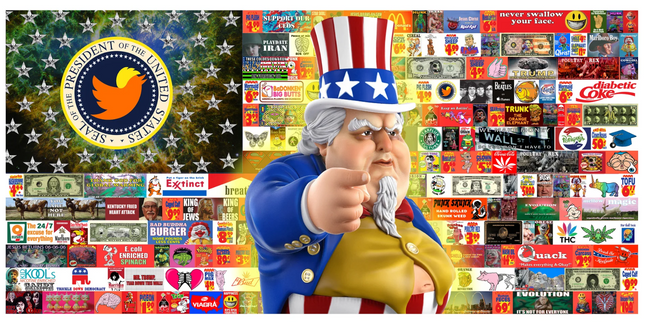
Ron English- POPaganda Uncle Scam Ad Flag Giclee Print by Ron English- POPaganda
Flush Giclee Print by Ron English- POPaganda Artwork Limited Edition Print on Fine Art Paper Graffiti Pop Street Artist. 2022 Signed & Numbered Limited Edition of 30 Artwork Size 37x25 Uncle Scam Ad Flag Giclee Print is a work of art by Ron English- POPaganda, a contemporary American artist known for his thought-provoking, often satirical and subversive street art, paintings, and sculptures. English is famous for creating art that highlights the absurdity of modern society, often blending elements of pop culture, advertising, and politics. In this particular piece, the artist critiques consumerism and the advertising industry by combining elements of the American flag with a caricature of Uncle Sam, who is transformed into "Uncle Scam." The term "Uncle Scam" refers to the idea that the advertising industry often manipulates consumers and promotes excessive materialism, which can be detrimental to society as a whole. A giclee print is a high-quality digital printing method that is capable of producing vivid and detailed reproductions of artwork. This process uses specialized inkjet printers and archival-quality inks, which are applied to various substrates, such as canvas or fine art paper, to create a long-lasting and visually appealing print. The result is a reproduction that retains the original artwork's colors and details, making it a popular choice for artists and collectors alike.
$1,558.00
-

Joe Ledbetter Waste of Space Archival Print by Joe Ledbetter
Waste of Space Archival Print by Joe Ledbetter Limited Edition on Fine Art Paper Pop Graffiti Street Artist Modern Artwork. 2007 Signed & Numbered Print Limited Edition of 125 Artwork Size 16x25 Archival Pigment Fine Art Waste of Space Archival Print by Joe Ledbetter – Limited Edition Street Pop Art & Graffiti Artwork Joe Ledbetter, a renowned figure in Street Pop Art & Graffiti Artwork, presents Waste of Space, a striking archival pigment fine art print that encapsulates his distinctive aesthetic. Released in 2007 as a signed and numbered limited edition of 125, this 16x25-inch print is a standout piece within his body of work. The composition features a melancholic yet expressive monkey slouched on a tattered couch, surrounded by remnants of a seemingly wasted existence—discarded drinks, empty snack containers, a video game controller, and an overall atmosphere of stagnation. The use of a monochromatic blue palette intensifies the emotional weight of the piece, reinforcing themes of isolation, apathy, and introspection. Ledbetter’s signature cartoon-influenced linework adds a playful contrast to the otherwise somber subject matter. The exaggerated features of the monkey, particularly its large, expressive eyes and slumped posture, evoke a sense of both humor and sadness, a balance that defines much of Ledbetter’s work in Street Pop Art & Graffiti Artwork. Joe Ledbetter’s Influence in Street Pop Art & Graffiti Artwork Joe Ledbetter has established himself as a key artist within contemporary Street Pop Art & Graffiti Artwork, blending influences from classic animation, vinyl toy culture, and traditional graffiti techniques. His bold use of thick outlines, clean yet dynamic compositions, and surreal anthropomorphic characters set his work apart. Ledbetter’s art often features animals depicted in exaggerated, almost tragicomic situations, using humor and satire to explore themes of existentialism, consumerism, and modern alienation. His artistic background in both graphic design and fine art contributes to his ability to create compositions that feel both structured and spontaneous. His work has been featured in galleries worldwide, yet it maintains the raw energy and accessibility associated with graffiti and street art. The storytelling elements in his pieces often elevate them beyond mere illustration, making them resonate deeply with collectors and fans of modern pop culture. Waste of Space – A Reflection on Modern Life Waste of Space is a visually compelling critique of modern leisure culture, portraying a character trapped in self-inflicted inertia. The scattered objects in the scene—video games, alcohol, junk food—serve as symbols of both indulgence and escapism. The title itself adds another layer of interpretation, forcing the viewer to consider whether the piece is a self-reflection or a broader social commentary. The background’s splattered textures and sketch-like details reinforce the graffiti influences within the artwork, maintaining a sense of urban grit despite its polished execution. The contrast between Ledbetter’s smooth, refined lines and the chaotic composition of the environment suggests an internal struggle between control and disorder. The choice of blue tones creates an almost melancholic atmosphere, making the piece feel introspective rather than purely humorous. The Lasting Impact of Waste of Space in Contemporary Art Joe Ledbetter continues to be an influential voice in Street Pop Art & Graffiti Artwork, pushing boundaries by merging fine art techniques with pop surrealism. Waste of Space remains one of his most memorable works due to its relatability and emotional depth. The combination of social critique, satirical humor, and an unmistakable artistic style ensures that this piece remains relevant even years after its initial release. This limited edition print serves as a powerful statement on modern existence, capturing the tension between comfort and complacency, self-indulgence and self-destruction. The artwork’s ability to engage audiences on multiple levels—whether as a visually engaging pop art piece or as a more profound commentary on contemporary life—solidifies its place as an important work within Street Pop Art & Graffiti Artwork. Through meticulous craftsmanship and an unflinching artistic vision, Ledbetter continues to challenge perceptions and inspire both collectors and fellow artists.
$356.00
-
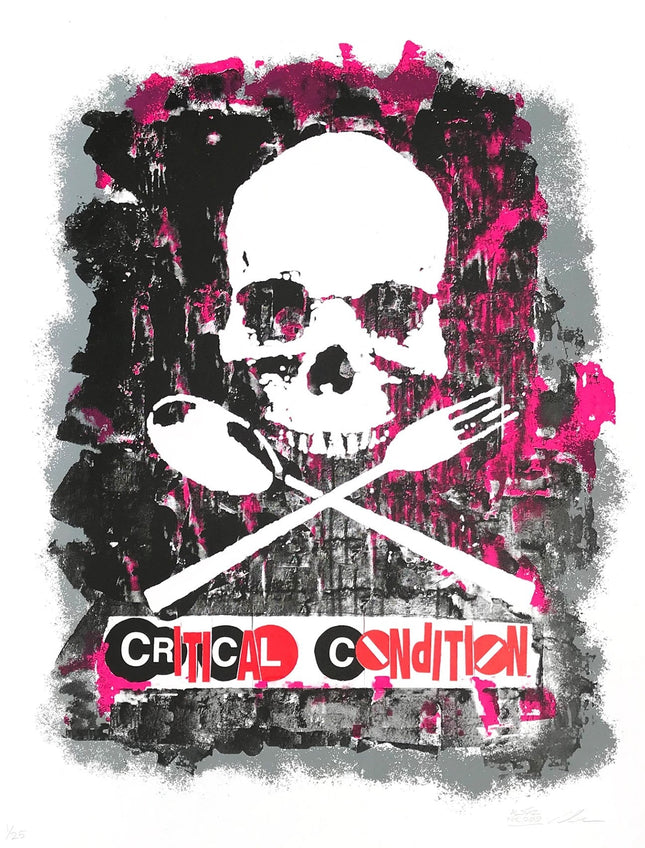
Al Diaz Critical Condition Silkscreen Print by Al Diaz
Critical Condition 4-Color Hand-Pulled Limited Edition Silkscreen Print on 100lb French Speckletone Paper by Al Diaz x Dave Navarro x Lifeafterdeath Rare Street Art Famous Pop Artwork Artist. 2019 Al Diaz and lifeafterdeath "Critical Condition" - 4 Color Screen Print, Limited Edition of 25 - 19 x 25" Critical Condition • 4 layer hand-pulled screenprint on French Speckletone 100 lb paper• 19 x 25 inches Hand-signed and numbered by artists Al Díaz and Dave Navarro in a limited edition of 25 "Distortion Skull" ink stamping on verso hand-applied by Dave Navarro Hand-produced in Albany, NY by Pepper Spray Press NYC
$450.00