


Food & Eating
-
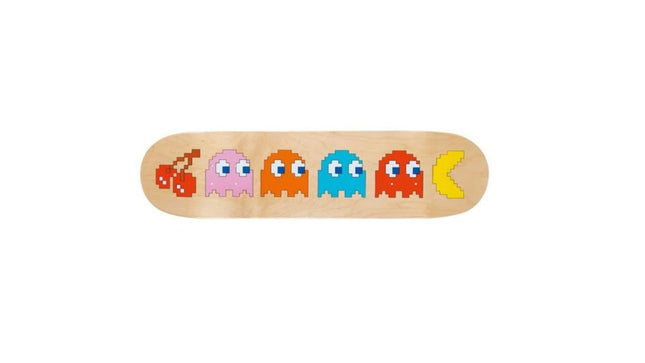
Medicom Toy MLE Pac-Man 40th Skateboard Art Deck by Medicom Toy
MLE Pac-Man 40th Deck Fine Art Limited Edition Archival Pigment Print Transfer on Cold Pressed Steep Natural Skateboard Deck by Street Artwork Graffiti Artist Medicom Toy. 2021 ● SIZE:W205mm×H820mm ● Weight:1200g ● Material:WOOD ● PAC-MAN is finally released from MLE! MLE Pac-Man 40th Skateboard Art Deck by Medicom Toy
$298.00
-
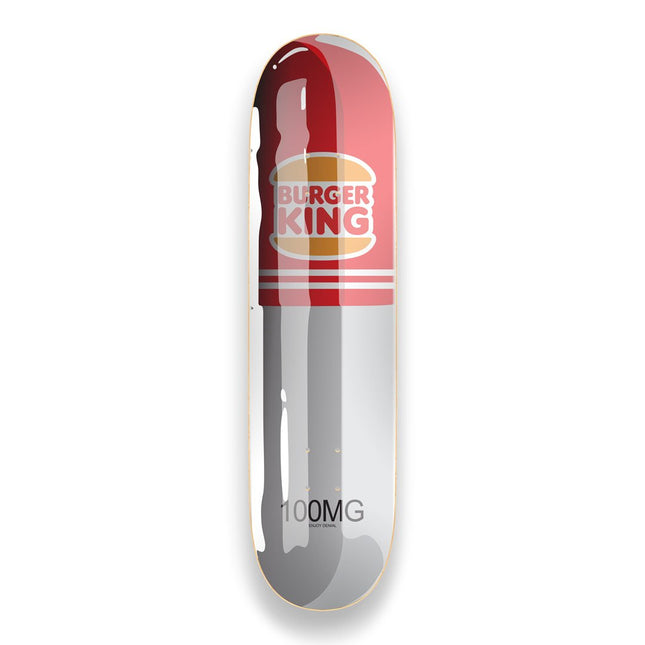
Denial- Daniel Bombardier Burger King Archival Skateboard Deck by Denial- Daniel Bombardier
Burger King Limited Edition Archival Pigment Print Transfer on Cold Pressed Steep Natural Skate Deck art by street pop culture artist Denial. In 2000 he adopted the moniker ‘DENIAL’ as a means of poking fun at advertising, politics, and media messages that contemporary society is often ‘in denial’ about. Since then he has maintained an ongoing global street-campaign of over 500, 000 stickers, placards, and murals, using the alpha-numeric characters ‘D3N!@L’. Denial has evolved as one the most prominent figures of contemporary pop artists, who nonetheless, continue to stay relevant and is interested in generating thought-provoking commentary. He has a long history of exploring the boundaries of appropriation, which he uses as a means of subverting the value of cultural products, imprinted in the collective memory of the Western civilization. His work, in other words, is inviting the viewer to re-imagine our dystopian society as a way of confronting it, with humor and irony as the biggest tools of the artist.
$505.00
-

DKG Cornerstore Marquise Henry Reddi Wip 8.25 Skateboard Art Deck by DKG
Cornerstore Marquise Henry Reddi Wip 8.25 Skateboard Art Deck by DKG Limited Edition Print From Artist on Wood Pop Street Graffiti Sports Object Artwork. 2021 Limited Edition Sports Artwork Skateboard Size 8x31 Skateboard Art Deck Printed Art Object Skate Pro Marquise Henry x DGK Reddi Wip Whipped Cream Stylized Board. Cornerstore Marquise Henry Reddi Wip Skateboard Deck by DGK: A Statement in Street Pop Art & Graffiti Artwork The Cornerstore Marquise Henry Reddi Wip Skateboard Deck by DGK, released in 2021, is a powerful fusion of sports culture and visual art. Created as part of DGK’s Cornerstore series, this limited edition deck brings together the raw, unfiltered energy of street skating with the visual punch of Street Pop Art & Graffiti Artwork. Sized at 8.25 inches wide by 32 inches long, with a 14.25-inch wheelbase, medium concave, and steep kick, the deck is made in Mexico using high-quality wood that caters to both collectors and skaters alike. The artwork features a stylized whipped cream can design, a parody of the iconic Reddi Wip can, with a twist of satire and cultural commentary that DGK is known for. Centered on the phrase Quise’s Whip, the design nods to professional skater Marquise Henry while cleverly referencing themes of indulgence, hustle, and the pursuit of cash in urban skate life. Visual Identity and Cultural Messaging in the Deck Design The design of the Reddi Wip deck functions as more than a simple branding homage. It operates on the language of Street Pop Art & Graffiti Artwork, borrowing from consumer culture to comment on the commodification of identity and skateboarding itself. With whipped cream rendered with googly eyes and piles of dollar bills beneath it, the message is both playful and sharp. The can is emblazoned with catchphrases like All Day and Always on Top, which serve as tongue-in-cheek affirmations rooted in skate hustle culture. Marquise Henry’s presence on the board grounds the product in authenticity, reflecting his real influence on street skating and urban fashion. The exaggerated parody of a grocery store product becomes a powerful symbol when placed in the context of the street, transforming everyday visual references into cultural signals that challenge and engage the viewer. Skateboard as a Canvas for Street Pop Art & Graffiti Artwork The use of skate decks as platforms for fine art has gained prominence within both contemporary street culture and the art world. This DGK board embraces that movement, turning a functional sports object into a collectible art piece. Printed on wood, the graphic utilizes bold colors, satirical typography, and character-driven elements to elevate the work beyond traditional branding. Skateboards like the Reddi Wip edition represent a fusion of physical performance and cultural expression, where the streets serve as both gallery and testing ground. DGK, founded by Stevie Williams, has consistently pushed these boundaries, offering products that reflect not only aesthetic tastes but also the values and struggles of the communities they represent. Limited Edition Object and Relevance in Modern Art As a limited edition 2021 print, this skateboard deck captures a moment in modern street art and skate history. With its unique design and connection to pro skater Marquise Henry, the Reddi Wip deck is more than just equipment. It becomes a curated art object, collectible and expressive of a lifestyle rooted in rebellion, perseverance, and style. Made with precision and integrity, the deck bridges skate functionality with the spirit of urban art commentary. The use of parody and consumer reference aligns it closely with the ethos of Street Pop Art & Graffiti Artwork, transforming a commercial parody into a powerful statement piece that stands tall in the overlapping worlds of art, design, and skateboarding culture.
$199.00
-
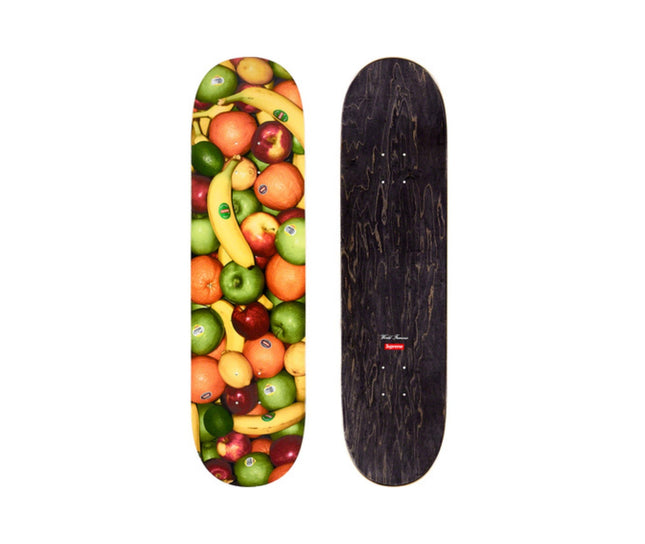
Supreme Fruit Skateboard Art Deck by Supreme
Supreme Fruit Deck Fine Art Limited Edition Archival Pigment Print Transfer on Cold Pressed Steep Natural Skateboard Deck by Street Artwork Graffiti Artist Supreme. MPN SS19SB11 GTIN 0888977463154 For Week 1 of Supreme's Spring/Summer 2019 season, the brand released a variety of items featuring a Fruits graphic. The deck features a variety of fresh fruits, and if you look closely, the stickers on the fruits include custom Supreme branding. This skateboard deck was released on February 21st, 2019.
$198.00
-
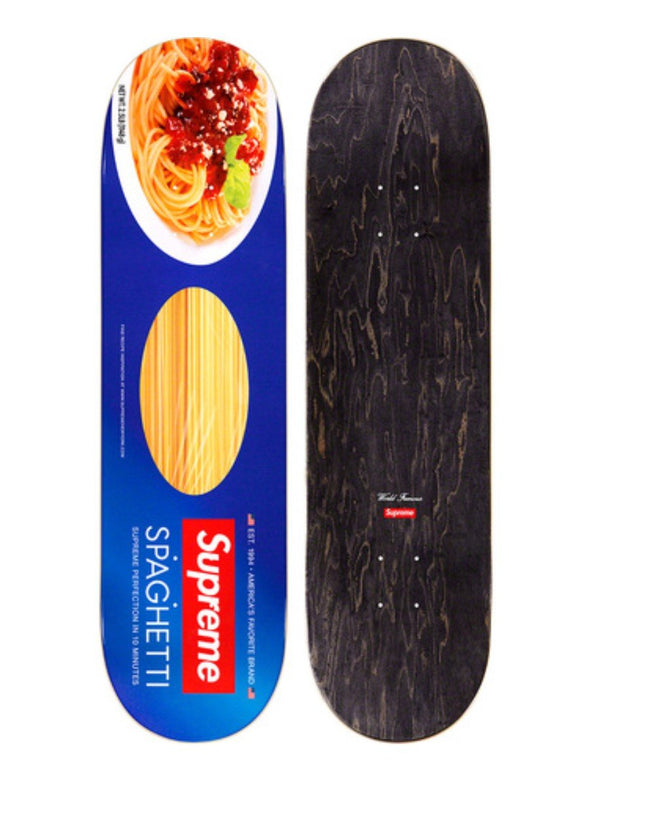
Supreme Spaghetti Skateboard Blue Skateboard Art Deck by Supreme
Spaghetti Skateboard- Blue Deck Fine Art Limited Edition Archival Pigment Print Transfer on Natural Veneer Wood Skateboard Deck by Street Artwork Graffiti Artists at Supreme. 2021 Spaghetti Skateboard- Blue 8.375" x 32.125" Supreme skate deck with natural veneer and black top ply. Printed graphic on the bottom with printed World Famous and box logo on top.
$206.00
-
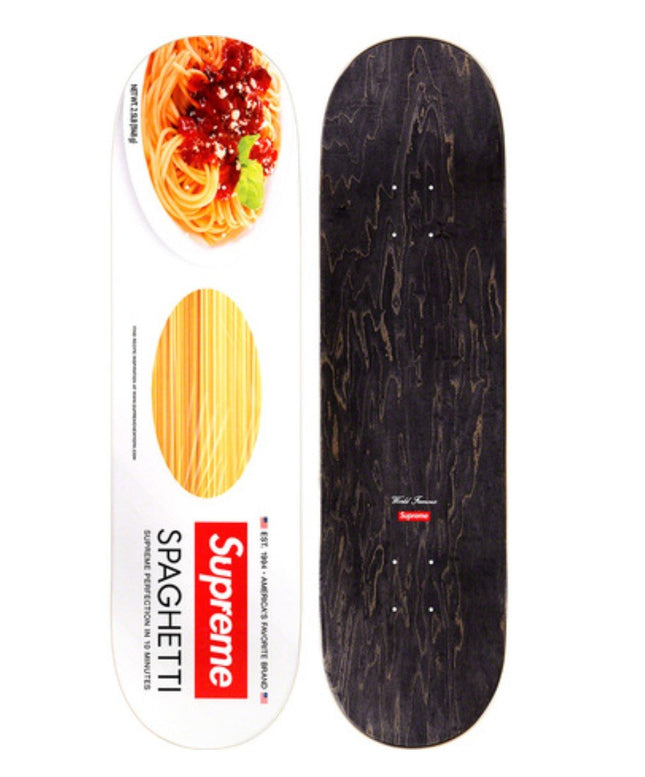
Supreme Spaghetti Skateboard White Skateboard Art Deck by Supreme
Spaghetti Skateboard- White Deck Fine Art Limited Edition Archival Pigment Print Transfer on Natural Veneer Wood Skateboard Deck by Street Artwork Graffiti Artists at Supreme. 2021 Spaghetti Skateboard- White 8.375" x 32.125" Supreme skate deck with natural veneer and black top ply. Printed graphic on the bottom with printed World Famous and box logo on top.
$206.00
-
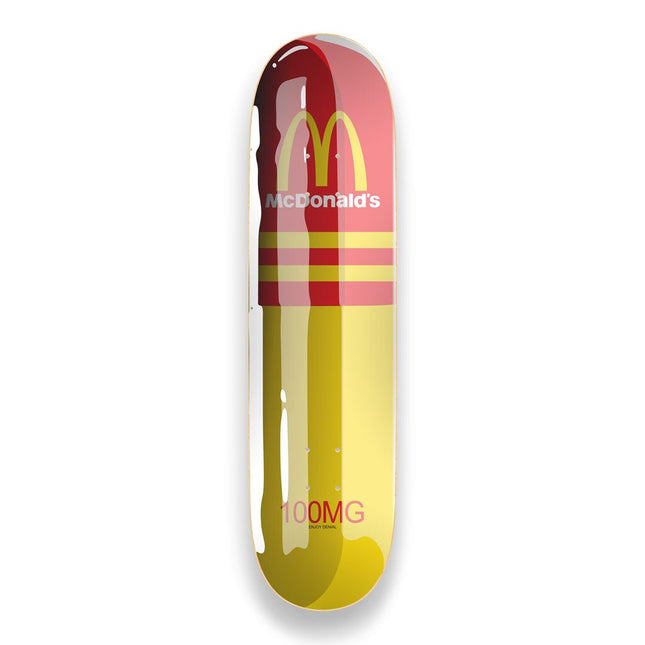
Denial- Daniel Bombardier McDonald Archival Skateboard Deck by Denial- Daniel Bombardier
McDonald Limited Edition Archival Pigment Print Transfer on Cold Pressed Steep Natural Skate Deck art by street pop culture artist Denial. 2019 Limited Edition of 50 In 2000 he adopted the moniker ‘DENIAL’ as a means of poking fun at advertising, politics, and media messages that contemporary society is often ‘in denial’ about. Since then he has maintained an ongoing global street-campaign of over 500, 000 stickers, placards, and murals, using the alpha-numeric characters ‘D3N!@L’. Denial is a Canadian artist who experiments with aerosol and stencil art, while his main fields of interest are consumerism, politics and the human condition in today’s society. Since the culture of graffiti was gaining more and more popularity in the US and Europe, the taggers had to be increasingly original in order to stand out. The signatures became bigger, more stylized and more colorful.
$505.00
-
Denial- Daniel Bombardier Coca-Cola Archival Skateboard Deck by Denial- Daniel Bombardier
Coca-Cola Limited Edition Archival Pigment Print Transfer on Cold Pressed Steep Natural Skate Deck art by street pop culture artist Denial. In 2000 he adopted the moniker ‘DENIAL’ as a means of poking fun at advertising, politics, and media messages that contemporary society is often ‘in denial’ about. Since then he has maintained an ongoing global street-campaign of over 500, 000 stickers, placards, and murals, using the alpha-numeric characters ‘D3N!@L’. In the world of Denial, memory is important, because it is the basis of his work, as it nostalgically encourages the audience to engage with it. As a result, his art is as familiar, as it is disturbing because it reveals the most unsettling parts of society, the ones we are in a “denial” of. No matter its controversial history, graffiti is less and less viewed as a form of vandalism.
$505.00