Food & Eating

1 artwork

  • Heart and Soul Original Pen Drawing by Mark Powell

    Mark Powell Heart and Soul Original Pen Drawing by Mark Powell

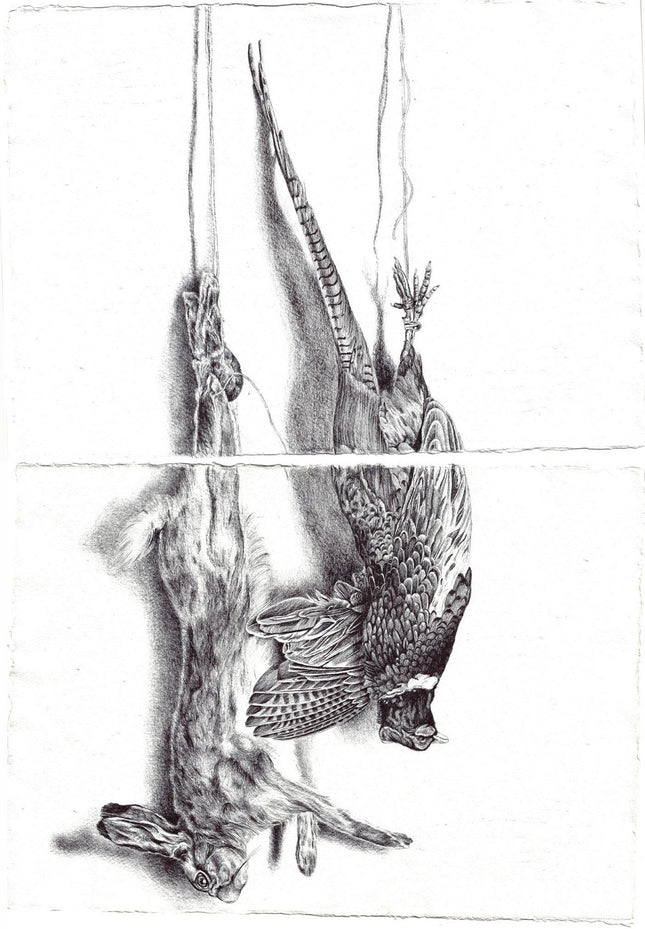
    Heart and Soul Original Pen Ink Drawing Art on 320gsm Handmade South Indian Paper by Modern Pop Art Artist Mark Powell. Signed 2021 Ballpoint pen drawing on 320 gsm handmade South Indian paper Size: 62cm x 43cm Unframed Drawing is protected by an archival UV protective matt varnish spray 16.9x24.4 Mark Powell – Heart and Soul in Street Pop Art & Graffiti Artwork Heart and Soul by British artist Mark Powell is a striking original pen-and-ink drawing executed in 2021 on 320gsm handmade South Indian paper. Measuring 62 x 43 cm (16.9 x 24.4 inches), this piece features a meticulously rendered dead hare and pheasant, hung upside down by string in a composition that instantly evokes classical still life yet pulses with contemporary subtext. Drawn entirely with a ballpoint pen and sealed with archival UV-protective varnish, Powell’s rendering elevates this modest medium to a tool of expressive clarity. Though absent of color or overt graffiti marks, the work stands firmly within the lineage of Street Pop Art & Graffiti Artwork through its subversive detail, its interrogation of mortality, and its commitment to technical excellence layered with conceptual weight. Powell is known for using found paper, vintage documents, and aged materials in his broader practice, though in Heart and Soul, he opts for clean, handmade paper—still retaining the rawness of imperfection in texture. The subject matter draws upon the tradition of vanitas and memento mori, while also referencing the vernacular of field sport culture in a way that challenges sentimentality. This visual honesty—showing death with beauty but no spectacle—is a gesture that resonates deeply with the ethos of street and pop-inflected art. It’s a confrontation with finality, with heritage, and with consumption. The Ballpoint Pen as a Tool of Dissent and Precision What separates Powell from traditional fine draftsmen is his unorthodox use of the ballpoint pen—a tool associated more with classroom doodles or blue-collar notebooks than high art. In the context of Street Pop Art & Graffiti Artwork, this choice mirrors the use of spray cans or permanent markers: democratic, accessible, and unpretentious. Every feather, fur strand, and shadow in Heart and Soul is executed with surgical precision using this common tool, elevating it to something sacred. Like a tag scratched into a subway door or a throw-up on a crumbling brick wall, Powell’s marks assert permanence against fragility. The imagery is clean yet jarring—animals that once lived now suspended, motionless. The vertical tension of the ropes holding them reflects themes of control and helplessness, drawing a subtle parallel to how bodies—whether in life or in art—are often manipulated, positioned, and consumed. These symbolic references are aligned with urban artistic movements that seek to expose the hidden systems beneath culture, whether through abstraction, realism, or text-based intervention. Contemporary Still Life in the Street Pop Art Narrative Still life traditionally served as a showcase of abundance, fragility, and temporal beauty. In Powell’s hands, that tradition is disrupted, made raw. The careful rendering of animals is not a romantic homage—it is a meditation on stillness, loss, and what it means to hold onto something after it has passed. By choosing subject matter often glorified in upper-class sporting culture and presenting it without drama or glorification, Powell reclaims the narrative. This reclamation mirrors the objectives of many street artists who challenge dominant visual histories by injecting alternate perspectives. There is a quiet radicalism in Heart and Soul—a refusal to decorate or dilute. The honesty of the composition, the weight of the medium, and the choice of paper all work together to create an artwork that is as much about process and material as it is about meaning. This approach reflects Street Pop Art & Graffiti Artwork’s core value: that beauty, rebellion, and reflection can emerge from the simplest of materials, when handled with vision. Mark Powell’s Position in Modern Pop Draftsmanship Though not a graffiti artist in the traditional sense, Mark Powell’s aesthetic and thematic sensibilities place him in close proximity to the conceptual edge of street art. His commitment to drawing as an act of observation and confrontation, along with his use of humble materials and deadpan subject matter, places his work within the wider umbrella of street-conscious fine art. Heart and Soul does not shout, but it never looks away. It is an elegy rendered in ink—a ballpoint requiem that speaks with the same depth as murals, stencils, and protest posters inked on alley walls.

    $854.00

Food & Eating Street Pop Art & Graffiti Artwork

Culinary Motifs in Street Pop Art and Graffiti Artwork

Food and eating, universal experiences intrinsic to human existence, have long served as rich subjects for artists, capturing their times' social and cultural ethos. In the domains of Street Pop Art and Graffiti Artwork, these motifs take on vibrant new life, reflecting the every day and the celebratory through bold colors, exaggerated forms, and the inherent commentary of the art forms. This artistic depiction of food not only tantalizes the senses but also symbolizes various aspects of culture, economy, and social dynamics. Food iconography in Street Pop Art is often amplified to hyperbolic proportions, mirroring contemporary society's consumerist culture and mass production of edibles. Here, artists may employ bright, attention-grabbing palettes and large-scale representations to mimic the overload of sensory information in advertising and media. Graffiti art, traditionally rebellious and provocative, can transform food into a symbol of societal consumption or a tool of critique, addressing issues like fast food culture, global hunger, or the commodification of natural resources. As Street Pop Art and Graffiti Artwork often operate in public spaces, depicting food and eating in these genres also directly engages with the community. These works can become interaction points, where the familiar subject of food invites viewers to engage with the art. These eliciting reactions range from hunger to humor to reflection on their eating habits and food sources.

Artistic Representation of Food in Urban Landscapes

Food-related graffiti becomes part of the city's visual and cultural fabric in urban landscapes, where the art of the street is as integral to the environment as the buildings and the bustling crowds. Artists might take a ubiquitous element of urban dining—like a slice of pizza or a hot dog—and elevate it to a symbolic status, encapsulating the essence of a city’s food scene. These depictions can become so iconic that they not only represent culinary preferences but also signify the identity of the place itself. The versatility of food as a subject allows artists to traverse from the literal to the symbolic, using it to communicate messages about consumption, waste, and the human condition. In some instances, food in Graffiti Artwork serves as a poignant reminder of the disparities in wealth and access to resources, with lavish food spreads painted in areas of poverty as a stark visual contrast to the lived reality of those who pass by. Moreover, the interactive nature of Street Pop Art means that food-related works are not just seen but can be used to engage the public in dialogue. These pieces can become backdrops for social gatherings, stages for performance art, or canvases for community participation, where the art evolves with the input of its audience.

Impact and Evolution of Food-Themed Artistry on the Streets

The impact of food-themed Street Pop Art and Graffiti Artwork is multi-layered, resonating with the observer on a personal and societal level. An individual may see a mural of a fruit-laden table and recall family gatherings. At the same time, another might interpret it as a commentary on agricultural bounty or a subtle critique of consumer excess. Such is the power of food in art—it speaks an intimate and universal language, personal and public. As Street Pop Art and Graffiti Artwork continue to evolve, so does the portrayal of food within these genres. What began as simple tagging or stenciling has become complex, thought-provoking installations. Artists have started incorporating actual food items into their works, blurring the lines between the culinary and visual arts and inviting an experiential interaction with the viewer that can be as brief as the food itself. Food and eating are not merely subjects for Street Pop Art and Graffiti Artwork; they are conduits for expression, reflection, and sometimes, revolution. These depictions can comfort or confront, reflecting the complexity of our relationship with food. Through the lens of these vibrant art forms, food is not just sustenance but a symbol, a statement, and a shared language in the urban landscape. Whether it serves to provoke thought, evoke nostalgia, or critique society, the representation of food in street art is as varied and rich as the culinary traditions that inspire it.
Footer image

© 2025 Sprayed Paint Art Collection,

    • Amazon
    • American Express
    • Apple Pay
    • Bancontact
    • Diners Club
    • Discover
    • Google Pay
    • iDEAL
    • Mastercard
    • PayPal
    • Shop Pay
    • Visa

    Login

    Forgot your password?

    Don't have an account yet?
    Create account