God

2 artworks

  • Sale -15% Lady Shiva Original Marker Drawing by Lady Pink

    Lady Pink Lady Shiva Original Marker Drawing by Lady Pink

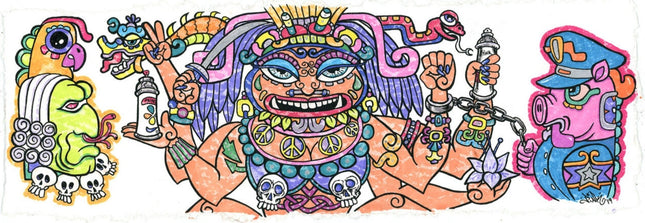
    Lady Shiva Original One of a Kind Mixed Media Paint & Markers Drawing Artwork on Hand Deckled Handmade Art Paper by Popular Street Graffiti Artist Lady Pink. 2019 Signed & Dated Original Drawing Illustration Paint Markers, on Handmade Deckled Paper. 6 x 18 inches in size. Lady Pink’s Lady Shiva: Mythology Meets Resistance in Street Pop Art Lady Pink’s Lady Shiva, created in 2019 with mixed media and marker on hand-deckled handmade art paper, fuses Aztec-influenced mythology with graffiti symbolism and social resistance. Measuring 6 x 18 inches, this one-of-a-kind work exemplifies her ongoing commitment to female empowerment and cultural reclamation within the language of Street Pop Art & Graffiti Artwork. The central figure is a vibrant, deity-like woman with six arms, adorned with skulls, peace symbols, and bold facial markings. She holds spray cans and chains, a direct reference to the tools and struggles of the graffiti movement. The composition blends traditional iconography with cartoonish energy, channeling both Mesoamerican art and contemporary visual rebellion. The central goddess figure references the Hindu deity Shiva, a powerful symbol of destruction and transformation, but here she is reimagined through the lens of street culture. Her expression is fierce, defiant, and jubilant. Surrounding her are serpents, birds, and ornamental symbols drawn in a palette of saturated pinks, purples, and greens—an aesthetic choice that reflects Lady Pink’s history of challenging male-dominated narratives in graffiti by owning her space with unapologetic color and form. Visual Allegory of Power, Culture, and Resistance The narrative unfolds with sharp contrasts and rich symbolism. On one end, a grotesque pig-faced police officer stands handcuffed to the goddess, gripping a spray can as if confiscated or misunderstood. On the other, mythic figures—complete with skull necklaces and serpents—align themselves with the goddess’s cause. The character design is playful, but the message is pointed. Lady Pink uses humor and caricature to expose cycles of surveillance, cultural erasure, and systemic control. The shackles and clenched fists transform the piece into an allegory of empowerment—where art, identity, and heritage become instruments of resistance. This is not a passive depiction of rebellion—it is active, kinetic, and celebratory. The goddess wields graffiti like a weapon of reimagination. Her eyes are lined with thick lashes, crying stylized teardrops that recall both sorrow and power. Her smile, full of sharp teeth, confronts the viewer directly. This emotional hybridity—fierceness paired with joy—is central to Lady Pink’s style. She constructs a visual mythology where cultural memory and contemporary rebellion meet at the intersection of gender, history, and paint. Graffiti Iconography Reframed Through Feminist Vision Lady Pink, born Sandra Fabara in Ecuador and raised in New York, has been a pioneering voice in graffiti since the 1980s. Her work consistently merges street energy with personal and political storytelling, especially from a feminist perspective. Lady Shiva stands as a testament to her role in shaping graffiti into a space of inclusion and cultural critique. Rather than adhering to hyper-masculine conventions of tagging and bombing, she incorporates ancient motifs, character illustration, and symbolism to narrate deeper social commentary. In Lady Shiva, the combination of handmade paper, thick marker strokes, and mythological subject matter aligns with the tactile and ephemeral nature of graffiti. The unpolished edges, visible brush textures, and bright marker fills evoke the immediacy of street walls and sketchbooks. This physicality speaks to the roots of the medium—accessible, unfiltered, and deeply personal. The piece refuses polish in favor of presence, giving the goddess a raw, living quality. Through Lady Shiva, Lady Pink doesn’t just create a goddess—she creates a narrative weapon. The work becomes a mural-sized declaration in miniature form, bridging spiritual power, ancestral art, and the lived resistance of women artists claiming space in public view. It is a visual spell cast in spray paint and marker, summoning transformation in the language of Street Pop Art & Graffiti Artwork.

    $1,750.00 $1,488.00

  • Symbiosis Archival Print by Beau Stanton

    Beau Stanton Symbiosis Archival Print by Beau Stanton

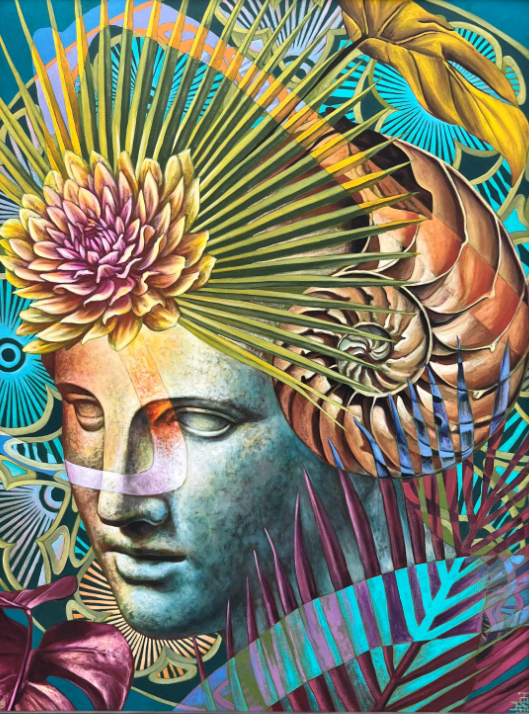
    Symbiosis Archival Print by Beau Stanton Limited Edition on Cotton Fine Art Paper Pop Graffiti Street Artist Modern Artwork. 2022 Signed & Numbered Print Limited Edition of 75 Artwork Size 18x24 Archival Pigment Fine Art. The Intersection of Styles in Beau Stanton's Symbiosis Archival Print In the vibrant landscape of contemporary art, Beau Stanton's "Symbiosis" emerges as a striking example of Street Pop Art and Graffiti Artwork. The limited edition archival print on cotton fine art paper is a testament to Stanton's mastery in blending classical art with modern sensibilities, encapsulated within an 18x24 artwork size. This piece, created in 2022, is part of a highly exclusive series, with only 75 signed and numbered prints available, each bearing the artist's unique signature. Stanton's "Symbiosis" is not merely an art piece but a visual exploration of the harmonious relationship between historical iconography and the explosive color palette synonymous with street and pop art. The artwork is infused with a sense of timelessness through its usage of archival pigment, ensuring that the vibrancy of the print remains a lasting tribute to the fusion of art styles. Crafting Visual Narratives in Modern Street Pop Art Stanton has been recognized for his ability to craft intricate visual narratives that communicate complex themes through imagery layers. "Symbiosis" is a vivid illustration of this narrative technique. The piece showcases a serene, classical face that emerges from the lush flora and fauna surrounding it, creating a dialogue between the natural world and human history. The juxtaposition of a classically rendered visage with modern, stylized elements of flora illustrates the symbiotic relationship between the past and present, a recurring theme in Stanton's work. The fine art paper serves as the canvas for this symbiotic dance, where the textural contrasts highlight the depth of Stanton's visual storytelling. The choice of medium is deliberate, bridging the gap between traditional artistry and contemporary methods. It is a nod to the artist's respect for classical techniques while embracing the dynamic and accessible nature of street art. Beau Stanton's Place in Contemporary Art Beau Stanton's contribution to the art world through works like "Symbiosis" solidifies his position as a modern visionary capable of transcending the boundaries of Street Pop Art and Graffiti Artwork. His work is not confined to the streets from which the genre derives its name but extends to galleries and private collections, indicating a shift in how street-inspired art is perceived and valued. The limited availability of "Symbiosis" further elevates its status within the art community. Collectors and fans of modern art clamor for the chance to own a piece of Stanton's vision, which is as much a collectible treasure as a piece of cultural commentary. The art's scarcity also speaks to the burgeoning market for street-inspired art, where exclusivity and originality are highly prized. In modern art, the "Symbiosis" archival print stands out as a symbol of the evolving nature of Street Pop Art and Graffiti Artwork. Beau Stanton's fluid amalgamation of historical and contemporary artistic expressions within this print challenges and expands the boundaries of what street art can be. It indicates that the art form is not static but is constantly redefined by artists like Stanton, who dare to imagine and create beyond conventional frameworks.

    $333.00

God
God has been a topic in art for centuries, and it's no different when it comes to graffiti art and pop art. Both forms of art have explored the concept of God in different ways. In graffiti art, God is often depicted as a powerful and all-knowing entity. Graffiti artists use God as a symbol of strength and protection, and they often incorporate religious imagery into their pieces. For example, a popular graffiti artist known as Banksy has created pieces that depict God as a surveillance camera watching over society. In pop art, God is often portrayed as a cultural icon. Pop artists use God as a way to comment on consumerism and popular culture. For example, the artist Keith Haring created a piece called "Pop Shop IV" that features an image of Jesus Christ as a pop culture icon. Similarly, the artist Andy Warhol created a series of silk screen prints called "The Last Supper," which depicts the famous biblical scene in his signature pop art style. God continues to be a relevant and powerful topic in graffiti art and pop art, and artists will likely continue to explore this theme in new and creative ways. Another interesting aspect of God as a topic in graffiti art and pop art is how it can challenge and subvert traditional religious beliefs and practices. Many artists use God as a way to question authority and challenge social norms. In graffiti art, for example, God may be depicted in a way that is irreverent or controversial, such as showing God smoking a cigarette or engaging in illicit activities. These depictions can be seen as a way to challenge the authority of traditional religious institutions and push back against societal norms. Similarly, pop artists may use God as a way to critique consumer culture and the commercialization of religion. They may use religious imagery and symbols in a way that is ironic or satirical, highlighting the contradictions between faith and consumerism. In both graffiti art and pop art, the use of God as a subject matter can also be seen as a way to explore deeper philosophical and existential questions. For example, some artists may use God to explore themes of mortality, spirituality, and the human condition. The topic of God in graffiti art and pop art can be a powerful and thought-provoking subject that challenges our beliefs and assumptions about religion and society.
Footer image

© 2025 Sprayed Paint Art Collection,

    • Amazon
    • American Express
    • Apple Pay
    • Bancontact
    • Diners Club
    • Discover
    • Google Pay
    • iDEAL
    • Mastercard
    • PayPal
    • Shop Pay
    • Visa

    Login

    Forgot your password?

    Don't have an account yet?
    Create account