Green
-
Lauren YS Hiatus Kaiyote Tigercorn Blotter Paper Archival Print by Lauren YS
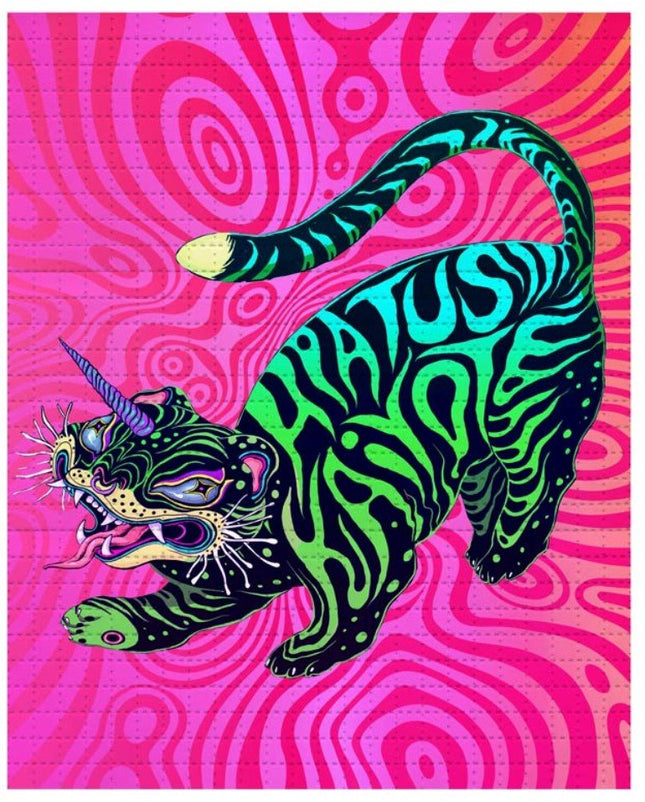
Hiatus Kaiyote Tigercorn Blotter Paper Limited Edition Archival Pigment Print Art on Perforated Blotter Paper by Lauren YS pop culture LSD artwork. 2021 Signed & Numbered with COA Archival Pigment Print on Perforated Blotter Paper Artwork Size: 7.5 x 7.5 Inches Release: April 19, 2021. Limited blotter editions are hand-perforated by Zane Kesey. Hiatus Kaiyote Tigercorn by Lauren YS: Psychedelic Iconography in Street Pop Art & Graffiti Artwork Hiatus Kaiyote Tigercorn is a vivid, limited edition archival pigment print created by Lauren YS, an American visual artist known for her neon-infused surrealism and work rooted in street art and lowbrow pop culture. Released on April 19, 2021, this 7.5 x 7.5 inch print was produced on perforated blotter paper and signed, numbered, and accompanied by a certificate of authenticity. Each edition was hand-perforated by Zane Kesey, reinforcing its connection to the rich visual history of blotter art and the psychedelic movement. The artwork’s unmistakable visual force and playfully aggressive imagery make it a standout within contemporary Street Pop Art & Graffiti Artwork, combining musical tribute, personal mythology, and psychotropic aesthetics in one explosive design. The central figure, a tiger-unicorn hybrid bursting with saturated green and blue tones against a radiant pink vortex backdrop, is both fantastical and confrontational. The creature's striped body cleverly incorporates the name Hiatus Kaiyote, celebrating the boundary-pushing Australian music group known for their fusion of soul, jazz, and electronic sound. The print radiates energy through its swirling background and exaggerated character design, with bold outlines and psychedelic patterns creating the visual equivalent of an electric current. The hand-drawn look and use of saturated, fluorescent color reflect Lauren YS’s signature approach, which bridges studio illustration and mural work while engaging with themes of transformation, empowerment, and altered perception. Lauren YS and the Language of Neo-Psychedelia Lauren YS has made a name through a body of work that embraces fantasy, mutation, and cultural remix. Their art often merges human and animal forms with dreamlike elements, pulling inspiration from science fiction, mythology, and subcultural symbology. With Hiatus Kaiyote Tigercorn, the choice of blotter paper as a medium is a deliberate nod to psychedelic visual traditions, and its scale and format mimic the exact dimensions of traditional LSD blotters. This connection is not just aesthetic but historical. Psychedelic blotter sheets were often canvases for visual experimentation, carrying illustrations that paralleled or enhanced the psychedelic experience. By using this format to immortalize a psychedelic feline hybrid, Lauren YS both honors and modernizes the lineage of this artform. As with all street-infused works, immediacy and impact are key. Hiatus Kaiyote Tigercorn achieves this with its chaotic energy and saturated palette, which would feel equally at home on a gallery wall or the side of a building. The animal's surreal form and hyperexpressive features suggest both humor and intensity, making it impossible to ignore. This aligns with Street Pop Art & Graffiti Artwork’s emphasis on creating emotional impact through image and color, particularly within public or alternative formats. Symbolism, Identity, and Surrealism in the Psychedelic Format The hybrid creature at the center of Hiatus Kaiyote Tigercorn is more than a decorative concept. Its features—striped body, unicorn horn, bared teeth—convey tension and duality. It is simultaneously fierce and whimsical, graceful and dangerous. These contradictions reflect the dual nature of many psychedelic experiences, which oscillate between beauty and chaos. The typography integrated into the tiger's stripes highlights the influence of sound and rhythm, visually representing the impact of Hiatus Kaiyote’s music. This combination of auditory and visual stimulation mirrors the synesthetic experiences often reported under psychedelics, reinforcing the relevance of this format in contemporary psych-pop culture. Lauren YS’s use of street art influences, comic surrealism, and layered visual metaphors adds depth to what may initially seem like a playful design. The exaggerated style and mythical creature format evoke dream states and imagined worlds. Their artistic language finds common ground with graffiti and pop surrealism, both of which champion distorted figures, bright palettes, and social resistance through fantasy. The use of perforated blotter paper brings this rebellious spirit to a tactile surface historically associated with radical freedom and mind expansion. Blotter Paper as Canvas in Contemporary Street Pop Art Hiatus Kaiyote Tigercorn exemplifies how contemporary artists are reclaiming blotter paper not merely as nostalgic reference but as a legitimate platform for art. When Zane Kesey hand-perforates each print, he embeds a cultural and material authenticity that connects these works to an underground tradition of chemically-induced exploration and revolutionary aesthetics. Lauren YS’s contribution stands out for its immediacy, symbolic boldness, and high-octane color scheme, transforming each sheet into a portal of visual and conceptual intensity. As part of the broader revival of blotter art within Street Pop Art & Graffiti Artwork, this print operates at the crossroads of music, psychedelia, and visual storytelling. Lauren YS continues to redefine how street-influenced art can engage with legacy formats while expanding its boundaries into new mythologies and imaginative terrains. Through their bold characters and kaleidoscopic visuals, they offer not just an image, but an invitation to perceive, question, and celebrate altered ways of seeing.
$352.00