Herbie Greene
-
Herbie Greene Dead On Blotter Paper Archival Print by Herbie Greene
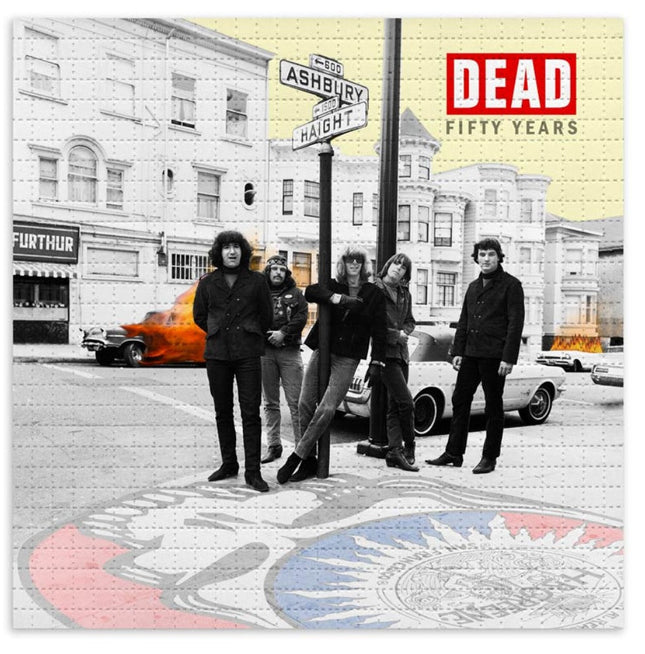
Dead On Blotter Paper Limited Edition Archival Pigment Print Art on Perforated Blotter Paper by Herbie Greene pop culture LSD artwork. 2021 Signed & Numbered with COA Archival Pigment Print on Perforated Blotter Paper Artwork Size: 7.5 x 7.5 Inches Release: April 19, 2021. Limited blotter editions are hand-perforated by Zane Kesey. Dead On by Herbie Greene: Grateful Dead, Haight-Ashbury, and the Psychedelic Core of Street Pop Art & Graffiti Artwork Dead On is a 7.5 x 7.5 inch archival pigment print on perforated blotter paper by Herbie Greene, released April 19, 2021, as a signed and numbered limited edition. Each print includes a certificate of authenticity and was hand-perforated by Zane Kesey, reinforcing the historical tie to LSD blotter art. This striking composition, both nostalgic and confrontational, features a black-and-white image of the Grateful Dead standing on the iconic corner of Haight and Ashbury in San Francisco. Greene injects color sparingly but strategically: flames erupt from a vintage car, the sidewalk bursts with a red-white-and-blue Steal Your Face logo, and the text DEAD FIFTY YEARS glows in red and gold in the upper right corner. The result is a collision of eras, attitudes, and iconography that embodies the rebellious core of Street Pop Art & Graffiti Artwork. Herbie Greene, born in the United States, rose to prominence documenting the psychedelic explosion of the 1960s, especially as the unofficial photographer of the Grateful Dead. In Dead On, he transforms a historic moment into a symbolic monument of counterculture energy. The band's casual stance at the heart of San Francisco's hippie revolution feels timeless and alive, made more powerful by the blotter format. LSD and the Dead have long shared intertwined legacies, and placing this image on perforated paper makes the print an artifact of both visual and chemical transformation. Greene's use of selective color against grayscale lends a raw immediacy that echoes the emotional sharpness found in wheatpaste murals, stencil tags, and handmade gig posters. Documenting Counterculture Through Psychedelic Media The corner of Haight and Ashbury is not just a location in this print—it is a symbol of a social and artistic uprising that defined an era. By capturing the Grateful Dead there, Herbie Greene documents more than a band. He preserves a time when art, music, and consciousness were all being redefined through collective experimentation and resistance. The vintage cars, residential buildings, and storefronts are left untouched in grayscale, reinforcing the photographic reality of the moment, while the graffiti-like color accents bring the spirit of protest, psychedelia, and spiritual fire to the forefront. The use of blotter paper adds a deeper layer of symbolism. This was not a material chosen for novelty. It is a deliberate nod to the role visual art played in enhancing or reflecting LSD experiences during the 1960s and beyond. Zane Kesey’s involvement in perforating the print adds continuity to that history. His connection to the original Merry Pranksters and his stewardship of psychedelic print traditions ensure that each sheet holds more than ink—it carries the energy of a cultural lineage that never stopped questioning the status quo. Visual Resistance and the Street Pop Art Aesthetic Dead On blurs the line between documentation and confrontation. The addition of fire—literally exploding from the background—turns a peaceful street portrait into a moment of surreal spectacle. The visual message aligns closely with the tenets of Street Pop Art & Graffiti Artwork, where public spaces are transformed through color, message, and distortion. The Dead’s stoic faces contrast with the intensity of the fire and the bold pop typography, creating a tension between calm defiance and burning revolution. This technique of mixing photographic realism with stylized additions mirrors the way street artists use paste-ups or painted overlays on photographs or prints in urban spaces. It evokes a world where memory is always edited by experience, where sacred moments can be revisited and recontextualized through art. By adding a psychedelic floor mural and ominous flames, Greene does not just celebrate the past—he reimagines it for now. The message becomes one of persistence, cultural renewal, and unfiltered truth. Herbie Greene and the Printed Memory of Sound and Vision Herbie Greene’s contribution to American visual culture spans music, photography, and psychedelic art. Through Dead On, he presents not just a band, not just a corner, but a living monument to a movement that still resonates today. The Grateful Dead’s relationship with visual art has always been central to their mythos—from album covers to poster design—and Greene’s work amplifies that history with a tactile surface that recalls a time when the experience of seeing was inseparable from the experience of feeling. Dead On is more than a photograph. It is a constructed memory made physical on a material that once altered consciousness and inspired revolution. It speaks to the roots of Street Pop Art & Graffiti Artwork, where visual language is raw, urgent, and built for both permanence and decay. With this piece, Herbie Greene secures a place where nostalgia is not passive and history remains lit with the fires of psychedelic rebellion.
$631.00 $473.00
-
Herbie Greene Say Goodnight Gracie Blotter Paper Archival Print by Herbie Greene
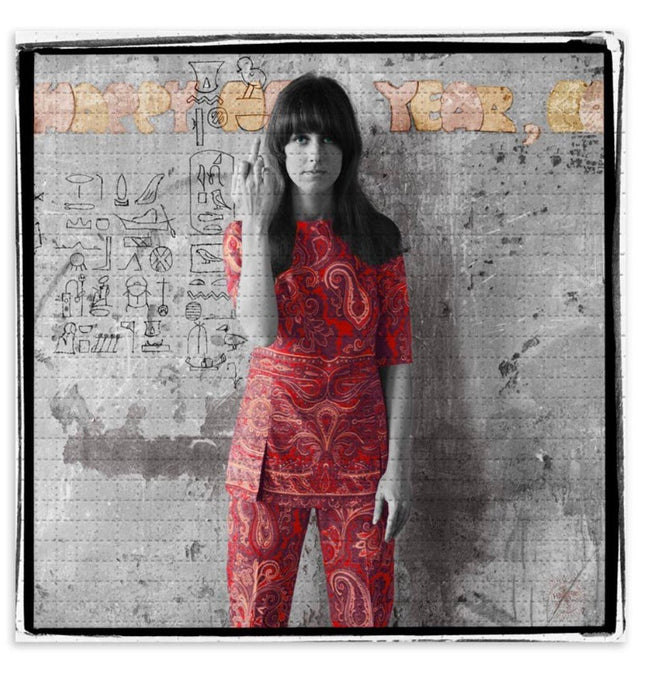
Say Goodnight Gracie Blotter Paper Limited Edition Archival Pigment Print Art on Perforated Blotter Paper by Herbie Greene pop culture LSD artwork. 2021 Signed & Numbered with COA Archival Pigment Print on Perforated Blotter Paper Artwork Size: 7.5 x 7.5 Inches Release: April 19, 2021. Limited blotter editions are hand-perforated by Zane Kesey. Say Goodnight Gracie by Herbie Greene: Blotter Paper Resistance in Street Pop Art & Graffiti Artwork Say Goodnight Gracie is a 7.5 x 7.5 inch archival pigment print on perforated blotter paper by Herbie Greene, released on April 19, 2021. Signed and numbered with a certificate of authenticity, each piece in this limited edition was hand-perforated by Zane Kesey, reinforcing its symbolic roots in psychedelic counterculture. The print features a black-and-white photograph of Grace Slick, the iconic frontwoman of Jefferson Airplane, overlaid with colorized elements including a paisley red outfit and piercing cyan eyes. The backdrop includes Egyptian-inspired sketches and faded, spray-painted text reading Happy New Year, creating a layered composition that mixes defiance, memory, and cultural critique. Herbie Greene, a legendary photographer from the United States, was known for capturing defining moments of the 1960s San Francisco music scene. This print is more than just a photo—it is a protest embedded in a relic. Slick’s expression and raised middle finger become the central focal point, offering a timeless act of rebellion immortalized through photographic grit and street-inflected style. The surrounding textures—worn concrete, hand-drawn symbols, and fading graffiti—echo the raw surfaces used in Street Pop Art & Graffiti Artwork, reinforcing the voice of anti-establishment figures who spoke through walls, posters, and sound. Grace Slick, Counterculture, and the Power of Visual Protest The image of Grace Slick in Say Goodnight Gracie resonates deeply with the cultural spirit of the 1960s and its aftermath. Slick's role as a voice of psychedelic rock and protest was unmistakable, and this moment of visual resistance encapsulates that spirit perfectly. She does not perform; she confronts. Her multicolored attire, contrasted against a grayscale background, draws attention to individuality and dissent amidst uniformity and decay. The visual isolation of colorized features within a monotone space mimics the effect of street stenciling or wheatpaste posters, techniques commonly used in urban protest art to highlight voices against a muted backdrop of authority. The print format on blotter paper is significant. It bridges the documentation of music history with the tangible aesthetics of drug culture and underground art. Zane Kesey’s involvement in hand-perforating the editions ties this piece directly to the visual traditions of LSD blotter art, where iconography often merged political satire, celebrity, and surrealism. This connection reinforces the idea of art not just as commentary, but as a vehicle of transformation—mental, social, and spiritual. The Urban Palimpsest as Art Form Herbie Greene’s composition in Say Goodnight Gracie operates like an urban palimpsest. Layers of history, rebellion, femininity, and symbolism are built into every detail. The hieroglyph-like drawings add an archaeological tone, suggesting lost messages or forgotten rituals that still echo in the present. The crumbling wall texture and ghosted graffiti add urgency and vulnerability, as if the image could fade at any moment—just like the posters pasted on city walls, fleeting yet unforgettable. This quality is central to Street Pop Art & Graffiti Artwork, where temporality, public visibility, and emotion collide to create impact. Grace Slick’s raised hand and unflinching gaze are a signal, not just a pose. They challenge the viewer to consider where protest lives today. In Greene’s composition, the past is not frozen but reanimated on blotter paper, a medium that has transported minds beyond the visible world for decades. This visual dialogue between photography, protest, and psychedelic symbolism speaks not just to nostalgia but to the ongoing role of image as resistance. Herbie Greene and the Documentation of Rebellion Herbie Greene’s work captures moments that transcend the frame. By reissuing Say Goodnight Gracie on perforated blotter paper, he transforms documentation into object, memory into statement, and portrait into symbol. This choice elevates the piece beyond archival photography into the arena of Street Pop Art & Graffiti Artwork, where message and method matter equally. Greene, born in the United States, became known for his close work with artists like Jefferson Airplane, the Grateful Dead, and Janis Joplin. His lens documented a generation seeking transformation, and in this work, that spirit persists—vivid, fierce, and permanent on a medium built for moments that change everything. Say Goodnight Gracie is not just a tribute to a music icon. It is a distilled act of visual rebellion, sharpened by decades of cultural memory and executed on one of the most subversive print surfaces in art history. It offers a flash of resistance captured in time, formatted for the hand, the wall, and the mind alike.
$631.00 $473.00