Hikari Shimoda

4 artworks

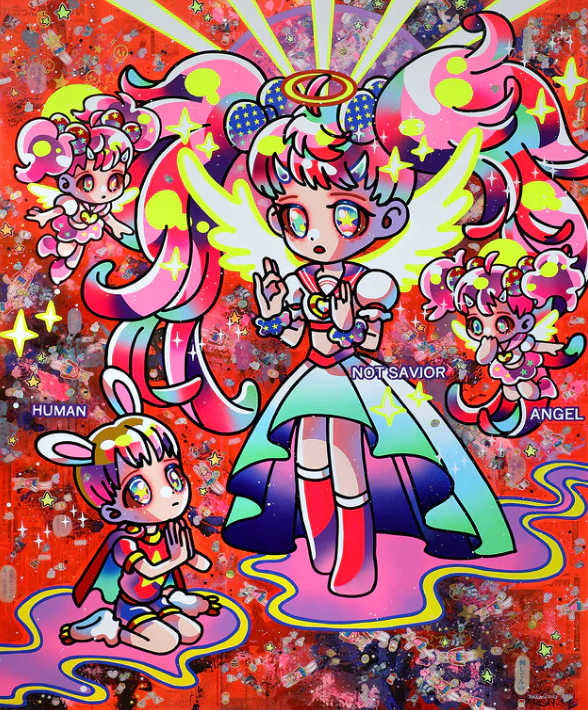
  • Neo Raigō-zu 2023 Archival Print by Hikari Shimoda

    Hikari Shimoda Neo Raigō-zu 2023 Archival Print by Hikari Shimoda

    Neo Raigō-zu 2023 Archival Print by Hikari Shimoda Limited Edition on 290gsm Moab Entrada Fine Art Paper Pop Graffiti Street Artist Modern Artwork. 2023 Signed & Numbered Print Limited Edition of 50 Size 20x24 Archival Pigment Fine Art Neo Raigō-zu 2023 Archival Print by Hikari Shimoda Hikari Shimoda's "Neo Raigō-zu 2023" offers a vibrant tapestry of colors and figures that resonate deeply with the themes prevalent in pop art, street art, and graffiti. This limited edition archival print, restricted to 50 signed and numbered pieces, showcases Shimoda's Lowbrow-Irasuto style, inspired by anime and manga, which she has honed since her career began after studying at Kyoto Saga University of Art. The 20x24 inch artwork, printed on premium Moab Entrada fine art paper, employs a striking pigment that captures the fantastical nature of Shimoda's subjects — celestial beings and magical children who explore the paradoxes of modern society and the quest for spiritual meaning. Her characters, often seen in heroic costumes or as magical Shojo girls, are not just whimsical; they embody a critique of contemporary issues and the ideological projections placed upon the younger generation. Shimoda's work, while enchanting, is a profound commentary on the state of the world, offering a unique blend of fantasy and reality that is characteristic of the most thought-provoking street pop art and graffiti artwork.

    $309.00

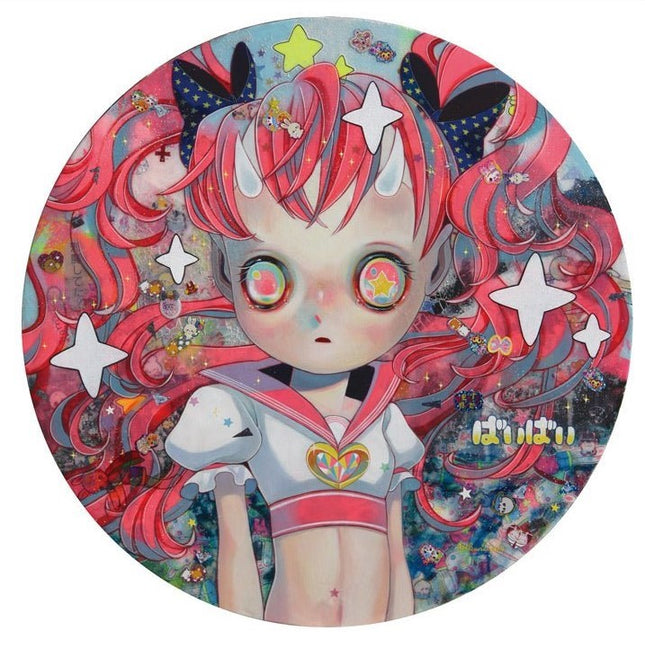
  • Solitary Child 1 Archival Print by Hikari Shimoda

    Hikari Shimoda Solitary Child 1 Archival Print by Hikari Shimoda

    Solitary Child 1 Limited Edition Archival Pigment Prints on 310gsm Fine Art Paper by Hikari Shimoda Graffiti Street Artist Modern Pop Art. 2016 Signed & Numbered Limited Edition of 50 Artwork Size 12x12 "Solitary Child is a series of works, focused on my original theme of the inevitability of the Apocalypse. In this series, I am offering a new savior for humankind- she is a magical girl (Solitary Child #1) and a little boy hero (Solitary Child #3). In the world of my paintings, humanity has perished, as seen in the collage background, where there is an expressed chaos throughout. In these images, my saviors have come upon the dying human race. After the death of man, the world has found some relief from the turmoil that he has brought upon it. Meanwhile, mankind selfishly dreams of newfound happiness in his afterlife. In the mythology of my work, as humanity is destroyed, only one figure remains and that is the Messiah represented as a child. The magical girl was the first to be left alone after humanity was destroyed, left to deal with the despair and damage he left behind. Her eyes are shining and sparkling, but her stare is blank. In contrast, my hero’s eyes are closed ever so gently. To him, everything in the world is very chaotic and overwhelming. He feels all of its happiness, despair, hope, sadness, everything… in such a state, even the world’s savior must shut his eyes to it." - Hikari Shimoda Solitary Child 1 Archival Pigment Print by Hikari Shimoda Solitary Child 1 is a haunting yet luminous work by Japanese artist Hikari Shimoda, executed as a limited edition archival pigment print on 310gsm fine art paper in 2016. Measuring 12x12 inches and part of a signed and numbered edition of only 50 pieces, the print is an exemplary artifact of modern Street Pop Art & Graffiti Artwork. Hikari Shimoda’s visual language is deeply influenced by anime, manga, and the traditions of Japanese pop culture, yet she transcends those frameworks by embedding layered commentary on psychological turmoil, existential despair, and the fractured identity of post-apocalyptic innocence. A Childlike Messiah in a Dystopian Aftermath Solitary Child 1 features a central character presented with almost overwhelming intensity: a young girl in a magical girl costume with heart motifs and sailor-style attire. Her pink and red hair bursts outward, saturated with visual energy, covered in stars and cosmic motifs. The round composition suggests a window into another dimension, one that has already processed the collapse of humanity. Her large, glowing eyes, rendered with 3D-like chromatic effects, stare blankly ahead, neither judgmental nor mournful. This emptiness is intentional, a thematic thread in Shimoda’s work meant to evoke both detachment and forced resilience. Within the background—a swirling collage of detritus, symbols, and abstract fragments—the chaos of a forgotten civilization bleeds through. Shimoda situates her character as both witness and survivor. The child does not weep for the world but exists beyond it, as its last remnant or perhaps as its reluctant redeemer. Her eyes, sparkling with galaxies and stars, are full of wonder and terror. Her small frame is juxtaposed against the density of visual information around her, reminding the viewer that she is no longer a child in the traditional sense but a totem for hope, destruction, memory, and transcendence. The Narrative of the Apocalypse and Magical Realism This print is part of Shimoda’s larger Solitary Child series, which contemplates the inevitable downfall of humankind and the rise of symbolic children as messianic figures. Her use of magical girl archetypes and child heroes blends contemporary kawaii aesthetics with harrowing existential themes. The result is a visual paradox: alluring and innocent on the surface, but deeply reflective of societal failure, emotional vacancy, and the search for meaning after cultural ruin. Solitary Child 1 is more than a work of visual pop; it is a philosophical reflection clothed in vibrant, hallucinogenic textures. A Singular Voice in Pop Apocalyptic Visual Language Hikari Shimoda’s Solitary Child 1 stands at the intersection of anime fantasy, pop aesthetics, and postmodern emotional realism. Printed with extraordinary precision on archival paper, the piece balances delicate brush textures with high-impact digital color precision. Each work in the edition is hand-signed and individually numbered, preserving its place in the limited pantheon of collectible Street Pop Art & Graffiti Artwork. As Shimoda continues to rise in global prominence, pieces like Solitary Child 1 serve as portals into her richly imagined mythos—where apocalyptic desolation and magical innocence collide to question what it means to save a world that cannot save itself.

    $298.00

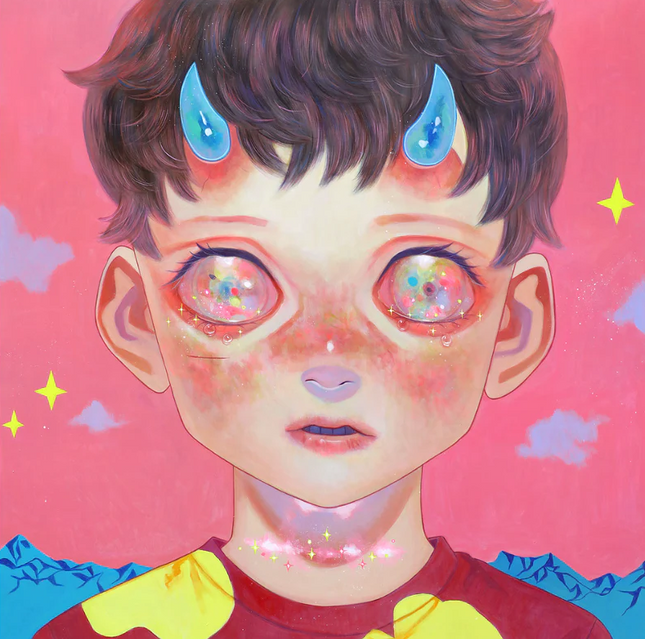
  • God Is Dead, But...#13 Archival Print by Hikari Shimoda

    Hikari Shimoda God Is Dead, But...#13 Archival Print by Hikari Shimoda

    God Is Dead, But...#13 Archival Print by Hikari Shimoda Limited Edition on 290gsm Moab Entrada Fine Art Paper Pop Graffiti Street Artist Modern Artwork. 2023 Signed & Numbered Print Limited Edition of 50 Size 22x22 Archival Pigment Fine Art The Cultural Significance of Hikari Shimoda's "God Is Dead, But...#13" The visual narrative of Hikari Shimoda's "God Is Dead, But...#13" reflects a profound narrative through Street Pop Art and Graffiti Artwork. As a limited edition archival print on Moab Entrada fine art paper, this piece is a testament to Shimoda's prowess in melding pop culture aesthetics with a graffiti art ethos. The piece is part of a limited edition of 50, each signed and numbered by the artist, underscoring the exclusivity and collectibility of Shimoda's work. At 22x22 inches, the artwork commands attention with its size and the potency of its message. The Visual Language of "God Is Dead, But...#13" This artwork is a vibrant foray into the complex emotional and societal narratives Shimoda is renowned for. It features a childlike figure, a recurring motif in Shimoda's oeuvre, set against a backdrop that radiates a dreamlike yet unsettling energy. Large and filled with galaxies, the eyes suggest a universe of thought and feeling beyond the immediate visual impact. This symbolism is characteristic of Street Pop Art's intention to communicate deeper meanings beneath a visually accessible surface. The use of archival pigment in fine art print ensures that the depth of color and detail remains pristine, preserving the emotional intensity of the original work. Shimoda's Integration of Street Art Ideals in Modern Artwork In "God Is Dead, But...#13," Shimoda exemplifies how Street Pop Art can transcend the boundaries of traditional graffiti artwork to enter the realm of fine art. The piece is not just a representation of Shimoda's internal musings but also a cultural commentary that reflects the zeitgeist. The title itself, "God Is Dead," resonates with the philosophical musings of Friedrich Nietzsche, suggesting a society amid existential contemplation. This aligns with the ethos of street art, which often grapples with grand narratives of existence and identity within the urban landscape. The Emotional Resonance in Shimoda's Limited Edition Print The emotional resonance of this piece is palpable. The child's expression is ambiguous, caught between innocence and a knowing sadness that speaks to the loss of divine certainty implied by the title. The tears that seem to be galaxies suggest mourning this loss or perhaps crying out for a new form of divinity or hope within the void. The choice of fine art paper and the precision of the archival pigment technique adds a layer of durability to the transient nature of the subject, allowing the work to stand as a lasting icon of contemporary Street Pop Art and Graffiti Artwork. In crafting "God Is Dead, But...#13," Shimoda asserts her place in the modern art world, proving that Street Pop Art and Graffiti Artwork have a vital role in contemporary art discourse. Her limited edition print is not just a collector's item but a piece of cultural significance that encapsulates the spirit of our times.

    $309.00

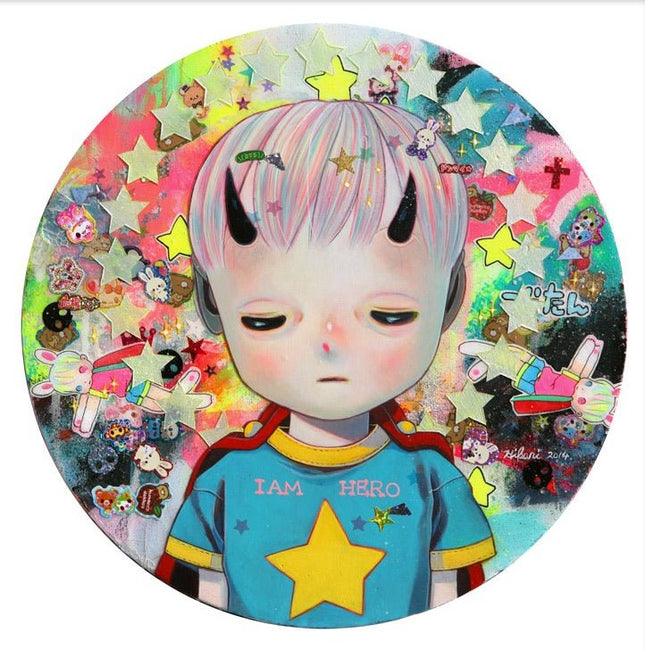
  • Solitary Child 3 Archival Print by Hikari Shimoda

    Hikari Shimoda Solitary Child 3 Archival Print by Hikari Shimoda

    Solitary Child 3 Limited Edition Archival Pigment Prints on 310gsm Fine Art Paper by Hikari Shimoda Graffiti Street Artist Modern Pop Art. 2016 Signed & Numbered Limited Edition of 50 Artwork Size 12x12 "Solitary Child is a series of works, focused on my original theme of the inevitability of the Apocalypse. In this series, I am offering a new savior for humankind- she is a magical girl (Solitary Child #1) and a little boy hero (Solitary Child #3). In the world of my paintings, humanity has perished, as seen in the collage background, where there is an expressed chaos throughout. In these images, my saviors have come upon the dying human race. After the death of man, the world has found some relief from the turmoil that he has brought upon it. Meanwhile, mankind selfishly dreams of newfound happiness in his afterlife. In the mythology of my work, as humanity is destroyed, only one figure remains and that is the Messiah represented as a child. The magical girl was the first to be left alone after humanity was destroyed, left to deal with the despair and damage he left behind. Her eyes are shining and sparkling, but her stare is blank. In contrast, my hero’s eyes are closed ever so gently. To him, everything in the world is very chaotic and overwhelming. He feels all of its happiness, despair, hope, sadness, everything… in such a state, even the world’s savior must shut his eyes to it." - Hikari Shimoda Solitary Child 3 Archival Pigment Print by Hikari Shimoda Solitary Child 3 by Hikari Shimoda is a vivid embodiment of emotional symbolism and post-apocalyptic narrative rendered through the lens of Japanese Street Pop Art & Graffiti Artwork. Released in 2016 as a signed and numbered archival pigment print limited to 50 editions, the artwork measures 12x12 inches and is printed on 310gsm fine art paper. This circular piece, like its counterpart Solitary Child 1, presents a child as a spiritual savior in the wake of humanity’s collapse. However, where the magical girl of the first installment gazes outward with shining eyes, Solitary Child 3 closes his eyes to the world, weighed down by its chaos and sorrow. The Child Hero as a Symbol of Emotional Overload The central figure is a young boy depicted with softly closed eyes, a vacant expression, and flushed cheeks. His pale, almost ghostlike complexion contrasts with the electric vibrancy of the chaotic collage behind him. The boy wears a star-laden shirt with the phrase I AM HERO emblazoned across the chest. This phrase is not a declaration of ego but a burden of responsibility in a world shattered by human error. With small black horns rising from his head and a solemn composure, the character straddles the line between innocence and burdened divine messenger. Hikari Shimoda’s universe exists in a fantastical space where childlike visuals are infused with heavy existential themes. The surrounding background in Solitary Child 3 is littered with neon stars, stickers, anime-inspired creatures, and cultural flotsam. The visual chaos symbolizes the overstimulation of modern society and the debris left behind after its collapse. The messianic child stands amid this wreckage, absorbing it all in quiet contemplation. Unlike heroes who fight with swords or powers, this savior’s resistance lies in his inward emotional experience. Aesthetic Tension Between Kawaii and Catastrophe Shimoda blends traditional Japanese pop culture imagery with deeply contemporary anxieties. The work’s aesthetic borrows heavily from kawaii sensibilities—cute characters, colorful motifs, childlike wonder—but it is filtered through a lens of apocalypse, grief, and spiritual ambiguity. The character is not smiling. His closed eyes speak to a need to shut out the pain of the world, even as he must stand as its redeemer. The artist challenges the viewer to question what innocence means when it exists in the shadow of destruction, and what heroism requires when the world has already ended. Pop Iconography Transformed Through Spiritual Narrative Solitary Child 3 situates itself within the new wave of Street Pop Art & Graffiti Artwork by merging painterly techniques, manga aesthetics, and conceptual symbolism. Hikari Shimoda’s work challenges traditional Western ideas of what children represent in visual culture. Here, the child is not naive or oblivious but rather deeply aware, spiritually complex, and emotionally overwhelmed. The use of archival pigment print on heavy fine art paper preserves both the vibrancy and the texture of the original, allowing collectors to experience the intimacy and power of Shimoda’s vision. This print serves as a profound statement within Shimoda’s mythological continuum. It reminds the viewer that amid ruin, the last figure standing is not a politician or warrior, but a child—silent, enduring, and burdened with the sorrow of a fallen world.

    $298.00

Hikari Shimoda> Pop Artist Graffiti Street Artworks

The Emergence of Hikari Shimoda in the Art World

Hikari Shimoda has emerged as a significant figure in the contemporary art, particularly in Street Pop Art and Graffiti Artwork. Born in Nagano, Japan, Shimoda's journey into the art world was marked by a unique blend of influences, ranging from Japanese anime and manga to traditional art forms. Her work stands out for its vivid colors, fantastical themes, and often unsettling depictions of children. These childlike figures, often portrayed with surrealism and magical realism elements, are an emblem overall of Shimoda's commentary on the modern world. Hikari Shimoda is a Japanese artist known for her contemporary pop surrealism and the use of anime and manga-inspired characters in her work. Born in Nagano, Japan, 1984 Shimoda studied illustration at the prestigious Kyoto Saga University of Arts. Her artwork often explores themes such as innocence, societal pressures, and the complexities of the human condition, all presented through a vibrant and fantastical lens. Shimoda's characters, often children or young adults, are depicted with wide, expressive eyes and an otherworldly aura, frequently surrounded by mystical or cosmic elements. Her signature motifs include skulls, horns, and starry patterns. Her work has been exhibited in galleries and art shows worldwide, garnering international attention and acclaim. Through her art, Shimoda explores the darker aspects of human nature, including loneliness, isolation, and existential anxiety. Despite the seemingly dark subject matter, her work also conveys a sense of hope and resilience, resonating with a broad audience.

The Unique Style and Themes of Shimoda's Art

Shimoda's art style is distinctive and easily recognizable. Her use of bright, almost neon colors combined with darker, sometimes disturbing themes creates a captivating and thought-provoking juxtaposition. With their large, expressive eyes, the children in her paintings often bear supernatural elements such as horns or glowing auras. These elements are not just aesthetic choices but are imbued with deeper meanings, often reflecting Shimoda's perspectives on societal issues, the innocence and vulnerability of youth, and the loss of childhood innocence.

Societal Commentary through Art

A significant aspect of Shimoda's work is her commentary on society. Her paintings are not just visually striking; they also delve into themes like the struggles of adolescence, the complexities of the human psyche, and the challenges faced in modern society. The recurring motif of children in her artwork is a metaphor for the innocence and purity of being corrupted or burdened by the world's harsh realities. Through her unique visual language, Shimoda articulates concerns about the future, the environment, and the socio-political challenges the younger generation inherits. 

Shimoda's Influence on Street Pop and Graffiti Art

Hikari Shimoda's contribution to the genres of Street Pop Art and Graffiti Artwork cannot be understated. Her work resonates with these art forms' rebellious and vibrant spirit while also bringing introspection and depth. The fusion of street art's boldness and the fantastical elements often seen in pop art creates a unique niche that Shimoda occupies. Her work, usually found in galleries and public spaces, bridges the gap between the elite art world and the more accessible, public domains of street art.

Global Recognition and Exhibitions

The global art community has recognized Shimoda's talent and unique voice. She has exhibited her work in numerous countries, receiving acclaim for her ability to communicate universally relatable themes through a deeply personal and culturally specific lens. Her exhibitions often attract a diverse audience, ranging from art critics and enthusiasts to younger generations drawn to her anime and manga-inspired style.

The Future of Art: Shimoda's Role

Looking towards the future, Hikari Shimoda is a pivotal figure in the evolution of contemporary art. Her work challenges traditional boundaries and conventions, offering a fresh perspective in the ever-evolving dialogue of art. As the lines between street art, pop art, and fine art continue to blur, artists like Shimoda play a crucial role in shaping the direction and narrative of modern art. Her ongoing exploration of new themes and mediums promises to keep her at the forefront of the art world, inspiring new generations of artists and art lovers alike.

In conclusion, Hikari Shimoda's impact on Street Pop Art and Graffiti Artwork is profound and far-reaching. Her unique style, thematic depth, and societal commentary make her a standout artist of her generation. As she continues to evolve and explore new artistic avenues, her influence on the art world is poised to grow, solidifying her place as a key figure in contemporary art.

Footer image

© 2025 Sprayed Paint Art Collection,

    • Amazon
    • American Express
    • Apple Pay
    • Bancontact
    • Diners Club
    • Discover
    • Google Pay
    • iDEAL
    • Mastercard
    • PayPal
    • Shop Pay
    • Visa

    Login

    Forgot your password?

    Don't have an account yet?
    Create account