Holiday

1 artwork

  • Born on the 4th Giclee Print by Risk Rock

    Risk Rock Born on the 4th Giclee Print by Risk Rock

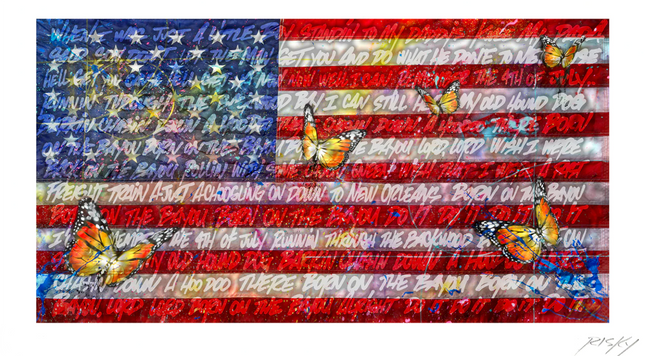
    Born on the 4th Giclee Print by Risk Rock Artwork Limited Edition Print on 290gsm Heavy Cold Press Cotton Rag Fine Art Paper Graffiti Pop Street Artist. 2023 Signed & Numbered Limited Edition of 50 Artwork Size 30x18 4th of July American Flag Risk Rock – Born on the 4th in Street Pop Art & Graffiti Artwork Born on the 4th by Risk Rock is a 2023 limited edition giclée print that merges patriotic symbolism with the kinetic force of graffiti. Printed on 290gsm heavy cold press cotton rag fine art paper, this 30x18 inch artwork is a signed and numbered edition of 50. As one of the foundational figures in American graffiti, Kelly Graval—known as Risk Rock—channels decades of visual rebellion into a piece that reflects on identity, memory, and national mythology. With the American flag as its base, overlayed by glowing butterflies and wild-style script lyrics, the work delivers a layered commentary on freedom, heritage, and transformation. The flag is rendered in expressive textures, saturated reds and blues, and stars blurred into bursts of light. Atop the stripes, Risk overlays dense, handstyle calligraphy referencing lyrics from Creedence Clearwater Revival’s Born on the Bayou—a gritty, reflective Southern anthem. The use of handwritten text, characteristic of graffiti, becomes a form of protest and remembrance, embedding personal and cultural history into a national symbol. The choice of lyrics anchors the work in themes of place, nostalgia, and longing, while simultaneously questioning the cost and complexity of American identity. This fusion of visual intensity and personal message is a hallmark of Street Pop Art & Graffiti Artwork. Graffiti Aesthetics Intertwined with Patriotic Imagery The most striking aspect of Born on the 4th is the collision of visual languages: the structured, iconic format of the American flag is interrupted by dynamic spray textures and gestural text. Risk employs his signature handstyle with fluid precision, making every line feel like a freestyle verse across a national canvas. The use of butterflies—painted in vibrant oranges, blues, and golds—adds a contrasting softness and becomes a symbol of freedom, metamorphosis, and fragility. Their presence floating across the flag challenges the rigidity of the structure they inhabit. They seem to represent untamed hope within a framework of constraint. This push and pull between containment and flight mirrors graffiti’s own relationship with authority and space. By reclaiming the flag—often a symbol of establishment—and remixing it with subversive lyricism and street-coded aesthetics, Risk reframes national pride through the lens of rebellion and individuality. This gesture is in direct conversation with the goals of street art: to reclaim public symbols and inject them with alternative narratives and truths. Risk Rock’s Legacy in Street Pop Visual Culture Risk Rock began his career painting freeway overpasses and freight trains in Los Angeles during the 1980s, becoming one of the first to take graffiti from underground subculture into the realm of commercial and gallery art without compromising its raw aesthetic. His work has always balanced fine art execution with street authenticity. Born on the 4th is a continuation of that legacy—layered, polished, and unflinchingly honest. The giclée printing process enhances the saturation and detail, preserving the energy of aerosol textures and brushwork that define his style. In the context of Street Pop Art & Graffiti Artwork, Risk’s flag is not a patriotic celebration alone—it is a visual poem of contradictions, stitched together by memory, struggle, and transformation. It captures the spirit of American graffiti: resistant, self-aware, and defiantly beautiful. The limited edition format adds collectible weight to the message, ensuring the piece remains both art object and cultural statement. Risk Rock’s Born on the 4th stands as a vibrant meditation on place, power, and the stories we write across the banners we inherit.

    $493.00

Holiday Graffiti Street Pop Artworks

Celebratory Expressions: Holidays in Street Pop Art and Graffiti

With their vivid imagery and deep-rooted cultural significance, holidays have long provided fertile ground for artists working within pop art, street art, and graffiti. From the jolly, red-suited figure of Santa Claus to the macabre aesthetics of Halloween, the visual elements associated with holidays offer a rich palette for artistic exploration and commentary. In the hands of street pop artists and graffiti creators, these symbols transcend their commercial and traditional origins, transforming into something that reflects and critiques contemporary culture. The use of holiday motifs in street pop art is often aimed at invoking a sense of community and shared culture in our spaces. Graffiti artwork, with its inherent transience and public-facing nature, harnesses holiday themes to engage with a broader audience, transcending the barriers that typically segregate the art world from the layperson. Murals of oversized turkeys, hearts, shamrocks, or fireworks become more than seasonal decorations; they serve as communal touchstones that invite viewers from all walks of life to engage with the art intuitively.

Reimagining Traditions Through Urban Art

Street pop graffiti art has become a ubiquitous art form that thrives in the urban environment. The art form is usually characterized by vibrant colors, stylized fonts, and images that aim to convey a message or tell a story. Among the numerous themes that street pop graffiti art covers, holidays are an often-recurring subject. This article delves into the use of holidays as a topic in street pop graffiti art and the various artists who have utilized the theme in their works. Banksy, one of the most renowned street pop graffiti artists, is known for his witty and satirical take on various issues. Among the numerous themes that Banksy has tackled is holidays, and his graffiti art is entertaining and thought-provoking. In his work titled "Merry Christmas," Banksy features a young boy holding a machine gun while kneeling in front of a large graffiti text that reads, "Merry Christmas." The work is a commentary on the commercialization of Christmas and the loss of the holiday's true meaning. Another Banksy work that features a holiday theme is "Kissing Coppers," a graffiti image that shows two policemen kissing. The work, which was painted on the side of a pub in Brighton, UK, during the 2004 Brighton Pride Festival, is a celebration of love and freedom, and it shows that even those in positions of authority can break away from social norms and express themselves. Street pop art and graffiti often twist the ubiquitous symbols of holidays, offering new perspectives on familiar tropes. In doing so, they reflect the evolving attitudes toward these celebrations. A Santa Claus mural might be depicted not with his traditional jolly smile but with a contemplative expression, perhaps commenting on the commercialization of Christmas.
Meanwhile, Easter artworks may feature eggs and bunnies in unexpected contexts, challenging the viewer to reconsider the origins and meanings of these symbols. Reimagining holiday imagery within street pop art is not merely an aesthetic choice but also laden with potential social commentary. Artists often leverage the emotional resonance of holiday symbols to make pointed observations about societal issues. For example, a Valentine's Day piece might juxtapose the universal quest for love against the isolation or consumerism that can also characterize the holiday. Such works engage with the duality of holidays — as moments of celebration and reflection.

Street Art, Pop Culture, and Holiday Iconography

Pop culture plays a significant role in shaping the imagery associated with holidays, and street pop artists and graffiti creators draw upon this rich iconography to connect with a broader audience. The depiction of characters from holiday movies, television specials, and songs in street art brings a layer of shared media experience into the urban landscape. These pieces become points of reference that tie together the threads of pop culture, public space, and personal memory. In street pop art, holiday imagery is a universal language that can break down barriers and unite disparate groups. Whether through celebrating the winter holidays, the vivid colors of Diwali, the solemn remembrances of Memorial Day, or the festive atmosphere of Carnival, these symbols become a bridge, connecting the artist and the public in a shared cultural dialogue. Holidays provide a unique and powerful theme for street pop art and graffiti artwork. Through the lens of these celebrations, artists can explore and express a range of emotions and commentaries, from joy and togetherness to criticism and satire. The seasonal motifs that populate our calendars become, in the hands of these artists, a canvas for exploring the human condition, the complexities of society, and the role of tradition in an ever-changing world. Keith Haring, a street pop graffiti artist from the 1980s, was known for his bold and bright art style. His work often tackled social and political issues and frequently used religious imagery in his pieces. One of Haring's most recognizable works is "Untitled (Easter)," a graffiti image that features a cartoonish Easter Bunny holding an egg. The work is a fun and playful take on the Easter holiday, showcasing Haring's signature style. In addition to "Untitled (Easter)," Haring also created "Crack is Wack," a mural that features a prominent red figure with a raised hand and a message that reads "Crack is Wack" in bold letters. The mural, which was painted in 1986 in Harlem, New York, is a commentary on the crack epidemic that was ravaging the city at the time. Mr. Brainwash is a street pop graffiti artist who gained fame after being featured in the 2010 Banksy documentary "Exit Through the Gift Shop." Pop culture references, bright colors, and bold lettering often characterize his works. In his piece "Happy New Year," Mr. Brainwash features a colorful background with the words "Happy New Year" in large letters. The work is a celebration of the new year and the hope and optimism that it brings. In addition to "Happy New Year," Mr. Brainwash has created works on other holiday themes, including Valentine's Day and Halloween. His work often features playful and whimsical images that convey a sense of joy and happiness. Holiday-themed street pop graffiti art is influential because it brings attention to important issues and celebrates the holidays uniquely and creatively. It allows artists to express themselves publicly and reach a broad audience with their messages. Additionally, holiday-themed street pop graffiti art can remind us of the true meaning of holidays, which can often be overshadowed by commercialization and consumerism.
Footer image

© 2025 Sprayed Paint Art Collection,

    • Amazon
    • American Express
    • Apple Pay
    • Bancontact
    • Diners Club
    • Discover
    • Google Pay
    • iDEAL
    • Mastercard
    • PayPal
    • Shop Pay
    • Visa

    Login

    Forgot your password?

    Don't have an account yet?
    Create account