Horror & Scary
-
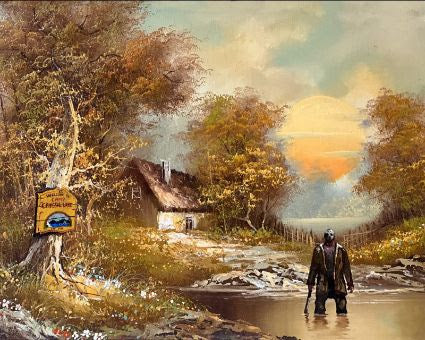
Dave Pollot TGIF V 20 Archival Canvas Print by Dave Pollot
TGIF V 20 Archival Print by Dave Pollot Limited Edition on PH Neutral 17mil Canvas Pop Graffiti Street Art Artist Modern Artwork. 2023 Signed & Numbered Print Limited Edition of 57 Artwork Size 16x20 Archival Pigment Fine Art on Canvas of the Jason from Horror Movie Friday the 13th in a Swamp TGIF V 20: Archival Print by Dave Pollot The TGIF V 20 archival print by Dave Pollot, released in 2023, represents a unique fusion of pop culture references, fine art techniques, and street pop art sensibilities. This limited edition artwork, signed and numbered by Pollot, is part of a series of just 57 prints. It is a 16x20 inch archival pigment print on pH-neutral 17mil canvas, which ensures its longevity and resistance to fading over time. The piece features the iconic character Jason Voorhees from the Friday the 13th horror movie franchise, depicted in a serene, almost pastoral swamp scene, blending the worlds of horror cinema and classical landscape painting. Pop Culture Meets Fine Art in TGIF V 20 Dave Pollot is known for his clever reimagining of traditional art, often incorporating pop culture icons and elements of contemporary media into classical or idyllic settings. TGIF V 20 is a prime example of this approach, as Pollot combines the menacing figure of Jason Voorhees with a tranquil countryside landscape. In this print, Jason stands ominously in a swamp, his iconic hockey mask reflecting the light of a distant sunset, as a small cottage nestles in the background, seemingly oblivious to the terror lurking nearby. Pollot's ability to juxtapose these two worlds — the horror of Friday the 13th and the peace of an idyllic countryside — creates a sense of unease and dark humor. The viewer is left to contemplate the absurdity of Jason, a figure of violence and fear, calmly existing in such a serene environment. This playful contradiction is a hallmark of street pop art, where familiar symbols are recontextualized in surprising and often ironic ways. By placing Jason in this unexpected setting, Pollot challenges our perceptions of the character and the setting, encouraging us to see them in a new light. The Influence of Graffiti and Street Pop Art Pollot's work, while rooted in traditional fine art techniques, is heavily influenced by the aesthetics and ethos of street pop art and graffiti. Street pop art is known for its bold use of color, incorporation of popular culture, and ability to challenge the boundaries between high and low art. In TGIF V 20, Pollot brings these elements together, using Jason as a mass culture symbol to disrupt classical landscape painting conventions. The texture and richness of the canvas, along with the vibrant yet balanced color palette, add to the visual impact of the piece. The scene, which might otherwise resemble a typical 19th-century landscape, is transformed by Jason's presence. The influence of graffiti and street art can be seen in how Pollot brings a sense of the urban and contemporary into the traditional. Jason, a figure from 1980s horror, becomes a modern-day interloper in a timeless setting, much like graffiti often disrupts the urban environment's aesthetic by introducing new, frequently controversial elements. Moreover, this print's hand-numbered, limited edition nature emphasizes the individuality and exclusivity often associated with street art, much like graffiti artists who mark their work with a signature or tag, Pollot signs, and numbers each print, ensuring that no two pieces are identical. This also ties into the street art philosophy of art being both public and personal, accessible yet unique. The Contrast of Horror and Pastoral Beauty At the heart of TGIF V 20 is the stark contrast between the horror genre and the peacefulness of the natural landscape. Jason, typically seen stalking victims through dark forests or deserted campsites, is instead placed in a setting that evokes warmth and nostalgia. The cottage in the background, illuminated by the soft glow of the setting sun, creates a comforting atmosphere that directly opposes the violent imagery often associated with Jason. This juxtaposition heightens the sense of unease as the viewer wonders how such a figure could belong in such a tranquil place. The piece's title, TGIF V 20, also plays into this contrast. While Friday the 13th is synonymous with bad luck and horror, the phrase "TGIF" typically conveys a sense of relief and the anticipation of a relaxing weekend. Pollot uses this duality to blur further the lines between fear and comfort, humor and horror. This layering of meaning is characteristic of street pop art, where multiple interpretations can coexist, and the viewer is encouraged to engage with the work on different levels. Pollot's decision to depict Jason in a swamp, as opposed to a more conventional horror setting, adds another layer of complexity to the piece. Swamps are often associated with decay, mystery, and hidden dangers, making them an ideal setting for Jason's brooding figure. At the same time, the way Pollot renders the scene — with soft brushstrokes, warm tones, and an overall sense of calm — makes the swamp appear almost inviting. This tension between beauty and menace is central to the appeal of the artwork, as it invites the viewer to question what lies beneath the surface. Dave Pollot's Modern Approach to Art and Pop Culture Dave Pollot's approach to art is rooted in the blending of high art and pop culture, a technique that has become a defining feature of modern street pop art. Pollot's background in classical painting techniques allows him to execute his works with precision. At the same time, his incorporation of familiar cultural icons adds a layer of accessibility and relevance to contemporary audiences. TGIF V 20 continues this tradition, as Pollot brings the world of horror movies into the refined setting of landscape painting. As a symbol of fear and violence, Jason Voorhees becomes a part of the natural world in Pollot's hands, suggesting that even the most terrifying aspects of our imagination have a place in the broader cultural landscape. By placing Jason in such a serene and picturesque setting, Pollot forces us to reconsider what we find beautiful and frightening. This merging of worlds is central to street pop art, where the familiar and the unexpected come together to create something entirely new. TGIF V 20 by Dave Pollot is a powerful example of how modern street pop art can challenge and expand our understanding of art and popular culture. Through his use of humor, contrast, and finely honed artistic technique, Pollot creates a visually striking and thought-provoking work, offering a fresh perspective on a familiar figure from horror cinema.
$462.00
-
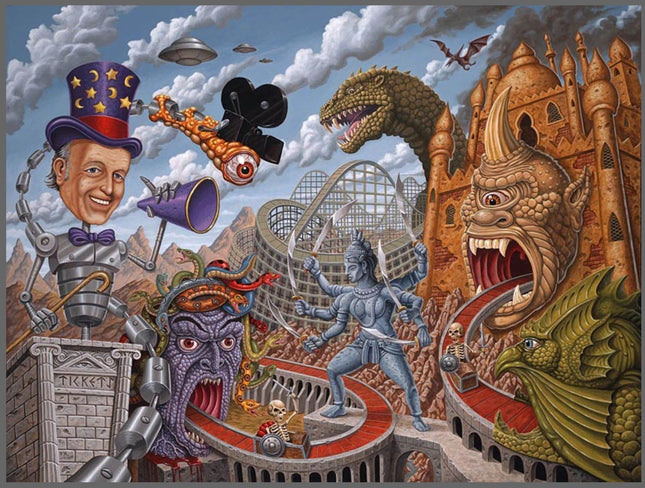
Pooch Harryhausen Land 16x20 Archival Print by Pooch
Harryhausen Land 16x20 Limited Edition Archival Pigment Prints on Fine Art Paper by Pooch Graffiti Street Artist Modern Pop Art.
$159.00
-
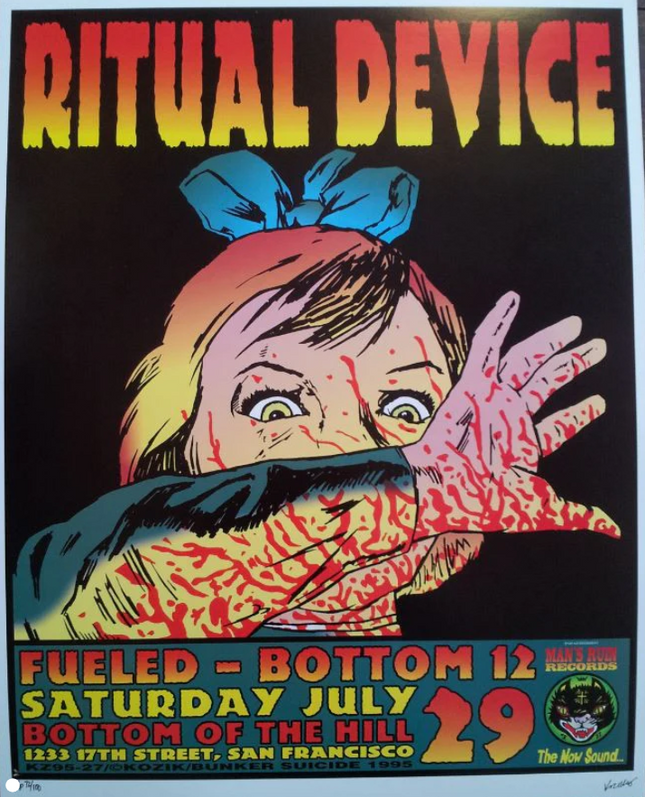
Frank Kozik Ritual Device Fueled Bottom AP 1995 San Francisco CA Silkscreen Print by Frank Kozik
Ritual Device Fueled Bottom AP 1995 San Francisco CA Silkscreen Print by Frank Kozik Hand-Pulled on Fine Art Paper Limited Edition Pop Street Art Artwork. AP Artist Proof 1995 Signed by Kozik & Numbered Limited Edition of AP 100 Artwork Size 16x22 Silkscreen Print Band Gig Poster by Frank Kozik Ritual Device Fueled Bottom July 29th 1995 San Fransisco California Bottom of the Hill. Frank Kozik is an American graphic artist known for his music poster art in the 1990s. He was a central figure in the revitalization of poster art, particularly in the punk rock and independent music scenes. His work is characterized by saturated colors, cartoony figures, and a distinctive illustrative style. Kozik has created posters for a wide range of bands and music events, particularly in and around the San Francisco area. Many of his works are silkscreen prints, a technique that allows for vibrant, dense color and is particularly suited to his style.
$317.00