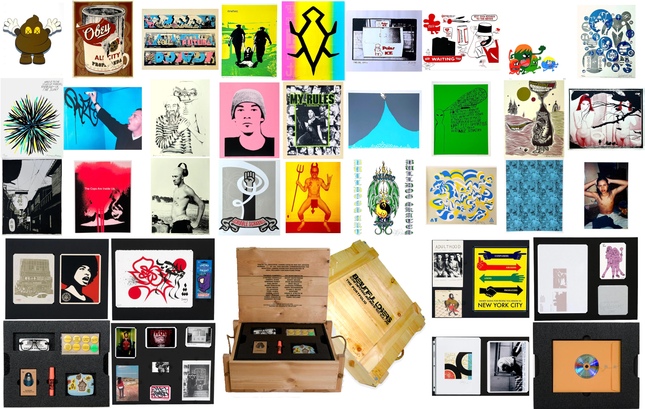
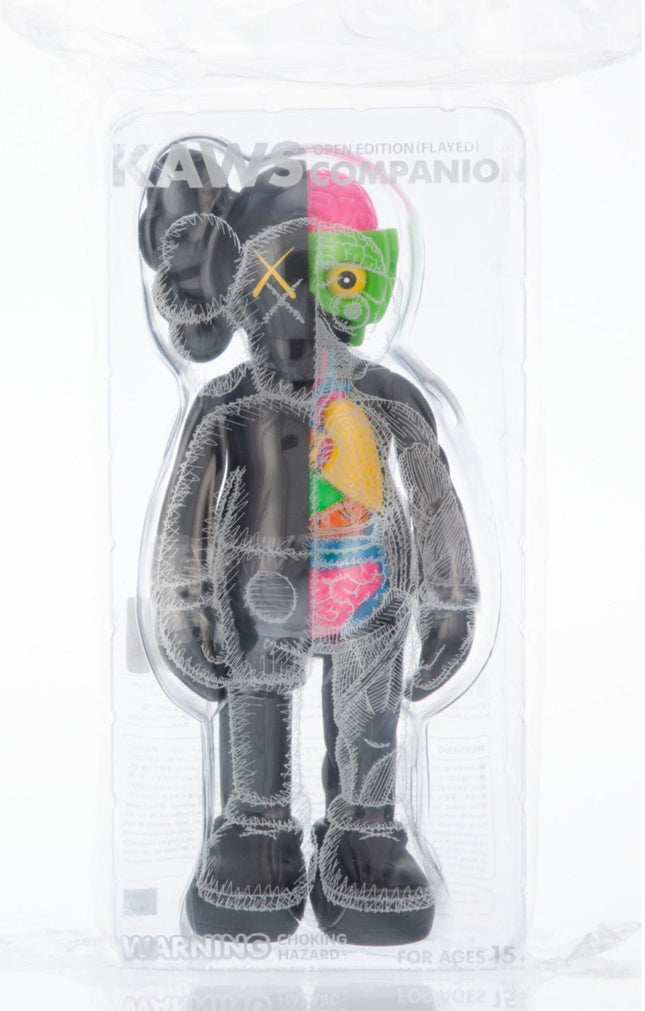
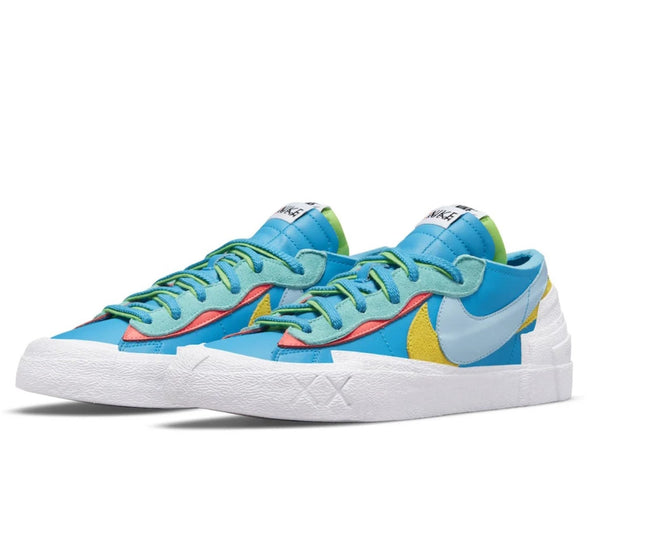
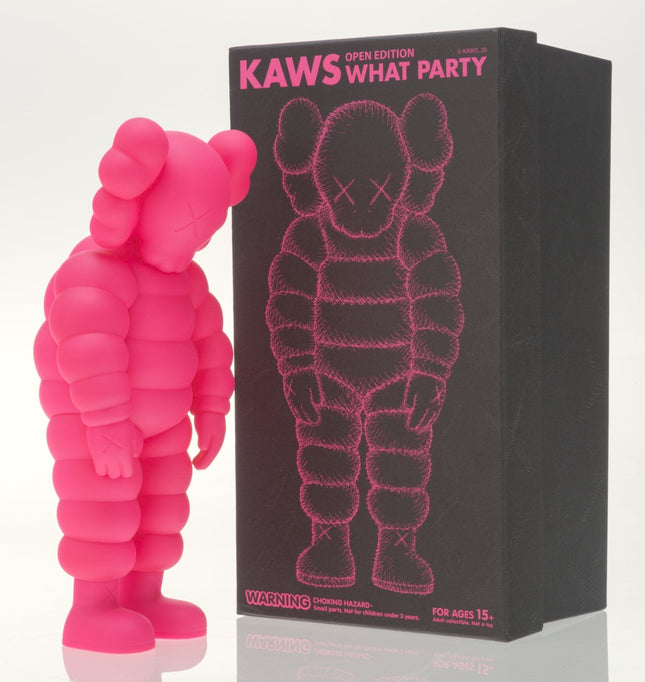
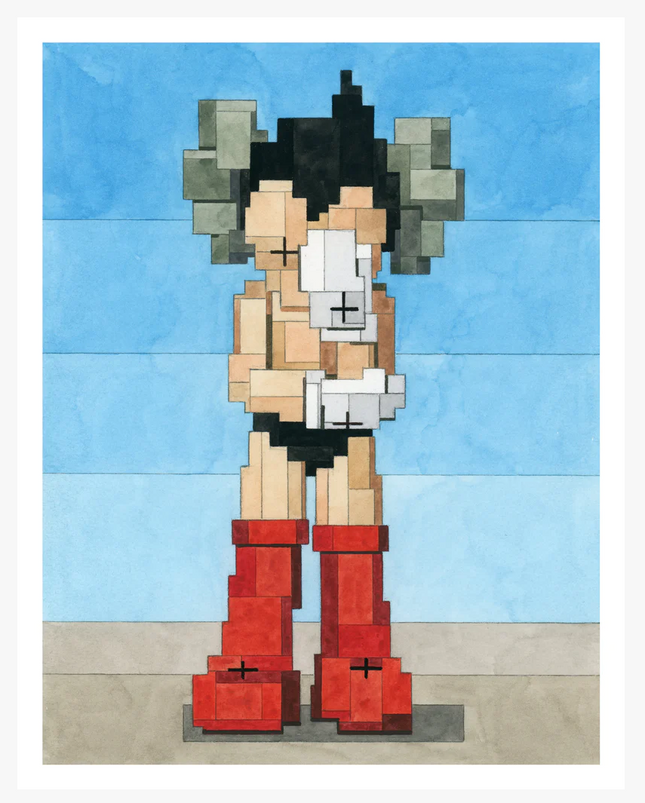
The Beautiful Losers Portfolio & Catalog Boxed Edition 2004-2010 Museum Crate Set Kaws- Brian Donnelly x Shepard Fairey- OBEY x Jonathan Levine Projects Featuring Legendary Graffiti Street Artwroks from Dozens of Artists During the 2004, 2005, 2006, 2007, 2008, 2009 & 2010 Show Run. The Beautiful Losers Portfolio and Catalog Boxed Edition, 2006 is a treasure trove for lovers of Street Pop Art and Graffiti Artwork, offering a comprehensive collection that captures the spirit of the iconic "Beautiful Losers" exhibition. This limited-edition set stands as a pristine testament to a defining moment in contemporary art and the raw creativity of the street art scene from 2004 to 2010. Each element of the set, carrying corresponding matching edition numbers, is in mint condition, ensuring its value as a collectible and a piece of art history.
Original The Beautiful Losers Portfolio & Catalog Boxed Edition 2004-2010 Museum Crate Set x Jonathan Levine.
Jonathan Levine Projects' The Beautiful Losers box sets 2004-2010 were released in a limited edition, with the Portfolio Box limited to under 30 editions and the Catalog Box limited to 100. Each set is housed in a custom printed and numbered wooden box, adding a layer of sophistication and care to the presentation of these artworks. The dimensions of these boxes, measuring 26 x 19 x 9 inches, were carefully chosen to accommodate the variety of works and their varying sizes, ensuring that the integrity of each piece is maintained. Iconoclast published these box sets on the occasion of the traveling exhibition "Beautiful Losers," which ran from 2004 to 2010. This exhibition, alongside "Transfer," which toured various locations from 2008 to 2010, showcased the burgeoning talent and diverse expressions within Street Pop Art and Graffiti Artwork. The Beautiful Losers exhibition and its accompanying publications, including the "Beautiful Losers: Contemporary Art And Street Culture" book published by Edition Iconoclast in 2005, have been pivotal in bringing the vibrancy and relevance of street and graffiti art to a broader audience. The Portfolio Box, a crucial component of these sets, is a treasure trove of 28 of the most influential street and graffiti artists. This collection includes prints from renowned artists like KAWS and Shepard Fairey, each bringing their unique vision and style to the forefront. Each piece within this box echoes the themes and artistic expressions in the broader Beautiful Losers exhibition, further underscoring this collection's significance in contemporary art.
The Beautiful Losers Movie 2008 About the Art Show
Beautiful Losers is a 2008 documentary that dives into the lives and art of a collective of artists who have played a pivotal role in the Street Pop Art and Graffiti Artwork movement since the 1990s. Directed by Aaron Rose and co-directed by Joshua Leonard, this film was a product of Sidetrack Films and BlackLake Productions, featuring artists like Harmony Korine and Steve "ESPO" Powers. The film explores the "do-it-yourself" ethos of these artists, whose work is steeped in the aesthetics of skateboarding, graffiti, and underground music genres such as punk rock and hip-hop. It casts a light on the journey of these artists from obscure street culture to becoming celebrated figures within the mainstream art world, detailing their personal feelings and convictions as they transitioned from creating for themselves to working on high-profile commercial projects. "Beautiful Losers" is more than a film; it is part of a more significant cultural phenomenon that includes a published art book of the same name, edited by Christian Strike and Aaron Rose, and a traveling museum exhibition that features the artists and their works. This exhibition serves both as a backdrop and a focus in the documentary, emphasizing the expansive influence of these artists and their continued relevance in contemporary art discourse.
Artist Signed Limited Edition Silkscreens, Photos, Drawings & Art Objects 2004-20010
Beautiful Losers Contemporary Art and Street Culture Book 2004
Beautiful Losers: Contemporary Art and Street Culture, a seminal anthology published in 2004 by D.A.P./Iconoclast, this volume is an essential exploration of a vibrant subculture that transformed the aesthetics of the late 20th and early 21st centuries. This first edition is a collector's gem encased in a satisfactory condition hardback with a sleeve. The book's red cloth boards are embossed with gilt lettering on the front and spine, signaling the treasure within a profusion of illustrations and original works. This is no mere collection; it is a profound narrative detailing a cultural movement's organic, uncontrived emergence. It charts the journey of American artists, many freshly stepping into adulthood, who were propelled not by market demands but by pure passion and creativity. Without formal training or insider knowledge, they drew inspiration from the streets, influenced by the raw vitality of skateboarding, graffiti, street fashion, and independent music. Names like Shepard Fairey, Mark Gonzales, and Spike Jonze are among the many who channeled their lived experiences into their craft, learning through doing and revolutionizing their mediums. Beautiful Losers serves as both a tribute and a historical account, tracing the cultural threads from Jean-Michel Basquiat and Keith Haring to newer proponents such as Ryan McGinniss and KAWS. It features various artistic expressions across mediums, alongside reproductions of ephemera that encapsulate the era's spirit. The book is further enriched by essays from writers who have fervently supported these artists from their inception. It's not just an art book; it's an archive of a movement that left indelible marks on the art world and fashion, music, literature, film, and even athletics. The independent ethos these creators embodied may have evolved, yet their foundational spirit—a spirit of rebellion, innovation, and authenticity—remains unshaken. Beautiful Losers is a celebration of that enduring spirit, an invitation to witness the beauty in the raw, the unrefined, and the real.
Kaws- Brian Donnelly: Warm Regards Letterpress Print 2005 Signed/Numbered
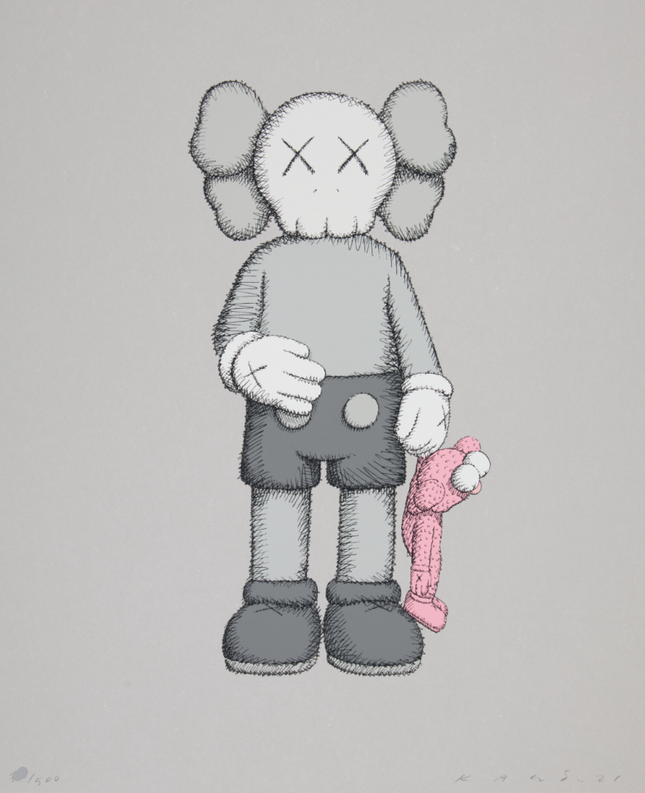
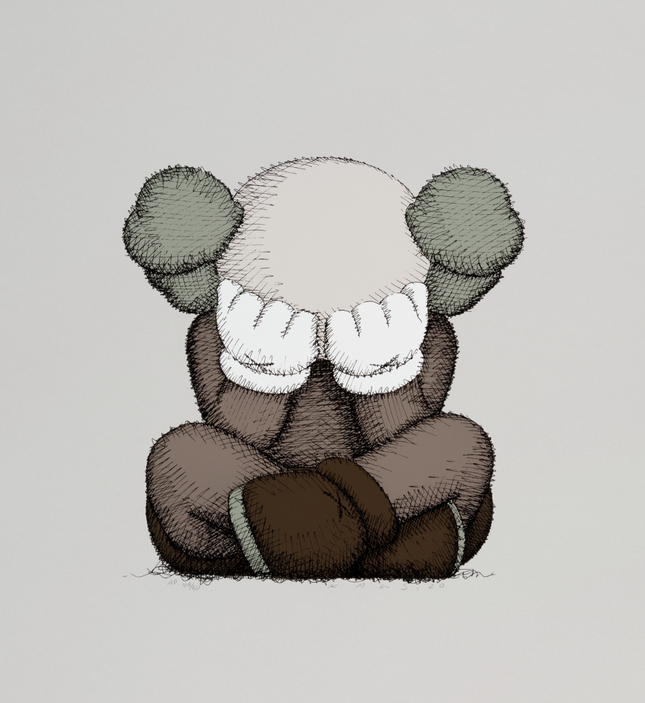
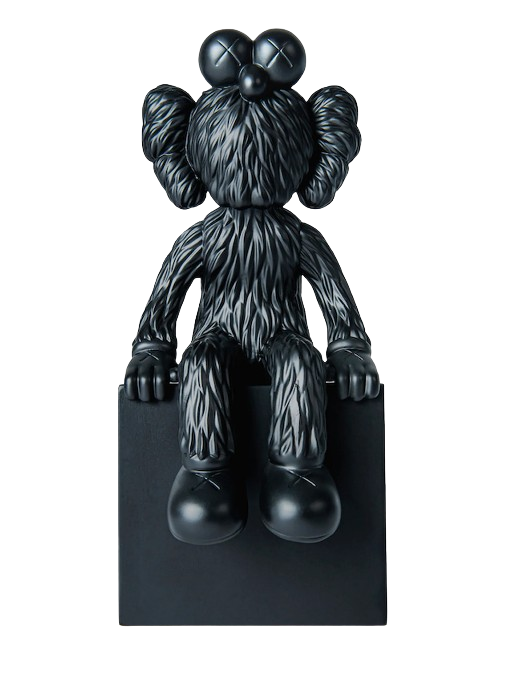
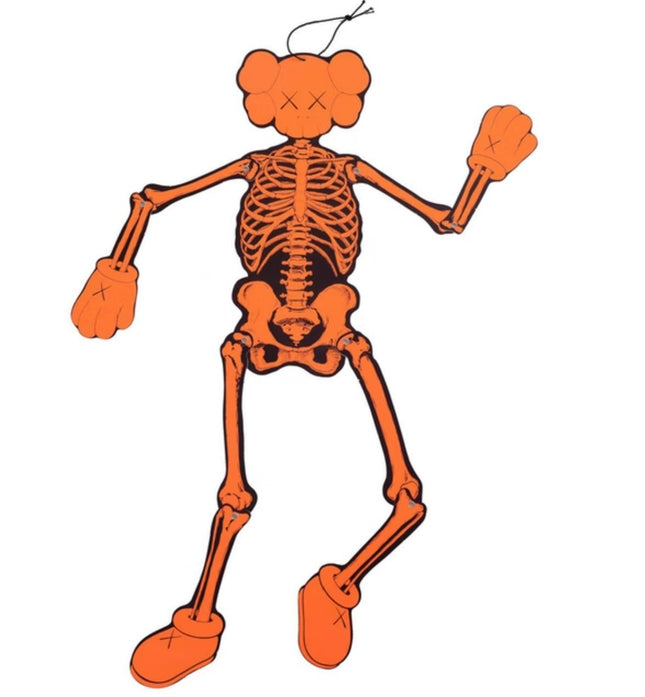
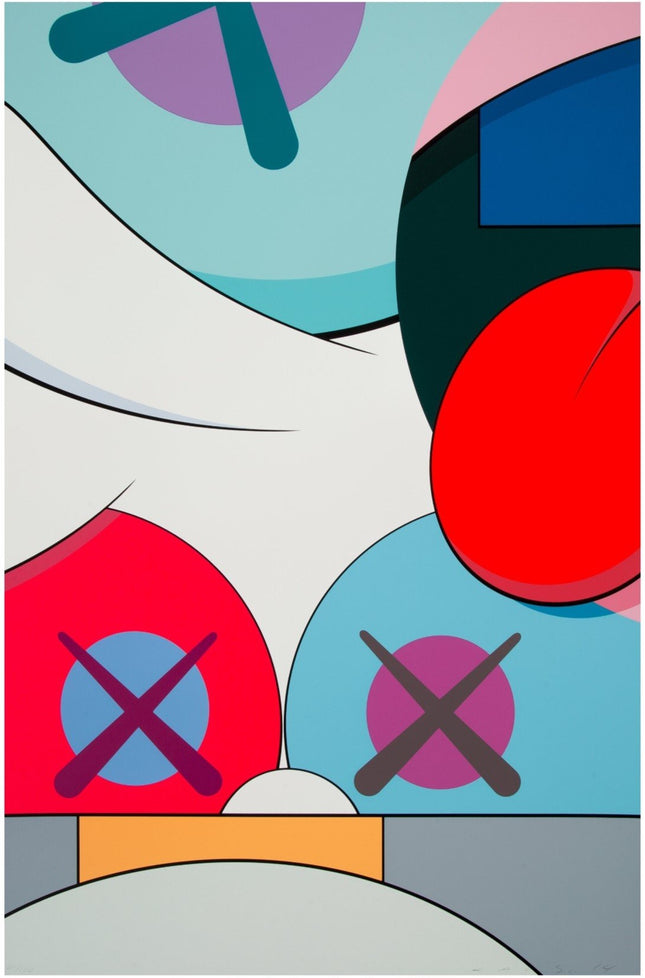
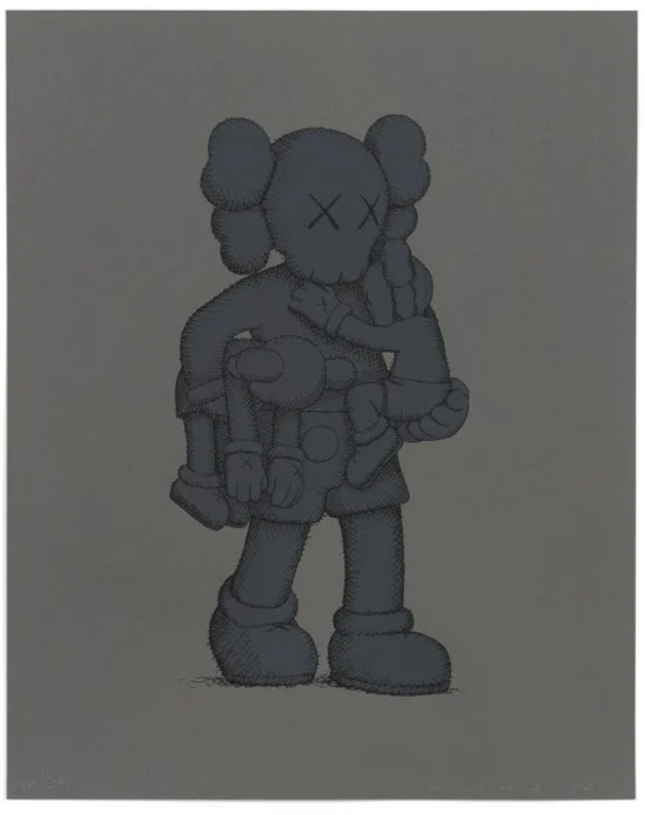
2005 Signed & Numbered Limited Edition of 200 Artwork Size 16x20. "Warm Regards," created in 2005 by KAWS, is a captivating piece of art rendered through letterpress on paper, measuring 20 x 16 inches. This artwork is part of a limited edition of 200, each meticulously signed and numbered by the artist. The piece was published explicitly by Iconoclast Editions to commemorate the "Beautiful Losers: Contemporary Art and Street Culture" exhibition, which ran from 2004 to 2009, marking a significant moment in the intersection of contemporary art and street culture. This artwork features a character that is a signature motif in KAWS' work, with its notable crossed-out eyes and exaggerated cartoon-like hands and feet. This print is from a limited edition series, with only 200 pieces available, each individually signed and numbered by the artist. It was published by Iconoclast Editions, likely as a celebration of the "Beautiful Losers: Contemporary Art and Street Culture" exhibition. The exhibition, which took place from 2004 to 2009, was a pivotal event showcasing the overlap of contemporary art with street culture. KAWS' work often bridges these two worlds, combining a commercial graphic design background with a sophisticated, gallery-worthy aesthetic. His characters are usually drawn from pop culture and are depicted in a playful and critical style, often reflecting consumerism and human emotion.
Shepard Fairey- OBEY: Soup Can I Silkscreen Print 2005 Signed/Numbered
2005 Signed & Numbered Limited Edition of 200 Artwork Size 16x20. Shepard Fairey's "Soup Can 1" is an iconic piece from 2005, masterfully rendered as a silkscreen print on acid-free archival paper. The artwork is 20 by 16 inches and belongs to a limited edition series, with only 200 existing pieces, each bearing the artist's signature and edition number. Iconoclast Editions released this print to commemorate the pivotal "Beautiful Losers: Contemporary Art and Street Culture" exhibition from 2004 to 2009 and celebrate the synergistic relationship between underground art scenes and mainstream culture. The "Soup Can 1" print has graced a variety of prestigious exhibits, including the seminal "Beautiful Losers" traveling exhibition, "Transfer" at Santander Cultural in Porto Alegre, Brazil, and the comprehensive "Supply & Demand" show. It also appeared at the "Transfer" exhibition housed within the Brazilian Cultural Pavilion at Ibirapuera Park, São Paulo, Brazil, in 2010. Fairey's work during this period is documented in an array of publications, notably the "Beautiful Losers" collection from 2005-2009, the "Supply & Demand" book published by Rizzoli in 2009, and the 2010 edition of "Transfer." Each of these works provides insights into the artist's creative process and the cultural impact of his work. The provenance of "Soup Can 1" is securely rooted in the Beautiful Losers Archive, ensuring its place in the annals of contemporary street culture and affirming its status as a collectible piece of art history.
Shepard Fairey- OBEY: Untitled Angela Davis Silkscreen Print 2005 Signed/Numbered
This powerful silkscreen by the influential artist Shepard Fairey is a striking addition to his illustrious work. Sized at a prominent 8x10, this untitled piece is part of an exclusive edition of only 100 copies, each printed, numbered, and signed by Fairey himself, ensuring its rarity and collectibility. Fairey, renowned for his ability to infuse art with social commentary, presents a compelling portrait set against a bold red backdrop that demands attention. The high-contrast silhouette captures the strength and intensity of its subject, immortalizing a moment of passionate expression. The image is a visual echo of the past yet speaks to contemporary themes of empowerment and resistance. In the lower-left corner, Fairey's signature emblem—the star circled by the word "OBEY"—anchors the work, embedding the piece within his more extensive oeuvre known for challenging viewers to question authority and the landscape of visual culture. This artwork is a testament to Fairey's continued relevance in the art world and his steadfast commitment to making a statement through his art. Collectors and admirers of Fairey's work will recognize the artist's iconic style, which has become synonymous with the modern street art movement.
Henry Chalfant: Lee, Futura, Dondi Silkscreen Print 2004 Signed/Numbered
This compelling artwork, crafted by the esteemed Henry Chalfant, celebrates the street art movement, immortalizing the work of three graffiti legends: Lee, Futura, and Dondi. Titled "Lee Futura Dondi," this piece from 2004 is a silkscreen printed on acid-free archival paper, ensuring its preservation and quality for years. Measuring 16 x 20 inches, the work is substantial enough to make an impactful visual statement while still suitable for diverse display settings. The triptych format of the artwork presents a trio of vibrant, stylized subway cars, each adorned with the distinctive artwork of the graffiti above artists. The top panel bursts with energetic pinks and blues, showcasing Lee's iconic lettering style, while the middle features Futura's futuristic approach, with abstract forms and a cool-toned palette. The final panel is a tribute to Dondi's classic wildstyle, with bold lettering in shades of pink cutting through the background. Chalfant's work is not merely a static representation; it conveys the movement and rhythm of subway art as it once moved through the arteries of New York City. Each piece in this limited edition series is signed and numbered by Chalfant, marking its authenticity and connection to the artist. This series was published to coincide with the groundbreaking exhibit "Beautiful Losers: Contemporary Art and Street Culture," which showcased the intersections and influences of street art within contemporary art. This print is a collector's item, not only for its aesthetic and historical value but also for its representation of the evolution of street art from subways and city walls into the echelons of high art.
Geoff McFetridge: Kemistry Original Drawing with DVD Animation 2004
This piece, created by Geoff McFetridge, is one of the 100 original drawings that compose an intricate animation sequence. Crafted with precision in pencil on Canson paper, each drawing measures 22.86 by 30.45 centimeters, capturing the minimalist aesthetic and fluid lines characteristic of McFetridge's work. This artwork showcases a playful scene of a figure skateboarding, rendered in a flowing, continuous line that conveys motion and a subtle sense of whimsy. A second character peeks curiously from the edge, adding a narrative element to the composition. Accompanying the original artwork, collectors receive a DVD containing the complete animation sequence, providing a rare glimpse into McFetridge's creative process and the animation's progression from still images to a dynamic visual experience. The artist signs Each drawing, providing a personal touch that assures authenticity. This offering is not merely an acquisition of a singular piece of art; it is an invitation to engage with McFetridge's visionary world where graphic design intersects with cinematic storytelling. This unique combination of traditional drawing and digital animation offers a multifaceted appreciation for the artist's innovative approach to contemporary art.
Ed Templeton: Chris Johanson At The First Beautiful Losers Exhibition Photograph 2004 Signed
Captured through the discerning lens of Ed Templeton, this photograph is a significant piece of contemporary art history, documenting the vibrant essence of the "Beautiful Losers" art movement. The image presents Chris Johanson, an artist synonymous with the DIY spirit of street art, at the first exhibition of "Beautiful Losers" in Cincinnati, Ohio, in 2004. This is an evocative silver gelatin print by Ed Templeton, depicting Chris Johanson at the inaugural "Beautiful Losers" exhibition. The photograph, sized at 8 x 10 inches, is part of a limited edition of 100, each individually signed by Templeton, marking its exclusivity and authenticity. Captured in 2004, this image is a timeless piece of art history, documenting a pivotal moment in the convergence of street culture and contemporary art. This photograph is a visual record and embodiment of the exhibition's ethos, celebrating the underground convergence of skateboarding, graffiti, and street art with contemporary art. The photo's composition is candid and unfiltered, showcasing Johanson with his face obscured by a white cloth, an enigmatic presence that stirs curiosity. This choice of presentation speaks to the themes of anonymity and mystery that often permeate street art culture. Johanson's obscured face, adorned with sunglasses atop the fabric and his untamed beard protruding beneath, creates a striking, visually arresting, and thought-provoking contrast. Signed by Ed Templeton, this photograph is a tactile connection to the moment it captures, bringing the viewer into the fold of a pivotal event in street and pop art history. Templeton's signature adds a layer of authenticity and marks this work as a genuine intersection of his photographic journey and Johanson's artistic narrative. "Chris Johanson At The First Beautiful Losers Exhibition" is a photograph transcending its medium, offering a glimpse into the community and camaraderie of the artists who defined a generation. This piece will hold a place of reverence for collectors and enthusiasts of the movement, encapsulating the raw, spontaneous energy that "Beautiful Losers" represented.
Cynthia Connolly: Untitled Ice Machine Page, Arizona Photograph 1999 Signed/Dated
This photograph by Cynthia Connolly, untitled yet poignantly capturing the essence of Page, Arizona, is a masterful silver gelatin print that embodies the spirit of the "Beautiful Losers" exhibition. The print, with dimensions of 4 x 6 inches, belongs to a limited edition series of 100, each painstakingly printed and signed by the artist, underscoring its collectible nature. The image focuses on an ice machine, a mundane yet iconic symbol of Americana in the everyday landscape. Dated 5/17/95, the photograph is not just a depiction of a place but a timestamp of an era. The handwritten annotation "Page, Arizona" adds a personal touch, evoking a sense of place and grounding the artwork in its geographical context. Connolly's photographic eye transforms the ordinary into the extraordinary, inviting viewers to find beauty and narrative in the commonplace. The stark contrast of the black and white image highlights the play of light and shadow, lending the ice machine a sculptural quality. This piece is a subtle exploration of form and texture, where even the utilitarian becomes a subject worthy of artistic contemplation. This print is essential for collectors who value the intersection of documentary photography and fine art. It is a testament to Connolly's commitment to capturing the overlooked nooks of American landscapes, making it an exceptional addition to any collection that celebrates the nuanced beauty of the mundane within the vast tapestry of American culture.
Barry Mcgee: Untitled Ryze 2007 C-Print & Hand-Tagged Photograph Artwork
Barry McGee's "Untitled Ryze" is a cornerstone of the contemporary art movement, symbolizing the vibrant intersection of street culture and fine art. This striking 2007 C-print, measuring 16 x 20 inches, is a highly coveted collectible, limited to an edition of 200. Each piece in the series bears the unique distinction of being hand-signed and numbered by McGee, an artist who rarely affixes his signature to his works. The artwork was released in conjunction with the seminal exhibition "Beautiful Losers: Contemporary Art and Street Culture," which spanned from 2004 to 2009 and a plethora of museums and galleries across the globe. The image captures the essence of Boston's legendary" street figure, Ryze, showcasing McGee's adeptness at translating the raw energy of graffiti into a refined gallery context. McGee's word extends beyond the photograph, as "Untitled Ryze" is pivotal in his larger installations and clustered assemblage pieces. The picture is a visual testament to the artist's legacy and a touchstone for the cultural zeitgeist The Beautiful Losers encapsulated. Acquired directly from Iconoclast Editions and the Beautiful Losers Archive, this piece represents a rare opportunity for fans and collectors alike to own a fragment of street art history seen through the lens of one of its most enigmatic and celebrated artist, Barry McGee.
Barry McGee: Untitled Hello My Name Is Original Slap-Up Sticker 2005 Signed Tag
Barry McGee, an influential figure in street pop art and graffiti artwork, has made a significant impact with his unique style and approach. His "Untitled Hello My Name Is Original Slap-Up Sticker 2005 Signed Tag" is a quintessential example of his work, blending the raw, energetic ethos of street art with the refined aesthetics of pop art. This piece, created in 2005, is a testament to McGee's ability to transform everyday objects and themes into compelling artistic expressions. McGee's journey in art began in the streets, where he honed his craft by creating graffiti under the tag "Twist." This formative period was crucial in shaping his distinctive style, characterized by a blend of graffiti's spontaneity and the bold, eye-catching essence of pop art. His transition from street walls to galleries did not diminish the raw authenticity of his work. Instead, it provided a new canvas for his expressions, allowing him to reach a wider audience while staying true to his roots in street culture.
Terry Richardson: Untitled Devil Self Portrait Silkscreen Print 2004 Signed/Numbered
Presenting a striking visual piece, this untitled self-portrait from 2004 is a silkscreen print on paper, measuring 20 x 16 inches, and part of a limited edition of 200. Each piece is individually signed and numbered by the artist, adding a personal touch to this exclusive artwork. The print features the artist in a vibrant yellow backdrop, posing with a playful yet rebellious demeanor. Adorning devil horns and wielding a trident, the subject playfully gestures a peace sign, juxtaposing traditionally nefarious symbols with a light-hearted attitude. The vivid monochromatic yellow tone of the print adds to the artwork's striking impact. This piece was released with the exhibition "Beautiful Losers: Contemporary Art and Street Culture" from 2004-2009. It explores the intersections of pop culture and street art, offering a subversive take on contemporary iconography. The artwork's provenance is notable, originating from Iconoclast Editions and the Beautiful Losers Archive, ensuring its authenticity and connection to a significant movement in modern art. This self-portrait is more than a mere image; it's a statement piece that captures the essence of a cultural zeitgeist, making it a compelling addition to any art collection.
Evan Hecox: Kyoto Street Woodblock Print 2004 Signed/Numbered
"Kyoto Street," a captivating silkscreen by Evan Hecox, presents a moment frozen in the timeless allure of Japan's old capital. Created in 2004, this piece of art is meticulously printed on acid-free archival paper, measuring 20 x 16 inches. It belongs to an exclusive edition limited to 200 prints, each hand-signed and numbered by Hecox himself, ensuring its place as a collectible item. This artwork was released as part of the influential "Beautiful Losers: Contemporary Art and Street Culture" exhibit from 2004 to 2009 and was showcased at various locations. The "Kyoto Street" print has been displayed in notable exhibitions, including "Transfer" at the Santander Cultural in Porto Alegre, Brazil, in 2008 and the Brazilian Cultural Pavilion in Ibirapuera Park, São Paulo, in 2010. In this piece, Hecox distills the essence of Kyoto's urban landscape into stark contrasts and clean lines, capturing the dynamic interplay of light and shadow. Lanterns adorned with kanji characters punctuate the scene, casting a warm glow over the alleyway. At the same time, the intricate web of power lines above adds a layer of complexity, suggesting the city's vibrant energy. The artwork's stark palette and bold graphic style evoke a sense of nostalgia, inviting viewers to contemplate the serene and bustling atmosphere of Kyoto streets. Preserved within the Beautiful Losers Archive, "Kyoto Street" is not just a print but a narrative piece chronicled alongside other contemporary masterpieces in the "Beautiful Losers" and "Transfer" catalogs. It is a testament to Hecox's ability to capture the urban environment's soul, making it a prized possession for collectors and admirers of contemporary art with a penchant for urban aesthetic and cultural depth.
Ryan McGinness: Pathetic Lucky Charms of the Hipster Doofus Silkscreen Print 2004 Signed/Numbered
Ryan McGinness, 'Pathetic Lucky Charms of the Hipster Doofus.' This exquisite piece from 2004 is a masterful representation of contemporary iconography, meticulously crafted through silkscreen on paper. Each print measures 20 by 16 inches and is part of an exclusive edition limited to 200 pieces, ensuring its uniqueness and collectible nature. Each print is hand-signed and numbered by the artist, a testament to its authenticity and McGinness's personal touch. The artwork was released in conjunction with the renowned exhibition 'Beautiful Losers: Contemporary Art and Street Culture,' which spotlighted the pulsating energy and vibrancy of street art within the context of contemporary art. The piece is a symphony of symbols, a visual lexicon reflecting the hipster subculture's ironic and often self-deprecating spirit. McGinness's use of iconic imagery, interwoven with playfulness and critique, encapsulates a moment where art, culture, and social commentary intersect with effortless grace. This work is not just a piece of art but a slice of cultural history, a mirror to the zeitgeist of the early 2000s urban landscape."
Harmony Korine: Untitled Osama & E.T. Silkscreen Print 2005 Signed/Numbered
This artwork is an enthralling silkscreen print by Harmony Korine titled "Untitled (Osama & E.T.)" from 2005. It is a limited edition work, with only 200 copies made, each hand-signed and numbered by Korine, elevating its status as a collector's item. This print, measuring 20 x 16 inches, showcases Korine's unique vision by juxtaposing two vastly different cultural references into one frame. The image represents Osama bin Laden in a warm embrace with the iconic extraterrestrial character, E.T., from Steven Spielberg's renowned film. Blending these images makes a bold statement and invites many interpretations of the convergence of disparate cultural symbols. The figure and E.T. are drawn with a delicate linearity that belies the weightiness of the subject matter, creating a striking visual paradox. This silkscreen print was released with the "Beautiful Losers" exhibition, which celebrated the intersection of skateboarding, graffiti, and street fashion with contemporary art. The provenance of the print is impeccable, coming from Iconoclast Editions and the Beautiful Losers Archive, adding to its historical and artistic significance. The pairing of such incongruous figures in this print challenges the viewer to reconcile the contrasting emotions and narratives each character represents. This piece is more than just a visual statement; it's a dialogue about pop culture, political figures, fictional characters, and their place within the artistic sphere. Collectors and enthusiasts of street pop art will appreciate this print's depth and provocative nature, making it a noteworthy addition to any compilation of contemporary artwork.
Larry Clark: Untitled Shorty Photograph Artwork 1996/2007 Signed/Numbered
This striking photograph titled "Untitled (Shorty)" is a profound work by the acclaimed artist Larry Clark. It was produced in 1996 and later published in 2007. It is presented on Anjelica watercolor paper with 20 x 13.75 inches dimensions. Each piece within this edition of 200 is individually signed and numbered by Clark himself, with an additional signature and date on the verso, ensuring its authenticity and rarity. Issued with the renowned "Beautiful Losers: Contemporary Art and Street Culture" exhibition from 2004 to 2009, this photograph emanates from the Iconoclast Editions and is an integral part of the Beautiful Losers Archive. Larry Clark, an influential figure in photography and film for over five decades, has left an indelible mark on the creative world through works like "Teenage Lust" and "Tulsa" and movies including "KIDS" and "Marfa Girl." The photograph captures the essence of Lyle Dean "Shorty" Easky, whose story intertwines with the artist's history and the broader narrative of American youth culture. Shorty, of Native American descent, tragically passed away in 2013. His life and untimely death remain a poignant tale, with roots stretching back to the same Tulsa neighborhood that inspired much of Clark's early work — the same locale that Francis Ford Coppola chose for "The Outsiders."
Raymond Pettibon: Untitled Sun Silkscreen Print 2005 Signed/Numbered
This striking work is an untitled piece from 2005 by the acclaimed artist Raymond Pettibon, known for his influential contributions to art and culture. The piece is a silkscreen on paper, a medium that allows for the vibrant and crisp presentation of Pettibon's dynamic design. It measures 20 x 16 inches, is scale accessible for various spaces, and commands enough to make a visual impact. Pettibon's creation is part of an exclusive edition of 200, with each piece signed and numbered by the artist, providing a direct connection to his creative process. The artwork features a burst of lines emanating from a central point, suggesting an explosive energy or a cosmic phenomenon. The use of black, coupled with highlights of blue and yellow, imbues the piece with a sense of depth and intensity, while the handwritten text at the top—"APPLY IT TO THE STUDY OF MIRRORS, RAINBOWS OR THE SUN!"—invites contemplation and lends a poetic dimension to the visual experience. This edition was published to commemorate the exhibit "Beautiful Losers: Contemporary Art and Street Culture," which celebrated the intersection of underground art and urban creativity. Pettibon's work is a testament to the ethos of this movement, encapsulating the raw spirit and the bold aesthetics that define the genre. It is a collector's item not only for its aesthetic appeal but also for its cultural significance within contemporary art.
Evan Hecox: Chinatown NYC Woodblock Print 2004 Signed/Numbered
Evan Hecox's 'Chinatown NYC,' a 2004 woodblock print on delicate Japanese rice paper, articulates urban vibrancy meticulously. Each print within this limited series measures 10 x 8 inches and is part of a numbered edition restricted to 100, underscoring its exclusivity. Each piece is printed and personally signed by Hecox, lending a touch of the artist's direct involvement in the collector's experience. This work captures the essence of New York's bustling Chinatown with a keen eye for detail and a distinctive stylistic approach. Hecox's use of lines in the woodblock medium translates the dynamic nature of the city into a static image that pulses with life. The artist masterfully conveys the architectural complexity of the urban landscape, complemented by the human element that breathes life into the city. The nuanced layering of the print, with its intricate linework and subtle tonal variations, echoes the layered experiences of urban life. Renowned for his ability to distill the spirit of a locale into his artwork, Hecox presents 'Chinatown NYC' as more than just a visual representation; it's a narrative woven in ink and paper, a story told through the rhythm of a cityscape. This piece reflects Hecox's artistic prowess and is a homage to the cultural tapestry that defines Chinatown and the ever-evolving story of New York City itself.
Rostarr- Romon K Yang: Untitled Japan HPM Spray Paint Silkscreen 2005 Signed/Numbered
Experience the fusion of tradition and rebellion with Rostarr's 'Untitled Japan HPM,' a provocative piece by Romon K Yang from 2005. This striking work, rendered on paper with dimensions of 27.94 x 33.02 cm, is a harmonious blend of spray paint and silkscreen techniques, culminating in a limited edition of just 100 copies, each individually signed and numbered by the artist. The artwork is a testament to Rostarr's distinctive visual language, where calligraphic strokes meet the spontaneity of street art. Bold red forms anchor the composition; their fluid contours and solid circles contrast sharply with the raw, improvised splatters of black spray paint. This interplay of color and form creates a dynamic tension, a visual symphony that captures the spirit of contemporary art. Each piece of 'Untitled Japan HPM' is a hand-painted, hand-printed celebration of unique expression, standing as a bold signature of Rostarr's iconic style. The artwork's limited availability makes it a coveted piece for collectors and enthusiasts eager to hold a part of art history that bridges the gap between the old and the new, the planned and the spontaneous. 'Untitled Japan HPM' is not just an artwork; it's a piece of cultural dialogue that resonates with the beats of modern urban life.
Rostarr- Romon K Yang: Butterfly In The Hurricane 2004 Silkscreen Print Signed/Numbered
Embark on a visual journey with 'Butterfly In The Hurricane,' a captivating silkscreen on paper by the acclaimed artist Rostarr, created in the transformative year of 2004. This piece exemplifies the dynamic interplay between form and fluidity, measuring an intimate 20 x 16 inches, and is part of an exclusive edition of 200, each bearing the unique signature and number assigned by the artist himself. Crafted during artistic exploration and boundary-pushing, 'Butterfly In The Hurricane' was released in conjunction with the groundbreaking exhibition 'Beautiful Losers: Contemporary Art and Street Culture,' which celebrated the confluence of underground art movements and the mainstream. The artwork features a storm of abstract shapes and curves, predominantly in shades of blue and yellow, evoking the chaotic grace of a butterfly caught in a storm. The bold colors swirl and dance across the paper, inviting viewers to contemplate the relationship between harmony and chaos. This piece is not merely a work of art; it's a statement, a slice of cultural history, and a testament to the artist's mastery of blending street culture's raw energy with the sophistication of contemporary art. 'Butterfly In The Hurricane' is a must-have for connoisseurs and collectors alike, promising to be a conversation starter and a cherished part of any collection.
Craig R Stecyk III: Untitled 2004 Unique HPM Silkscreen Photograph Signed/Numbered
A distinctive piece by Craig R. Stecyk III, this untitled artwork from 2004 is a brilliant example of the fusion between contemporary art and street culture. Crafted with meticulous attention to detail, the work features a hand-painted custom airbrush backdrop, a double-sided silkscreen is masterfully applied, along with pencil accents on robust, extra-thick white acid-free archival paper measuring 20 x 16 inches. Limited to an edition of 200, each piece is individually numbered and bears the artist's signature, underscoring its exclusivity. This artwork was released with the "Beautiful Losers: Contemporary Art and Street Culture" exhibit, which spanned from 2004 to 2009 and is held in high esteem within the Beautiful Losers Archive. The provenance of this piece traces back to Iconoclast Editions, a testament to its authenticity and cultural significance. Stecyk, a seminal figure in the Beautiful Losers project, created an installation that captivated audiences and garnered unprecedented acclaim. His work is a tribute to the vibrant Californian subcultures, drawing inspiration from custom car culture, surfing, and skateboarding, all depicted through his extensive photographic documentation. As a founding member of the Dogtown and Z-Boys, Stecyk's works are more than mere art; they are storied representations of a decadent cultural movement, rendered on paper with a palette that resonates with the energy and spirit of the streets. This piece is an artistic expression and a cultural artifact that captures the essence of Californian subcultures, immortalized through Stecyk's visionary lens.
Craig R Stecyk III: Untitled Proof Gelatin Silver Silkscreen Print Signed/Numbered
Craig R. Stecyk III's untitled piece is a statement of originality and artistic defiance. It is a part of an exclusive set of 100 artworks, each a gelatin silver and silkscreen print on paper, measuring 10.16 by 15.24 centimeters. The artwork boldly features the word "PROOF" in prominent red letters, asserting the piece's authenticity as an original generation photographic print. The text beneath serves as both a declaration and a restriction, emphasizing the print's purpose as a contractual document and expressly prohibiting reproduction, resale, and public display. The artist's signature underscores this boundary of exclusivity, scrawled energetically across the print, which authenticates each piece and marks it as a unique entity within the limited edition. The signature becomes an integral part of the artwork, blending with the textual message and the stark background, ensuring that each print is a testament to Stecyk's unique artistic philosophy and legacy within the art community.
Tobin Yelland: Untitled Andy Roy Silkscreen Print 2004 Signed/Numbered
Tobin Yelland's "Untitled (Andy Roy)" is a striking silkscreen that captures the essence of individuality and defiance, hallmarks of street culture. Produced in 2004, this piece features the image of Andy Roy, a figure synonymous with the skateboarding world, known for his raw style and unapologetic persona. Printed on high-quality paper, each piece within this limited edition spans 20 x 16 inches and is part of a series capped at 200 prints. Each is meticulously signed and numbered by Yelland, guaranteeing its authenticity and placing it within a lineage of sought-after collectibles. The artwork was created for the influential "Beautiful Losers: Contemporary Art and Street Culture" exhibition from 2004 to 2009. This exhibition was pivotal for celebrating and acknowledging street culture within the contemporary art scene, bringing the aesthetics of skateboarding, graffiti, and beyond into the gallery space. Originating from Iconoclast Editions and the Beautiful Losers Archive, "Untitled (Andy Roy)" is more than a portrait; it's a narrative of subculture, an emblem of the rugged spirit of street art, and a snapshot of a movement that has left an indelible mark on the canvas of contemporary art. Collectors and admirers of the genre will find in this silkscreen a piece that continues to resonate with the authenticity and vibrancy of street culture.
Tobin Yelland: Skate Smash Window PhotMills' Signed/Numbered
Tobin Yelland's "Skate Smash Window Photo" is a raw and dynamic black and white photograph that seizes a candid moment of youthful rebellion. Captured in 2004, this image epitomizes the spirit of the street and skate culture of the time. The photo showcases the spontaneity and impulsiveness inherent in the skateboarding subculture, embodied by the act of a skateboard crashing through a car window. The photograph was featured in the seminal "Beautiful Losers: Contemporary Art and Street Culture" exhibition, which took place from 2004 to 2009. This exhibition celebrated the fusion of street sensibilities with the art world, bringing the authenticity of subcultural experiences into a fine art context. Originating from the Beautiful Losers Archive, with provenance through Iconoclast Editions, this piece is not just a photograph but a narrative, a slice of life from a culture that often goes undocumented. Yelland's ability to capture such a raw, unfiltered moment creates a visceral connection with the viewer, offering a window into the unrestrained aspects of youth culture. The "Skate Smash Window Photo" is a testament to the era it represents, serving as a historical document of the defiance and disruptive energy that skateboarding means. It is a valuable piece for collectors and enthusiasts of photography and street culture, offering an unapologetic look at the moments defining a movement.
Mike Mills: The Cops Are Inside Us Silkscreen Print 2004 Signed/Numbered
Mike Mills' evocative piece "The Cops Are Inside Us." stands as a profound statement in contemporary art, utilizing the raw medium of hand-printed silkscreen combined with pencil on soft white acid-free archival paper. This 2004 work measures 20 x 16 inches and is part of an exclusive edition limited to 200 signed and numbered prints. Each print from this series is a testament to Mills' keen eye for the interplay of text and image, crafting a narrative that speaks to the internal struggle and societal introspection. The bold red hue dominating the print, fading into a stark, gritty representation at the bottom, creates a striking visual contrast, suggesting a duality within the human condition. This artwork was released with the pivotal "Beautiful Losers" exhibition showcased from 2004 to 2009. The exhibit highlighted the cultural significance of street art and its impact on contemporary art practices. "The Cops Are Inside Us" reflects the sentiment of its era and continues to resonate with current social commentaries, making it a timeless piece for collectors and enthusiasts of meaningful art. Coming from the revered Beautiful Losers collection, this piece by Mike Mills is not just a work of art; it is a piece of cultural commentary, preserved through silkscreen and offering a window into the complex dialogue between society and self.
Cheryl Dunn: Drafted 2004 Signed/Numbered Silkscreen Print & Signed Photograph
Cheryl Dunn's "Drafted." is a provocative silkscreen artwork that starkly captures a moment of human interaction, set against a vibrant yellow backdrop. This 2004 creation measures 20 x 16 inches and is part of a limited edition of 200, each individually signed and numbered by the artist, underscoring its exclusivity. The artwork presents a high-contrast scene featuring silhouetted figures, one seated on the ground and the others seemingly in motion. Dunn's silhouettes create a universal narrative, allowing viewers to impart their stories and meanings onto the piece. The title "drafted." suggests themes of compulsion and resistance, resonating with viewers on a deeply personal level. Released during the influential "Beautiful Losers: Contemporary Art and Street Culture" exhibition, which spanned from 2004 to 2009, this piece contributes to the dialogue between street culture and fine art. The exhibition was a pivotal showcase for artists influenced by subcultural forms such as skateboarding, graffiti, and punk. Emerging from the prestigious Beautiful Losers Archive and produced by Iconoclast Editions, "drafted." is more than a piece of art; it's a cultural artifact that embodies the spirit of a movement. It is a powerful expression of Dunn's perspective and a visual commentary on the forces shaping our society. Collectors of contemporary art and street culture lovers will find a compelling blend of aesthetic boldness and social relevance in this work.
Cheryl Dunn: C-4 San Francisco Tenderloin Hallway Giclee Print 2004 Signed/Numbered
Presenting a captivating giclée print by Cheryl Dunn, this work transports the viewer to the vibrant heart of San Francisco's Tenderloin district. The piece, titled "C-4 San Francisco Tenderloin Hallway," is a testament to Dunn's keen eye for the raw and the real, capturing an evocative moment in a hallway that whispers tales of the city's urban fabric. The print measures display-friendly 15 by 10 inches, meticulously numbered and personally signed by Cheryl Dunn, signifying its authenticity and connection to the artist's original vision. This limited edition print is one of only 100 copies, making it a unique and collectible piece for art lovers and admirers of urban exploration. The subject stands in the narrow corridor, embodying a sense of stillness amidst the potential for city chaos. The individual is clad in a striking red and green jacket, adorned with whimsical bear ears that lend an air of innocence to the otherwise gritty scene. This person holds a spray paint can, suggesting a story of street art and expression. At the same time, the jacket pockets are intriguingly stuffed with additional cans, perhaps hinting at the artist's commentary on youth, rebellion, or creativity in urban spaces. Cheryl Dunn's print not only offers a visual narrative but also evokes a discussion on the cultural heartbeat of city life, the layers of stories packed into its walls, and the vibrant characters that walk its paths. This piece is more than a photograph; it's a slice of San Francisco's soul, beautifully preserved in high-quality giclée.
Cynthia Connolly: Untitled Ice Machine Silkscreen Print 2004 Signed/Numbered
Cynthia Connolly's "Untitled" from her "Ice Machines" series is a captivating silkscreen on paper, measuring an impressive 16 x 20 inches. This piece is part of a limited edition run of 200, each bearing the artist's signature and a unique number, marking its authenticity and limited availability. Crafted with an eye for the Americana aesthetic, this artwork is a poetic documentation of the once-ubiquitous ice machines dotted the American landscape, now a vanishing emblem of a bygone era. Connolly's work is celebrated for its ability to capture these fleeting slices of American life, preserving the nostalgia and cultural significance that these everyday objects hold. The "Untitled" print was published to commemorate the "Beautiful Losers: Contemporary Art and Street Culture" exhibition, which took place from 2004 to 2009. This exhibition was a pivotal moment that brought the rawness of street culture into the refined spaces of art galleries, highlighting the work of artists who draw inspiration from street aesthetics, skateboarding, and the undercurrents of subculture. Connolly's photographs, renowned for their poignant simplicity and depth, are held in the permanent collections of esteemed museums. This print, part of the "Ice Machines" body of work, reflects her dedication to chronicling elements of American life that are slowly fading from view. For collectors and admirers of contemporary art with a touch of nostalgia, Connolly's "Untitled" is a must-have. It's not just a silkscreen print; it's a piece of cultural heritage, a thoughtful reflection on the transient nature of the every day, and a beautiful work of art from a distinguished photographer and artist.
Geoff McFetridge: The Hidden Radiance Silkscreen Print 2004 Signed/Numbered
"The Hidden Radiance" by Geoff McFetridge is a testament to the artist's mastery of visual rhythm and narrative within the confines of silkscreen printing. Created in 2004, this silkscreen on paper measures 20 x 16 inches, a size that allows the intricate patterns and striking blue palette to envelop the viewer's field of vision—each element within the tessellated design pulses with an energy emblematic of McFetridge's graphic artistry. Upon closer inspection, one can discern the meticulous composition of abstract and figurative forms. This patterned artwork is a sophisticated visual puzzle where geometric and organic shapes converge to create a sense of depth and movement. The repetition of the elements serves an aesthetic purpose and weaves a deeper narrative, alluding to the interconnectedness of individuals within a community or the repetitive yet unique nature of urban landscapes. Signed by the artist, this piece holds the personal touch of McFetridge, ensuring its authenticity and connecting the collector directly to the creative process. "The Hidden Radiance" was featured in the renowned "The Beautiful Losers Portfolio" at Agnes B Gallery in Los Angeles as part of a collection celebrating the synergy between contemporary art and street culture. It is also highlighted in the pivotal book "Beautiful Losers: Contemporary Art and Street Culture," published by Edition Iconoclast, which documents this artwork's cultural phenomenon. This silkscreen print is a decorative piece integral to the dialogue between street pop art and mainstream art scenes. It is a collector's piece that captures the essence of McFetridge's influence on the visual language of contemporary art. This language speaks to the discerning art enthusiast and the vibrant street culture aficionado.
Ed Templeton: Untitled Shocked Woman Silkscreen Print 2004 Signed/Numbered
Presenting a compelling piece by Ed Templeton, "Untitled Shocked Woman" is a work that encapsulates the raw and expressive potential of silkscreen printing. Crafted in 2004, this piece measures 16 x 20 inches and is part of a limited edition of 200, each signed and numbered by Templeton, ensuring its exclusivity and collectible status. This silkscreen print showcases Templeton's unique ability to capture the human condition in its most vulnerable and candid moments. The artwork features the image of a woman, her expression of surprise or shock, a narrative moment frozen in time by Templeton's adept hand. The use of stark, contrasting colors and the overlay of abstract elements give this piece a dynamic quality that is both disturbing and intriguing. The imagery is imbued with immediacy and intimacy, characteristic of Templeton's approach to art. It challenges viewers to confront the unexpected and often unsettling emotions that his subjects display. The raw brushstrokes and the deliberate obscuring of details invite an exploration into the themes of privacy, emotion, and the voyeuristic nature of art. "Untitled Shocked Woman" was published during the seminal exhibition "Beautiful Losers: Contemporary Art and Street Culture," which celebrated the intersection of underground art scenes and mainstream recognition. Templeton's work is a testament to the power of street pop art to convey profound human experiences, making this piece a valuable acquisition for collectors and enthusiasts of contemporary art.
James Jarvis x Amos Toys: In-Crowd The Thin Blue Line Wiggins Signed Figure Fine Art Toy 2004
He is introducing the "In-Crowd: The Thin Blue Line Wiggins" - a limited-edition of 100 signed series 3.5x6 collector's item that merges the imaginative world of James Jarvis with the tangible delight of fine art toys. Created in collaboration with Amos Toys, this figure represents a unique synthesis of art, collectibility, and narrative, culminating in a 6-inch (approximately 10cm) vinyl figure named Wiggins, part of a highly exclusive series limited to just 1660 overall pieces worldwide. Wiggins, the diminutive law officer, stands proudly in his uniform, crafted with meticulous attention to detail. From the top of his classic police hat to the soles of his steadfast boots, every element of his attire has been thoughtfully designed to reflect his character's essence. He holds a club, an accessory that hints at his readiness to jump into action and restore order. Yet, his face, with a mustache poised above a stern expression, suggests a depth of personality beyond his official duties. Each figure arrives encased in a beautifully designed box, proudly displaying the signature of James Jarvis, a mark of authenticity and a direct connection to the artist's hand. The packaging is as much a work of art as the figure itself, with the silhouette window showcasing Wiggins in a presentation that blurs the line between toy and art sculpture. Wiggins is not just a character but a storyteller in his own right, embodying the complexities of his profession with a twist of Jarvis's characteristic humor and insight. According to his backstory, when not patrolling the streets, he is penning confessional poetry, providing a glimpse into his sensitive soul—a contrast to his authoritative figure. This piece is a must-have for fans of street pop art and those who appreciate the intersection of art and playfulness. It is a tribute to the offbeat charm and creative vision that James Jarvis is renowned for, making "In-Crowd: The Thin Blue Line Wiggins" a standout addition to any collection of fine art toys or contemporary art pieces.
ESPO- Steve Powers: Untitled Next Door HPM Silkscreen Print 2006 Signed/Numbered
Steve Powers' "Untitled (Next Door...)" is an exemplary piece of contemporary art, blending the rawness of street art with the sophistication of a gallery piece. This silkscreen on paper, measuring 16 x 20 inches, is part of a limited edition of 200, each individually signed and numbered by the artist, ensuring its status as a collector's item. A standout feature of this artwork is that each print includes unique hand-drawn elements by Powers, making every piece a one-of-a-kind treasure. The artwork is infused with Powers' characteristic wit and visual language, featuring bold graphics and textual interplay that convey a complex narrative. Published in conjunction with the celebrated "Beautiful Losers: Contemporary Art and Street Culture" exhibition, which spanned from 2004 to 2009, this print captures the essence of a movement that blurred the boundaries between underground and mainstream art. The varied elements, from the "Misfit" puzzle piece to the sad figure with a top hat, all speak to themes of identity, societal pressures, and the existential search for meaning. Originating from Iconoclast Editions and the Beautiful Losers Archive, Powers' "Untitled (Next door...)" is not merely a piece of printed art; it's a dialogue with the viewer, a satirical commentary on the human condition, and a reflection of Steve Powers' (aka ESPO) distinctive voice in the world of art. This piece will complement any art collection and serve as a conversation starter due to its vibrant imagery and the artist's unique storytelling prowess.
ESPO- Steve Powers: Handy Signs for People You Know in New York City Custom HPM Print 2006
Steve Powers, also known as ESPO, brings the dynamic essence of urban communication to life with his "Handy Signs for People You Know in New York City" from 2006. This collection of die-cut stickers is more than mere decoration; it's a form of expression, embodying the pulse of New York City's streets. Each sticker is a burst of color and symbolism, measuring 12-1/8 x 10-1/4 inches, designed to capture the attention and provoke thought. This piece cleverly categorizes the various archetypes one might encounter in the bustling metropolis: "CONFUSERS" with a pointing hand in blue, "ABUSERS" with a thumbs down in red, "USERS" with a pointing finger in green, and "PRODUCERS" with a handshake in black—the background's vibrant yellow acts as a visual megaphone, amplifying each sign's message. Powers' artwork is a commentary on the social dynamics of city life, each sign a shorthand for the complex interactions that define the urban experience. Released as a custom, high-pressure matte (HPM) die-cut sticker sheet, these stickers are designed to adhere to any surface, turning everyday objects into mediums for social dialogue. "Handy Signs for People You Know in New York City" is an interactive art piece and a cultural artifact that reflects the artist's keen observation of the characters that make up the fabric of city life. For collectors and admirers of Steve Powers' work, this sticker sheet is a unique blend of graphic design, street art, and wry commentary—all hallmarks of Powers' distinct style.
Jo Jackson: Untitled Silkscreen Print 2004 Signed/Numbered & "States" Artist Book
Jo Jackson's "Untitled" from 2004 is a serene silkscreen print that captures the minimalist essence of natural forms through color and shape. Measuring 16 x 20 inches, this work is part of a limited edition series, with each piece signed and numbered by the artist, underscoring its exclusivity and collectible value. States is a limited edition flip book zine of 100. The print features a stark, icy peak set against an excellent blue background, evoking a sense of calm and contemplation. The mountain's apex is met with a singular, detailed snowflake, suggesting the purity and uniqueness of nature's creations. Below, a field of white dots dances across the base, reminiscent of a quiet snowfall or a starry night sky. Released in alignment with the "Beautiful Losers: Contemporary Art and Street Culture" exhibition from 2004 to 2009, Jackson's artwork reflects the introspective and often meditative qualities that contemporary art can elicit. The exhibition was a landmark event showcasing artists who drew inspiration from street culture, graffiti, skateboarding, and other subcultural art forms. Emerging from the Beautiful Losers Archive, this piece represents a moment in contemporary art where simplicity and symbolism converge. For collectors and enthusiasts alike, Jackson's "Untitled" is not just a print but a piece of tranquil beauty, offering a moment of reflection amidst the chaos of everyday life. It is a testament to the artist's ability to distill complex emotions into a single, poignant image.
Thomas Campbell: People Of Pangea Silkscreen Print 2005 Signed/Numbered
Thomas Campbell's "People Of Pangea Unite" is a compelling silkscreen on paper that encapsulates a whimsical and thought-provoking perspective on unity and the natural world. This 2005 piece is part of a limited series, individually signed and numbered by the artist, making each print a collectible artifact. The artwork portrays a surreal landscape where human figures merge with the trunk of a tree, creating a visual metaphor for interconnectedness. Above, a speech bubble unfurls with the text, "WHAT EXACTLY ARE CONSERVATIVES CONSERVING," a provocative prompt encouraging viewers to ponder political and environmental stewardship. The piece is punctuated with vibrant splashes of color amidst an otherwise earth-toned palette, drawing the eye across the playful composition. Published for the "Beautiful Losers: Contemporary Art and Street Culture" exhibition, which ran from 2004 to 2009, Campbell's print embodies the exhibition's celebration of subcultural art forms and their influence on contemporary art. The exhibition was a significant cultural event, bringing the ethos of skateboarding, graffiti, and street art into the gallery space. "People Of Pangea Unite" is a testament to Campbell's unique ability to blend the fantastical with the critical, offering a statement that is both aesthetically pleasing and intellectually stimulating. For collectors, this print is not just a piece of art; it's a conversation piece that captures a distinctive moment in contemporary art history, characterized by its boldness and ability to challenge the status quo.
Thomas Campbell: T Moe Still Smoking Paul Frank Limited Edition Hand Made Custom Wallet 2005
Thomas Campbell's "Still Smoking" is a bespoke, handcrafted wallet, a functional piece of art that fuses utility with the vibrancy of the street culture. Created in 2005, this limited edition item celebrates personal style and artistic flair. Adorned with a myriad of whimsical illustrations that are signature to Campbell's aesthetic, the wallet boasts a light blue background with vivid, contrasting images. From the playful depiction of clouds to the stylized structures and whimsical figures, each element is rendered with a sense of joy and a bold, graphic sensibility. The wallet was released as part of commemorating the "Beautiful Losers: Contemporary Art and Street Culture" exhibition, which took place from 2004 to 2009. This global event was a landmark for showcasing the intersection of skateboarding, graffiti, and street art within the contemporary art scene. Campbell's "Still Smoking" wallet is not just an accessory but a collectible piece that captures the essence of an era where art was not confined to galleries but was carried in the pocket, a part of the everyday. It is a tribute to the spirit of "Beautiful Losers" and a must-have for collectors who appreciate the blend of art and everyday life.
Andy Jenkins: Untitled Hang Unique HPM Print 2005 Signed/Dated
A compelling piece from Andy Jenkins, this artwork is part of a unique collection of 100 inkjet prints, each approximately 11 by 9 inches. This untitled work is a symphony of visual elements, combining typography, graphic design, and hand-drawn illustrations to create a layered narrative. The piece boldly features the word "HANG" in oversized, staggered letters that dominate the visual field, set against a backdrop that intriguingly blends elements of a calendar and handwritten script, suggesting the passage of time and the fleeting nature of moments. A sketched rocket positioned alongside the typography adds a dynamic sense of motion and exploration, further enriching the story told by the print. Each print in this limited edition is individually signed and dated by Jenkins, ensuring its authenticity and connecting the collector directly to the artist's creative journey. This artwork is not just a visual statement but a testament to Jenkins' multidisciplinary approach, where text and image are interwoven to engage and challenge the viewer.
Andy Jenkins: Untitled Circle HPM Unique Print 2005 Signed/Dated
Andy Jenkins' "Circle Untitled HPM Print" from 2005 is a remarkable example of contemporary printmaking that marries the simplicity of geometric forms with the complexity of individual expression. This piece, one of a hundred unique inkjet prints, each measuring approximately 11 by 9 inches, showcases Jenkins' mastery of form, color, and composition. The artwork features two bold, black circles dominating the visual field; they form a study of perfect symmetry and balance. Surrounding these central figures appear to be handwritten notes and doodles, some clear, some obscured, hinting at the artist's process or perhaps thoughts left intentionally cryptic. The print is set against a pristine white background, which not only accentuates the vividness of the black circles and the red accents within one of them but also gives prominence to the subtle text and line work that invite the viewer to lean in closer. Each print in this series is signed and dated by Jenkins, indicating a personal touch and authenticity that collectors and admirers of art often seek. The limited edition nature of these prints makes each one unique in terms of its place in the series and the slight variations that occur in inkjet printing. Jenkins' "Circle Untitled HPM Print" is not just a visual experience but a tactile one as well, with the artist's choice of paper and printing technique contributing to the overall presence of the work. It is a testament to Jenkins' ability to convey depth and narrative within the minimalist framework, engaging the observer in a silent, reflective, and universal dialogue. With its clean lines and intriguing details, this piece is a compelling addition to any collection that values the intersection of modern design and personal expression within fine art printmaking.
Andy "Mel Bend" Jenkins: Scribble Scrabble Silkscreen Print 2005 Signed/Numbered
Andy Jenkins' "Scribble Scrabble" is an intriguing silkscreen and graphite work on paper, capturing the viewer's imagination through its bold graphic quality and playful engagement with typography. Measuring 20 x 16 inches, this piece is part of a finite edition of 200, each numbered and personally signed by Jenkins, affirming its uniqueness and collectible status. The composition features a raised fist entwined with flowing, ribbon-like lines against a backdrop of soft grays, punctuated by the eponymous "Scribble Scrabble" banner in striking black and red. Jenkins' graphic sensibility, honed through years as a pivotal creative in skateboarding culture, is on full display, merging elements of street art with delicate art sensibilities. Released with the seminal "Beautiful Losers: Contemporary Art and Street Culture" exhibition from 2004 to 2009, "Scribble Scrabble" represents the creative evolution of skateboarding's aesthetic into gallery spaces. Jenkins, a versatile artist known for his work as a comic artist, illustrator, and creative director, co-founded Dirt magazine with Spike Jonze and Mark Lewman in the early 1990s, further cementing his influence in the subculture. "Scribble Scrabble" by Andy Jenkins is more than a print; it reflects a creative force shaping skateboarding culture's visual language. It holds a place of honor within the Beautiful Losers Archive, representing a time when the lines between subculture and high culture were blurred and beautifully intertwined.
Terry Richardson: Smilen Broadway Eye Glasses Art Object 2004
This intriguing art object by Terry Richardson, titled "Smilen Broadway Eye Glasses," is a testament to the fusion of functional design and artistic expression. Presented as an art object from 2004, this pair of black eyeglasses represents Richardson's distinctive visual style, known for its boldness and directness. The glasses measure approximately 3 x 8 x 3 inches, embodying a sense of style within their compact form. The eyeglasses rest against a backdrop that reads "BROADWAY Collection SMILEN EYEWEAR," suggesting a theme of commercialism intertwined with personal identity. The clear acrylic lenses are set in a classic black frame, a color choice with timeless appeal. These glasses are not just accessories; they are statement pieces that reflect the wearer's personality and the artist's unique perspective on everyday objects. Crafted with meticulous attention to detail, the glasses carry the specifications "STYLE STEVEN COLOR BLACK SIZE 56-16 TEMPLE 145," denoting their bespoke nature. The art object blurs the lines between practical objects and collector's items, challenging the boundaries of what is typically perceived as art. Richardson's work here invites viewers to contemplate the intersection of visual culture, fashion, and personal expression, making it a compelling addition to any collection that values the innovative integration of art into daily life.
Ari Marcopoulos: Justin Silkscreen Print 2004 Signed/Numbered
Capturing a moment in contemporary portraiture, "Justin" by Ari Marcopoulos is a 2004 silkscreen creation on acid-free archival paper, measuring 20 x 16 inches. This work is part of a coveted limited edition series, with only 200 pieces, each meticulously signed and numbered by Marcopoulos, ensuring its exclusivity and collectible status. Set against a bold pink background, the portrait of 'Justin' is a compelling study of character and form. The stark contrast between the vivid backdrop and the monochromatic subject allows the figure to emerge with depth and introspection. The subject's neutral expression is rendered with a minimalist aesthetic, capturing a serene yet penetrating gaze that seems to look beyond the paper. This piece was published to mark the "Beautiful Losers" exhibit, a celebration of art that blurs the lines between street culture and high art. It reflects the movement's ethos, encapsulating a raw, unadulterated snapshot of youth and subculture. "Justin" is not just a portrait; it is a statement, a piece that speaks to the collector with an appreciation for the convergence of the art form with the zeitgeist of its time. It is a timeless addition to any collection, offering aesthetic beauty and cultural significance.
Ari Marcopoulos: "I Might Be Wrong" Artist Art Book 2005
This image is a striking visual piece from Ari Marcopoulos' art book, "I Might Be Wrong," released as a limited fanzine in 2005 numbered limited edition of 100. This compelling work showcases Marcopoulos' skill in capturing street culture's raw and authentic essence. The photograph, printed in offset for precise, sharp detail, measures 20.32 x 12.7 cm, a size that invites close inspection and personal engagement with the viewer. In this monochrome portrayal, a figure stands before a weathered brick wall, their identity concealed behind what appears to be a boombox with eyes, evoking a sense of urban anonymity and artistic subterfuge. The boombox is a poignant symbol of the music and street scenes of the past decades, suggesting a narrative that intertwines personal expression with cultural artifacts. The backdrop is plastered with flyers, including one prominently featuring an announcement for the Alleged Gallery, providing context and anchoring the image in a specific cultural milieu. This edition numbered and limited to 100 copies, is a collector's item, offering an intimate glimpse into the artist's perspective on urban life and art. Marcopoulos is known for his documentary style that often explores the fringes of mainstream culture, and this image is a testament to his ability to find beauty and meaning in the everyday. Collectors and admirers of contemporary photography and street art will recognize the value of this art book as a touchstone for the dynamic and ever-evolving narrative of street culture.
Todd James: Alive with Pleasure Silkscreen Print 2005 Signed/Numbered
Introducing "Alive With Pleasure" by Todd James, a remarkable 2005 silkscreen creation on paper that vibrates with the artist's iconic energy and stylistic flair. This piece, measuring 7 x 5 inches, is part of an exclusive numbered edition of 100, making it a rare collectible for contemporary art enthusiasts. In this work, James continues to explore the themes of joy and exuberance that permeate much of his oeuvre. The composition features two figures rendered in a monochromatic pink hue that is striking and playful. The foreground is dominated by a character holding a smoke, her expression of unadulterated happiness, eyes closed, and a wide, toothy smile conveying a sense of contentment and delight. Behind her, a second figure, partially obscured, echoes this sentiment with a hand over her mouth smoking, suggesting laughter or a shared secret. James's line work in "Alive With Pleasure" is fluid and confident, with a cartoonish exaggeration immediately recognizable as his signature style. The characters are adorned with details such as the rainbow motif on the central figure's shirt, which adds a layer of visual interest and could be interpreted as a nod to themes of diversity and inclusion. This silkscreen print is not just a piece of art; it's a snapshot of happiness, a representation of life's simple pleasures, and a celebration of the moments that make us feel truly alive. It's a testament to Todd James's ability to capture the spirit of street pop art and package it in a format that resonates with the viewer on a visceral level. For collectors and admirers of Todd James's work, "Alive With Pleasure" is more than an artwork—it's an infusion of joy and an accurate representation of the artist's enduring appeal.
Todd James: BullieJames'screen Print 2005 Signed/Numbered
Presenting "Bullies" by the acclaimed artist Todd James, also known in the art circles as REAS, this 2005 silkscreen on paper is a vibrant testament to his renowned style deeply rooted in street culture and animated aesthetics. Measuring 20 x 16 inches, this piece is part of a limited edition of 200, each individually signed and numbered by the artist, ensuring its uniqueness and collectability. The artwork showcases four cartoon-like characters, each rendered with exaggerated expressions and gestures that convey a sense of movement and interaction. With its green complexion and fist raised, the dominant figure symbolizes the 'bully' archetype, a recurring theme in REAS's work, which often explores power dynamics and societal roles through a playful yet critical lens. Released in conjunction with the "Beautiful Losers: Contemporary Art and Street Culture" exhibition, "Bullies" encapsulates the energy and ethos of the street culture movement. The use of bold, primary colors and fluid lines is characteristic of Todd James's approach, where he blends elements of graffiti art with a refined art sensibility. This piece is a visual delight and a significant part of the dialogue between street art and mainstream contemporary art. It resonates with the rebellious spirit of the underground scenes from which Todd James emerged while also holding a mirror to society's broader narratives of confrontation and resilience. "Bullies" is a compelling example of Todd James's impact on the evolution of graffiti and street pop art, making it a coveted piece for collectors and enthusiasts. It embodies the fusion of street savvy and aesthetic finesse, a hallmark of James's artistic journey and a colorful addition to any collection.
Wes Humpston: Bulldog Skates Silkscreen Print 2004 Signed/Numbered
Featuring a striking blend of bold imagery and vibrant colors, the 'Bulldog Skates artwork by Wes Humpston is a profound piece that captures the essence of skateboarding culture. Created in 2004, this work is crafted with silkscreen and graphite on paper and stands at 20 x 16 inches. It belongs to a special edition limited to 200 pieces, each meticulously numbered and personally signed by the artist, establishing a direct connection between Humpston and the collector. This artwork was unveiled during the critically acclaimed exhibit "Beautiful Losers: Contemporary Art and Street Culture," which celebrated the rich visual language of street culture and its influence on contemporary art. 'Bulldog Skates' is emblematic of Humpston's distinctive style, incorporating elements of street pop art and graffiti artwork. The central image—a fiery-eyed bulldog encapsulated within vibrant green flames—is not just a logo but an icon representing skateboarders' rebellious spirit and fiery passion. The vertical text that borders the central figure, reminiscent of graffiti tags, bears the name 'Bulldog Skates', reinforcing the brand's identity and roots in street art's gritty, raw energy. Humpston's artwork is a testament to the authenticity and creative freedom that defines the street skating scene, resonating with enthusiasts and art collectors alike. 'Bulldog Skates' is more than a piece of art; it is a cultural artifact that embodies the spirit of an era and a community that thrives on the edge of societal norms.
Glen E Friedman: My Rules Silkscreen Print 2004 Signed/Numbered
This dynamic silkscreen creation, 'My Rules,' by the acclaimed artist Glen E. Friedman, was produced in 2004. This piece, a bold representation of street culture's impact on visual arts, measures 20 x 16 inches and is part of a limited edition series, with only 200 prints available worldwide. Each piece is individually signed and numbered by Friedman, adding a personal authentication to the collector's item. Crafted with the precision and vibrancy characteristic of silkscreen printing, 'My Rules' serves as a visual manifesto of the punk and skateboarding ethos. The artwork was unveiled as part of the iconic 'Beautiful Losers: Contemporary Art and Street Culture' exhibition, which celebrated the crossover of street art into the gallery space. 'My Rules' is an emblem of the artist's storied career in documenting the rebellious spirit of youth subcultures. The print is a montage of energetic portraits and live-action shots, centering around a commanding figure vocalizing the title's sentiment. The electric lime-green typography slices through the monochrome backdrop, asserting the defiant tone of the work. This piece is not just an artwork; it is a historical archive that captures the pulse of a movement. It embodies the voice of a generation that challenged norms and lived by their own rules. Owning a piece from this edition is not just an investment in art; it's an acknowledgment of a transformative period in contemporary art, where the streets conversed with the studio, and Glen E. Friedman was there to capture it all.
Chris Johanson: Untitled Why Are They So Frantic Silkscreen 2004 Signed/Numbered
Untitled Why Are They So Frantic? by Chris Johanson is a compelling silkscreen that speaks volumes through its combination of text and imagery. Created in 2004, this piece is meticulously printed on acid-free archival paper, measuring 20 x 16 inches. It is part of a limited edition series, with only 200, each hand-signed and numbered by Johanson himself. This artwork was conceived for the groundbreaking "Beautiful Losers: Contemporary Art and Street Culture" exhibit that celebrated the influential movements in skate, graffiti, and street art from 2004 to 2009. The piece features an alien figure rendered in a minimalist outline, which serves as a conduit for a message that challenges the viewer to reflect on issues of hysteria and vulnerability within society. The bold, bright green backdrop accentuates the urgency and reflective nature of the text. Johanson's work traveled across various locations as a part of the "Beautiful Losers" exhibition. It was later featured in the "Transfer" shows in Brazil, at Santander Cultural in Porto Alegre and the Brazilian Cultural Pavilion in Ibirapuera Park, Sao Paulo. The influence and reach of the piece are further documented in the "Beautiful Losers" and "Transfer" bibliographies. Originating from the Beautiful Losers Archive, this artwork is a piece of visual culture and a historical snapshot, encapsulating the ethos of a movement that blurs the lines between the gallery and the street. It offers a unique opportunity for collectors and enthusiasts to engage with a pivotal time in contemporary art through Johanson's introspective lens.
Chris Johanson: Love Not War Button Badge Set 2004 Numbered
Chris Johanson's "Love Not War" is a thought-provoking collection of button badges measuring ten by 17.78 centimeters. This set, presented in a limited edition of 100 copies, reflects Johanson's engagement with contemporary socio-political themes encapsulated within each badge's brief, powerful messages. The badges, set against a vibrant backdrop of yellow with one standout in green, serve as wearable art that invites reflection and discourse. They echo the artist's commitment to peace, support for grassroots entrepreneurship, and critique of consumer culture and war. Each badge is a conversation starter, from advocating for human rights vigilance in global commerce to promoting inner tranquility and love. This numbered collection is a piece of art and a historical commentary, capturing the essence of advocacy and personal expression in miniature manifestos. Johanson's artistry turns wearing a badge into a statement of unique ethos and a call to social consciousness.
Mark Gonzales & Harmony Korine: "Adulthood" Artist Art Zine 1995
"Adulthood" is a poignant collaborative art zine from 1995 by Mark Gonzales and Harmony Korine, artists known for their influential work within the skateboarding and film communities, respectively. This fanzine is a physical manifesto of the era's subculture, rendered through the photocopied medium that gives it a raw, authentic aesthetic. Measuring approximately 20.32 x 12.7 cm, the zine is a handheld testament to the DIY ethos that permeated the underground art scenes of the time. The cover features a grainy, high-contrast image of four young men, evoking the style of early 20th-century portraiture yet brimming with the defiant attitude of the 90s. Beneath the image, the names "Mark Gonzales" and "Harmony Korine" boldly declare this collaborative effort, uniting two distinct creative forces in a shared vision. The title "ADULTHOOD" looms above in stark, typewritten letters, juxtaposed with the date "First ish. March 1995," anchoring the piece in a specific moment of cultural production. Limited to 100 copies, this edition is as much a collectible as it is a slice of cultural history, capturing the ethos of a generation poised on the cusp of adulthood yet profoundly entrenched in the subversive youth culture of the time. Each zine serves as a snapshot of the period, a tangible artifact that embodies the spirit of collaboration and creativity that Gonzales and Korine are celebrated for. This work is a must-have for collectors and enthusiasts of 90s skate culture, indie film, and the raw energy of street-inspired art.
Mark Gonzales: Limited Edition Krooked Air Freshener Art Object 2004
Embodying the skate culture aesthetic, Mark Gonzales presents the Limited Edition Krooked Air Freshener, a vibrant art object marring functionality with street art flair. Released in 2004 as part of the Beautiful Losers Portfolio, these air fresheners transcend their practical use, standing as collectible pieces reflective of Gonzales's artistic vision. Each air freshener features the distinctive Krooked skateboarding brand's playful and irreverent character, rendered in bold, graphic outlines. Available in two designs, the first flaunts a rich purple hue, embodying the Krooked eyes motif. In contrast, the second design showcases the brand's signature character in a stark white against a striking blue background. These art objects were curated for the seminal "Beautiful Losers: Contemporary Art and Street Culture" exhibition, which celebrated the influential DIY spirit in art from 2004 to 2009. The collection taps into the heartbeat of street culture, infusing everyday items with a sense of artistry and rebellion against the mainstream. Originating from Iconoclast Editions and the esteemed Beautiful Losers Archive, the Krooked Air Fresheners holds a special place in the chronicles of contemporary art. They serve as a testament to GGonzales' impact on the skateboarding and art communities and a symbol of the era's diffusion of underground art with everyday life. These limited edition pieces are coveted by collectors and enthusiasts, representing a moment when street culture boldly claimed its space in the world of high art.
Phil Frost: Custom Superwide Poster Refillable Marker 2004
Phil Frost presents a unique fusion of utility and artistry with his Superwide Marker and Poster Marker, crafted in 2004. These custom plastic refillable markers are more than mere tools; they are individual art pieces, standing approximately 2 x 5 inches, and are part of a limiwoman'stwomen'siwomen's00 each. The markers are adorned with FFrost's distinctive tribal-esque motifs in black against a vivid orange backdrop. This design is instantly recognizable to those familiar with FFrost'swork, known for its intricate patterns and a keen sense of the priMill's yet contemporary visual language. Sourced from Iconoclast Editions and part of the Beautiful Losers Archiv", these markers embody the ethos" of the "Beautiful Losers: Contemporary Art and Street Culture" exhibition. This project celebrated the DIY culture and street art that influenced a generation of artists. For MMills'srs, these markers are a tangible slice of the exhibition, encapsulating the essence of street culture's impact on contemporary art. They are a testament to the vision where the everyday object becomes a canvas, blending form and function with the fluidity of street art. These markers are functional items and collectible works that carry the artist's artist's signature style into the hands of creatives and art enthusiasts alike.
Mike Mills: The Architecture of Reassurance 1999 Mini Book
Mike MMills's" The Architecture of Reassurance" is a captivating softcover artist book that serves as a visual extension of his short film. Released in 1999, this first edition book measures 7 x 4.25 inches and is a rare collectible sourced directly from the Beautiful Losers Archive. Within its pages, the book offers a rich collection of photographs and film stills that capture the essence of a young woman's women's women's journey through the suburban landscapes around Los Angeles. These images are woven together to create a narrative that explores themes of urban isolation, the search for identity, and the comforting yet sometimes sterile uniformity of residential design. Mill's work is renowned for its ability to distill profound socio-cultural observations into minimalist visuals. "the Architecture of Reassurance" is no exception, reflecting thoughtfully on our environments and how they shape our experiences and perceptions. This intimate publication is a book and a portable gallery of MMills's cinematic and photographic talent. For admirers of MMills' work and those interested in the interplay between film, photography, and urban theory, this artist is an invaluable addition to their collection, offering a tactile piece of the late 20th-century zeitgeist.
Clare Rojas: Peggy Honeywell Faint Humms Limited Edition CD 2004
This art object is a limited edition CD titled Peggy Honeywell "Faint Humms" by Clare E. Rojas, an artist whose work spans a variety of mediums, often exploring themes of identity and folklore. Released in conjunction with the influential exhibit "Beautiful Losers: Contemporary Art and Street Culture," this CD is not only a vessel of Rojas' auditory art but also a collectible item that represents the intersection of music and visual art within the street culture milieu. The CD is presented in a striking orange case, which underscores Rojas' bold use of color in her visual artworks. The case is enveloped in a foam liner, ensuring the protection of the disc and echoing the care typically given to preserve art objects. The disc, with its reflective surface creating a spectrum of colors, is reminiscent of Rojas' characteristic style, which often employs vibrant, contrasting hues. This piece is a tangible connection to the ethos of the "Beautiful Losers" exhibition, which celebrated the diverse art forms emerging from street culture and its influence on contemporary art. As a limited edition release, this CD is a snapshot of a particular moment in art history, embodying the creative spirit of an era where the lines between different artistic disciplines were blurred to create new forms of expression. Collectors and enthusiasts of Clare E. Rojas' work and those who appreciate the legacy of street culture in art will find this CD a meaningful addition to their collection.
Ryan McGinness: Custom Sticker Pack 2005 Signed/Numbered
This art piece is a Custom Multiverse Sticker Pack by Ryan McGinness, an artist renowned for graphic representations and organic forms. The pack, released in 2005, is part of a special edition, limited to 100 copies, each meticulously signed and numbered by McGinness, indicating its position as #of 100. The dimensions of the case are 12.7 x 12.7 cm, a compact size that encapsulates the essence of McGinness' design philosophy. Presented in a sleek silver case that shimmers with a metallic sheen, the pack embodies a sense of exclusivity and modernity. The artist's signature on the left side of the envelope certifies the work's originality. At the same time, the iconic crown emblem of the Ryan McGinness Studios logo on the right is a stamp of quality and authenticity. Inside, the case contains an array of stickers, each a fragment of McGinness' vibrant multiverse. These are not mere embellishments; they are adhesive artworks, allowing the bearer to carry a piece of the McGinness aesthetic into the world. The stickers serve as a portable gallery, a democratization of art at the heart of McGinness' ethos. This Multiverse Sticker Pack is a collectible that blurs the boundaries between high art and the accessible art form of stickers. For admirers of Ryan McGinness' work, this pack is a unique opportunity to own a piece of art history that is interactive, playful, and deeply rooted in the visual language of contemporary culture.
Read
more
less