Lithograph Fine Art Print

1 artwork

  • Circle City HPM Lithograph Print by Jen Collins

    Jen Collins Circle City HPM Lithograph Print by Jen Collins

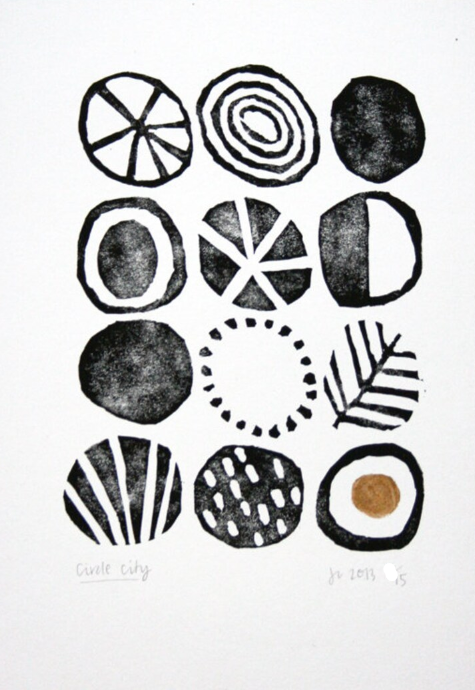
    Circle City HPM Lithograph Print by Jen Collins Hand Applied Gold Details Print on Recycled 280gsm A6 Card Stock Paper Limited Edition Pop Artwork. 2013 Signed & Numbered Limited Edition of 15 Artwork Size 5.8x8.3 Hand Applied Gold Paint Circle City HPM Lithograph Print by Jen Collins The Circle City HPM Lithograph Print by Jen Collins stands as a striking example of how contemporary street pop art & graffiti artwork continues to evolve through experimental printmaking techniques. Created in 2013, this piece is part of a limited edition of 15, each signed and numbered by the artist. The artwork is printed on recycled 280gsm A6 card stock paper, reinforcing the intersection of sustainability and artistic expression. Adding to its uniqueness, hand-applied gold paint details enrich the composition, making each print a singular work of art rather than a mere reproduction. The Artistry Behind Circle City This piece is characterized by a minimalist yet dynamic composition, featuring a series of hand-drawn circular forms that evoke organic patterns, abstract textures, and geometric harmony. Each circle is visually distinct, adorned with varying line work, dot formations, and bold negative space. The raw imperfection of the shapes, achieved through lithographic printing techniques, preserves the authenticity of hand-drawn elements, a fundamental aesthetic in street pop art & graffiti artwork. The hand-applied gold paint within the lower right circle enhances the artwork’s depth and symbolism. Gold has historically represented value, sacredness, and transformation, and in the context of modern pop art, it functions as a nod to both tradition and contemporary visual language. The choice to include a single golden detail within an otherwise monochromatic scheme draws the eye, emphasizing the piece’s balance between structure and spontaneity. Jen Collins and Contemporary Printmaking Jen Collins, an artist known for her intuitive mark-making, organic compositions, and delicate linework, incorporates printmaking as a method of artistic exploration. In street pop art & graffiti artwork, printmaking plays a significant role in producing limited edition multiples that retain an artist’s original hand-drawn sensibility. Unlike mass-produced digital prints, hand-pulled lithographs allow for subtle variations in ink texture, pressure, and tonality, making each edition slightly unique. This approach aligns with the ethos of street art, where imperfection, individuality, and direct artistic engagement are celebrated. Artists working within street pop art & graffiti artwork often challenge the conventions of mass production, preferring small-batch, handcrafted prints that emphasize artistic authenticity over commercial replication. Circle City and the Influence of Urban Aesthetics The circular motifs in Circle City can be interpreted as reflections of urban landscapes, organic rhythms, and symbolic unity. The use of repetitive shapes mirrors patterns seen in street art murals, architectural design, and textile prints, making it a versatile piece that resonates within contemporary urban aesthetics. The composition’s hand-rendered nature further echoes the spontaneity of graffiti and street markings, where public surfaces become canvases for artistic expression. By combining street pop art influences with lithographic printmaking and hand-applied details, Circle City bridges the gap between fine art print culture and street-level creativity. This work exemplifies how artists like Jen Collins continue to redefine the boundaries of modern printmaking, integrating personal expression with accessible, tactile forms of art.

    $109.00

Lithograph Fine Art Print Graffiti Street Pop Artwork

Process and Appeal of Lithograph Print Fine Art Graffiti Street Pop Artwork Printing

Lithograph Print Fine Art Graffiti Street Pop Artwork involves etching a design onto a flat stone or metal plate with a greasy substance. The surface is then treated with a mixture of acid and gum Arabic, etching the ungreased portions of the design into the surface. When the plate is moistened, these etched areas retain water while the greasy parts repel it, allowing an oil-based ink to adhere only to the original drawing. The inked image can then be transferred to a piece of paper, producing a print. The ability to produce several high-quality reproductions from a single image has made lithography a favorite among artists and collectors. For street pop art and graffiti artists, whose work often begins in public spaces and on unconventional canvases, lithography offers a means to transfer their fleeting creations into a more permanent and distributable form. The lithograph print, a traditional printmaking technique, has found a unique and enduring place within pop art, street art, and graffiti artwork. This method of printing, based on the principle that oil and water do not mix, has been utilized by artists since the end of the 18th century and continues to be relevant today. Lithography allows for a high degree of detail and a richness of color, particularly appealing to artists in these genres, who often seek to create bold and impactful works.

Lithography's Role in Pop Art, Street Art, and Graffiti

In pop art, street art, and graffiti, lithograph prints have served as a bridge between the illicit thrill of creating art in public spaces and the established traditions of the fine art world. Artists like Keith Haring and Shepard Fairey have used lithography significantly to disseminate their work more widely and to create a different form of engagement with their audience. The accessibility of lithograph prints has allowed these art forms to transcend their origins and enter the homes and galleries of a diverse audience. The collectibility of lithograph prints is well-established, as they offer a more accessible entry point for collectors looking to own a piece of pop or street art. Unlike unique street murals or canvases, which can be challenging to acquire and preserve, lithograph prints are more accessible to distribute and own. For artists, lithographs present a method to share their work with a broader audience without diluting their art's original message or aesthetic. The influence of lithograph prints is also significant in preserving and documenting street pop art and graffiti artwork, which are inherently transient and often subject to destruction or decay.

Technological Advances and Lithograph Print Fine Art Graffiti Street Pop Artwork

Technological advances have also impacted the production of Lithograph Print Fine Art Graffiti Street Pop Artwork, with digital methods complementing traditional stone and plate techniques. These advancements have expanded the possibilities for artists, who can now produce lithographs that combine the old with the new, incorporating digital manipulation into the traditional process. This fusion of techniques aligns well with the ethos of street and graffiti art, which often involves a dialogue between traditional and contemporary, between permanence and impermanence. Lithograph prints represent a unique confluence of artistry, craftsmanship, and technology. They offer a snapshot of the ever-evolving landscape of visual art, capturing the essence of street pop art and graffiti in a form that is both enduring and accessible. As both a medium and a method, lithography has ensured that the vibrant visuals of the street can be appreciated far from their original locations, preserving the transient beauty of street art for future generations to study and enjoy.
Footer image

© 2025 Sprayed Paint Art Collection,

    • Amazon
    • American Express
    • Apple Pay
    • Bancontact
    • Diners Club
    • Discover
    • Google Pay
    • iDEAL
    • Mastercard
    • PayPal
    • Shop Pay
    • Visa

    Login

    Forgot your password?

    Don't have an account yet?
    Create account