Lithograph Fine Art Print

1 artwork

  • Protect the Sacred- Offset Lithograph Print by Shepard Fairey- OBEY

    Shepard Fairey- OBEY Protect the Sacred- Offset Lithograph Print by Shepard Fairey- OBEY

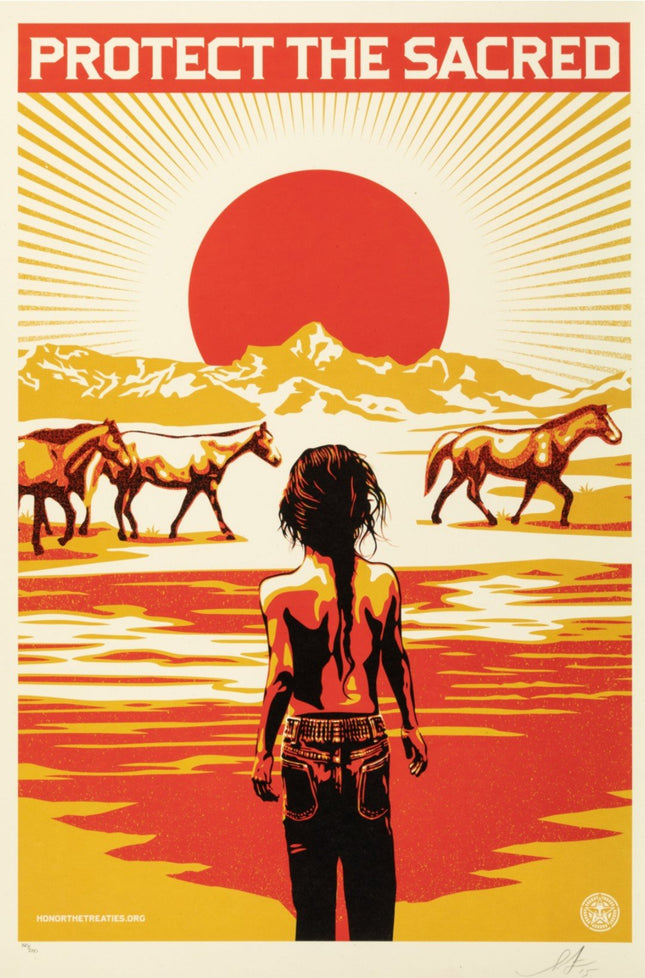
    Protect the Sacred Limited Edition Graffiti Artwork Offset Lithograph Print on Cream Speckle Tone Paper by street artist Shepard Fairey. 2015 Signed & Numbered 24x36 Edition of 200- Protect the Sacred, 2015 Offset lithograph in colors on thick speckled cream paper 36 x 24 inches (91.4 x 61 cm) (sheet) Ed. 200 Signed, numbered, and dated in pencil along lower edge Published by Obey Giant, Los Angeles Protect the Sacred Offset Lithograph by Shepard Fairey Protect the Sacred by Shepard Fairey is a landmark piece of Street Pop Art & Graffiti Artwork that delivers both a powerful visual experience and an urgent social message. Released in 2015 as a signed and numbered limited edition of 200, this offset lithograph is printed on thick cream Speckletone paper and measures 24x36 inches. Fairey, one of the most influential voices in contemporary street art, uses this work to amplify Indigenous voices and underscore the importance of honoring land, culture, and environmental sanctity. Symbolism and Visual Composition The composition features a young Indigenous figure standing bare-backed at the edge of a sacred body of water, flanked by a trio of wild horses. The central figure stares into the distance, symbolizing spiritual reflection, generational strength, and resistance. A bold red sun radiates behind a jagged mountain range, creating a powerful sense of harmony and tension. The sun’s rays stretch out like a mandala, suggesting divine illumination and cyclical renewal. The use of high-contrast red, yellow, and black evokes both urgency and reverence—colors often tied to warning as well as heritage. Every element in the composition has a voice. The water, rendered in rippling blocks of red and yellow, suggests instability and reflection. The horses symbolize freedom, natural power, and cultural continuity. Shepard Fairey roots this work in deep respect for Indigenous traditions and cosmologies, which hold land and nature not as resources but as sacred relations. Offset Printing as Political Tool While Shepard Fairey is globally known for his screenprint and stencil work, the choice of offset lithograph printing for Protect the Sacred is intentional. Offset printing allows for broader distribution and reproduction fidelity, aligning with Fairey’s ethos of accessible political art. The print maintains his hallmark sharp linework, layering techniques, and propaganda-inspired layout, but presents them with the finesse of a high-resolution poster. This makes the work not just a collector’s object but a tool of advocacy—designed for walls, protests, and public dialogue. Activist Roots and Cultural Solidarity This artwork was created in support of Honor the Treaties, an organization that uses art to amplify the voices of Indigenous communities fighting for environmental justice. The print foregrounds the relationship between sacred land and Indigenous sovereignty—a central concern for Native activists and water protectors across North America. Fairey’s involvement in this movement is not performative; he lends his visual language, platform, and printing resources to amplify those historically silenced. Protect the Sacred stands as a prime example of how Street Pop Art & Graffiti Artwork can transcend aesthetic to become cultural weaponry. Shepard Fairey’s offset lithograph not only reminds the viewer of past injustices but demands present accountability. It is a call to remember, a call to protect, and a call to listen.

    $1,269.00

Lithograph Fine Art Print Graffiti Street Pop Artwork

Process and Appeal of Lithograph Print Fine Art Graffiti Street Pop Artwork Printing

Lithograph Print Fine Art Graffiti Street Pop Artwork involves etching a design onto a flat stone or metal plate with a greasy substance. The surface is then treated with a mixture of acid and gum Arabic, etching the ungreased portions of the design into the surface. When the plate is moistened, these etched areas retain water while the greasy parts repel it, allowing an oil-based ink to adhere only to the original drawing. The inked image can then be transferred to a piece of paper, producing a print. The ability to produce several high-quality reproductions from a single image has made lithography a favorite among artists and collectors. For street pop art and graffiti artists, whose work often begins in public spaces and on unconventional canvases, lithography offers a means to transfer their fleeting creations into a more permanent and distributable form. The lithograph print, a traditional printmaking technique, has found a unique and enduring place within pop art, street art, and graffiti artwork. This method of printing, based on the principle that oil and water do not mix, has been utilized by artists since the end of the 18th century and continues to be relevant today. Lithography allows for a high degree of detail and a richness of color, particularly appealing to artists in these genres, who often seek to create bold and impactful works.

Lithography's Role in Pop Art, Street Art, and Graffiti

In pop art, street art, and graffiti, lithograph prints have served as a bridge between the illicit thrill of creating art in public spaces and the established traditions of the fine art world. Artists like Keith Haring and Shepard Fairey have used lithography significantly to disseminate their work more widely and to create a different form of engagement with their audience. The accessibility of lithograph prints has allowed these art forms to transcend their origins and enter the homes and galleries of a diverse audience. The collectibility of lithograph prints is well-established, as they offer a more accessible entry point for collectors looking to own a piece of pop or street art. Unlike unique street murals or canvases, which can be challenging to acquire and preserve, lithograph prints are more accessible to distribute and own. For artists, lithographs present a method to share their work with a broader audience without diluting their art's original message or aesthetic. The influence of lithograph prints is also significant in preserving and documenting street pop art and graffiti artwork, which are inherently transient and often subject to destruction or decay.

Technological Advances and Lithograph Print Fine Art Graffiti Street Pop Artwork

Technological advances have also impacted the production of Lithograph Print Fine Art Graffiti Street Pop Artwork, with digital methods complementing traditional stone and plate techniques. These advancements have expanded the possibilities for artists, who can now produce lithographs that combine the old with the new, incorporating digital manipulation into the traditional process. This fusion of techniques aligns well with the ethos of street and graffiti art, which often involves a dialogue between traditional and contemporary, between permanence and impermanence. Lithograph prints represent a unique confluence of artistry, craftsmanship, and technology. They offer a snapshot of the ever-evolving landscape of visual art, capturing the essence of street pop art and graffiti in a form that is both enduring and accessible. As both a medium and a method, lithography has ensured that the vibrant visuals of the street can be appreciated far from their original locations, preserving the transient beauty of street art for future generations to study and enjoy.
Footer image

© 2025 Sprayed Paint Art Collection,

    • Amazon
    • American Express
    • Apple Pay
    • Bancontact
    • Diners Club
    • Discover
    • Google Pay
    • iDEAL
    • Mastercard
    • PayPal
    • Shop Pay
    • Visa

    Login

    Forgot your password?

    Don't have an account yet?
    Create account