Luxury

1 artwork

  • Lady With Sphinx Original Oil on Linen Painting by Aaron Nagel

    Aaron Nagel Lady With Sphinx Original Oil on Linen Painting by Aaron Nagel

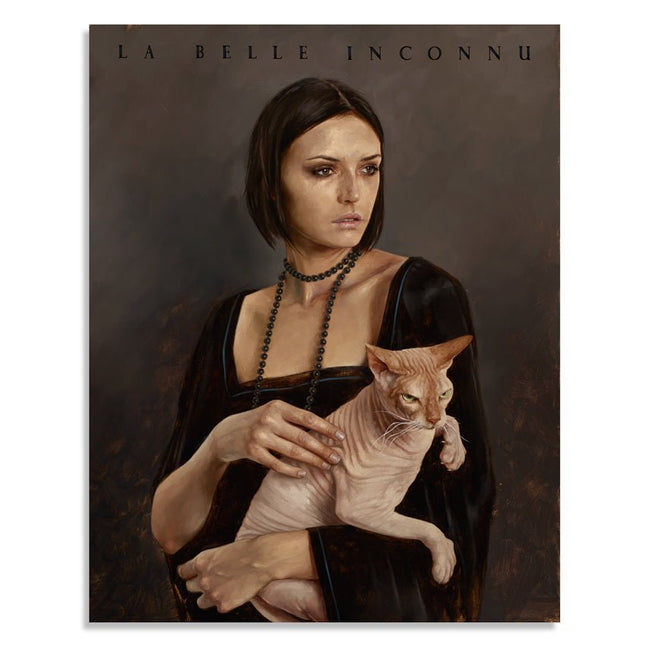
    Lady With Sphinx Original Painting Oil On Linen Mounted To Wood With Frame by Aaron Nagel Graffiti Street Artist Modern Pop Art. 2015 Signed Original Oil Painting Framed by Aaron Nagel Measuring 26x30 Lady With Sphinx by Aaron Nagel – A Classical Revival in Street Pop Art & Graffiti Artwork Aaron Nagel’s 2015 original oil painting Lady With Sphinx stands as a meticulous fusion of classical composition and contemporary subtext. Executed in oil on linen and mounted to wood, the work measures 26 x 30 inches with frame and carries Nagel’s signature stylistic elegance. The image evokes the traditions of Renaissance portraiture while quietly dismantling them with modern iconography and symbolic subversion. A serene yet emotionally distant woman clad in rich, dark fabric holds a hairless Sphynx cat, whose gaze is as penetrating as the figure who cradles it. Above her head, the French inscription La Belle Inconnu adds a cryptic narrative element, suggesting themes of anonymity, allure, and quiet power. The texture of the painting is richly layered, with detailed attention to skin tones, fabric folds, and the cat’s anatomical precision, emphasizing Nagel’s technical discipline while embracing the surreal tension between elegance and discomfort. Aaron Nagel’s Artistic Identity Within Pop and Street Influences Aaron Nagel, a contemporary artist born in the United States, has gained recognition for his distinct position at the crossroads of classical oil painting and modern Street Pop Art & Graffiti Artwork. Though trained outside of traditional academic institutions, his mastery of oil technique rivals that of the old masters. What separates Nagel from strictly academic painters is his conscious incorporation of contemporary themes, body language, and fashion-inspired elements, grounding his figures in the now while rendering them with reverent antiquity. In Lady With Sphinx, this duality is fully realized. The subject’s direct yet introspective expression, her minimalist styling, and the inclusion of the Sphynx—an animal often associated with the esoteric and the avant-garde—create a mood that is both ancient and futuristic. The work resists the ornamental or decorative, opting instead for a psychologically complex atmosphere that invites extended contemplation. Medium and Technique: Oil on Linen as a Platform for Modern Symbolism The choice of oil on linen mounted to wood reinforces the tactile sophistication of the piece. This medium has long been favored for its ability to capture subtleties of flesh, fabric, and emotion, and Nagel utilizes it to its full potential. His handling of light and shadow is controlled yet evocative, accentuating the coolness of the background and the warmth of the human subject. The Sphynx cat, sculptural and intense, mirrors the woman’s composure and elevates the painting’s sense of stillness into something more uncanny. Framing the work enhances its formal presence, transforming it from contemporary canvas to object of veneration. Every choice in material and technique deepens the narrative without imposing a literal storyline, allowing viewers to find their own relationship to the quiet unease and magnetism it portrays. Contemporary Classicism in the Framework of Street Pop Art & Graffiti Artwork Nagel’s presence in Street Pop Art & Graffiti Artwork is defined by his ability to appropriate the language of high art and recontextualize it within a culture often defined by rebellion and immediacy. Rather than relying on loud visuals or typographic shock, he uses silence, elegance, and suggestion. Lady With Sphinx challenges expectations by presenting beauty not as a passive attribute but as a controlled power. The model’s soft stare is filled with restraint rather than seduction, and the symbolism of the Sphynx—a creature stripped of its fur yet regal in posture—complicates ideas of purity and aesthetics. It is a painting steeped in layers of reference but fully self-possessed. As part of Nagel’s broader practice, this piece represents the intellectual weight that Street Pop Art & Graffiti Artwork can hold when technique and concept operate in harmony. It serves as a sophisticated reminder that subversion does not always require noise—sometimes it speaks loudest through poise.

    $7,820.00

Luxury
Luxury is a term that has been associated with wealth, excess, and indulgence. It is often depicted in the form of high-end brands, expensive jewelry, luxurious cars, and lavish lifestyles. Graffiti art and pop art have both explored the concept of luxury in their own unique ways, using the medium of art to comment on society's fascination with wealth and excess. Graffiti art is a form of street art that involves the use of spray paint, stencils, and markers to create bold, colorful images on public surfaces such as walls, buildings, and bridges. Graffiti artists often use their art to make political statements, express their personal beliefs, or simply to beautify the urban environment. However, luxury is also a common theme in graffiti art, as many artists use the medium to comment on the wealth gap and consumerism. One example of luxury in graffiti art is the work of Banksy, a renowned street artist known for his politically charged and socially conscious art. In his piece "Kissing Coppers," Banksy depicts two police officers engaged in a romantic kiss, with their helmets masking their identities. The artwork was created in Brighton, UK, in 2004 and has since become an iconic symbol of rebellion against authority. Another example of luxury in graffiti art is the work of Mr. Brainwash, a French street artist and filmmaker. His art often incorporates images of celebrities and luxury brands, such as Chanel and Louis Vuitton, to comment on the excess and consumerism of modern society. In one of his pieces, "Life is Beautiful," Mr. Brainwash created a mixed media collage featuring Marilyn Monroe holding a Chanel handbag. Pop art is a form of art that emerged in the 1950s and 60s, characterized by its use of popular culture and everyday objects as subject matter. Pop artists often appropriated images from mass media, advertising, and consumer culture to create works that challenged traditional notions of high art. Luxury was a common theme in pop art, as many artists used the medium to comment on the commercialization of art and the rise of consumerism. One of the most famous pop art pieces is Andy Warhol's "Campbell's Soup Cans," which consists of 32 individual canvases, each featuring a different flavor of Campbell's Soup. The artwork was created in 1962 and has since become an iconic symbol of pop art and consumer culture. Another example of luxury in pop art is the work of Jeff Koons, an American artist known for his sculptures and installations featuring everyday objects such as balloon animals and vacuum cleaners. In his series "Luxury and Degradation," Koons created sculptures of luxury goods such as liquor bottles and cigarettes, commenting on the glamorization of harmful behaviors and the marketing of addiction. Luxury has been a common theme in both graffiti art and pop art, as artists use their medium to comment on the excess and consumerism of modern society. Whether it is through the use of luxury brands, celebrities, or everyday objects, artists have found ways to critique and challenge the notion of wealth and excess through their art. Both graffiti art and pop art continue to inspire and challenge artists today, as they seek to use their art to make a statement about the world around them.
Footer image

© 2025 Sprayed Paint Art Collection,

    • Amazon
    • American Express
    • Apple Pay
    • Bancontact
    • Diners Club
    • Discover
    • Google Pay
    • iDEAL
    • Mastercard
    • PayPal
    • Shop Pay
    • Visa

    Login

    Forgot your password?

    Don't have an account yet?
    Create account