Man Male

4 artworks

  • Selfie Gun Blue Silkscreen Print by Joan Cornellà

    Joan Cornellà Selfie Gun Blue Silkscreen Print by Joan Cornellà

    Selfie Gun Blue Silkscreen Print by Joan Cornellà Hand-Pulled on Fine Art Paper Limited Edition Screenprint Artwork. 2024 Signed & Numbered Limited Edition of 250 Artwork Size 16.14x22.44 Silkscreen Print Selfie Gun Blue Silkscreen Print by Joan Cornellà Selfie Gun Blue is a 2024 silkscreen print by Spanish artist Joan Cornellà, known for his satirical and unflinching commentary on modern life. This limited edition piece, hand-pulled on fine art paper, is signed and numbered out of an edition of 250. Measuring 16.14 by 22.44 inches, the artwork presents a bold visual punch with clean lines, flat blocks of color, and a composition that captures Cornellà’s iconic absurdist humor. The image depicts a smiling figure holding a selfie stick topped not with a phone, but with a handgun pointed directly at their own head. The bright cyan blue background serves as a jarring contrast to the image’s grim thematic undertones, echoing the aesthetic cues of commercial design while delivering a sharp critique. Joan Cornellà and Satirical Extremism in Street Pop Art & Graffiti Artwork Joan Cornellà, born in 1981 in Barcelona, Spain, has emerged as a crucial figure in the evolution of Street Pop Art & Graffiti Artwork. His visual language is instantly recognizable—smiling characters, polished cartoonish lines, and saturated colors serve as vehicles for biting, often darkly humorous reflections on society. Selfie Gun Blue stands as an archetypal example of Cornellà’s approach: presenting a cheerful scene that reveals something deeply unsettling upon closer inspection. This tension between style and substance is a hallmark of his work. In this silkscreen print, the fusion of an everyday object with an instrument of violence creates a jarring metaphor about technology, self-obsession, and the superficial culture of digital validation. Technique and Visual Economy as Subversive Tools The artwork’s strength lies in its visual economy. There is no clutter, no background narrative, and no textual explanation. Every element in the frame is calculated and precise. Cornellà uses simplicity as a form of satire, stripping his characters of individuality while heightening their symbolic impact. The man’s suit, smile, and vacant eyes are rendered in bold primary hues, reducing him to an archetype. The gun, rendered in muted gray and pink tones, is stark in contrast but seamlessly integrated into the composition. This hand-pulled screenprint showcases Cornellà’s command over flat color layering, a classic method in fine art printing now repurposed for modern commentary. Modern Irony Encapsulated Through Visual Absurdity Selfie Gun Blue is not merely a visual gag; it is a stark reflection on societal detachment. Cornellà uses cheerful aesthetics to critique real-world issues—narcissism, desensitization, and the commodification of identity in digital spaces. Through Street Pop Art & Graffiti Artwork, he confronts the viewer with uncomfortable truths hidden beneath polished surfaces. His work has resonated globally, in galleries, books, and public installations, because it forces a confrontation with the absurdities of modern behavior using the very visual cues that have become familiar and trusted. This piece, like much of Cornellà’s portfolio, demands not just observation but introspection, challenging the viewer to question the hidden implications behind every filtered smile.

    $3,500.00

  • Selfie Gun Pink Silkscreen Print by Joan Cornellà

    Joan Cornellà Selfie Gun Pink Silkscreen Print by Joan Cornellà

    Selfie Gun Pink Silkscreen Print by Joan Cornellà Hand-Pulled on Fine Art Paper Limited Edition Screenprint Artwork. 2024 Signed & Numbered Limited Edition of 250 Artwork Size 16.14x22.44 Silkscreen Print Selfie Gun Pink Silkscreen Print by Joan Cornellà Selfie Gun Pink is a 2024 hand-pulled silkscreen edition by Spanish satirical artist Joan Cornellà. Measuring 16.14 by 22.44 inches and produced in a limited edition of 250, this signed and numbered artwork reflects Cornellà’s unmistakable blend of polished visual simplicity and biting social commentary. The image features a cheerfully smiling man in a peach-toned suit, holding a selfie stick that supports not a camera, but a handgun aimed squarely at himself. The background is rendered in soft pink, enhancing the ironic dissonance between the subject’s cheery disposition and the underlying theme of violence masked as casual narcissism. Joan Cornellà’s Critique Through Absurdist Imagery Born in Barcelona in 1981, Joan Cornellà has become a global force in Street Pop Art & Graffiti Artwork by using minimalistic cartoon aesthetics to unveil the absurdities of modern life. His figures are intentionally void of individuality, often grinning unnaturally as they perform disturbing or nonsensical acts. In Selfie Gun Pink, the character’s satisfied expression juxtaposes the grim symbolism of a weapon aimed at his own head. The stick, traditionally used for self-promotion and attention-seeking behavior, is transformed into an object of quiet destruction. This visual metaphor encapsulates Cornellà’s critique of digital culture, social vanity, and the dangerous detachment that technology can breed. Color, Style, and Technique in Contemporary Satire The silkscreen process used in this print is emblematic of Cornellà’s commitment to precision and high-quality presentation. Bold lines, solid color fields, and flat shading are used to mimic corporate mascots or health-and-safety cartoons, only to subvert their intent with disturbing undertones. The use of pink as a background in Selfie Gun Pink offers a candy-colored contrast to the dark humor within the scene. It speaks to Cornellà’s deliberate strategy of using playful palettes to disarm viewers, forcing them into a second glance where the deeper commentary emerges. This pop-art coloration coupled with street-level critique is what places his work firmly within Street Pop Art & Graffiti Artwork. Impact and Relevance in the Modern Visual Landscape Selfie Gun Pink exemplifies how Joan Cornellà’s work transcends traditional boundaries, moving seamlessly between fine art prints, gallery walls, and viral memes. Yet the impact of his imagery is not just visual novelty. His recurring themes—violence, self-obsession, irony, and commodification—mirror urgent social conversations. The 2024 print captures this moment in time where performative happiness masks inner turmoil and where devices meant to connect us may instead isolate and endanger. With each new piece, including this limited edition print, Cornellà continues to be one of the most searing voices in the contemporary art world, pushing viewers to confront uncomfortable truths through deceptively light-hearted visuals.

    $3,500.00

  • Selfie Gun Yellow Silkscreen Print by Joan Cornellà

    Joan Cornellà Selfie Gun Yellow Silkscreen Print by Joan Cornellà

    Selfie Gun Yellow Silkscreen Print by Joan Cornellà Hand-Pulled on Fine Art Paper Limited Edition Screenprint Artwork. 2024 Signed & Numbered Limited Edition of 250 Artwork Size 16.14x22.44 Silkscreen Print Selfie Gun Yellow Silkscreen Print by Joan Cornellà Selfie Gun Yellow is a 2024 hand-pulled silkscreen print by Spanish artist Joan Cornellà. Signed and numbered in a limited edition of 250, this work measures 16.14 by 22.44 inches and presents Cornellà’s now-iconic visual punch with a deceptively cheerful palette masking deeply provocative themes. The image features a smiling male figure in a blue suit standing against a vibrant yellow background, holding a selfie stick that supports a handgun rather than a smartphone. The print's stark simplicity, exaggerated expression, and flat fields of color allow its absurdity and subversion to dominate the viewer's first and lasting impression. Joan Cornellà’s Visual Irony and the Absurdity of the Digital Age Joan Cornellà was born in 1981 in Barcelona and has risen to international prominence for his uniquely unsettling yet humorous critiques of contemporary life. Through a visual language that borrows heavily from mid-century commercial illustration and pop iconography, Cornellà’s work deconstructs digital narcissism, commodified identity, and passive complicity. Selfie Gun Yellow crystallizes many of these themes. The joyful pose of the figure, exaggeratedly cheerful and unaware, becomes a metaphor for societal blindness in the pursuit of validation and spectacle. The gun at the end of the selfie stick transforms a common habit into a commentary on psychological self-destruction and performative existence. Silkscreen Precision and the Language of Commercial Aesthetics The technique used in Selfie Gun Yellow amplifies its message. The precision of hand-pulled silkscreen printing allows for crisp, clean lines and saturated colors, giving the work the look of mass-produced consumer graphics while being part of an exclusive limited run. The yellow background is not merely a color field but a psychological trigger—evoking optimism and energy while laying the groundwork for cognitive dissonance. The contrast between the man’s welcoming demeanor and the weapon he points toward himself deepens the satire without relying on excessive visual clutter. This minimalism, paired with shocking irony, is central to Cornellà’s success as a provocateur in Street Pop Art & Graffiti Artwork. The Role of Satirical Minimalism in Street Pop Art & Graffiti Artwork Cornellà’s contribution to the evolution of Street Pop Art & Graffiti Artwork is defined by his capacity to use restraint to elicit powerful reactions. His figures are deliberately anonymous, their individuality stripped away to amplify the social roles they play. In Selfie Gun Yellow, the business suit, the performative smile, and the stylized violence condense global anxieties into one frozen frame. With no dialogue, no background narrative, and no ambiguity, the piece is direct but not reductive. It forces a confrontation with the viewer's own habits, obsessions, and the mechanics of attention in the modern world. Through works like this, Joan Cornellà continues to provoke, entertain, and challenge through satire masked in simplicity.

    $3,500.00

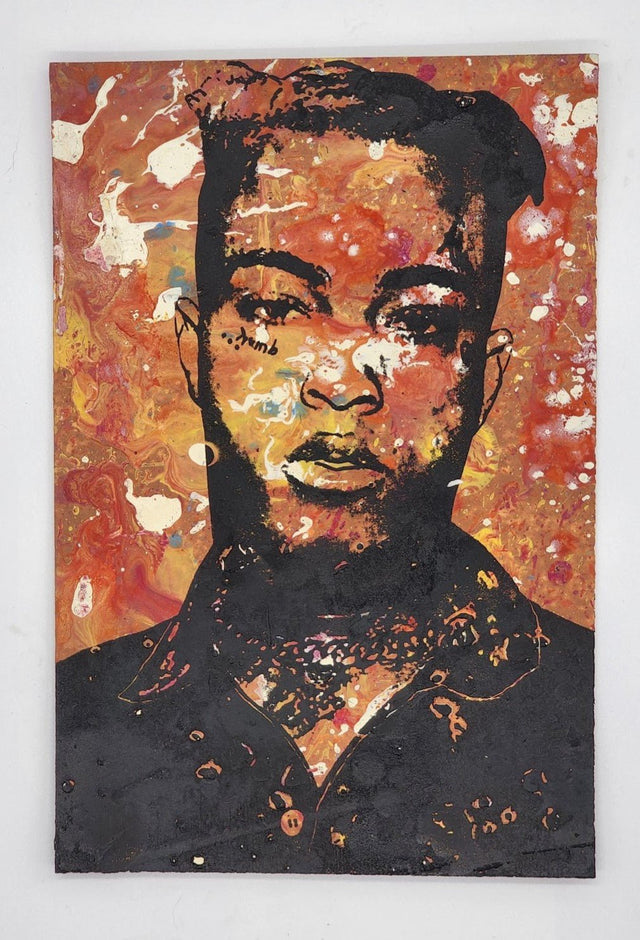
  • Some May Never Live, But The Crazy Never Die Etching Print by Mark Powell

    Mark Powell Some May Never Live, But The Crazy Never Die Etching Print by Mark Powell

    Some May Never Live, But The Crazy Never Die Etching Print on Fine Art Paper by Artist Mark Powell Limited Edition Artwork. 2022 Signed & Numbered Limited Edition of 25 Artwork Size 11x22.44

    $323.00

Man Male Graffiti Street Pop Artwork

The Evolution of Male Imagery in Street Pop Art and Graffiti Artwork

Graffiti street art has long been a platform for artists to express themselves, share messages, and challenge social norms. Men as a topic in graffiti street art can encompass a wide range of subjects, styles, and messages. Some key themes and aspects of men in graffiti street art include Portraits and representation: Graffiti artists often create portraits of men, whether they're famous figures, friends, or strangers. These portraits can showcase various emotions, characteristics, and styles, allowing artists to communicate messages and ideas about masculinity. Street Pop Art and Graffiti Artwork have long been powerful mediums for expression, often reflecting social, political, and cultural themes. Among these themes is the portrayal of men, which has evolved significantly. This evolution is a reflection of changing artistic styles and shifting societal perceptions about masculinity and male identity.

Early Representations of Men in Graffiti and Street Art

In the early days of graffiti and street art, male figures were often depicted as symbols of rebellion and social dissent. Graffiti, in its nascent form, was closely linked with the subcultures of urban environments, where it was used as a tool for the marginalized to voice their frustrations and aspirations. Exaggerated features, bold lines, and a sense of ruggedness typically characterized the male figures in these early works. They were often portrayed in dynamic poses, symbolizing strength and defiance against societal norms. One of the pioneering artists in this field was Keith Haring, an American artist known for his unique style that combined graffiti, pop art, and cartoon elements. Haring's work often featured male figures engaged in various actions, reflecting themes of life, death, sexuality, and war. He used these depictions to comment on broader social issues, including the AIDS crisis and LGBTQ+ rights. Haring passed away on February 16, 1990, but his influence on street pop art and graffiti remains profound.

Modern Interpretations and Diverse Perspectives

As street pop art and graffiti evolved, the representation of men in these mediums became more diverse and complex. Modern artists have moved away from one-dimensional portrayals, presenting men in various roles and contexts. This shift reflects a broader societal movement towards questioning and redefining traditional notions of masculinity. Contemporary artists like Banksy, whose real identity remains unknown, have utilized male imagery to critique political systems and societal structures. Banksy's work often features men in ironic or paradoxical situations, challenging viewers to reconsider their preconceptions about male identity and power structures. His art serves as a commentary on the vulnerabilities and complexities of modern masculinity, veering away from the stereotypical portrayal of men as merely solid and unemotional.
Similarly, Brazilian artist Eduardo Kobra uses colorful, kaleidoscopic patterns to create large-scale murals that often include male figures from history and pop culture. Kobra's work blends hyper-realism and abstraction, bringing a sense of humanity and depth to his subjects. His murals are visually striking and carry messages about peace, unity, and the human experience.

Impact and Influence of Male Imagery in Street Pop and Graffiti Art

The portrayal of men in street pop art and graffiti has significantly impacted both the art world and society. These artworks have provided a platform for discussing and challenging traditional gender roles, offering new perspectives on what it means to be a man in the modern world. They have also played a crucial role in democratizing art, taking it out of galleries and into public spaces, making it more accessible and relatable to a broader audience. Moreover, the evolution of male imagery in these art forms reflects the ongoing societal conversation about gender identity and expression. As attitudes towards masculinity continue to evolve, so too does the portrayal of men in street pop art and graffiti. This dynamic relationship between art and society ensures that these art forms remain relevant and powerful tools for social commentary and change. Cultural icons and role models: Artists may depict male icons, leaders, or role models from various cultures, highlighting their accomplishments, impact, or influence on society. This can include athletes, musicians, politicians, activists, or historical figures. Social issues and masculinity: Graffiti street art often addresses social issues and challenges cultural norms. Men can be the subject of these discussions as artists explore themes such as toxic masculinity, gender roles, and male vulnerability. These artworks can provoke thought and conversation about how men are perceived and expected to behave in society. Styles and techniques: Various styles and techniques in graffiti art can be used to represent men or masculine themes. For example, artists may use realistic, abstract, or cartoonish styles, incorporating typography, stencils, or mixed media elements. Collaborations and collectives: Many graffiti artists work in groups or collaborate on projects, creating a sense of community and shared artistic vision. These collaborations can lead to unique and impactful works that address themes related to men or masculinity. Men as a topic in graffiti street art can be approached in numerous ways, ranging from portraits and representation to social issues and cultural icons. The versatility of graffiti as a medium allows artists to express their thoughts and ideas about men and masculinity in a way that is accessible, thought-provoking, and engaging to the public. The representation of men in street pop art and graffiti artwork has undergone significant changes over the years. From symbols of rebellion in the early days to more nuanced and diverse portrayals in modern times, these images reflect the complex and ever-evolving nature of male identity. Artists like Keith Haring, Banksy, and Eduardo Kobra have shaped this narrative, using their art to challenge stereotypes and spark conversations about masculinity in contemporary society. The impact of their work extends beyond the art world, influencing societal perceptions and contributing to the broader discourse on gender.
Footer image

© 2025 Sprayed Paint Art Collection,

    • Amazon
    • American Express
    • Apple Pay
    • Bancontact
    • Diners Club
    • Discover
    • Google Pay
    • iDEAL
    • Mastercard
    • PayPal
    • Shop Pay
    • Visa

    Login

    Forgot your password?

    Don't have an account yet?
    Create account