Mickey Mouse

2 artworks

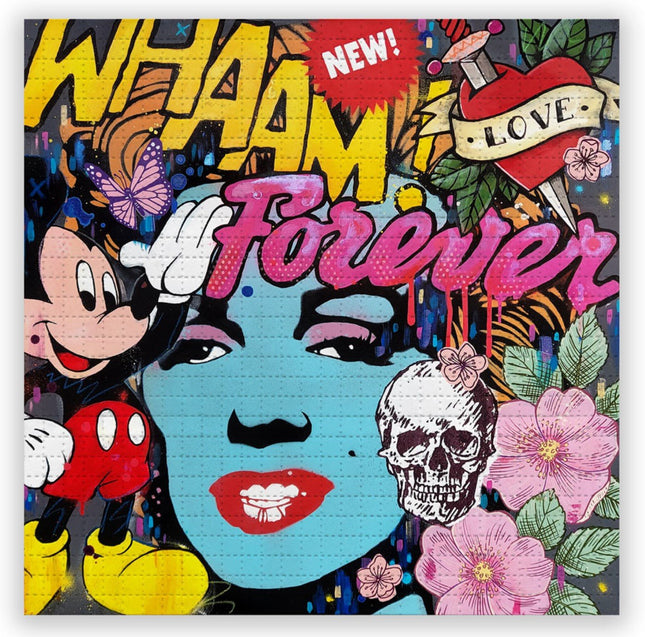
  • Marilyn Whaam New Love Forever Blotter Paper Archival Print by Copyright

    Copyright Marilyn Whaam New Love Forever Blotter Paper Archival Print by Copyright

    Marilyn Whaam New Love Forever Limited Edition Fine Art Blotter Paper Archival Pigment Print Art on Perforated Blotter Paper by Modern Pop Artist Copyright. 2022 Signed & Numbered Limited Edition of 35 Archival Pigment Print on Perforated Blotter Paper Size: 7.5 x 7.5 Inches Release: April 19, 2022 Limited blotter editions are hand-perforated by Zane Kesey. Marilyn Whaam New Love Forever by Copyright: Icons, Psychedelia, and Modern Myth in Street Pop Art & Graffiti Artwork Marilyn Whaam New Love Forever is a 2022 limited edition archival pigment print created by the UK-based modern pop artist Copyright. Produced in an edition of just 35 and measuring 7.5 x 7.5 inches, this fine art piece is printed on perforated blotter paper, a material long associated with psychedelic counterculture. The edition is hand-perforated by Zane Kesey, reinforcing its ties to underground and rebellious creative traditions. Copyright, known for fusing pop iconography with layered social critique, constructs a visual kaleidoscope that blurs the boundaries between commercial art, psychedelia, and romantic symbolism. The artwork’s format—archival pigment print on blotter—is as intentional as the imagery itself, merging printmaking craftsmanship with the aesthetic of outlaw spirit. Visual Archetypes and Cultural Overload At the core of the artwork is a cyan-hued portrait of Marilyn Monroe, reimagined in a Warholian color palette and stylized with dripping paint, bold outlines, and floral embellishments. Her face is overlaid with layered graphics: the word Forever in sparkling pink script, a skull adorned with petals, butterflies, and a tattoo-style heart that reads Love. Above her, comic book text explodes in Whaam, while Mickey Mouse gestures into the frame, acting both as a witness and a participant in the chaos. This collage of commercial characters, romance clichés, and subversive symbols creates a disorienting and emotionally saturated composition. In the tradition of Street Pop Art & Graffiti Artwork, the piece uses universally recognized figures to dissect the artificial constructs of fame, memory, mortality, and branding. Material Legacy and Psychedelic Format The choice of blotter paper as the printing substrate is a deliberate reference to 1960s and 1970s psychedelic art, where LSD tabs often featured graphic micro-images. While this artwork does not serve a functional purpose in that context, the use of perforated sheets draws a clear line to underground culture and mind-expansion aesthetics. The archival pigment printing process ensures color accuracy, longevity, and fine detail, lending a museum-quality finish to a material traditionally deemed ephemeral or illicit. The 7.5 x 7.5 inch size encourages up-close viewing, highlighting the pixel-level texture of the perforation grid beneath the imagery. This contrast between the sacred and the disposable adds a layer of tension to the print’s message—suggesting that contemporary mythologies are as fragile as they are omnipresent. Copyright’s Role in the Remix Tradition Copyright is a UK street pop artist who continually reimagines the familiar through a lens of distortion, nostalgia, and rebellion. Blending elements of graffiti culture, fashion advertising, fine art, and pop media, his works function as remix archives of collective memory. Marilyn Whaam New Love Forever distills his approach into one saturated square, drawing upon the semiotics of love, death, sex, capitalism, and escapism to create a maximalist meditation on cultural saturation. The inclusion of characters like Mickey and Monroe acts as both homage and critique—icons who once promised happiness and now haunt the very systems they helped define. In the world of Street Pop Art & Graffiti Artwork, this piece asserts itself as a colorful explosion of conflicted worship, where beauty meets decay and permanence is found in the disposable.

    $352.00

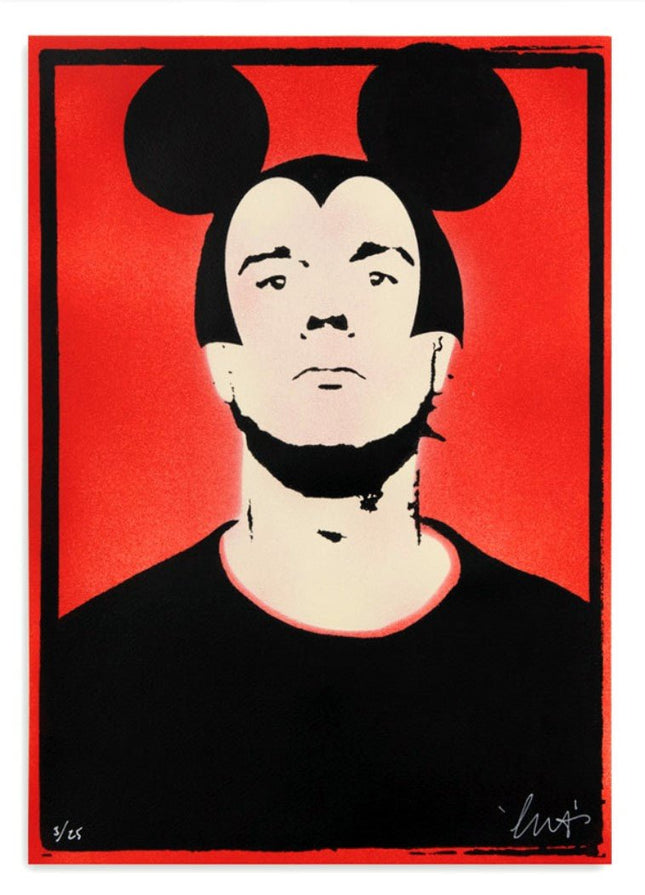
  • Andy Mouse HPM Stencil Silkscreen Print by Copyright

    Copyright Andy Mouse HPM Stencil Silkscreen Print by Copyright

    Andy Mouse 3-Color Hand-Pulled Limited Edition Silkscreen Print on 300 gsm Fabriano Watercolour Paper by Copyright Rare Street Art Famous Pop Artwork Artist. 2020 Signed & Numbered Limited Edition of 25 HPM Artwork Size 13.7x19.6 Andy Warhol x Mickey Mouse Disney. This edition is uniquely hand-painted. Copyright: Copyright has been daubing the streets of the UK with his trademark pink roses for years. Fusing street art, graffiti, and more traditional styles, he uses a mixture of classic painting techniques and spray can art. He creates print styles with stencils, depth with spray paint, and texture with a paintbrush.

    $352.00

Mickey Mouse Graffiti Street Pop Artwork

Mickey Mouse is an Icon in Street Pop Art and Graffiti Artwork

Mickey Mouse, the cheerful rodent created by Walt Disney and Ub Iwerks in 1928, has transcended his animated origins to become a symbolic figure in street pop art and graffiti artwork. This cultural icon, recognized by his circular ears and gleeful demeanor, has been appropriated by street artists worldwide as a symbol of childhood innocence and a canvas for social and political commentary. In the diverse and often provocative world of street art, Mickey Mouse emerges not merely as a nostalgic figure but as a versatile tool for artists to express their views on a myriad of topics, from consumer culture to the loss of innocence and the omnipresence of media in contemporary life. Mickey Mouse's journey into the lexicon of street pop art and graffiti artwork is remarkable, signifying the character's enduring impact on popular culture. Initially designed as a whimsical character for children's entertainment, Mickey's image has been transformed and reinterpreted through the lenses of various street artists, who have often placed him in contexts far removed from his playful Steamboat Willie beginnings. These reinterpretations range from placing Mickey in ironic scenarios that critique the corporate culture he is part of to using his image to explore themes of identity and the human condition. This appropriation is a testament to the character's universal recognition and the ease with which his image can be manipulated to convey complex messages.

Mickey Mouse's Dual Role in Contemporary Art

The dual role of Mickey Mouse in street pop art and graffiti artwork – as both a beloved character and a vehicle for critique – is a reflection of the character's profoundly ingrained place in global consciousness. On one hand, Mickey's image can evoke a sense of joy and nostalgia, harkening back to simpler times. On the other, it can highlight the pervasive influence of corporate entities in everyday life. This duality has made Mickey Mouse a favored subject in street art, allowing for a unique interplay between the ostensibly innocent and the critical, the commercial and the countercultural. Through Mickey's image, street artists can communicate with a broad audience, leveraging the character's popularity to ensure that their message is received and contemplated. Internationally, Mickey Mouse has become a common sight in street art hotspots, from the Los Angeles alleys to the Berlin lanes. The character has been depicted in many styles, from lifelike renderings to abstract interpretations, each bringing a different perspective to this animated icon. The ubiquitous presence of Mickey in street pop art underscores the global reach of his image and the diverse interpretations he inspires. In this urban art setting, Mickey becomes a shared language among artists, a way to connect with disparate audiences who might not share a spoken language but can understand and appreciate the visual symbolism of this iconic character.

Commercial Iconography and its Discontents

The frequent depiction of Mickey Mouse in street pop art and graffiti artwork raises questions about commercial iconography and its place in public spaces. While Disney's Mickey is a protected trademark, his image's use in street art often falls into a gray area, balancing between homage, parody, and critique. This dynamic is fundamental to street art's ethos – to challenge norms and provoke thought by repurposing familiar images in unexpected ways. The tension between commercial imagery and public art continues to fuel debates on intellectual property, art, and freedom of expression, with Mickey often at the center of these discussions. Mickey Mouse's presence in street pop art and graffiti artwork is multifaceted, embodying both a celebration of popular culture and a critique of it. The evolution of Mickey's image in the hands of street artists reflects the complex relationship between commercial entities and the public domain. As street art continues to flourish and evolve, the image of Mickey Mouse is likely to remain a potent symbol for artists to express their creativity and critique, solidifying the character's status not just as a beloved animated figure but also as an essential icon in contemporary art.
Footer image

© 2025 Sprayed Paint Art Collection,

    • Amazon
    • American Express
    • Apple Pay
    • Bancontact
    • Diners Club
    • Discover
    • Google Pay
    • iDEAL
    • Mastercard
    • PayPal
    • Shop Pay
    • Visa

    Login

    Forgot your password?

    Don't have an account yet?
    Create account