
Mosaic

1 artwork

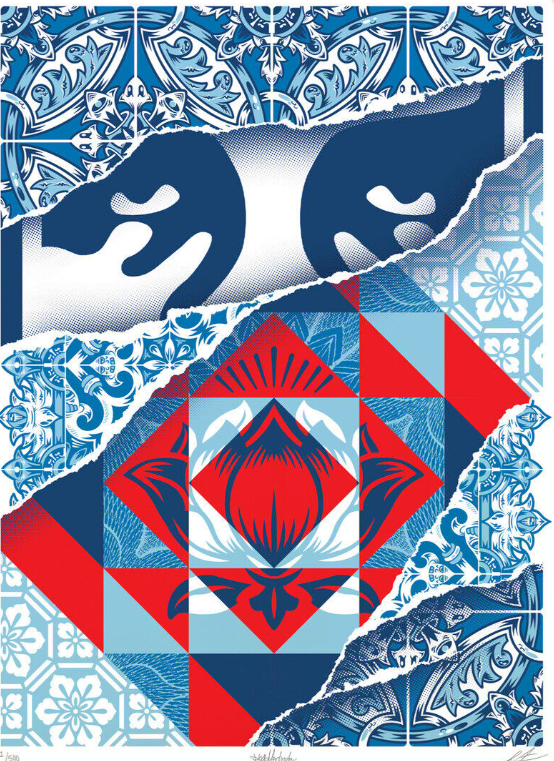
  • Modular Silkscreen Print by Add Fuel x Shepard Fairey- OBEY

    Shepard Fairey- OBEY Modular Silkscreen Print by Add Fuel x Shepard Fairey- OBEY

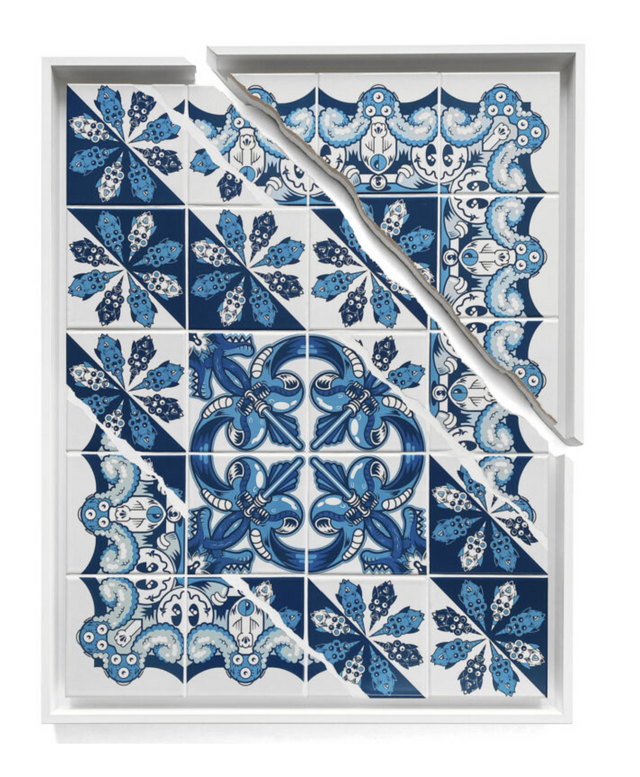
    Modular Silkscreen Print by Add Fuel x Shepard Fairey- OBEY Hand-Pulled on Cream Speckletone Fine Art Paper Limited Edition Artwork Obey Pop Culture Artist. 2022 Signed & Numbered Limited Edition of 500 Artwork Size 18x24 Silkscreen Print "Diogo Machado aka ADD FUEL’s art functions on several levels literally and metaphorically. His pieces master the aesthetics of traditional Portuguese tile work while adding his own playful character illustrations subversively woven into the designs. These two seemingly disparate styles are so elegantly blended together that discovering the oddity within the harmony is both bizarre and joyful. The actual and faux rips ADD FUEL incorporates into his art are more than just a nod to paper, the common material of modern street art, they’re also a provocative bit of visual dissonance since tiles don’t rip. Despite the incongruity of tiles and rips, ADD FUEL’s visually seductive compositions evoke a sense of time passed and a story behind each layer." -Shepard Fairey- OBEY Modular by Add Fuel x Shepard Fairey – Obey Collaborative Silkscreen in Street Pop Art & Graffiti Artwork Modular is a 2022 collaborative silkscreen print created by Portuguese artist Diogo Machado, known as Add Fuel, and American artist Shepard Fairey, the founder of OBEY. Hand-pulled on cream Speckletone fine art paper and released in a signed and numbered limited edition of 500, this 18 x 24 inch artwork exemplifies the synergy between ornamental heritage and contemporary visual resistance. The print layers traditional azulejo tile motifs, signature to Add Fuel’s practice, with Fairey’s distinct iconography and compositional balance. Faux paper rips tear through the layers, revealing dynamic juxtapositions of classic pattern, modern pop abstraction, and a central floral mandala infused with Fairey’s visual politics. The piece vibrates with blue, red, and white tonalities, echoing the dual themes of beauty and disruption at the core of their shared visual vocabulary. Tile Motifs, Illusion, and Layered History Add Fuel’s approach to traditional Portuguese tile work is at once reverent and subversive. By reinterpreting the symmetrical elegance of ceramic motifs with unexpected figures and graphic elements, he modernizes a centuries-old medium while injecting it with conceptual humor and narrative depth. In Modular, the faux rips slice through the precision of the tiles to expose underlying designs, mimicking the distressed layering often found in urban environments. These rips are visual contradictions—tiles do not tear—yet they ground the piece in the material reality of street posters, wheatpastes, and handbills. The effect suggests a story unfolding across time, where aesthetics are built upon each other, scraped away, and reassembled to create a living history. This illusion invites the viewer to peel back their own assumptions about permanence, tradition, and identity. Shepard Fairey’s Integration and Urban Influence Shepard Fairey’s signature influence is woven into the modular structure of the work through the inclusion of bold geometric symbology and red-toned central focal points. Known for his OBEY Giant campaign and the Hope poster for Barack Obama, Fairey brings a sharply honed graphic instinct to this collaboration. His presence in Modular is not dominant but seamlessly integrated, allowing the dialogue between his political design language and Add Fuel’s ornamental fluency to unfold in harmony. The composition carries Fairey’s commitment to layering, repetition, and symbolic forms of power, contributing to the conceptual weight of the piece without overpowering the decorative base. It is a rare fusion of design-minded street art and historic pattern making, emblematic of Fairey’s mission to preserve message within form. Craftsmanship and Concept in Street Pop Art & Graffiti Artwork This silkscreen print was meticulously crafted using multiple layers of ink on Speckletone paper, a choice that echoes the street origins of both artists’ practices while elevating the final result to gallery standards. Modular’s formal tension between classic ornament and pop symbolism makes it a quintessential example of contemporary Street Pop Art & Graffiti Artwork. It reflects an evolving aesthetic where collaboration expands meaning, and where cultural pasts are not preserved in silence but animated through visual intervention. For collectors and viewers, Modular offers a tactile and symbolic experience—a print that holds the precision of tradition and the urgency of the present in perfect contradiction. It stands as a testament to the transformative power of surface, story, and subversion.

    $951.00

Mosaic Graffiti Street Pop Artwork
Mosaic art has been used in various forms of artistic expression for centuries. From ancient Greek and Roman mosaics to modern-day art installations, the use of small tiles or pieces of material to create larger images has been a popular technique. One form of art where mosaic influence can be seen is in graffiti and street art. Graffiti and street art are often seen as subversive and countercultural, but they have also become recognized forms of art that can have a positive impact on the urban landscape. Graffiti and street artists often use a variety of techniques to create their works, and mosaic influence is one that has been gaining popularity in recent years. Mosaic influence in graffiti and street art can be seen in a few different ways. One way is through the use of small tiles or pieces of material, such as glass or ceramic, to create larger images. These pieces can be arranged in a pattern or image to create a larger work of art. This technique is often used in public art installations, where the artist wants to create something that is both visually striking and durable. Another way that mosaic influence can be seen in graffiti and street art is through the use of stencils. Stencils are a popular technique in graffiti and street art, and they can be used to create a variety of images and patterns. Mosaic stencils are a type of stencil that uses small tiles or pieces of material to create an image. These stencils can be used to create a variety of images, from simple geometric shapes to more complex designs. One artist who has been using mosaic influence in his work is the French artist known as Invader. Invader is known for creating works that resemble the pixelated images from old video games. He creates these works using small tiles or pieces of material, which he arranges to create larger images. These images are then affixed to walls and other surfaces using adhesive. Invader's works can be found in cities all over the world, and he has become one of the most recognized street artists in the world. Another artist who has been using mosaic influence in his work is the British artist known as Nick Walker. Walker is known for his stenciled images, which often depict scenes from everyday life. He has also been using mosaic stencils in his work, which he creates by cutting small tiles or pieces of material into the shapes he needs. These stencils are then used to create images that resemble mosaics. Mosaic influence can also be seen in the work of the Brazilian artist known as Kobra. Kobra is known for his large-scale murals, which often depict famous people or scenes from history. He has been using a technique that he calls "reverse graffiti," which involves removing dirt and grime from a surface to create an image. Kobra has been using mosaic influence in his work by creating images that resemble mosaics. He achieves this by removing the dirt and grime in a pattern or image to create a larger work of art. Mosaic influence in graffiti and street art can have a positive impact on the urban landscape. These works of art can help to beautify the city and create a sense of community. They can also serve as a way to promote cultural exchange, as artists from all over the world are creating works that can be seen by people from all walks of life. In conclusion, mosaic influence is a popular technique in graffiti and street art. Artists are using small tiles or pieces of material to create larger works of art, either through the use of stencils or by affixing the pieces directly to a surface. This technique can help to create visually striking works of art that can have a positive impact on the urban landscape. Mosaic influence in graffiti and street art is a trend that is likely to continue to grow in popularity as artists continue to experiment with new techniques and materials. As cities around the world continue to embrace street art as a legitimate form of art, mosaic influence will undoubtedly continue to be seen in new and exciting ways. One of the benefits of using mosaic influence in graffiti and street art is that it allows artists to create works that are both durable and visually stunning. By using small tiles or pieces of material, artists can create works that are less likely to be damaged by the elements or vandalism. This makes them a popular choice for public art installations, as they can withstand the wear and tear of being exposed to the elements. Mosaic influence in graffiti and street art also provides an opportunity for cultural exchange. Artists from all over the world are creating works that can be seen by people from all walks of life. This allows for a sharing of ideas and perspectives that can help to promote understanding and acceptance. Finally, mosaic influence in graffiti and street art can help to create a sense of community. These works of art are often created in public spaces, which means that they can be enjoyed by anyone who happens to be in the area. They can also serve as a way for people to come together and appreciate art, regardless of their background or socioeconomic status.
Footer image

© 2025 Sprayed Paint Art Collection,

    • Amazon
    • American Express
    • Apple Pay
    • Bancontact
    • Diners Club
    • Discover
    • Google Pay
    • iDEAL
    • Mastercard
    • PayPal
    • Shop Pay
    • Visa

    Login

    Forgot your password?

    Don't have an account yet?
    Create account