Nuclear & Nuke

2 artworks

  • The End of the End- Mini HPM Stencil Print by Denial- Daniel Bombardier

    Denial- Daniel Bombardier The End of the End- Mini HPM Stencil Print by Denial- Daniel Bombardier

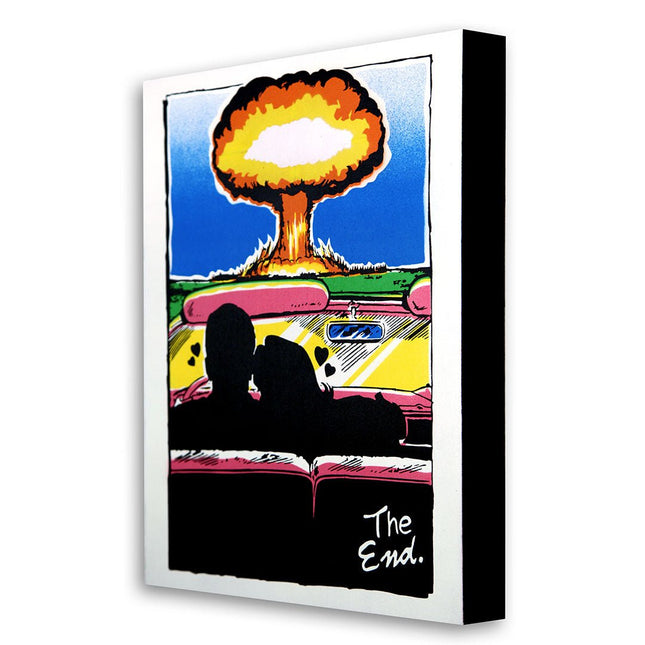
    The End of the End- Mini, Part of the True Facts Mini Multiple Series Original Hand-Painted Multiple (HPM) on Wood Cradled Panel ready to hang by Denial Graffiti Street Artist Modern Pop Art. 2020 Signed & Numbered HPM Limited Edition of 20 Artwork Size 24x36 "My work speaks of impending doom and a lot of crass sinister themes, but that should not mean I desire this to happen at all. I hope my work would suggest only the opposite: to show the ridiculousness of it all and how we may find better solutions for the future." -Denial The End of the End Mini by Denial: Love, Apocalypse, and Satire in Street Pop Art & Graffiti Artwork The End of the End Mini is a 2020 hand-painted multiple by Canadian artist Denial, known for his fusion of satire, iconography, and subversive wit. Created as part of the True Facts Mini Multiple Series, this piece measures 24 x 36 inches and is produced on a wood cradled panel, ready to hang. Each edition in the set is an original HPM—hand-painted multiple—offering unique brushwork and embellishment over a consistent base print. Limited to 20 signed and numbered pieces, the work presents a silhouetted couple locked in a romantic embrace within a car as they overlook a mushroom cloud detonating in the distance. The scene closes with a stylized handwritten caption that simply reads The End, suggesting finality with a mix of tragedy and humor. This darkly comic juxtaposition is a hallmark of Denial’s work, perfectly situated within the visual terrain of Street Pop Art & Graffiti Artwork. Nuclear Romance and Comedic Catastrophe The imagery in The End of the End Mini plays with retro cartoon styling and Cold War era fears, placing symbols of youthful romance—vintage cars, scenic overlooks, date-night silhouettes—alongside the icon of global annihilation: the mushroom cloud. The bomb blast, rendered in vivid oranges and yellows, contrasts with the blue sky and lush green horizon, creating an unnervingly cheerful palette for a scene of planetary extinction. The couple remains indifferent, lost in their affection, suggesting either complete detachment or ironic defiance. In Street Pop Art & Graffiti Artwork, such combinations expose the contradictions in cultural storytelling, where romance and violence are often sold in the same breath. Denial uses this absurd pairing not to promote nihilism, but to provoke reflection on how society trivializes catastrophe through media and myth. Material Detail and Collector Format Each panel is painted on cradled wood, offering dimensionality and presence beyond a flat print. The edges are blacked out to create a framed effect, giving the work an object-like quality suited for both contemporary art installations and personal collections. The base image is screen printed in sharp graphic tones, but each edition is uniquely treated with hand-applied paint, drips, smears, and marks that personalize the piece. This makes every version of The End of the End Mini a singular artwork despite its shared motif. The limited edition of 20 increases its desirability within both pop art and street art collector communities, where originality and scarcity fuel long-term interest. Denial’s Role in Contemporary Satirical Expression Denial, born Daniel Bombardier, is an artist from Windsor, Ontario whose work critiques consumer culture, social absurdity, and media manipulation through a visual language rooted in propaganda design and street aesthetics. With a background in graffiti and billboard alteration, Denial transforms familiar formats—comic strips, advertising, political signage—into layered visual riddles. The End of the End Mini belongs to this ongoing narrative, using humor and horror to illustrate human contradiction. The work doesn’t encourage hopelessness but rather highlights the ridiculous normalization of disaster in pop imagery. It’s a moment frozen in beautiful denial, where intimacy and destruction merge under a blue sky, daring viewers to laugh, gasp, and rethink what they celebrate and what they ignore. In the lexicon of Street Pop Art & Graffiti Artwork, it is a postcard from the absurd future disguised as now.

    $954.00

  • Samiyam The Blind Pig 2011 Silkscreen Print by Jeremy Wheeler

    Jeremy Wheeler Samiyam The Blind Pig 2011 Silkscreen Print by Jeremy Wheeler

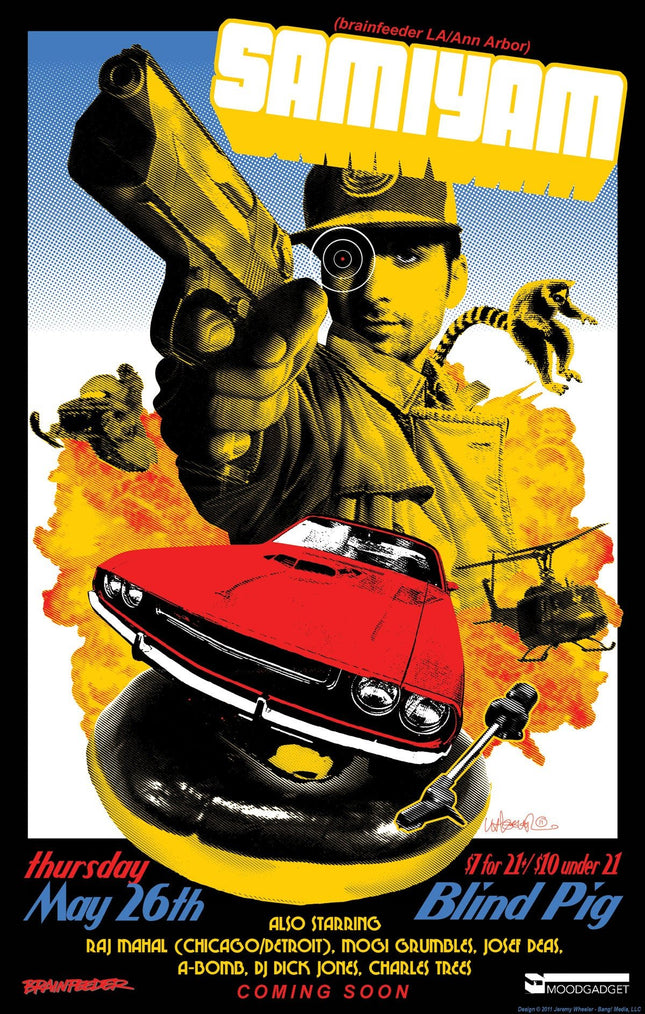
    Samiyam- The Blind Pig 2011 Limited Edition 6-Color Hand-Pulled Silkscreen Print on Fine Art Paper by Jeremy Wheeler Graffiti Street Artist Modern Pop Art. Samiyam, Raj Mahal, Mogi Grumbles, Josef Deas, A Bomb, DJ Dick Jones, Charles Trees at The Blind Pig on May 26th 2011

    $103.00

Nuclear & Nuke
Graffiti art and street art have long been celebrated for their ability to give voice to the voiceless, and their ability to provoke thought and conversation. One topic that has been explored extensively in both graffiti art prints and street art prints is that of nuclear power and weaponry, colloquially referred to as "nukes." This topic has remained relevant and resonant with artists and audiences alike, as nuclear technology continues to shape global politics, environmental concerns, and social anxieties. As such, a wide range of perspectives on nuclear energy and weaponry can be found in this art, illustrating the complexity and nuance of the issue at hand. Graffiti artists have been known to use their craft to convey strong messages related to nuclear power, both in support and in opposition to its use. Some artists focus on the potential benefits of nuclear power, highlighting its ability to provide clean and efficient energy that could revolutionize the world's energy infrastructure. These artworks often feature symbols of progress and innovation, with imagery of glowing atoms and futuristic cityscapes. In these pieces, the artists convey a sense of optimism and hope for a brighter, cleaner future through the adoption of nuclear energy. On the other hand, many graffiti and street art prints explore the darker aspects of nuclear power, focusing on the dangers posed by nuclear weaponry and the potential for catastrophic accidents at nuclear power plants. These works often incorporate powerful images of destruction, such as mushroom clouds, radioactive symbols, and scenes of devastation. The artwork aims to create a sense of urgency and caution in the viewer, stressing the need for responsible and informed decision-making when it comes to the use and proliferation of nuclear technology. One of the most powerful and evocative themes in graffiti and street art prints that tackle the subject of nukes is the concept of mutually assured destruction (MAD). Artists who incorporate this idea into their work aim to emphasize the inherent danger and ultimate futility of the arms race, pointing out that the escalation of nuclear weapon capabilities by one nation only serves to spur other nations to follow suit. This often results in a tense and precarious global balance, with each nation's security resting on the assurance that launching a nuclear attack would be suicidal due to the inevitable retaliation from others. Such works of art typically depict scenes of desolation, emphasizing the horrific consequences of nuclear war and the potential annihilation of humanity. Furthermore, some artists choose to focus on the humanitarian and environmental consequences of nuclear power and weaponry, with an emphasis on the long-lasting effects of radiation on both people and ecosystems. These pieces often draw inspiration from the tragic events of Hiroshima, Nagasaki, Chernobyl, and Fukushima, illustrating the devastating consequences of nuclear accidents and the use of nuclear weapons. In these works, artists attempt to evoke empathy and compassion for the victims of such events and inspire viewers to reflect on the moral and ethical implications of utilizing nuclear technology. Graffiti art prints and street art prints offer a powerful and compelling means for exploring the complexities of nuclear power and weaponry. Through their varied approaches to this controversial subject matter, artists have the ability to convey a range of emotions and ideas, from optimism for a cleaner energy future to cautionary tales of destruction and devastation. By engaging with these works of art, viewers are encouraged to reflect on the immense power and responsibility that come with harnessing nuclear technology and consider the consequences of its use on both a global and human scale.
Footer image

© 2025 Sprayed Paint Art Collection,

    • Amazon
    • American Express
    • Apple Pay
    • Bancontact
    • Diners Club
    • Discover
    • Google Pay
    • iDEAL
    • Mastercard
    • PayPal
    • Shop Pay
    • Visa

    Login

    Forgot your password?

    Don't have an account yet?
    Create account