

Orange
-
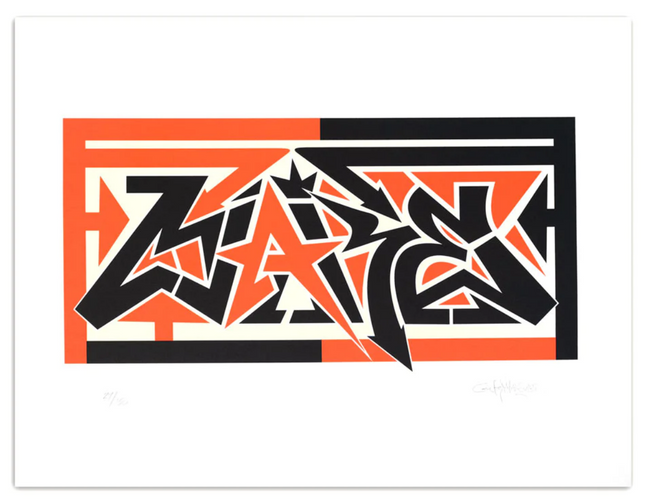
Mare139 Carlos Rodriguez Russian Mare Silkscreen Print by Mare139 Carlos Rodriguez
Russian Mare Silkscreen Print by Mare139 Carlos Rodriguez Hand-Pulled 3-Color on 250gsm Rives BFK Fine Art Paper Limited Edition Artwork. 2022 Signed & Numbered Limited Edition of 150 Artwork Size 25.6x19.7 Silkscreen Print Mare139's Silkscreen Mastery in "Russian Mare" "Russian Mare," a silkscreen print by renowned artist Mare139, also known as Carlos Rodriguez, is a vibrant representation of street pop art and graffiti artwork. Created in 2022, this limited edition print reflects Mare139's deep roots in the street art movement and his seamless transition into the refined art gallery space. Each print in the edition of 150 is hand-pulled, featuring a bold three-color palette on 250gsm Rives BFK fine art paper, known for its smooth texture and durability. The artwork, sized at 25.6x19.7 inches, offers a substantial visual statement that is both impactful and intricate. Innovative Aesthetics in Limited Edition Artwork Rodriguez's "Russian Mare" showcases the distinctive aesthetics that define his work within the graffiti art landscape. The print's dynamic composition, characterized by sharp geometric shapes and a striking contrast of black, white, and orange, captures the movement and energy synonymous with graffiti. The artist's signature, coupled with the numbering of the print, assures collectors of its authenticity and the limited nature of this particular work. The hand-pulled silkscreen process, a meticulous and traditional printmaking technique, further underscores the uniqueness of each piece in the series. Street Pop Art: A Cultural Evolution The term "Street Pop Art," applied to Mare139's "Russian Mare," underscores the fusion of street art's raw, expressive power with the mass appeal and accessibility of pop art. Rodriguez's work is emblematic of this hybrid genre, which honors the rebellious spirit of graffiti while embracing the broader cultural dialogue facilitated by pop art. "Russian Mare," with its abstract representation and vibrant hues, invites viewers to interpret the piece through the lens of contemporary urban culture while appreciating the fine art craftsmanship of silkscreen printing. Collectibility and the Art Market The collectibility of "Russian Mare" is significant in the art market, particularly within Street Pop Art and Graffiti Artwork. The limited edition of 150 makes each print a coveted item for enthusiasts and collectors alike, who value the work's aesthetic, cultural aspects, andestment potential. The choice of Rives BFK fine art paper speaks to a dedication to quality and longevity, ensuring the artwork maintains its visual impact over time. Collectors of Mare139's work can appreciate the depth of his artistic practice, exemplified by the careful selection of materials and the precision of the silkscreen technique. In the narrative of modern art, "Russian Mare" by Mare139 stands as a compelling intersection of street credibility and refined art prestige. The artwork embodies the spirit of the streets while holding a place of distinction in the gallery setting. Rodriguez's ability to translate the vitality of graffiti into a silkscreen print demonstrates the evolving nature of Street Pop Art as a form that bridges disparate artistic worlds. "Russian Mare" is not just a print; it is a statement about the transformative power of art and its ability to resonate across different audiences and environments.
$333.00
-
Takashi Murakami TM/KK Smiley Days with Ms Flower to You! Silkscreen Print by Takashi Murakami TM/KK
Smiley Days with Ms. Flower to You! 8-Color Hand-Pulled Limited Edition Silkscreen Print on Fine Art Paper by Takashi Murakami TM/KK Rare Street Art Famous Pop Artwork Artist. 2020 Signed & Numbered Limited Edition of 100 Artwork Size 19.7x19.7 Rare Takashi Murakami TM/KK Ms. Mr. Rainbow Flower Silkscreen Print Artwork. Small handling bumps to the left/right lower corner, small bump to the upper right corner. Takashi Murakami's Smiley Days with Ms. Flower to You!: Flattened Joy in Pop Art Precision Takashi Murakami’s Smiley Days with Ms. Flower to You! encapsulates his signature blend of cheerful imagery, cultural layering, and ultra-clean graphic execution. Created in 2020 as an 8-color hand-pulled silkscreen print, this limited edition of 100 works stands at 19.7 x 19.7 inches and is signed and numbered by the artist. The artwork features the instantly recognizable flower motif with alternating petal colors and an exaggerated smile across the central face. What appears at first to be a playful, almost childlike symbol of joy is, in Murakami’s visual language, a deeply coded cultural artifact that questions the nature of happiness, identity, and image saturation in the contemporary world. The symmetrical structure and bold outlines suggest cartoon aesthetics, yet Murakami’s execution is far from spontaneous. Every curve, gradient, and color choice is calculated to reinforce a sense of artificial perfection. The smiling flower character, often mistaken for simplistic pop decoration, emerges from a broader lineage of Japanese visual culture—including Edo-period painting, kawaii consumer goods, and the hyper-saturated imagery of anime and manga. By distilling all of these elements into a single figure, Murakami has produced a contemporary symbol that functions across cultures and commercial systems. Superflat Theory and the Deconstruction of Depth Murakami’s Smiley Days with Ms. Flower to You! is a direct application of his Superflat philosophy, which merges traditional Japanese aesthetics with the shallow perspective of digital-age visual consumption. The flatness in this print is not merely stylistic but ideological. It represents a collapse of distinction between fine art and mass media, high culture and consumer object. The lack of depth in the flower’s face, along with the pristine uniformity of the petals, draws attention to how culture packages emotion and sells it as aesthetic surface. Rather than invite introspection through complexity, Murakami’s print bombards the viewer with immediate, digestible visual pleasure. But that sensory overload is deceptive. The flower’s manic grin—framed by perfectly arranged petals in pastel and neon hues—suggests an almost disturbing insistence on happiness. It becomes a symbol not of actual emotional expression but of imposed positivity. The eyes, colored with soft gradients and cartoon sparkle, recall the exaggerated features of anime mascots but also serve as hollow portals in an otherwise flattened identity. Street Pop Art & Graffiti Artwork Rendered with Surgical Cleanliness Though not rooted in traditional graffiti practice, Murakami’s work has been deeply influential in the evolution of Street Pop Art. He merges the visual appeal of mass-produced graphic design with the thematic subversions common in graffiti. The flower motif, while seemingly benign, has appeared on luxury fashion collaborations, vinyl toys, and fine art prints alike, highlighting how symbols circulate between subculture and commerce. Murakami’s deliberate use of commercial channels does not dilute his message—it amplifies it. The print’s pristine execution and wide appeal comment on the mechanisms of art as commodity, without needing to stage rebellion through messiness or illegality. The silkscreen process used in this edition aligns with Murakami’s obsession with perfection. Each color layer is meticulously printed, ensuring consistency and uniform saturation, mimicking the effect of digital art but with the tangible value of a handmade print. This duality—the tactile reality of traditional craft paired with the aesthetics of digital media—reinforces the thematic content of the flower itself: joy as production, identity as design, emotion as product. Murakami’s Smiley Days with Ms. Flower to You! ultimately operates as both a visual balm and a conceptual warning. In Street Pop Art & Graffiti Artwork, surface often holds as much power as meaning, and Murakami leverages that to brilliant, unsettling effect. The flower smiles because it must. Its joy is performative, its beauty standardized—and in that, it holds a mirror to the world that created it.
$4,936.00