




Original Artwork
-
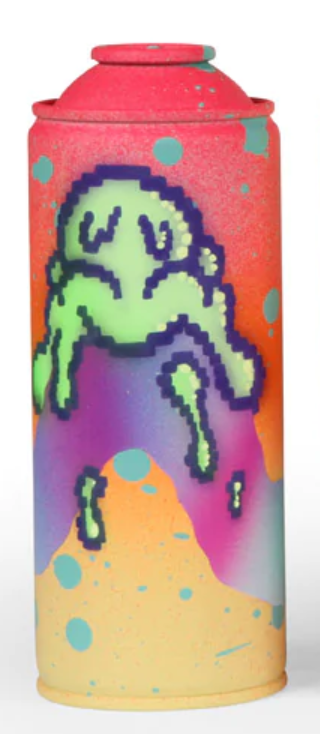
Buff Monster Digital Pistachio Ice Cream Original Spray Paint Can by Buff Monster
Digital Pistachio Ice Cream Original Spray Paint Art Can by Buff Monster Sculpture Artwork by Iconic Pop Culture Modern Artist. 2018 Signed Original Spray Paint Mixed Media Spray Paint Can Painting Artwork Size 3x8 Creative Expression on Unconventional Mediums "Pistachio Ice Cream" by Buff Monster is a vibrant original spray paint art on a can, embodying the playfulness and innovation that marks the artist's contribution to the modern pop culture and street art movement. Created in 2018, this signed original mixed media artwork measures 3x8 inches and is a standout example of how everyday objects can be transformed into works of art. Buff Monster's work is instantly recognizable for its bright, bold colors and motifs that draw inspiration from various sources, including Japanese culture, heavy metal music, and classic ice cream flavors. "Pistachio Ice Cream" is no exception. It features the artist's iconic melty motifs, a signature synonymous with his name. The spray paint can, an instrument often associated with graffiti and street art, serves as the canvas for this piece, further blurring the lines between the tool and the resulting artwork. This playful juxtaposition highlights Buff Monster's ability to see the potential for beauty in the mundane and to repurpose it with a sense of irreverence and joy. Buff Monster's Impact on Street Pop Art & Graffiti Artwork Buff Monster is a pivotal figure in the Street Pop Art and graffiti Artwork genre, consistently pushing the boundaries of how art can be experienced and where it can be found. His work extends beyond the traditional spaces allocated for art, encouraging viewers to see creativity in unexpected places. "Pistachio Ice Cream" is a sculptural piece that captures the essence of street art's spontaneity and pop art's accessibility, creating a direct, intimate, engaging dialogue with the audience. In the landscape of contemporary art, "Pistachio Ice Cream" and similar works by Buff Monster represent a movement that is not afraid to challenge the status quo and to reinvent spaces and objects as platforms for artistic expression. His creations celebrate the street art ethos, embodying the spirit of freedom and the joy of creation. The artwork's size and medium make it a unique collector's item, a tangible piece of the vibrant energy that Buff Monster brings to the art world.
$1,430.00
-

Atomik Hello There Orange Original Spray Paint Art Can by Atomik
Hello There Orange Original Spray Paint Art Can by Atomik Sculpture Drawing Artwork by Iconic Pop Culture Modern Artist. 2025 Signed Original Magic Marker Atomik Orange Smiling Face Reclaimed Spray Paint Can Painting Artwork Size 3x8 Hello There, Orange Original Spray Paint Art Can by Atomik The Hello There Orange Original Spray Paint Art Can by Atomik is a distinct piece of Street Pop Art & Graffiti Artwork that exemplifies the artist’s commitment to transforming ordinary objects into personalized statements of identity and expression. Created in 2025 and signed by the artist, this artwork is drawn directly on a reclaimed spray paint can using a magic marker. The work features the iconic grinning orange face that has become synonymous with Atomik’s visual language. With bold black linework over a used Montana spray can, the piece merges the raw energy of graffiti materials with the intimate immediacy of a hand-drawn illustration. Atomik’s instantly recognizable orange face peeks forward with oversized, cartoonish eyes and a mischievous smile, encapsulating the spirit of his Miami-based street art heritage. Reclaiming the Tools of Expression as Art Objects Spray paint cans are a staple in graffiti and street art culture. They are tools of resistance, freedom, and self-expression. Atomik’s decision to turn a spray can into the canvas itself reflects a deeper ethos in Street Pop Art & Graffiti Artwork. Rather than discarding the medium once emptied, he reclaims it—transforming the functional into the collectible. The resulting artwork stands as both an homage to graffiti’s tactile process and a rebellion against traditional notions of fine art. Every dent, scratch, and warning label on the can becomes part of the finished aesthetic, grounding the orange character in the lived reality of street-level artmaking. This practice not only preserves a piece of graffiti history but recasts it as a standalone object worthy of admiration and discourse. The Smiling Orange and the Miami Identity The smiling orange has its roots in Atomik’s personal response to the demolition of Miami’s beloved Orange Bowl stadium, a landmark of civic pride. Atomik reimagined the orange as a graffiti character that pays tribute while asserting a uniquely Floridian flavor. Over the years, it has appeared on freight trains, abandoned buildings, and murals, becoming one of the most widely recognized characters in contemporary graffiti. On this specific spray paint can, the orange floats in contrast against a sea of fine print, warnings, and hazard symbols. This juxtaposition of regulatory text and unruly character speaks to the tension between control and freedom, legality and expression. It also reflects the artist’s ongoing commentary on reclaiming space and materials for cultural storytelling. Graffiti as Sculpture and Collectible Commentary This hand-drawn reclaimed can is not only a visual piece but a sculptural one. The cylindrical form allows the artwork to live in three dimensions, giving viewers the opportunity to see how street art evolves when it enters a more permanent and collectible format. Unlike traditional canvas or digital prints, the use of the spray can physically and conceptually connects the viewer to the graffiti process. Atomik’s signature on the base further authenticates the piece, anchoring it in his artistic lineage and practice. As Street Pop Art & Graffiti Artwork continues to push boundaries, works like the Hello There Orange Spray Can stand at the forefront, showing that even a once-discarded object can become a celebrated artifact when touched by the right artist’s hand.
$225.00
-
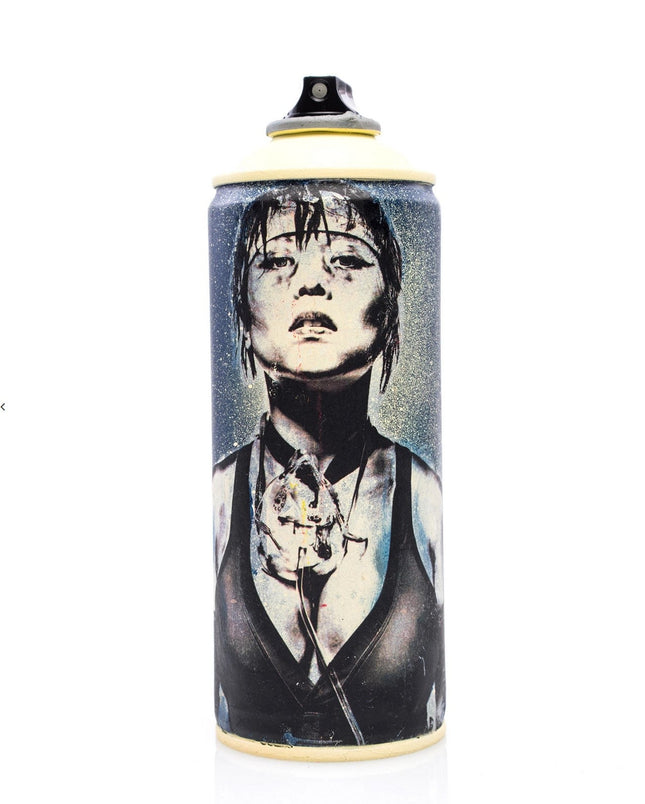
Eddie Colla Salvage Can 10 Original Spray Paint Can Sculpture Painting Eddie Colla
Salvage Can 10 Original Painting on Spray Paint Can Mixed Media Sculpture Artwork by street artist graffiti legend Eddie Colla. 2018 Signed Original Spray Paint Acrylic Mixed Media on Spray Paint Can Artwork Size 3x8 "I made this series of cans in China in 2018. I had been waiting for supplies to start working on larger pieces. The residency where I was had kept all their empty spray cans. I started making these small pieces from the used spray cans. It wasn't anything I planned; I just had an unexpected amount of free time waiting for my materials to arrive, so I worked with what was available. Each can is signed and dated on the bottom of the can." -Eddie Colla. Eddie Colla's Artistic Practice Eddie Colla's "Salvage Can 10" is a compelling piece that reflects the artist's adaptive creativity and resourcefulness, elements that are often at the core of street pop art and graffiti artwork. Created during a residency in China in 2018, this work is part of a series made from used spray paint cans, an example of the artist's ingenuity in repurposing materials at hand to make art. Standing at 3x8 inches, each original mixed media sculpture speaks to the improvisational spirit of street art and the artist's personal narrative. The "Salvage Can" series emerged from waiting for art supplies, showcasing Colla's ability to innovate with available resources. This circumstance led to the transformation of discarded spray cans into a medium for artistic expression. Colla's approach involved using spray paint and acrylics to craft a mixed-media sculpture that conveys a street-wise aesthetic and intricate detail. The fact that each can is signed and dated on the bottom adds authenticity and offers a tangible connection to the artist's engagement with his work. Symbolism and Technique in "Salvage Can 10" Colla's "Salvage Can 10" stands out for its haunting imagery, displaying a contemplative and intense figure. Using a spray can as a canvas is deeply symbolic within the context of graffiti art, signifying both the tool of the trade and the transient nature of the art form itself. The choice to repurpose used cans highlights themes of sustainability and the reclamation of materials, which aligns with the broader ethos of street art's ability to transform and reinvigorate urban environments. Impact on Street Art and Graffiti Culture Eddie Colla is recognized as a significant figure in the street art movement, and his "Salvage Can" series contributes to the rich tapestry of graffiti artwork. By taking an object that is so integral to the creation of street art and making it the subject of the art itself, Colla blurs the lines between tool and artwork, creator and creation. His work serves as a visual statement within the art community and as a physical artifact that embodies the process and environment in which street art is created. Collectibility of Eddie Colla's "Salvage Can" Series For collectors, each "Salvage Can" piece represents a unique slice of Eddie Colla's artistic journey. The series' creation story—borne out of a need to create with limited resources—resonates with the narrative of many street artists who often work with what they have available. This backstory, coupled with the intimate scale of the work, makes each piece desirable for those seeking to own a part of the improvisational and spontaneous energy that defines much of street pop art and graffiti artwork. "Salvage Can 10" encapsulates Eddie Colla's innovative spirit and ability to make profound statements through street art. His choice to work with used spray paint cans during an artist residency illustrates the authentic and impromptu essence that street art is known for. Each signed and original mixed media sculpture from this series is a testament to Colla's role as a graffiti legend and a creative force in contemporary art.
$504.00
-
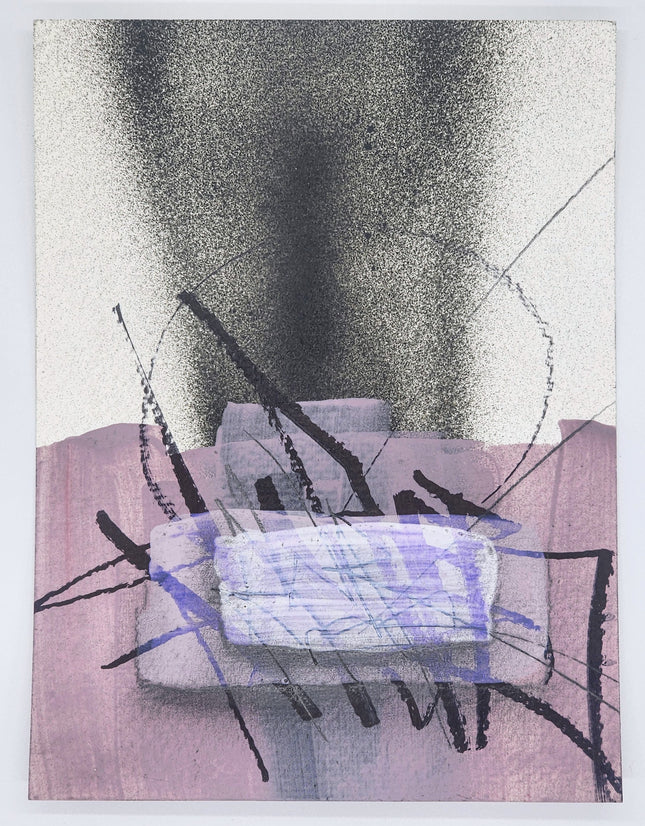
Saber White Washed Purple Tag HPM Unique Marker Artwork by Saber
White Washed Purple Tag HPM Mixed Media Unique by Saber Hand-Painted Marker on Fine Art Paper Graffiti Street Artist Modern Pop Art. 2023 Signed & Numbered Mixed Unique Edition Original Series Edition of 40 HPM Hand-Drawn Mixed Media, Spray Paint, Acrylic Paint, Markers & Permanent Markers Tag Artwork Size 6x8 Mini Drawing on Thick Fine Art Paper. Exploring the Essence of Street Pop Art and Graffiti Artwork Street Pop Art and Graffiti Artwork represent a vibrant and dynamic fusion of underground street culture with pop art's colorful and bold aspects. This unique blend has emerged as a significant movement within the contemporary art scene, capturing the essence of urban life and its pulsating energy. The movement is characterized by its rebellious spirit, often breaking free from the constraints of traditional art forms and expressing a raw, unfiltered view of society. White Washed Purple Tag HPM Mixed Media Unique by Saber The piece titled "White Washed Purple Tag HPM Mixed Media Unique" by the artist Saber is a quintessential example of this art form. Saber, a renowned American graffiti artist, Ryan Weston Shook, has played a pivotal role in bringing graffiti and street art into the gallery space. Born in 1976, Saber remains an influential figure in the street art community, known for his distinctive style that often features a dynamic use of color, bold tags, and an edgy aesthetic that resonates with the ethos of street culture. The artwork itself is a hand-painted marker on fine art paper that exudes street art's raw energy and spontaneity. The mixed media piece is part of a unique original series comprising an edition of 40 hand-drawn mixed media works. Saber's use of spray paint, acrylic paint, markers, and permanent markers culminates in an artwork that is visually striking and tactile in its layered application of materials. The piece's dimensions, a modest 6x8, may seem small, but the impact of the artwork is substantial. The compact size encapsulates the immediacy of graffiti art, where space is often at a premium, and artists must convey their message concisely and powerfully. The thick fine art paper serves as a testament to the durability and permanence of the art form, much like the walls that bear the weight of urban storytelling. Artistic Significance and Cultural Impact Saber's "White Washed Purple Tag" is a testament to the cultural impact of street pop art and graffiti artwork. By taking the art from the alleys and train cars onto fine art paper, the artist has elevated the perception of graffiti, allowing it to be appreciated as a form of social commentary and as a legitimate and sophisticated art form. The mixed media aspect of the piece showcases the versatility and innovativeness of street artists, who often have to adapt to various environments and use available materials. The technique of whitewashing, often used by city authorities to cover up graffiti, is reappropriated in this piece to serve as a canvas, creating a stark contrast with the vibrant purple tag. This reclamation symbolizes street artists' struggle in their quest for recognition and the right to public space. The purple tag, a signature of Saber's work, is not merely a name but a statement of identity, a bold declaration of existence in a constantly changing and evolving world. In the context of modern pop art, Saber's work is a bridge between street culture and high art, reflecting the changing attitudes towards what is considered valuable and worthy of attention in the art world. His works are collected and admired for their aesthetic appeal and their ability to capture the zeitgeist of an increasingly urbanized, digitized, and diverse generation. The presence of this piece within the collection of mixed media works serves as a reminder of the transformative power of art. It celebrates individuality and creativity, encouraging viewers to look beyond the surface and find beauty in the messages and stories often overlooked or dismissed. The "White Washed Purple Tag HPM Mixed Media Unique" is not just an artwork; it is a piece of cultural history, a slice of urban life, and a beacon of artistic rebellion.
$109.00
-
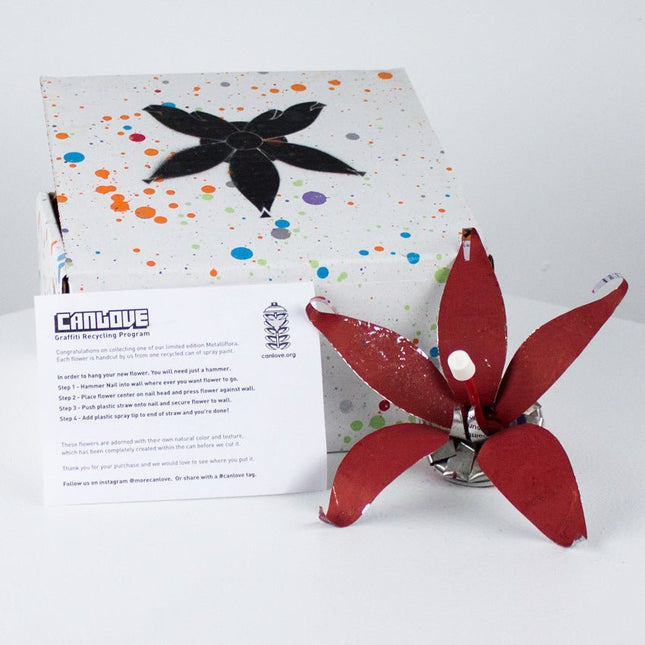
Canlove Sexphyllum Classicum #14 Original Recycled Spray Paint Can Sculpture by Canlove
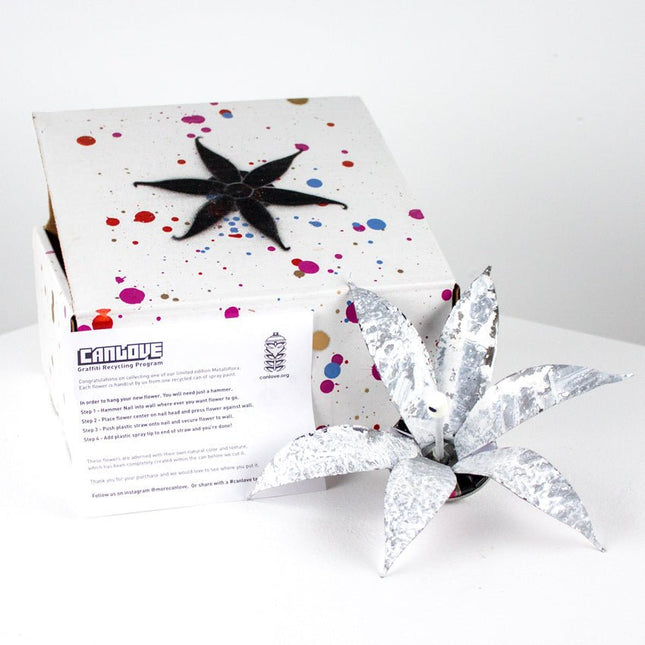
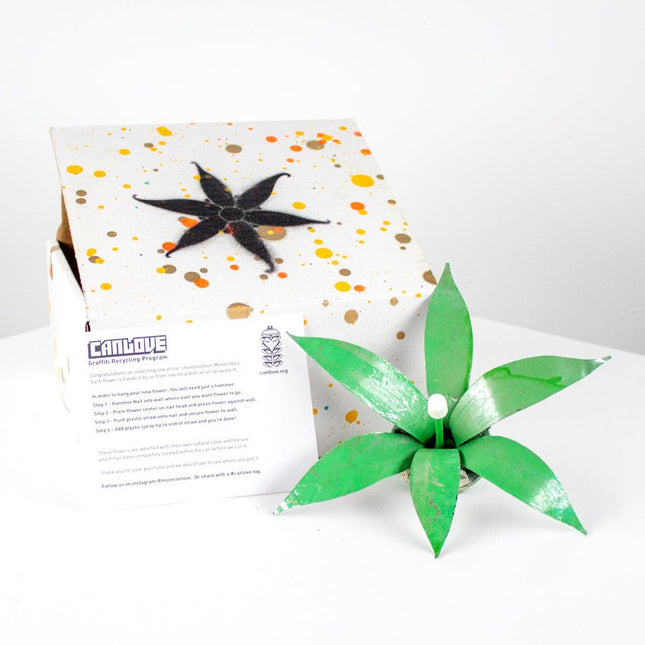
Sexphyllum Classicum #14 Original 100% Recycled, Hand Cut Iron Lak Aerosol Paint Can Sculpture Artwork by graffiti street artist modern pop artist Canlove. 2015 Signed Original Mixed Media Spray Paint Can Paint Displayed With Custom Box Sculpture Artwork Size 8x8 Ready To Hang on Wall "We dubbed these flower creations Metaliflora and we’ve been experimenting with different shapes and forms for a few years. We challenged ourselves to create the greatest and most efficient use of one recycled spray paint can. The flower bloomed naturally. This series is partially about us returning to our roots. When we started cutting these flowers we wouldn’t paint them as we often do now. We’ve been venturing into this raw approach with some of our other work. It feels right to introduce it with this series as well.The can popping process always produces a unique pattern inside the can because as the marble moves around inside it leaves its tracks on the wet paint. Each flower is cut by hand and no two flowers are exactly alike. Each one is completely unique. And every box we shipped had a custom paint job." - Canlove
$201.00
-

Woes Martin Woebot Japanese Water Color Sketch Original Drawing by Woes Martin
Woebot Japanese Water Color Sketch Original Drawing by Woes Martin on Fine Art Paper Modern Street Pop Artwork. 2023 Signed Original Watercolor Paint and Pen Drawing Size 6x8 Woebot: Japanese Watercolor Sketch by Woes Martin Woebot, a 2023 original watercolor and pen drawing by Woes Martin, captures the distinct blending of modern street pop art and graffiti culture with a traditional fine art approach. The piece, measuring 6x8 inches, is rendered on fine art paper, giving it both an intimate scale and an elegant presentation. Known for his stylized, bear-like characters often referred to as "Woebots," Woes Martin has established himself as a significant figure in the street art world, particularly for his ability to blend graffiti techniques with a softer, more traditional artistic aesthetic. The Evolution of Woes Martin's Woebot in Street Pop Art Woes Martin, an American-born artist with deep ties to both Hawaiian and global street art culture, has been developing his iconic Woebot characters for many years. These characters, often depicted as large, lumbering bear-like creatures, evoke a range of emotions, from fierce aggression to deep melancholy. In Woebot, the watercolor sketch offers a softer, more contemplative side to the character, highlighting Woes Martin’s versatility as an artist. The Woebot is a staple in Woes’ body of work, acting as a bridge between the emotional rawness often associated with street art and the accessibility of pop culture. In this particular sketch, the Woebot is drawn with minimal line work, using soft brushstrokes and delicate shading. The watercolor medium gives the piece a loose, fluid quality, allowing the Woebot to appear both detailed and abstract at the same time. This approach is characteristic of Woes Martin’s ability to play with different forms of media and create art that feels simultaneously ephemeral and bold. In the world of street pop art and graffiti artwork, the repetition of characters like Woebot holds significance. Similar to how iconic graffiti tags become synonymous with an artist’s identity, Woes’ characters serve as a personal mark, leaving an impression that goes beyond the canvas or wall. The Woebot character is a reflection of both the artist’s emotional state and the larger emotional palette of human experience, depicted through the lens of street art aesthetics. Japanese Watercolor and Pen: A Unique Medium for Street Art While Woes Martin is often associated with bold graffiti murals and street art, the use of Japanese watercolor and pen in Woebot demonstrates the artist’s range and adaptability. Watercolor, traditionally seen as a delicate and refined medium, contrasts with the gritty, urban connotations of graffiti. Yet, in this piece, Woes expertly marries the two, using the fluidity of watercolor to create a sense of movement and depth within the Woebot figure, while the pen adds a crispness and definition to the sketch. The subtlety of the watercolor medium in this work allows Woes Martin to explore the more tender, vulnerable aspects of his characters. While his larger murals often depict Woebots in powerful, aggressive poses, this small-scale watercolor sketch presents the character in a more introspective light. The soft washes of color give the Woebot an almost ghostly appearance, as if it is emerging from or disappearing into the paper. The minimalistic approach of the piece reinforces the emotional weight that the Woebot carries, making the viewer focus on the expressions and posture of the character, rather than the elaborate details often found in larger street art pieces. Street Pop Art Meets Fine Art Paper One of the most striking aspects of Woebot is the use of fine art paper as the medium’s surface. Fine art paper, often associated with classical painting and drawing, contrasts with the urban, raw surfaces typically used in street pop art and graffiti. By choosing fine art paper for this work, Woes Martin brings the world of graffiti into the domain of traditional fine art. This creates a juxtaposition between the refined and the rebellious, the formal and the informal. The choice of paper also enhances the texture of the piece, as watercolor tends to interact with fine art paper in unique ways. The way the paint soaks into the paper, leaving behind soft, organic edges, contrasts with the sharp, deliberate pen strokes. This creates a tension between precision and spontaneity, which is central to much of Woes Martin’s work. As in graffiti, where speed and improvisation are key, this sketch demonstrates Woes’ ability to work quickly while still maintaining control over the final image. In the context of street pop art, the choice of fine art materials like watercolor and paper elevates the form, suggesting that the aesthetic value of graffiti and street art should be considered on par with more traditional art forms. By using these materials, Woes Martin challenges the boundaries between high art and street culture, inviting the viewer to reconsider what constitutes “fine art” and how street culture can be represented in such a space. Emotional Depth and Character in Graffiti Artwork The emotional depth of Woes Martin’s work is what sets him apart in the world of graffiti and street pop art. While many graffiti artists focus on tags or abstract forms, Woes’ focus on character design allows him to explore more complex emotional narratives. The Woebot character, in its various forms, acts as a surrogate for the artist’s emotions, as well as a reflection of the viewer’s own emotional experiences. In this 2023 sketch, the Woebot’s expression and body language suggest feelings of contemplation or sadness, contrasting with the aggressive energy often associated with street art. The composition of the piece also speaks to Woes Martin’s mastery of form and space. Despite the small size of the sketch, the Woebot figure dominates the page, its large, rounded shapes taking up most of the space. This gives the character a sense of weight and presence, despite the minimalist nature of the drawing. The viewer is drawn into the Woebot’s world, invited to empathize with its quiet, reflective mood. Ultimately, Woebot is a powerful example of how street pop art can convey deep emotional truths through simple, yet effective, imagery. Woes Martin’s combination of graffiti-inspired line work, Japanese watercolor techniques, and fine art materials creates a unique visual language that speaks to the evolving nature of street art. As the boundaries between street art and fine art continue to blur, artists like Woes Martin are at the forefront of pushing these genres forward, showing that street pop art can be as emotionally resonant and technically skilled as any traditional form of art. In conclusion, Woebot is a testament to Woes Martin’s ability to bring the raw energy of street pop art into the more refined realm of fine art, while maintaining the emotional depth and character-driven focus that has made him a standout in the graffiti world.
$298.00
-
Canlove Quinqueflor Mordida #11 Original Recycled Spray Paint Can Sculpture by Canlove
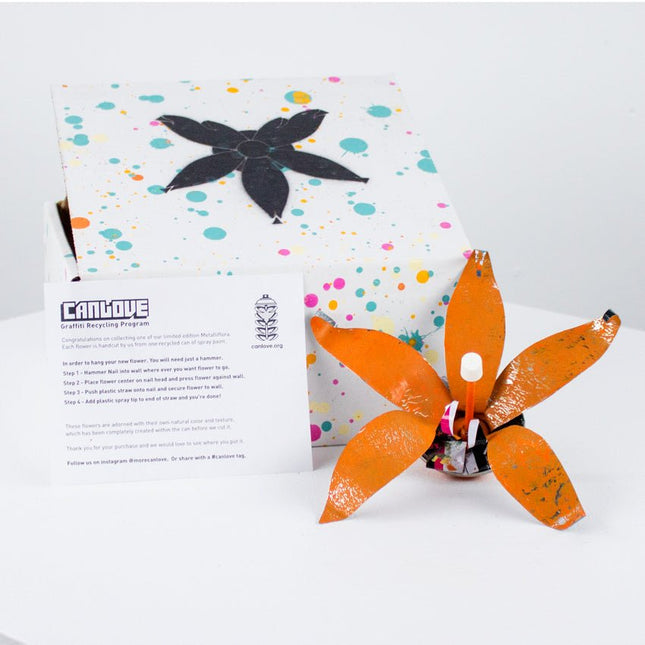
Quinqueflor Mordida #11 Original 100% Recycled, Hand Cut Iron Lak Aerosol Paint Can Sculpture Artwork by graffiti street artist modern pop artist Canlove. 2015 Signed Original Mixed Media Spray Paint Can Paint Displayed With Custom Box Sculpture Artwork Size 8x8 Ready To Hang on Wall "We dubbed these flower creations Metaliflora and we’ve been experimenting with different shapes and forms for a few years. We challenged ourselves to create the greatest and most efficient use of one recycled spray paint can. The flower bloomed naturally. This series is partially about us returning to our roots. When we started cutting these flowers we wouldn’t paint them as we often do now. We’ve been venturing into this raw approach with some of our other work. It feels right to introduce it with this series as well.The can popping process always produces a unique pattern inside the can because as the marble moves around inside it leaves its tracks on the wet paint. Each flower is cut by hand and no two flowers are exactly alike. Each one is completely unique. And every box we shipped had a custom paint job." - Canlove
$201.00
-
Canlove Quinqueflor Mordida #04 Original Recycled Spray Paint Can Sculpture by Canlove
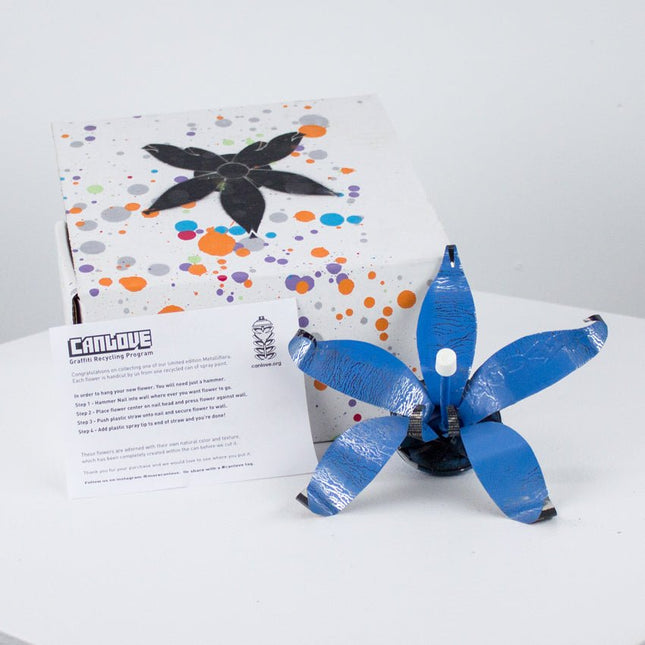
Quinqueflor Mordida #04 Original 100% Recycled, Hand Cut Iron Lak Aerosol Paint Can Sculpture Artwork by graffiti street artist modern pop artist Canlove. 2015 Signed Original Mixed Media Spray Paint Can Paint Displayed With Custom Box Sculpture Artwork Size 8x8 Ready To Hang on Wall "We dubbed these flower creations Metaliflora and we’ve been experimenting with different shapes and forms for a few years. We challenged ourselves to create the greatest and most efficient use of one recycled spray paint can. The flower bloomed naturally. This series is partially about us returning to our roots. When we started cutting these flowers we wouldn’t paint them as we often do now. We’ve been venturing into this raw approach with some of our other work. It feels right to introduce it with this series as well.The can popping process always produces a unique pattern inside the can because as the marble moves around inside it leaves its tracks on the wet paint. Each flower is cut by hand and no two flowers are exactly alike. Each one is completely unique. And every box we shipped had a custom paint job." - Canlove
$201.00
-
Woes Martin Japanese Water Color Brush Pen Sketch H4 Original Drawing by Woes Martin
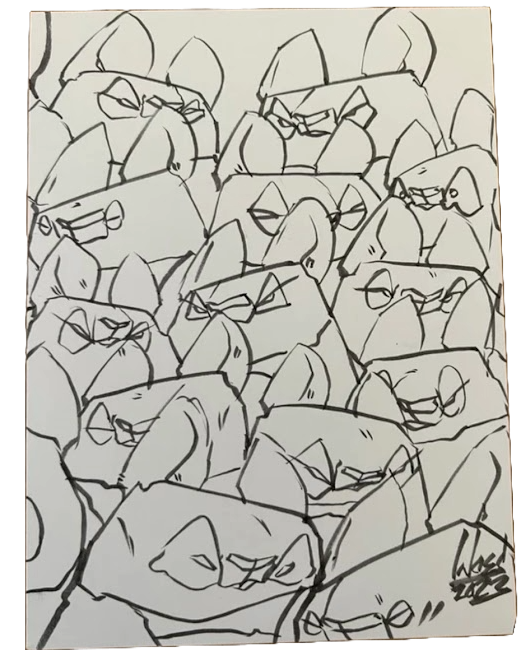
Japanese Water Color Brush Pen Sketch H4 Original Drawing by Woes Martin on Fine Art Paper Modern Street Pop Artwork. 2023 Signed Original Watercolor Paint and Pen Drawing Size 6x8 Woes Martin Japanese Water Color Brush Pen Sketch H4 Original Drawing Japanese Water Color Brush Pen Sketch H4 is a 2023 signed original drawing by modern street pop artist Woes Martin. Measuring 6 x 8 inches and executed on fine art paper, this one-of-a-kind work combines watercolor and expressive brush pen linework. As an original piece, it offers collectors a direct and unfiltered example of the artist’s hand and evolving character studies. Layered Character Repetition in Raw Linework The composition is densely packed with overlapping, angular character faces rendered in confident black brush strokes. Each form is simplified yet distinct, with sharp geometric features, narrowed eyes, and exaggerated contours that convey attitude and personality. The repetition creates visual rhythm, almost like a crowd pressing forward, while subtle variations in expression prevent the pattern from feeling mechanical. The minimal color palette places emphasis on gesture and structure. The brush pen lines shift in thickness and pressure, revealing the immediacy of the artist’s movement. The absence of heavy color or shading enhances the sketch-like quality, highlighting the foundational elements of Woes Martin’s street-influenced visual language. Signed 2023 Original Street Pop Artwork Signed and dated 2023, this 6 x 8 inch original watercolor and pen drawing stands as a unique collectible within Woes Martin’s body of work. Small-format originals like H4 often showcase experimentation, spontaneity, and core character development that later informs larger works and editioned prints. Blending graffiti sensibility with refined draftsmanship, Japanese Water Color Brush Pen Sketch H4 captures the energy of contemporary street pop art in its most immediate form.
$298.00
-
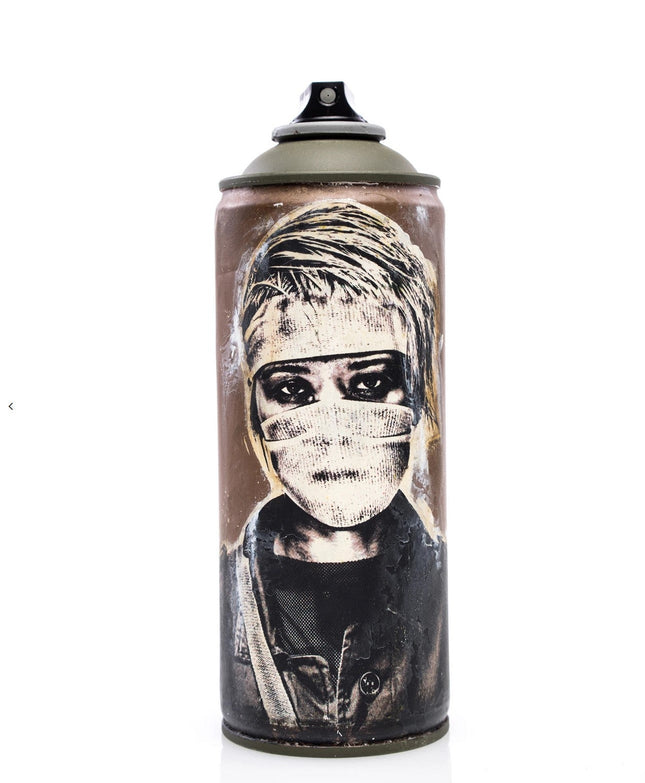
Eddie Colla Salvage Can 3 Original Spray Paint Can Sculpture Painting Eddie Colla
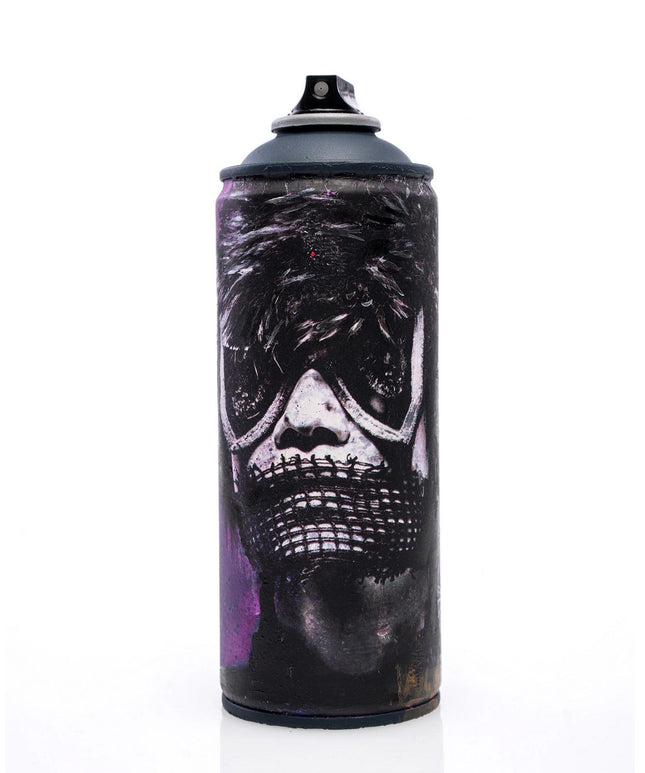
Salvage Can 3 Original Painting on Spray Paint Can Mixed Media Sculpture Artwork by street artist graffiti legend Eddie Colla. 2018 Signed Original Spray Paint Acrylic Mixed Media on Spray Paint Can Artwork Size 3x8 "I made this series of cans in China in 2018. I had been waiting for supplies to start working on larger pieces. The residency where I was had kept all their empty spray cans. I started making these small pieces from the used spray cans. It wasn't anything I planned; I just had an unexpected amount of free time waiting for my materials to arrive, so I worked with what was available. Each can is signed and dated on the bottom of the can." -Eddie Colla. Eddie Colla's Creative Philosophy "Salvage Can 3" by Eddie Colla is a striking mixed-media sculpture that exemplifies the innovative nature of street pop art and graffiti artwork. Created in 2018 as part of a series during a residency in China, this artwork represents a unique fusion of spontaneity and intentionality that defines Colla's approach to art. Utilizing discarded spray paint cans as his canvas, Colla transformed these objects into thought-provoking artworks, each signed and dated, capturing his signature style and commentary on contemporary issues. In the "Salvage Can" series, Eddie Colla embraced the unexpected interlude in his creative process to produce a series that reflects a core principle of street art: the ability to create with whatever materials. "Salvage Can 3" manifests Colla's resourcefulness and artistic agility. This series speaks to the essence of street art's improvisational nature, with Colla repurposing the used spray cans from his residency to craft pieces that stand as a testament to the transformative power of art. Artistic Expression in "Salvage Can 3" The visual language of "Salvage Can 3" communicates a poignant narrative. The figure depicted on the can, partially obscured by what appears to be a mask, invites viewers to ponder themes of identity, concealment, and the human condition in the modern world. Using spray paint and acrylic, traditional mediums in graffiti artwork, on an unconventional substrate highlights Colla's skills in mixed media and his ability to push the boundaries of street pop art. Cultural Impact of Eddie Colla's Work Eddie Colla is not merely a street artist but a cultural commentator whose works resonate with a global audience. "Salvage Can 3," like the rest of the series, is more than an object of visual intrigue; it is a commentary on the times and an expression of individuality amidst collective narratives. Colla's work is renowned for its critical engagement with socio-political themes, and this piece is no exception. It is a cultural artifact that challenges viewers to question and reflect, embodying the rebellious spirit that often characterizes graffiti art. Significance in the Art Market The collectible nature of "Salvage Can 3" lies in its unique origin story and the reputation of Eddie Colla as a graffiti legend. Each can be individual, marked by Colla's hand and signature, and carries the story of its creation—making it a coveted item for street art collectors. These pieces occupy a special place in the art market, bridging the gap between temporary street murals and enduring art collectibles. "Salvage Can 3" is not just a mixed media sculpture; it is a piece of the ongoing narrative of street pop art and its evolution in the contemporary art scene. "Salvage Can 3" profoundly reflects Eddie Colla's ability to capture the ethos of street pop art and graffiti artwork within a singular object. Through his innovative use of materials and poignant visual storytelling, Colla continues to influence and define the street art genre. This work stands as a reminder of the power of art to adapt and thrive, even in unexpected places and forms, resonating with a universal audience and cementing Colla's status as a pivotal figure in the world of art.
$504.00
-
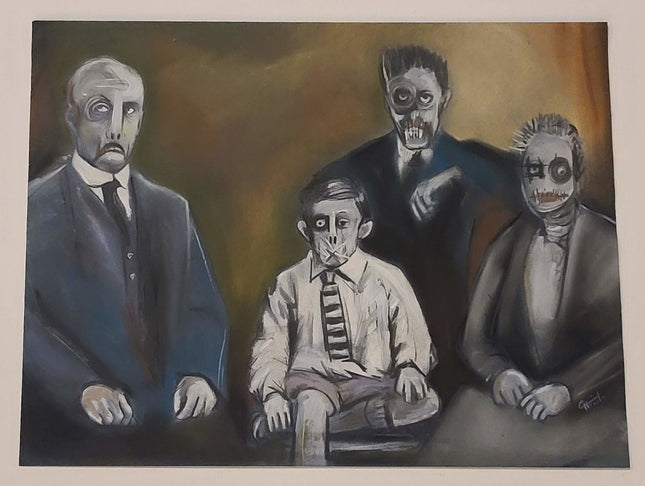
Christabel Christo Perfect Family Original Drawing by Christabel Christo
Perfect Family One of a Kind Original Pastel Graphite Drawing Artwork on Paper by Popular Street Graffiti Artist Christabel Christo. Signed 2010 10.5x8 Perfect Family Original Drawing by Christabel Christo
$323.00
-
Canlove Quinqueflor Mordida #09 Original Recycled Spray Paint Can Sculpture by Canlove
Quinqueflor Mordida #09 Original 100% Recycled, Hand Cut Iron Lak Aerosol Paint Can Sculpture Artwork by graffiti street artist modern pop artist Canlove. 2015 Signed Original Mixed Media Spray Paint Can Paint Displayed With Custom Box Sculpture Artwork Size 8x8 Ready To Hang on Wall "We dubbed these flower creations Metaliflora and we’ve been experimenting with different shapes and forms for a few years. We challenged ourselves to create the greatest and most efficient use of one recycled spray paint can. The flower bloomed naturally. This series is partially about us returning to our roots. When we started cutting these flowers we wouldn’t paint them as we often do now. We’ve been venturing into this raw approach with some of our other work. It feels right to introduce it with this series as well.The can popping process always produces a unique pattern inside the can because as the marble moves around inside it leaves its tracks on the wet paint. Each flower is cut by hand and no two flowers are exactly alike. Each one is completely unique. And every box we shipped had a custom paint job." - Canlove
$201.00
-

RIFF 170 Toronto Subway Map Yellow Original Spray Paint Painting by RIFF 170
Toronto Subway Map Yellow Original Spray Paint Painting by RIFF 170 One of a Kind Artwork on Reclaimed Canadian Subway Train Map by Street Art Pop Artist. 2021 Toronto Canada Subway System Map Signed Spray Paint Painting Original Artwork Size 16x8 Toronto Subway Map Yellow by RIFF 170 – Original Spray Paint Artwork in Street Pop Art & Graffiti Artwork Toronto Subway Map Yellow is a 2021 original spray paint artwork by pioneering graffiti artist RIFF 170, executed on an authentic reclaimed Canadian subway system map. Measuring 16 x 8 inches, this one-of-a-kind piece merges urban navigation with handstyle authority, marking a transnational moment in graffiti’s story where the New York originator imprints his legacy onto Toronto’s metropolitan layout. Using bold, freehanded spray techniques, RIFF 170 tags his iconic name—RIFF—across the map in large, towering block letters. Each letter is filled with textured, speckled fades in earthy browns and shadowy blues, while a vibrant yellow glow surrounds the form, acting like a halo of motion and noise. The style evokes the golden era of train writing while repurposing a static, informational object into a living, expressive surface. The transformation of this utilitarian subway map into a graffiti-stained relic turns the piece into both artwork and document—an artifact of place, travel, and aerosol mastery. Graffiti Legacy Across Borders RIFF 170 stands among the foundational figures of American graffiti. Rising through the ranks of New York’s early train bombers in the 1970s, his work helped set the blueprint for stylized lettering, color fill, and cartoon influence that would later dominate graffiti globally. In Toronto Subway Map Yellow, he brings that raw, original lineage to a Canadian context—layering a piece of Canada’s urban fabric with New York’s iconic name writing legacy. This transposition creates a visual dialogue between two major metropolitan systems, linking the experience of subway transit with the presence of graffiti as commentary, imprint, and movement. The Canadian map becomes a canvas of resistance, redefined by a writer whose name has crossed decades and borders without ever fading from relevance. Color, Texture, and the Use of Found Materials The piece’s color choices are purposeful and powerful. The central fill of each letter uses a burnt umber tone reminiscent of rusted steel, decay, and the surfaces of train cars after years of layering. Speckles of spray across the fill simulate grime and motion, creating a sense of depth and texture that evokes train yards and subway tunnels. The yellow outline glows like flashing signal lights, giving the letters a sense of urgency and highlighting their vibrancy against the dense layout of Toronto’s transit system. RIFF 170’s decision to paint over a subway map reinforces the graffiti tradition of using found, ephemeral materials—turning the everyday object of navigation into a symbol of movement with visual attitude. Street Pop Art & Graffiti Artwork in Real Time Toronto Subway Map Yellow stands as a contemporary example of Street Pop Art & Graffiti Artwork at its most raw and honest. It takes a relic of public infrastructure and reclaims it as a message board, infusing the geography of Toronto with the iconic name of a Bronx legend. In doing so, RIFF 170 asserts graffiti’s relevance not just in the past but in the ongoing redefinition of urban art. This piece is as much about location as it is about identity—about the places that shape movement and the names that mark those spaces. RIFF’s classic, drippy outline and all-caps declaration carries the weight of history with the energy of now. It is an emblem of cross-border style, executed with spray, signed with legacy, and placed into the map of modern graffiti culture.
$750.00
-
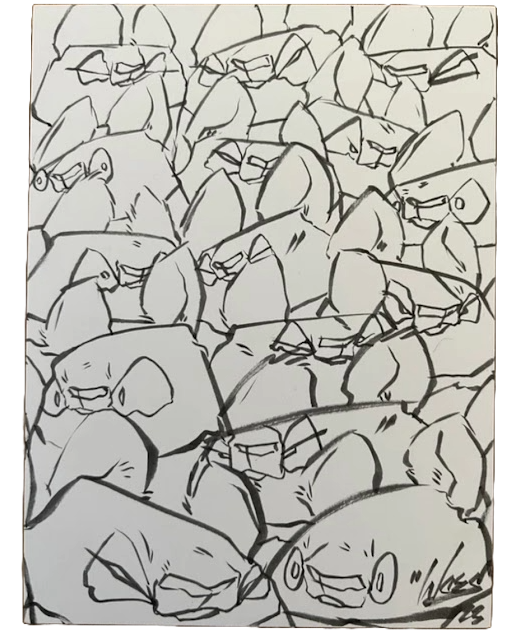
Woes Martin Japanese Water Color Brush Pen Sketch G1 Original Drawing by Woes Martin
Japanese Water Color Brush Pen Sketch G1 Original Drawing by Woes Martin on Fine Art Paper Modern Street Pop Artwork. 2023 Signed Original Watercolor Paint and Pen Drawing Size 6x8 Woes Martin Japanese Water Color Brush Pen Sketch G1 Original Drawing Japanese Water Color Brush Pen Sketch G1 is a 2023 signed original drawing by contemporary street pop artist Woes Martin. Executed on fine art paper using watercolor and brush pen, this one-of-a-kind piece showcases the artist’s raw hand style and character-driven visual language. As an original work, it stands apart from editioned prints, offering a direct glimpse into Woes Martin’s creative process. Repetition, Linework, and Character Study The composition features a dense field of repeated character forms rendered in expressive black brush pen linework. Each figure appears crouched and compact, simplified into bold outlines with subtle variations in posture and facial expression. The overlapping arrangement creates rhythm and movement across the surface, almost like a living pattern or animated texture. The minimal palette—primarily monochrome line on paper—highlights the immediacy of the drawing. Loose strokes, pressure shifts, and layered contours reveal the spontaneity of the brush pen technique. Rather than relying on color or embellishment, Woes Martin emphasizes form, repetition, and gesture, allowing the characters’ silhouettes to carry the visual weight. Original Contemporary Street Pop Artwork As a signed 2023 original watercolor and pen drawing, Japanese Water Color Brush Pen Sketch G1 represents a unique collectible within Woes Martin’s body of work. Original works on paper often provide insight into an artist’s foundational style—unfiltered by large-scale production or editioning. Blending graffiti-influenced character design with refined draftsmanship, this piece embodies the intersection of street culture energy and contemporary pop minimalism.
$298.00
-
Eddie Colla Salvage Can 11 Original Spray Paint Can Sculpture Painting Eddie Colla
Salvage Can 11 Original Painting on Spray Paint Can Mixed Media Sculpture Artwork by street artist graffiti legend Eddie Colla. 2018 Signed Original Spray Paint Acrylic Mixed Media on Spray Paint Can Artwork Size 3x8 "I made this series of cans in China in 2018. I had been waiting for supplies to start working on larger pieces. The residency where I was had kept all their empty spray cans. I started making these small pieces from the used spray cans. It wasn't anything I planned; I just had an unexpected amount of free time waiting for my materials to arrive, so I worked with what was available. Each can is signed and dated on the bottom of the can." -Eddie Colla Eddie Colla's Innovation in Street Art Eddie Colla's "Salvage Can 11" stands as a powerful statement within the realm of street pop art and graffiti artwork, an original painting on a spray paint can that marries mixed media techniques with the subversive energy of street art. The work is part of a series created in 2018 during a residency in China, a period that Colla describes as marked by an unexpected hiatus, waiting for art supplies, which led to the innovative use of discarded materials to create something unforeseen yet profound. Colla's "Salvage Can 11" is a testament to the spontaneous and adaptive spirit that often drives street art. Faced with a delay in his usual creative process, Colla turned to the empty spray cans available at his residency, transforming them from tools into canvases. This act of reclamation gave new life to the used cans and challenged the perception of value and utility in art materials. The resulting artwork—a signed original piece—is a mixed-media sculpture that encapsulates the essence of graffiti artwork: raw, immediate, and deeply personal. Visual Dynamics of "Salvage Can 11" The visual impact of "Salvage Can 11" is immediate and visceral. The imagery on the can is haunting, with the figure's features suggesting a blend of humanity and mask-like anonymity—a common theme in Colla's work, which often comments on identity and the individual's place within society. Using acrylic and spray paint adds texture and depth, with the stark black and purple hues commanding attention and drawing the viewer into a contemplative dialogue with the piece. Cultural Significance of Eddie Colla's Work Eddie Colla's contribution to street art extends beyond his murals and public installations. He bridges the gap between the street and the collector's space by bringing his art to a tangible, holdable medium like a spray paint can. "Salvage Can 11" embodies the transient nature of street art, while its existence as a preserved object challenges the ephemerality traditionally associated with the form. Colla's work is a reminder that street art is not confined to public spaces but is a dynamic art form that can inhabit and adapt to any context. The Resonance of the "Salvage Can" Series in Art Collecting The "Salvage Can" series holds a special place in the art collection. Each can, signed and dated by Colla, is not just an artwork but a historical piece that carries the story of its creation. Collectors of street pop art and graffiti artwork are often drawn to pieces with a narrative, and "Salvage Can 11" offers just that—a story of innovation, adaptation, and the creative process that unfolded in an artist's residency across the globe. "Salvage Can 11" is a mixed-media sculpture encapsulating Eddie Colla's innovative spirit and stature as a graffiti legend. The work is symbolic of the creativity that flourishes within the constraints of street art, highlighting Colla's ability to craft compelling narratives from unexpected circumstances. It is a prime example of how street pop art can transcend traditional boundaries and redefine what a canvas can be, inviting a broader audience to engage with the street art movement in new and meaningful ways.
$504.00
-
Canlove Sexphyllum Classicum #03 Original Recycled Spray Paint Can Sculpture by Canlove
Sexphyllum Classicum #03 Original 100% Recycled, Hand Cut Iron Lak Aerosol Paint Can Sculpture Artwork by graffiti street artist modern pop artist Canlove. 2015 Signed Original Mixed Media Spray Paint Can Paint Displayed With Custom Box Sculpture Artwork Size 8x8 Ready To Hang on Wall "We dubbed these flower creations Metaliflora and we’ve been experimenting with different shapes and forms for a few years. We challenged ourselves to create the greatest and most efficient use of one recycled spray paint can. The flower bloomed naturally. This series is partially about us returning to our roots. When we started cutting these flowers we wouldn’t paint them as we often do now. We’ve been venturing into this raw approach with some of our other work. It feels right to introduce it with this series as well.The can popping process always produces a unique pattern inside the can because as the marble moves around inside it leaves its tracks on the wet paint. Each flower is cut by hand and no two flowers are exactly alike. Each one is completely unique. And every box we shipped had a custom paint job." - Canlove
$201.00
-

Atomik Hungry Eyes Original Pen Pencil Paint Drawing by Atomik
Hungry Eyes Original Pen Pencil Paint Drawing by Atomik Modern Street Pop Artwork. 2025 Signed Original Ink Paint Pencil Graphite on Paper Drawing Size 5x8 of the Famous Miami Florida Atomik Orange. Hungry Eyes Original Drawing by Atomik: A Raw Expression of Graffiti Culture in Street Pop Art The 2025 piece titled Hungry Eyes by Miami-based graffiti artist Atomik is a potent example of raw Street Pop Art & Graffiti Artwork captured in traditional media. Known globally for his animated orange character, Atomik channels his origins from the streets of Florida into this expressive 5x8 inch work executed in pen, pencil, ink, and white paint on paper. The drawing preserves the energetic curves, exaggerated facial features, and strong iconography that define his visual language, yet it diverges by focusing on depth, texture, and mood rather than public wall space or train cars. This signed original holds particular weight because it brings Atomik’s explosive style into a more intimate and tactile dimension, highlighting the same mischievous gaze and stylized emotion that viewers typically encounter on a city wall or boxcar. The Miami Influence and the Evolution of Atomik’s Orange Atomik, born and based in Miami, Florida, has been a key figure in the visual evolution of graffiti across the southeastern United States. His signature orange character was born out of a tribute to a lost local landmark—the Miami Orange Bowl—and has since morphed into a universal symbol of urban rebellion, humor, and resilience. Hungry Eyes strips down that icon into its most fundamental parts. Drawn with ballpoint pen, graphite, and accented with sharp white strokes, this piece introduces nuance and technique often overlooked in outdoor works. Swirls and crosshatch marks surround and define the facial contours, merging classical drawing skills with street sensibility. The background of kraft-tone paper gives the composition a raw, unpolished energy, consistent with the artist’s handstyle and sense of immediacy. Even in this format, the image demands attention as if it were wheatpasted across a city block. Street Pop Art Translated to Fine Drawing While Atomik’s graffiti legacy is built upon bright enamel hues and fatcap spray lines across highly visible surfaces, Hungry Eyes functions as an alternate lens into the graffiti psyche—quiet, detailed, and full of coded visual emotion. The angular ink strokes channel years of tagging and can control, while the whimsical circular gradients embedded in the eyes mimic bubble letters and aerosol flares. The use of hand-drawn highlights instead of reflective gloss draws from a comic-book aesthetic while simultaneously staying grounded in graffiti's DIY tradition. This drawing proves that Street Pop Art & Graffiti Artwork can exist with just as much presence and weight on paper as it does on steel or concrete. Signature and Collectibility in Contemporary Street Art The reverse of the artwork is inscribed in pencil with the artist’s signature, a stylized flourish of the name Atomik and the date 25. This mark authenticates the piece not only in terms of authorship but also as a deliberate object within the continuum of street artist editions and originals. Collectors and fans of graffiti culture recognize works like Hungry Eyes as evidence that street artists are not limited to spray paint and murals. Atomik’s ability to transfer his identity onto fine art media makes this piece a collector-worthy addition for any serious archive of modern graffiti or pop-inspired street visuals. The drawing stands as a reminder that graffiti is not only about location or defiance—it is about mark-making, identity, and the ability to repurpose commercial and personal symbols into resonant visual statements.
$300.00
-

RAE BK Leppard Shirt Original Mixed Media Drawing by RAE BK
Leppard Shirt Original Mixed Media Drawing by RAE BK on Cardstock Paper Modern Street Pop Artwork. 2022 Signed Original Markers & Permanent Markers, Graphite & Colored Pencils, Ink, Mixed Media Drawing Size 5x8 Leppard Shirt by RAE BK – Fragmented Form and Emotional Texture in Street Pop Art & Graffiti Artwork Leppard Shirt is a 2022 original mixed media drawing by Brooklyn-based artist RAE BK, executed on 5 x 8 inch cardstock using markers, permanent markers, graphite, colored pencils, and ink, along with additional collage-like material accents. This one-of-a-kind piece showcases RAE BK’s spontaneous, layered, and emotionally coded visual language. Dominated by a bold abstract figure drawn in thick black linework with uneven features, the composition plays with portraiture in an intentionally fractured and expressive way. Facial elements are repeated, distorted, or echoed, while the shirt’s spotted pattern—a nod to the title—is rendered in blotched marks that drift between representation and symbolic texture. This work exists as both a drawing and an artifact, operating in the aesthetic chaos that defines Street Pop Art & Graffiti Artwork. Expressionist Energy in Character and Surface RAE BK’s figures are never clean or symmetrical—they are built from scratch, corrected in real-time, and imbued with raw, unfiltered emotion. In Leppard Shirt, the central face feels unstable, yet confident in its presence. The oversized nose, simplified eyes, and curved mouth are layered over washes of smudged material, creating a portrait that feels emotional rather than literal. The repetition of the face motif in miniature—like echoes or iterations—suggests memory or commentary. The artwork does not offer a resolved figure but rather a psychological imprint, drawn with urgency and spontaneity. This sense of emotional immediacy is what places RAE BK’s character work firmly within the tradition of Street Pop Art & Graffiti Artwork, where lines are as much about rhythm and response as they are about control. Collage Elements and Material Disruption The presence of mixed materials—including glitter, adhered objects, and what appears to be a barcode label—transforms the surface into a textural conversation between image and object. The artist uses the tools of the street—found fragments, improvised layers, raw media—and compresses them into a work on paper that feels sculptural and alive. These tactile additions don’t just decorate the page—they rupture it. They serve as interruption, symbol, and critique all at once. Glitter becomes a distortion. Tape becomes a gesture. The result is a drawing that functions like a wall paste-up or found tag—a message delivered in parts, open to interpretation but packed with presence. The layering and mark-making fuse into a visual field of controlled chaos, echoing the layered reality of urban experience and artistic survival. RAE BK and the Language of Urban Artifact RAE BK’s Leppard Shirt is a miniature yet complete embodiment of his larger practice—an intuitive blend of emotional abstraction, coded symbols, and reclaimed visual language. The piece doesn’t ask to be understood in a linear way. It exists as a document of feeling, a collision of internal narrative and found reality. His approach embraces imperfection, trusting the materials and their placement to speak louder than polished composition. As part of Street Pop Art & Graffiti Artwork, this drawing is a reminder that small-scale work can carry the same intensity and commentary as a mural or installation. RAE BK continues to create not from a need for explanation but from a place of urgency, rhythm, and resistance—giving paper, like city walls, the power to carry voices that refuse to be ignored.
$575.00