Pharmaceutical

3 artworks

  • Social Distancing Archival Print by Ben Frost

    Ben Frost Social Distancing Archival Print by Ben Frost

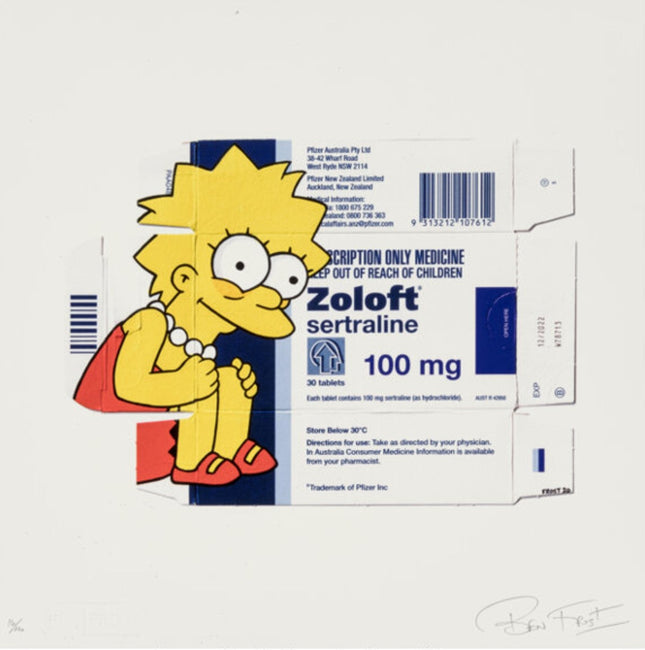
    Social Distancing Simpsons Archival Pigment Fine Art Limited Edition Print on 310gsm Bauhaus Cotton Rag Paper by Artist Ben Frost, Street Pop Art Graffiti. 2020 Signed & Numbered Limited Edition of 40 Artwork Size 12x12. Ben Frost (b. 1975) Social Distancing, 2020 Archival digital print on Bauhaus Cotton Rag Stock paper 12 x 12 inches (30.5 x 30.5 cm) (sheet) Ed. 40 is signed and numbered in pencil along the lower edge and published by the artist. Intersecting Pop Culture and Social Commentary Ben Frost's "Social Distancing Simpsons" archival pigment fine art print is a piercing examination of contemporary society through the lens of street pop art and graffiti. This limited edition print, numbered and signed, reflects Frost's unique and often controversial approach to his art, blending pop culture icons with subversive messaging. Created in 2020, "Social Distancing Simpsons" is a compelling artwork set against the backdrop of a global pandemic, a time when social distancing became a ubiquitous part of life. By incorporating a familiar character from "The Simpsons," Frost taps into the collective consciousness and comments on the impact of societal changes on popular culture. The choice of using archival digital print on Bauhaus Cotton Rag Stock paper, a high-quality material, ensures that the vibrancy of the piece and the precision of its details are preserved. The image of the Simpson's character juxtaposed with a pharmaceutical label indicates Frost's style, often involving the fusion of disparate elements to create a jarring yet thought-provoking visual statement. This 12 x 12 inches print is a perfect square that captures the essence of Frost's artistic statement: a critique of consumerism, mental health, and the pharmaceutical industry. Ben Frost's Signature Style Frost's work is characterized by his unflinching willingness to confront and challenge viewers with uncomfortable truths about modern life. In "Social Distancing Simpsons," the collision of the cartoon world with the stark reality of medication speaks to a generation that finds solace in nostalgia while grappling with present-day anxieties. With its limited edition of 40, the artwork becomes a collector's piece, a snapshot of an era defined by isolation and the search for connection. Reflection of Street Pop Art and Graffiti Frost's art is a reflection of street pop art and graffiti in its directness and its utilization of visual language that is immediate and accessible. Incorporating street art aesthetics into fine art prints blurs the lines between high art and more democratic expressions in urban environments. "Social Distancing Simpsons" is a testament to the power of this genre to communicate beyond words, offering a visual critique that is both universal and deeply personal. In summary, "Social Distancing Simpsons" by Ben Frost is more than just an artwork; it is a commentary on the times, a mirror held up to the complexities and contradictions of contemporary life. Through his expert blending of pop culture references with cutting social commentary, Frost solidifies his place as a significant voice in street pop art and graffiti artwork. This piece, in particular, stands as a poignant reminder of 2020, capturing the essence of a moment that has left an indelible mark on society.

    $684.00

  • Ritalin Scar Archival Print by Ben Frost

    Ben Frost Ritalin Scar Archival Print by Ben Frost

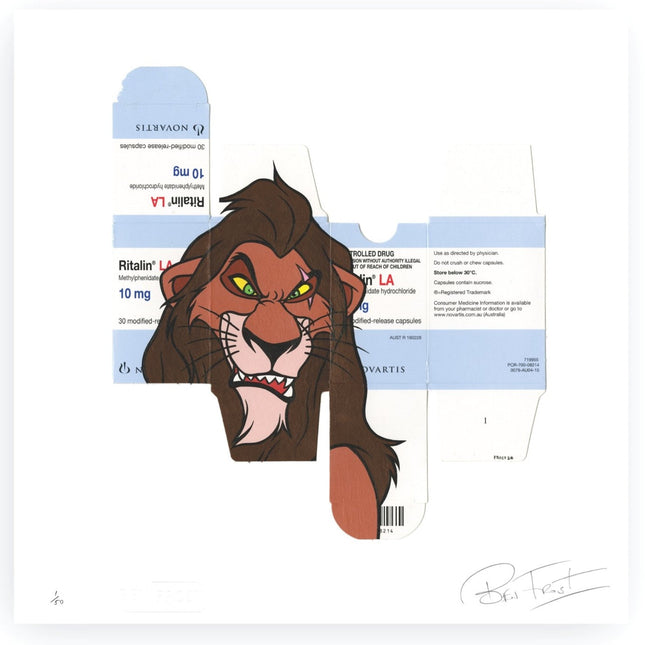
    Ritalin Scar Archival Pigment Fine Art Limited Edition Print on 310gsm Photo Cotton Rag Paper by Artist Ben Frost, Street Pop Art Graffiti Legend. 2022 Signed & Numbered Limited Edition of 50 Artwork Size 12x12 Signed 2022 Edition of 50 ‘Ritalin Scar’ Archival Digital Print on Bauhaus 310gsm Photo Rag 100% Cotton Paper Embossed, signed and editioned by the artist 30cm x 30cm (12 x 12 inches) unframed. Ritalin Scar by Ben Frost: A Sharp Fusion of Pop Culture and Pharmaceuticals in Street Pop Art & Graffiti Artwork Ritalin Scar by Ben Frost is a powerful statement within the Street Pop Art & Graffiti Artwork movement. Released in 2022, this piece is an archival pigment fine art print created on Bauhaus 310gsm photo rag 100 percent cotton paper, a material known for its superior quality and durability. Measuring 30cm by 30cm, or 12 by 12 inches unframed, the artwork is part of a signed and numbered limited edition of only 50 pieces. Each print is individually embossed, signed, and editioned by Ben Frost, reinforcing its status as a highly collectible work. By placing the menacing figure of Scar from Disney's The Lion King onto a flattened Ritalin LA pharmaceutical box, Frost engages viewers in a provocative dialogue about societal perceptions of control, medication, and villainy through the visual language of pop culture. The Artistic Process and Provocative Themes of Ritalin Scar Ben Frost, an Australian artist widely recognized for his disruptive and confronting style, uses familiar characters and consumer brands to deliver bold social commentary. In Ritalin Scar, the artist strategically selects Scar, a character known for his cunning and treachery, and juxtaposes him against the backdrop of a pharmaceutical package designed for behavioral regulation. This combination invites critical reflection on how society views and manages perceived deviance, particularly in children. The use of archival digital print technology ensures that the vivid colors and sharp lines remain striking and durable over time, preserving the immediate impact of the work. By repurposing real-world packaging as his canvas, Frost magnifies the uneasy relationship between commercialism and personal identity, a theme that resonates deeply within the Street Pop Art & Graffiti Artwork tradition. Ben Frost’s Influence on Contemporary Street Pop Art & Graffiti Artwork Ben Frost has built an international reputation for his provocative visual language that challenges societal norms and consumer culture. His body of work often combines elements of advertising, pharmaceuticals, and beloved cartoon imagery, making his style instantly recognizable. Through pieces like Ritalin Scar, Frost asserts Street Pop Art & Graffiti Artwork as a critical platform for addressing controversial issues. His manipulation of pop culture imagery disrupts the traditional narratives associated with these characters and products, transforming them into symbols of larger social commentary. Frost’s work captures the spirit of rebellion and critique that defines Street Pop Art & Graffiti Artwork, proving its capacity to provoke thought and spark conversation in an era of increasing media saturation. The Importance of Limited Edition Prints like Ritalin Scar Owning a limited edition print like Ritalin Scar offers collectors a tangible piece of contemporary cultural critique. The combination of Bauhaus 310gsm photo rag paper with archival digital printing ensures a museum-quality finish that honors the original vision of the artist. With only 50 copies released, each embossed, signed, and numbered by Ben Frost, the scarcity enhances the value and significance of the artwork. Street Pop Art & Graffiti Artwork thrives on exclusivity and authenticity, traits that are embedded into every aspect of this piece. Ritalin Scar not only showcases Frost’s distinctive style but also captures the enduring tension between pop culture, pharmaceutical influence, and personal autonomy, making it a standout work within contemporary pop and street art collections.

    $650.00

  • Tigger on Zoloft Archival Print by Ben Frost

    Ben Frost Tigger on Zoloft Archival Print by Ben Frost

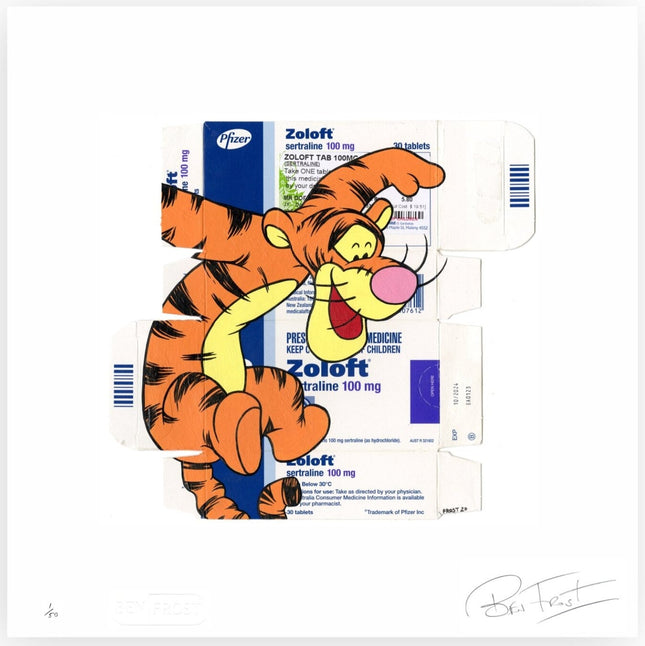
    Tigger on Zoloft Limited Edition Archival Pigment Fine Art Prints on Bauhaus Cotton Fine Art Paper by Graffiti Street Art and Pop Culture Artist Ben Frost. ‘Tigger On Zoloft’ Archival Digital Print on Bauhaus 310gsm Photo Rag 100% Cotton Paper Embossed, signed and editioned by Ben Frost 30cm x 30cm (12 x 12 inches) Melbourne, Australia Edition of 50 The essence of Frost’s commentary is established on the basis of subverting the meaning and the messages, promoted by the mainstream media. In other words and, as he has stated in the past: “The less you fill your mind with the trappings of advertising and bad television, the more space you have in your brain for things of value”. At the same time, his take on modern pop culture is equally compelling. Mainstream media, advertisements, and politics can be identified as some of his main fields of interest, which he utilizes and mixes up in a controversial formation. The word controversial is not used incidentally. What Ben Frost’s art is doing is, essentially, the appropriation and weaponization of imagery against the same system that gave birth to it.

    $572.00

Pharmaceutical Graffiti Street Pop Art

Pharmaceuticals as Subject Matter in Street Pop Art & Graffiti Artwork

Pharmaceutical imagery has become a powerful and persistent theme in Street Pop Art & Graffiti Artwork, serving as both aesthetic symbol and cultural critique. Artists working within this genre frequently use pills, prescription bottles, blister packs, and pharmaceutical branding to explore themes of dependency, consumerism, mental health, and systemic control. These visuals tap into a shared cultural language, where medication is not only a means of healing but also a symbol of confinement, numbing, and commodification. The use of pharmaceutical elements in art allows creators to confront uncomfortable truths about how society copes with emotional pain and how pharmaceutical industries profit from that struggle. Artists like Ben Frost and Luke Chueh have become synonymous with this visual dialogue, creating works that simultaneously allure with clean design and unsettle with their underlying meaning.

The Symbolic Weight of Prescription Iconography

The recurring presence of pills and medicine bottles in Street Pop Art & Graffiti Artwork underscores the tension between relief and repression. These symbols act as entry points for conversations around mental health, trauma, and addiction. Prescription drugs like Xanax, Vicodin, Oxycontin, and Adderall are not just names in this context—they are cultural references, shorthand for complex emotional and societal issues. In a world where mental health is increasingly addressed through chemical intervention, these items become metaphors for invisible pain and institutional dependency. Street and pop artists distort, replicate, and reframe these symbols to expose how deeply they are embedded in everyday life. The colorful aesthetics of pills contrast with the often dark realities of what they represent, creating a visual dissonance that fuels the emotional power of these works.

Emotional and Social Commentary Through Pop Visual Language

The incorporation of pharmaceutical themes in this type of artwork often reflects a broader commentary on capitalism and self-medication. By reinterpreting over-the-counter packaging or prescription labels, artists question the commercialization of healing and the cultural normalization of medicating psychological discomfort. The bright and accessible visual language of pop art allows these critiques to reach wide audiences, while the rebellious energy of graffiti maintains the urgency and rawness of the message. Figures like Luke Chueh use minimal, emotionally potent characters to portray internal suffering, while others like Ben Frost overlay cartoon imagery with drug branding to examine the psychological friction between comfort and control. This duality is what defines Street Pop Art & Graffiti Artwork—it makes complex topics visually engaging while maintaining their conceptual gravity.

Pharmaceutical Aesthetics as a Mirror of Contemporary Life

As pharmaceutical culture becomes increasingly visible and politicized, artists continue to use it as a tool for reflection. Street Pop Art & Graffiti Artwork turns medication into a visual mirror, reflecting back the ways in which society prescribes not just drugs but identities, behaviors, and acceptable emotional responses. The aesthetic of clean pill bottles and clinical labels is subverted and recontextualized into a critique of conformity, silence, and emotional control. These artworks do not celebrate pharmaceuticals, nor do they purely condemn them. Instead, they frame them within the chaos of modern life—where pills are both lifelines and shackles. Through this lens, pharmaceutical symbols evolve from functional design into vessels of cultural meaning, loaded with commentary about pain, power, and the fragile boundaries between healing and harm.

Footer image

© 2025 Sprayed Paint Art Collection,

    • Amazon
    • American Express
    • Apple Pay
    • Bancontact
    • Diners Club
    • Discover
    • Google Pay
    • iDEAL
    • Mastercard
    • PayPal
    • Shop Pay
    • Visa

    Login

    Forgot your password?

    Don't have an account yet?
    Create account