Prince & King

4 artworks

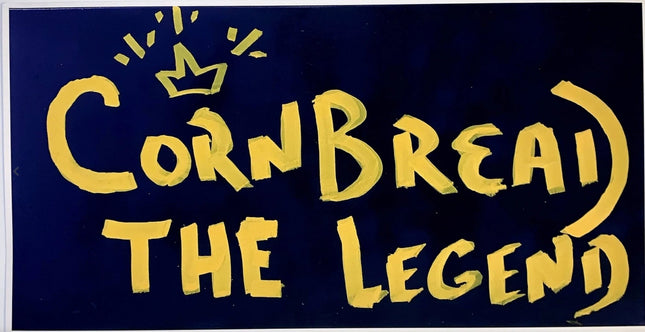
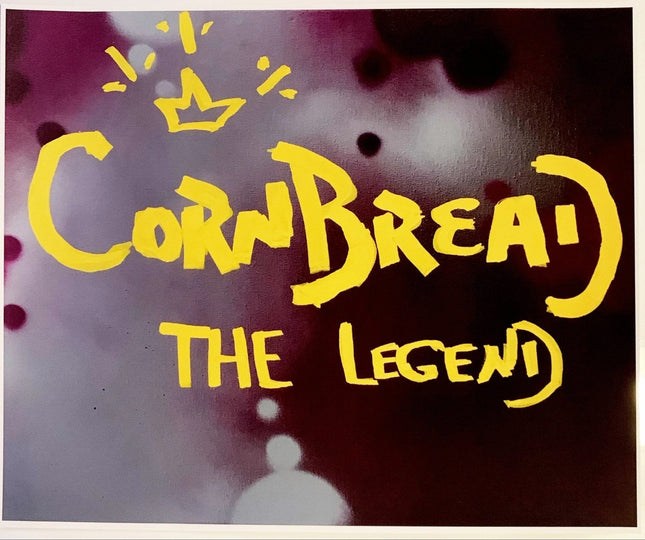
  • Cornbread The Legend Blue Yellow Archival Print by Cornbread- Darryl McCray

    Cornbread- Darryl McCray Cornbread The Legend Blue Yellow Archival Print by Cornbread- Darryl McCray

    Cornbread The Legend- Blue Yellow Archival Pigment Fine Art Limited Edition Print on Fine Art Paper by Modern Pop Street Graffiti Artist Cornbread- Darryl McCray. 2021 Cornbread The Legend (Blue Yellow) 20" x 16.5" (Inches) Limited Edition Print: Archival Pigment Print Paper: Fine Art Paper Size: 20" x 16.5" (Inches) Edition Size -7 Hand-signed & Numbered by Artist

    $217.00

  • Life After Death Giclee Print by Ken Flewellyn

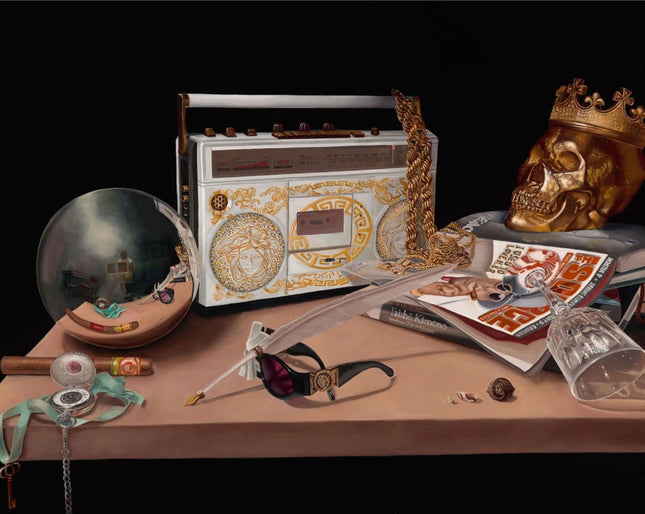
    Ken Flewellyn Life After Death Giclee Print by Ken Flewellyn

    Life After Death Artwork Giclee Limited Edition Print on 290gsm Fine Art Paper by Pop Culture Graffiti Artist Ken Flewellyn. 20x16 inches / 51x41 cm Edition of 40 Fine art print on 290gsm paper Hand-signed and numbered by the artist Ken Flewellyn’s Life After Death: Baroque Symbolism in Street Pop Art Form Ken Flewellyn’s Life After Death presents a meticulously rendered still life that fuses classical painting traditions with the language of Street Pop Art & Graffiti Artwork. Released as a 20 x 16 inch giclée print on 290gsm fine art paper in a signed and numbered edition of 40, the piece takes aesthetic cues from 17th-century vanitas while layering in modern hip-hop and pop culture references. With photographic precision, Flewellyn constructs a visual narrative about legacy, excess, identity, and mortality—turning familiar symbols into philosophical statements. A gold-plated skull wearing a crown rests atop a stack of magazines, evoking both royalty and finality. The juxtaposition of this memento mori with luxury objects—a Versace-styled boombox, thick gold rope chain, designer sunglasses, a spilled wine glass—highlights the tension between materialism and impermanence. The broken cigar, empty jewelry case, and antique pocket watch on a satin ribbon extend this commentary, nodding to the fragility of status and time. Like Dutch vanitas painters who used decaying fruit and extinguished candles to hint at life’s brevity, Flewellyn replaces those metaphors with consumer goods, packaging the same message for a contemporary audience. Hyperrealism as a Tool of Cultural Synthesis The precision of Flewellyn’s painting style is not just a technical flex—it’s a deliberate choice that elevates the visual weight of every object on the table. Each item is treated with reverence and clarity, forcing the viewer to examine them individually and collectively. Hyperrealism in this context becomes a method of preservation, much like how historical paintings immortalized wealth, nobility, or religious conviction. Here, the objects preserved are relics of urban culture, hip-hop mythology, and fashion-driven self-construction. This synthetic approach to visual storytelling is one of Flewellyn’s strengths. Rather than lean into abstraction or expressive distortion, he paints with clinical sharpness. The boombox, decorated with intricate Medusa heads and gold patterning, becomes a sacred totem. The magazines, showing muscle-bound figures and flashy headlines, serve both as cultural archive and pop commentary. The reflection in the polished orb at left even contains the outline of the artist’s studio space, collapsing the illusion of classical detachment and re-inserting the viewer into the act of creation. Rewriting the Still Life Through Street Pop Language Ken Flewellyn’s background in pop culture study and urban visual language allows Life After Death to operate as a cross-genre artwork. Though not made with aerosol or on public walls, its structure and symbols place it firmly in the lineage of Street Pop Art & Graffiti Artwork. The work reframes the aesthetics of graffiti—where hierarchy, identity, and legacy are constantly negotiated—through the composition and technique of high art traditions. It does not imitate graffiti stylistically; instead, it honors its values through symbolism and narrative. By reconstructing a still life with hip-hop’s material vocabulary, Flewellyn bridges historical and contemporary methods of cultural storytelling. The table becomes a battlefield of symbols—power, time, excess, fame—and the viewer is invited to read the relics for what they reveal about the pursuit of permanence in a transient world. The crown, worn by a skull, reminds us that all power is borrowed. The spilled drink, the tangled chain, the tooth—each item carries encoded meaning, transformed by the hand of the artist into a modern-day parable. Ken Flewellyn’s Life After Death captures the essence of contemporary Street Pop Art by combining the rigor of fine art painting with the immediacy of cultural critique. Through composition, symbolism, and visual clarity, it serves as a statement on mortality, self-image, and what survives after the noise fades.

    $217.00

  • Crown Oversized Archival Print by Marly Mcfly

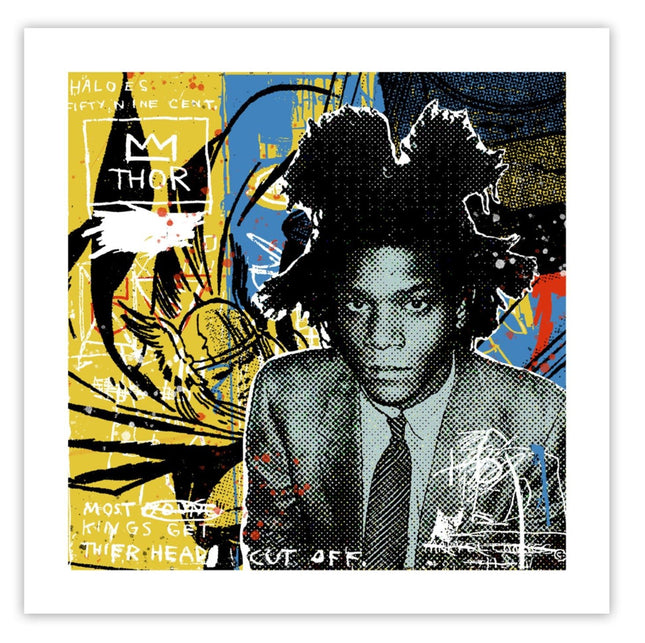
    Marly Mcfly Crown Oversized Archival Print by Marly Mcfly

    Crown- Oversized Archival Pigment Fine Art Limited Edition Print on 290gsm Moab Entrada Paper by Artist Marly Mcfly, Street Pop Art Graffiti Legend. 2022 Signed & Numbered Limited Edition of 27 Size 20x20

    $298.00

  • The Legend II Purple Gray Archival Print by Cornbread- Darryl McCray

    Cornbread- Darryl McCray The Legend II Purple Gray Archival Print by Cornbread- Darryl McCray

    The Legend II- Purple Gray Archival Pigment Fine Art Limited Edition Print on Fine Art Paper by Modern Pop Street Graffiti Artist Cornbread- Darryl McCray. 2021 Cornbread The Legend (Blue Yellow) 20" x 16.5" (Inches) Limited Edition Print: Archival Pigment Print Paper: Fine Art Paper Size: 20" x 16.5" (Inches) Edition Size -9 Hand-signed & Numbered by Artist

    $217.00

Prince & King
The fusion of popular culture and traditional artistry has given birth to a myriad of genres, each bearing its unique characteristics and quirks. Pop art, street art, and graffiti art are such creative amalgamations, often reflecting the zeitgeist of the time in a visually engaging manner. An intriguing theme that threads through these genres is the repeated use of royal titles such as "Prince" and "King." This motif serves as a potent symbol in the artistic expression, functioning as a critique, an homage, or a bold assertion of self-identity, depending on the artist's intent and context. The notion of "Prince" and "King" within pop art traces its roots to the subversive works of 1960s artists like Andy Warhol and Roy Lichtenstein. These pioneers sought to democratize art by incorporating everyday objects, celebrities, and comic strips into their creations, thereby blurring the lines between 'high' and 'low' culture. Andy Warhol, for instance, famously created portraits of Elvis Presley, the 'King' of Rock 'n' Roll, and Michael Jackson, the 'Prince' of Pop. These pieces not only celebrated these iconic figures but also questioned the societal constructs around fame and idolization. Warhol's work, in particular, emphasized the dichotomy between the public persona and the private individual, a theme that resonates in the portrayal of 'princely' and 'kingly' figures in pop art. In the realm of street art, the titles of "Prince" and "King" hold a significant place, often serving to declare an artist's prominence or mastery over a certain domain. Born from the heart of urban life, street art is a democratic form of expression that thrives on competition and the assertion of selfhood. Here, artists mark their territories, fight for visibility, and establish their legacies. A striking example is the New York City graffiti artist Dondi, widely regarded as the 'Style Master General' or the 'King' of graffiti for his unparalleled typographic skills and stylistic innovations. His moniker held a sense of respect and power within the community, signifying his status as an influential figure. Street art's inherently subversive nature also allows it to serve as a potent tool for socio-political commentary. Banksy, the enigmatic British street artist, has leveraged this to deliver powerful messages about power, authority, and the monarchy. His 2011 piece 'Slave Labour,' depicting a young boy hunched over a sewing machine producing Union Jack bunting, created a stir by critiquing the commercialization around Queen Elizabeth II's Diamond Jubilee and the royal wedding. This work exemplifies how the theme of 'princes' and 'kings' can be harnessed to offer a scathing critique of societal structures and events. Graffiti art, with its roots in the turbulent socio-political landscape of the 1970s and 1980s, often uses the "Prince" and "King" motif as a form of rebellion and a claim to authority within a marginalized community. Here, 'King' often refers to an accomplished artist who has gained respect and recognition within the graffiti community. A graffiti 'King' might display their prowess through 'tags,' stylized signatures, on numerous city surfaces, or through complex works ('pieces') that showcase their artistic skill. The 'Prince,' in contrast, could refer to an up-and-coming artist, much like a prince is a king-in-waiting. In essence, the recurring motif of 'Prince' and 'King' in pop art, street art, and graffiti art encapsulates a multitude of meanings, ranging from idolization and self-assertion to social critique. It is a testament to the versatility and depth of these genres that a single motif can convey such a range of messages, each resonating differently depending on the artist's intent and the viewer's perspective. The 'Prince' and 'King' motif also speaks to the evolving nature of these art forms. 'Prince' and 'King' motif in pop art, street art, and graffiti art offers a fascinating lens to explore these dynamic and ever-evolving genres. From the iconic works of pop art masters to the rebellious creations of street and graffiti artists, this motif continues to evolve, reflecting the changing cultural, social, and political landscapes. As we move forward, it will be interesting to see how artists continue to reinterpret and reinvent these royal titles, imbuing them with new meanings and perspectives.
Footer image

© 2025 Sprayed Paint Art Collection,

    • Amazon
    • American Express
    • Apple Pay
    • Bancontact
    • Diners Club
    • Discover
    • Google Pay
    • iDEAL
    • Mastercard
    • PayPal
    • Shop Pay
    • Visa

    Login

    Forgot your password?

    Don't have an account yet?
    Create account