Princess & Queen

1 artwork

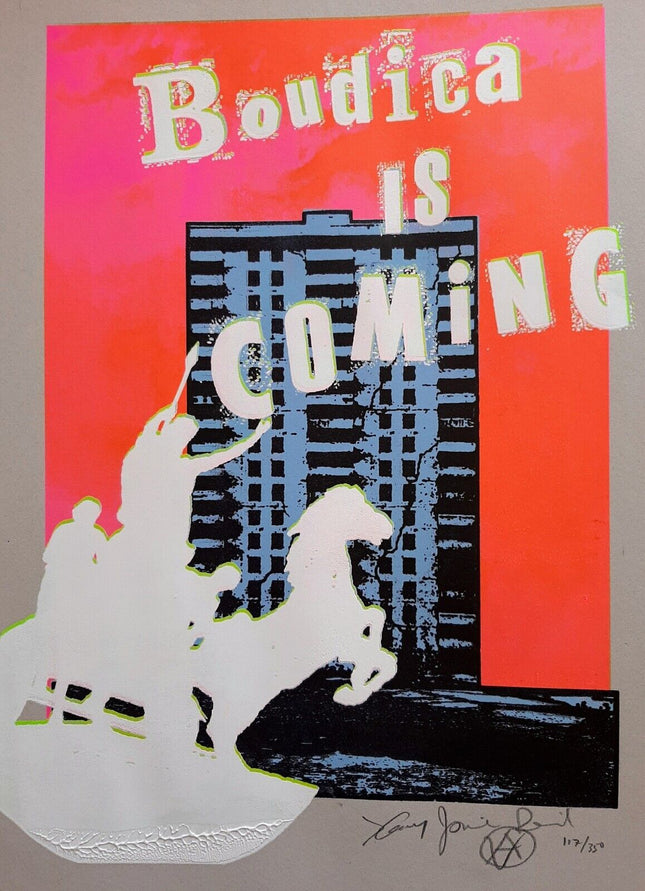
  • Boudica Is Coming HPM Silkscreen Print by Jamie Reid x James Cauty

    Jamie Reid Boudica Is Coming HPM Silkscreen Print by Jamie Reid x James Cauty

    Boudica Is Coming to HPM Embellished 6-Color Silkscreen Print by Jamie Reid Hand-Pulled on Distressed 400gsm Reverse Optimum Grey Card Limited Edition Artwork. 2018 Signed By Both Artists HPM Acrylic Hand Embellished Stencil & Numbered Limited Edition of 350 Artwork Size 17x25 Silkscreen Print of Queen Boudica on Horse Chariot Next To Skyscraper Building Art Car Boot Fair Edition Hand Distressed Boudica Is Coming: HPM Embellished Silkscreen Print by Jamie Reid and James Cauty The artwork Boudica Is Coming is an exemplary piece in the fusion of street pop art and graffiti-inspired visuals. Created by renowned British artists Jamie Reid and James Cauty, this work is an homage to rebellious iconography and the modern urban landscape. It is a limited edition of 350, hand-pulled on distressed 400gsm Reverse Optimum Grey Card, giving each piece a distinctive texture. Measuring 17x25 inches, the work captures the essence of street art culture while linking it to historical references, most notably through the imagery of Queen Boudica. The Iconography of Boudica in Street Pop Art Boudica, the ancient warrior queen of the Iceni tribe, is a recurring figure in British rebellious iconography. In this particular piece, Reid and Cauty draw a direct line between the defiant spirit of Boudica and the countercultural movements that define much of contemporary street art. She is depicted riding her iconic horse-drawn chariot, wielding strength and power. The juxtaposition of her figure against the backdrop of a modern skyscraper highlights the tension between history and the relentless progress of urbanization. This contrast is a central theme in street pop art, where historical and cultural symbols are frequently re-contextualized in contemporary urban environments. The use of Boudica in this context transforms her from a historical figure into a symbol of ongoing resistance. By placing her against a looming urban tower block, the artists are making a statement about the enduring relevance of rebellion in modern life. This ties into the broader themes of street pop art, where everyday environments, societal norms, and the tension between authority and individualism are challenged. Distressed Aesthetic and Graffiti Influences The aesthetic choices in Boudica Is Coming reflect the rough and gritty style often associated with graffiti artwork. The silkscreen is printed on distressed grey card stock, adding texture and uniqueness to each print. The distressed elements create a worn, almost decaying look, contrasting with the piece's vibrant neon colors. This distressing technique is particularly effective in replicating the look and feel of urban street walls, where posters and graffiti interact with the elements, slowly eroding into new forms. Jamie ReReid'sackground in graphic design and punk rock visuals plays a vital role in the pipiece'sverall composition. His work with the Sex Pistols and his distinctive collage style, which often includes defaced and altered political symbols, resonates throughout this silkscreen. The stencil-like appearance of Boudica and her chariot is reminiscent of street tagging, a nod to graffiti arart'soots. Meanwhile, James Cauty, known for his work with the KLF and as part of the art collective The Grey Organisation, brings a postmodern, dystopian sensibility to the piece. Combining these two artists creates a visual dialogue between rebellion, decay, and the ever-evolving cityscape. Hand-pulled and Hand-Embellished Elements A vital aspect of this edition is its hand-pulled silkscreen printing process. Each print is not just mechanically reproduced but crafted with care, resulting in slight variations between editions, making each piece unique. The silkscreen process, especially in the hands of Reid and Cauty, imbues the work with a tactile quality that draws the viewer in. The bold, almost fluorescent colors demand attention, creating a dynamic contrast between the monochrome tower block and the vibrancy of the lettering and Queen BoBoudica'silhouette. Further enhancing the print is the hand-embellished acrylic stenciling. Each print has been individually embellished by the artists, adding layers of paint extending beyond traditional prints' flatness. This manual intervention by the artists adds depth and texture, reinforcing the sense of the handmade, a cornerstone of street art and graffiti practices. These embellishments ensure that no two prints are exactly alike, adding to the value and collectability of the piece. Queen Boudica in the Urban Landscape The juxtaposition of Queen Boudica against a towering skyscraper is not merely a visual choice but a statement. It speaks to the encroachment of modernity on history, tradition, and natural landscapes. Skyscrapers, often symbols of corporate power and modernity, stand in stark contrast to the ancient, organic power represented by Boudica and her horse-drawn chariot. In this sense, Boudica Is Coming embodies the tension between the past and present, nature and industry, rebellion and order. The use of bold text in the piece, announcing Boudica Is Coming, adds a sense of immediacy and urgency. It speaks to the viewer in the way street art does, with its direct, almost confrontational messaging. The message itself hints at the idea of resurgence or the return of something powerful and transformative. Boudica becomes a stand-in for any number of modern resistances, whether political, social, or cultural. This is what makes the piece stand out in the world of street pop art and graffiti artwork. It engages the viewer visually and intellectually, prompting them to consider the implications of rebellion in the context of the modern city. It bridges history and contemporary street culture, creating a dialogue between the two. Boudica Is Coming by Jamie Reid and James Cauty is a powerful piece of street pop art that blends historical iconography with contemporary urban landscapes. Through its silkscreen process, hand-embellished elements, and the distressed aesthetic, it captures the raw energy of street art while commenting on the enduring relevance of rebellion and resistance. ItIt'sot just a print, but a visual and cultural statement that resonates within the framework of modern graffiti and pop art movements.

    $750.00

Princess & Queen
Princesses and queens have long been a recurrent theme in popular culture, often symbolizing beauty, power, and status. In the world of contemporary art, particularly in pop art, street art, and graffiti, these figures have been adopted and reimagined, often with a touch of subversion or social commentary. Instead of depicting the traditional imagery of fairy tales and monarchies, artists delve into complex narratives, challenging norms and questioning societal constructs through their work. Pop art, a movement that emerged in the mid-20th century, draws inspiration from popular and commercial culture. Artists such as Roy Lichtenstein and Andy Warhol have used imagery from mass media and advertising, and similarly, princesses and queens have been depicted in this context. For instance, Warhol's iconic prints of Queen Elizabeth II, part of his "Reigning Queens" series, utilized the pop art style to portray the monarch in a different light, transforming her from a royal figure into a pop culture icon. This reflects pop art's essence, which often aims to blur the boundaries between 'high' art and 'low' culture. Similarly, in street art and graffiti, princesses and queens play a significant role. As a largely unregulated form of expression, these art forms offer artists the chance to provide commentary on social and political issues. Banksy, one of the most notable street artists, often includes powerful female figures in his work. His stenciled graffiti piece of Queen Victoria sitting on a woman's face is a perfect example of this approach, challenging the traditional depiction of queens and highlighting themes of sexuality and power dynamics. While Banksy uses satire to critique power, other artists like Shepard Fairey use these royal figures to promote empowerment and equality. Fairey's "Obey Giant" campaign, known for its iconic image of Andre the Giant, also features a queen figure as part of its imagery. This queen, with her crown replaced by the word "Obey," is a call to challenge authority and societal norms. In a different vein, the New York-based street artist Swoon uses the imagery of princesses and queens to explore themes of femininity and resilience. Her life-sized wheatpaste prints often feature women in regal, queen-like attire, yet in everyday, urban settings. Her work aims to celebrate the strength and beauty of women, positioning them as queens of their own domains. The work of these artists underscores the versatility of princess and queen imagery in pop art, street art, and graffiti. By reinterpreting these traditional figures, they challenge societal norms, question power structures, and celebrate female strength. They take symbols of royalty and transform them into something relatable and accessible, bridging the gap between the high-culture association of royalty and the everyday reality of the streets. In the world of graffiti and street art, the representation of princesses and queens goes beyond mere portraiture or iconography. It's about making statements, pushing boundaries, and challenging the status quo. Whether it's Banksy's satirical take on Queen Victoria, Shepard Fairey's queen figure as a symbol of rebellion, or Swoon's celebration of everyday queens, the princess and queen theme serves as a powerful tool for social commentary and critique. As we continue to witness the evolution of pop art, street art, and graffiti, the portrayal of princesses and queens will undoubtedly remain a vital part of the artistic discourse. These depictions, while drawn from traditional symbols of power and beauty, have been reimagined to resonate with contemporary audiences, offering insightful perspectives on society, culture, and the human experience. In this way, the princess and queen theme in these art forms serves as a reflection of our times, capturing the zeitgeist and opening dialogues on critical issues.
Footer image

© 2025 Sprayed Paint Art Collection,

    • Amazon
    • American Express
    • Apple Pay
    • Bancontact
    • Diners Club
    • Discover
    • Google Pay
    • iDEAL
    • Mastercard
    • PayPal
    • Shop Pay
    • Visa

    Login

    Forgot your password?

    Don't have an account yet?
    Create account