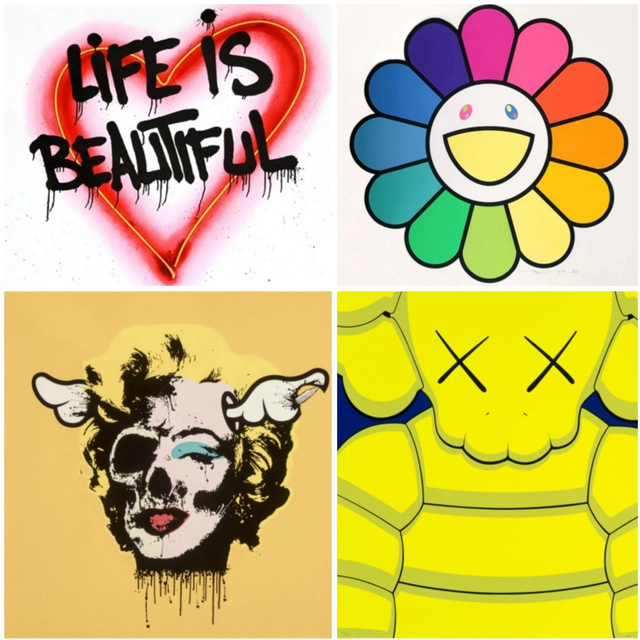
Print Fine Art

8 artworks

  • $100 Dollar Bill Backside HPM Serigraph Print by Steve Kaufman SAK

    Steve Kaufman SAK $100 Dollar Bill Backside HPM Serigraph Print by Steve Kaufman SAK

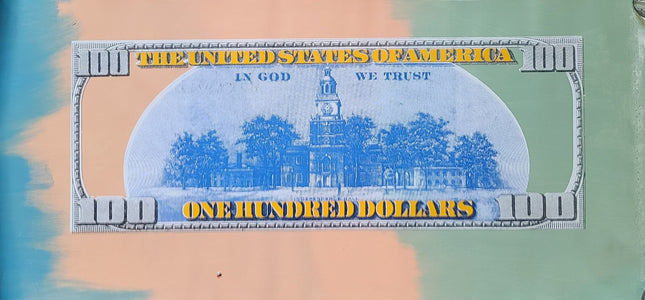
    $100 Dollar Bill- Backside Limited Edition Hand-Embellished Oil Paint HPM Silkscreen Print on Canvas by Steve Kaufman SAK Graffiti Street Artist Modern Pop Art. 1995 Signed & Numbered Limited Edition of 100 Artwork Size 34x15 Unstretched canvas, the image is in perfect condition. Back of the United States $100 dollar bill money from the 1990s. $100 Dollar Bill- Backside Limited Edition Hand-Embellished Oil Paint HPM Silkscreen Print on Canvas by Steve Kaufman The $100 Dollar Bill- Backside silkscreen print on canvas by Steve Kaufman is a striking example of street pop art and graffiti artwork that captures the essence of American consumer culture and wealth symbolism. Created in 1995, this signed and numbered hand-embellished oil paint HPM (Hand-Painted Multiple) is part of a limited edition of 100. Measuring 34x15 inches on unstretched canvas, this piece presents a visually compelling reinterpretation of the back of a 1990s United States $100 bill. Kaufman’s distinctive approach to printmaking, combined with his background in graffiti and modern pop art, makes this artwork a significant statement within the genre. Steve Kaufman’s Influence on Street Pop Art Steve Kaufman, often referred to by his initials SAK, was a pivotal figure in contemporary street pop art. As a former assistant to Andy Warhol, Kaufman developed his own signature style that blended commercial iconography with hand-painted elements. His work frequently centered on themes of capitalism, mass production, and American identity, utilizing recognizable imagery such as currency, famous celebrities, and consumer products. This piece, depicting the back of a $100 bill, is a prime example of his ability to elevate everyday symbols into fine art. By incorporating graffiti-inspired aesthetics with screen printing techniques, Kaufman transformed traditional art forms into something dynamic and relevant to the modern era. His ability to merge street culture with fine art galleries made him a bridge between two artistic worlds. This limited edition print, with its rich colors and textured embellishments, continues his legacy of challenging conventional notions of value, art, and commerce. The Symbolism of Money in Modern Pop Art The use of currency as a subject in modern pop art has deep historical roots, often serving as a critique of wealth, power, and societal values. Kaufman’s portrayal of the $100 bill’s backside takes a familiar object and recontextualizes it through color, scale, and artistic intervention. The presence of Independence Hall in the composition is particularly significant, symbolizing the intersection of American history and contemporary consumer culture. This piece is more than just a reproduction of money—it becomes a meditation on the influence of wealth and financial systems in art and daily life. Kaufman’s choice to hand-embellish each print adds a layer of uniqueness, reinforcing the idea that even in a world driven by mass production, individuality and artistic expression remain essential. The bold use of color and contrast amplifies the visual impact, making the print stand out as both a statement piece and a collector’s item. A Collector’s Piece with Lasting Impact This $100 Dollar Bill- Backside print holds a special place in the world of limited edition street pop art and graffiti artwork. As an unstretched canvas, it offers flexibility for framing and display, allowing collectors to showcase it in a way that best fits their aesthetic. Kaufman’s legacy as a groundbreaking artist continues to thrive, and his works are highly sought after for their cultural relevance and visual appeal. For art enthusiasts and collectors who appreciate the fusion of graffiti, pop culture, and fine art, this piece serves as a powerful representation of Kaufman’s vision. It encapsulates the bold, unapologetic nature of street pop art while remaining deeply tied to the broader narrative of American economic and artistic history.

    $1,917.00

  • Marchers White Silkscreen Print by Cleon Peterson

    Cleon Peterson Marchers White Silkscreen Print by Cleon Peterson

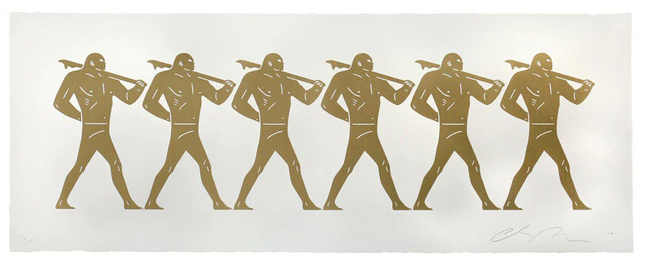
    Marchers White Silkscreen Print by Cleon Peterson 2 Color Hand-Pulled on Deckled Fine Art Paper Limited Edition Pop Street Art Artwork. 2016 Signed & Numbered Limited Edition of 125 Artwork Size 13x34 Silkscreen Print of Tribal Men Carrying Bloody Swords Marching In Line. Marchers White by Cleon Peterson – Limited Edition Silkscreen in Street Pop Art & Graffiti Artwork Marchers White is a 2016 hand-pulled 2-color silkscreen print by American artist Cleon Peterson. This signed and numbered limited edition of 125 was printed on deckled fine art paper and measures 13 x 34 inches. It features a procession of six stylized, muscular figures in a uniform line, each carrying a blood-streaked sword draped across their shoulders. The artwork is a graphic portrayal of conformity and violence, rendered in Peterson’s iconic flattened silhouette style. With clean lines and bold simplicity, the figures march in lockstep across a stark white background, forming a visual rhythm that mimics propaganda friezes and ancient relief carvings. The use of gold and red ink intensifies the contrast between elegance and brutality, a hallmark of Peterson’s visual language. Symbolism of Power, Violence, and Uniformity In Marchers White, Peterson explores the mechanization of power and the erosion of individuality within systems of control. Each figure appears identical, stripped of personal identity and locked in a hypnotic march. The red-tipped blades suggest recent violence or continuous bloodshed, reinforcing the idea that aggression has become routine, even ceremonial. The figures’ nudity, stylized musculature, and emotionless posture evoke primal force restrained within a ritual of obedience. The repeated form not only recalls ancient military parades or mythic processions, but also comments on contemporary structures of state, surveillance, and oppression. The absence of background or contextual setting forces viewers to focus entirely on the figures and their choreography, placing the act of violence and conformity at the center of the narrative. Cleon Peterson’s Allegorical Voice in Street Pop Art & Graffiti Artwork Cleon Peterson is known internationally for creating visual allegories that depict lawlessness, domination, and moral inversion. His works pull from classical art history, political propaganda, and modern editorial illustration to construct a world in collapse—where traditional boundaries between good and evil are blurred. Marchers White reflects Peterson’s ongoing examination of systemic violence and institutional complicity. While minimal in execution, the work functions as a complex statement on the banality of authoritarianism. It belongs squarely within the lineage of Street Pop Art & Graffiti Artwork, as it utilizes bold, graphic style to engage in socio-political critique. Peterson does not romanticize rebellion or glorify power—instead, he presents viewers with unfiltered snapshots of a dystopian order wrapped in seductive aesthetics. Printmaking Technique and Collector Value The Marchers White edition is crafted with the precision and attention to detail that characterizes Cleon Peterson’s fine art practice. Printed using a 2-color silkscreen method on heavyweight deckled fine art paper, the physical quality of the piece matches its conceptual weight. The crisp edges of the figures and the subtle texture of the ink application reflect a high standard of printmaking. Each print is individually signed and numbered, securing its authenticity and positioning it as a significant work within Peterson’s catalog. For collectors of Street Pop Art & Graffiti Artwork, Marchers White stands as a poignant artifact of modern discontent—a visually arresting and politically charged piece that underscores the silent march of violence accepted as structure.

    $1,199.00

  • Marchers Black Silkscreen Print by Cleon Peterson

    Cleon Peterson Marchers Black Silkscreen Print by Cleon Peterson

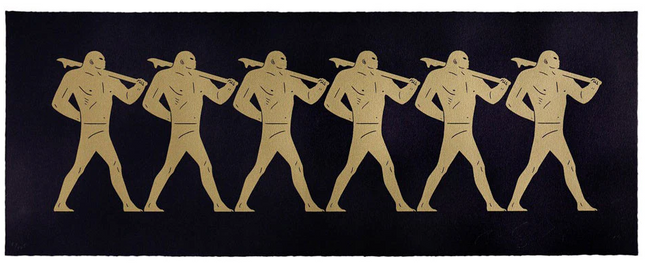
    Marchers Black Silkscreen Print by Cleon Peterson 2 Color Hand-Pulled on Deckled Fine Art Paper Limited Edition Pop Street Art Artwork. 2016 Signed & Numbered Limited Edition of 125 Artwork Size 13x34 Silkscreen Print of Tribal Men Carrying Bloody Swords Marching In Line. Marchers Black by Cleon Peterson – Limited Edition Silkscreen in Street Pop Art & Graffiti Artwork Marchers Black is a 2016 hand-pulled 2-color silkscreen print by Cleon Peterson, an American artist acclaimed for his stark allegories of violence, dominance, and control. This limited edition work is printed on 13 x 34 inch deckled fine art paper and was released in an edition of 125, each one signed and numbered by the artist. The image features six identical, stylized figures walking in strict formation, each with a sword slung over the shoulder. The figures are rendered in gold on a deep matte black background, emphasizing their ritualistic presence and evoking both ancient procession and modern conformity. The figures’ nudity, musculature, and uniform posture strip them of individual identity, instead casting them as instruments of institutional force, frozen in a silent parade of aggression. Conformity, Power, and the Aesthetic of Ritual In Marchers Black, Cleon Peterson isolates the mechanisms of systemic violence and repetition. The identical figures advance in step, their gestures calm yet loaded with menace. The blood-smeared blades on their backs are symbolic rather than graphic, suggesting not the moment of action but the aftermath—the silent normalization of brutality. The lack of expression or differentiation among the figures speaks to the erasure of individuality under oppressive structures, whether they be military, political, or societal. Their forward momentum, fixed and unrelenting, reads as both a march toward power and a descent into complicity. The black background serves not just as negative space but as psychological weight, amplifying the intensity of the gold silhouettes and enforcing a sense of visual and emotional gravity. Cleon Peterson’s Signature Themes in Street Pop Art & Graffiti Artwork Cleon Peterson is a leading voice in Street Pop Art & Graffiti Artwork, known for merging graphic minimalism with confrontational narratives. His compositions channel ancient mural traditions, propaganda design, and dystopian storytelling into modern allegories. Marchers Black exemplifies this approach by simplifying form to maximize meaning. While many artists in the genre celebrate rebellion, Peterson exposes the systems behind it—the hierarchies, the ritualistic cycles of violence, the role of submission in maintaining order. His work is not decorative but declarative, challenging viewers to confront the undercurrents of cruelty that persist beneath polished surfaces. Marchers Black is not a depiction of chaos, but of order so rigid it becomes inhuman. It visualizes the seduction and horror of control through the repetition of figures whose purpose is not to question, but to obey. Material Execution and Collector Impact Printed on premium deckled fine art paper using a two-layer silkscreen process, Marchers Black merges street aesthetics with refined printmaking tradition. The gold pigment contrasts dramatically against the matte black background, delivering a visual impact that echoes the thematic weight of the piece. Each print is hand-pulled and signed by Cleon Peterson, reinforcing its position as a deliberate and enduring object. As a limited edition of 125, it holds significant value for collectors interested in Street Pop Art & Graffiti Artwork that critiques systems of power without relying on spectacle. Marchers Black is both a visual mantra and a warning—documenting the quiet march of institutional violence, masked in symmetry, strength, and silence.

    $1,199.00

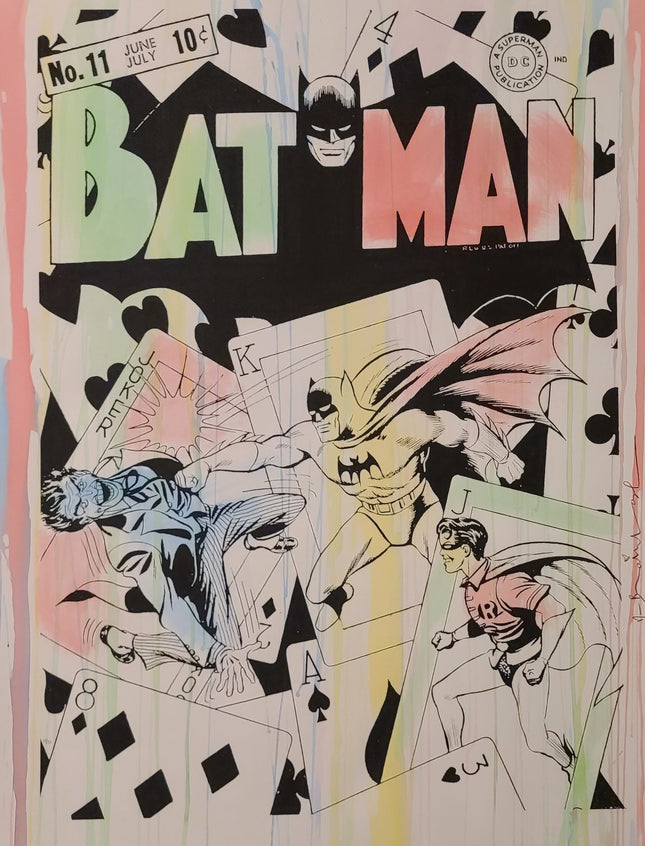
  • The Joker Comic Book Cover #2 HPM Hand-Embellished - Sprayed Paint Art Collection

    Mr Brainwash- Thierry Guetta The Joker Comic Book Cover #2 HPM Silkscreen Print by Mr Brainwash- Thierry Guetta

    The Joker Comic Book Cover #2 Limited Edition 1-Color Watercolor Paint Embellished HPM Silkscreen Print on Fine Art Paper by Mr Brainwash- Thierry Guetta. 2019 Signed & Numbered Limited Edition of 25 Artwork Size 34x46 Mr. Brainwash is pleased to announce a new addition to the ongoing series of comic book covers, this time featuring one of the most notorious supervillains, the Batman comic book cover featuring The Joker. A one-color screen print on hand-torn archival art paper, hand-finished with watercolor. Each print from the edition will be unique, and colors will vary from print to print. Print Size: 34 x 46 inches Edition of 25

    $4,740.00

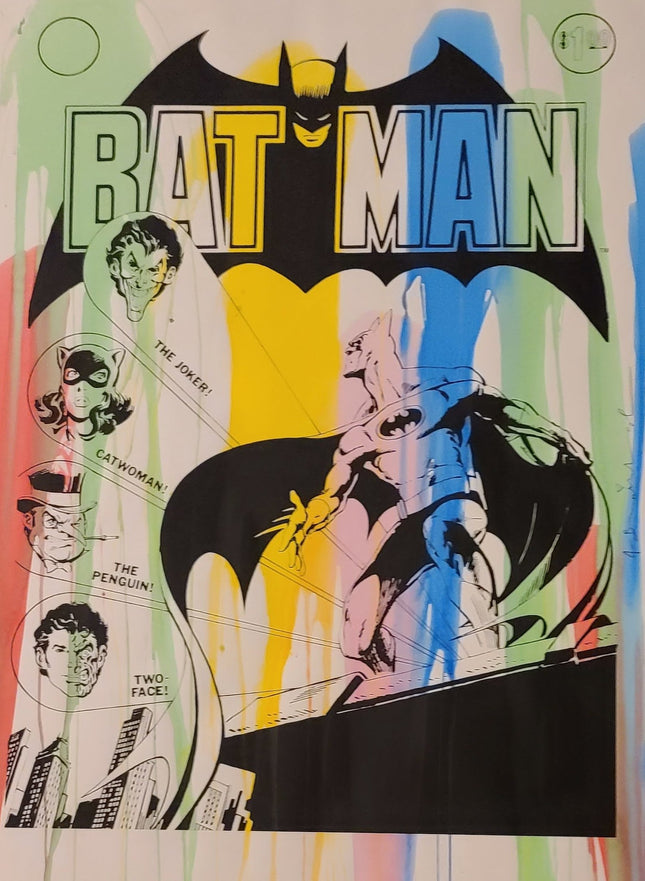
  • The Joker Comic Book Cover #3 HPM Hand-Embellished - Sprayed Paint Art Collection

    Mr Brainwash- Thierry Guetta The Joker Comic Book Cover #3 HPM Silkscreen Print by Mr Brainwash- Thierry Guetta

    The Joker Comic Book Cover #3 Limited Edition 1-Color Watercolor Paint Embellished HPM Silkscreen Print on Fine Art Paper by Mr Brainwash- Thierry Guetta. 2019 Signed & Numbered Limited Edition of 25 Artwork Size 34x46 Mr. Brainwash is pleased to announce a new addition to the ongoing series of comic book covers, this time featuring one of the most notorious supervillains, the Batman comic book cover featuring The Joker. A one-color screen print on hand-torn archival art paper, hand-finished with watercolor. Each print from the edition will be unique, and colors will vary from print to print. Print Size: 34 x 46 Inches Edition of 25

    $4,740.00

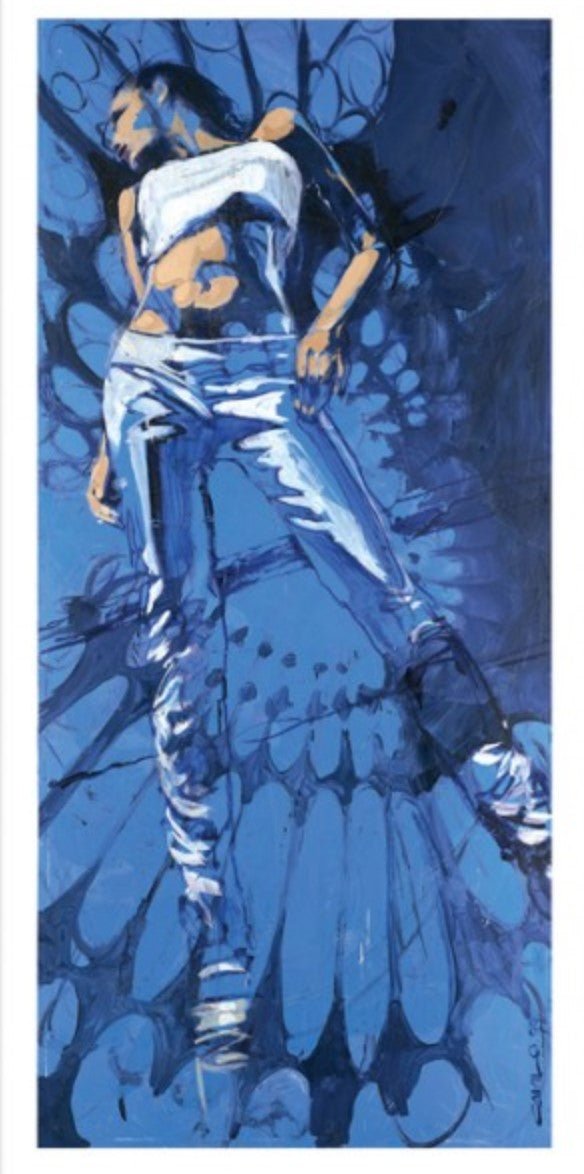
  • Blue Girl Archival Print by Camilo Pardo

    Camilo Pardo Blue Girl Archival Print by Camilo Pardo

    Blue Girl Limited Edition Archival Pigment Prints on 310gsm Fine Art Paper by Camilo Pardo Graffiti Street Artist Modern Pop Art. Camilo's paintings and drawings speak to both his love for linear perfection and his fascination for the manner in which those lines deliver aesthetic satisfaction to the viewer. His works genuinely seem to move and they are energized by what is obviously a rich understanding and respect for popular culture and traditional disciplines.

    $352.00

  • Hawxs.EXE Giclee Print by Vincent Langaard

    Vincent Langaard Hawxs.EXE Giclee Print by Vincent Langaard

    Hawxs.EXE Giclee Print by Vincent Langaard Artwork Limited Edition Print on Hahnemühle Fine Art Paper Graffiti Pop Street Artist. 2025 Signed & Numbered Limited Edition of 30 Artwork Size 34x32 Glitched Out Hawk Birds Hawxs.EXE by Vincent Langaard: Digital Disintegration in Street Pop Art & Graffiti Artwork Hawxs.EXE is a 2025 signed and numbered limited edition giclée print by Norwegian artist Vincent Langaard, produced in an edition of 30 and printed on Hahnemühle fine art paper. Measuring 34 x 32 inches, this print represents a visual onslaught of avian anatomy and technological glitch, merging Langaard’s signature collage chaos with themes of digital corruption and identity distortion. The composition is dominated by an army of hawks, falcons, and hybridized raptors spiraling across the surface in fractured motion, many of them multiplied, glitched, or duplicated into unreadable patterns. At the center, a prominent hawk figure is traced in neon pink, the only clearly defined presence in a storm of hyperreal feathers, digital noise, and synthetic color overlays. The artwork feels like a corrupted hard drive of wildlife photography, dissected and rewritten with code. Feathers stretch unnaturally. Wings replicate in stuttered loops. Beaks dissolve into data shards. All of it is suspended against a violently vibrant background of rainbow gradients, blue sky, and digital interference, where sharp realism collides with surreal artificiality. Embedded mathematical symbols, algebraic notations, and characters like *5F+1 float throughout the image, suggesting a system of encryption or conceptual logic behind the visual breakdown. This use of mathematical markup contributes to the theme of system overload, echoing the visual language of Street Pop Art & Graffiti Artwork through layering, repetition, and sensory attack. Mutation, Pattern, and the Glitch as Subject Hawxs.EXE functions as both a visual metaphor and a data stream. Langaard utilizes the hawk not just as a symbolic bird of prey but as a digital asset—duplicated, corrupted, and recompiled. The hawk’s role as a predator becomes more complex when viewed through the lens of system failure and identity distortion. This idea is reinforced through the use of pattern-based collage, where wings become abstract textures and animal forms disintegrate into ornamental chaos. The central hawk, outlined in neon, offers a flickering focus amid the wreckage, anchoring the viewer's gaze and framing the surrounding collapse. This tension between precision and collapse mirrors the energy of Street Pop Art & Graffiti Artwork. Artists in this space often repurpose mass media imagery and glitch-based aesthetics to disrupt expectation and communicate urgency. In Langaard’s hands, the hawk becomes a victim and vector of the glitch—a once-majestic figure now looped endlessly, data-sliced and recoded until it transforms into both warning and visual spectacle. Vincent Langaard’s Syntax of Digital Collapse Vincent Langaard continues to refine a language that draws equally from pop surrealism, internet decay, wildlife illustration, and graffiti’s aggressive composition style. His imagery blurs the boundary between illustration and system feedback, using distortion not only as a stylistic tool but as a conceptual anchor. In Hawxs.EXE, the chaos is intentional. The overloaded composition mimics the sensation of screen burn, buffering, and processor lag—only it plays out through feathers, beaks, and sharpened talons. Langaard’s print invites the viewer to interpret the natural world through a synthetic interface, questioning what is real, what is preserved, and what is now permanently corrupted. This work amplifies his reputation for character-centric abstraction and digital decay. It does not simply present hawks—it reinvents them as carriers of visual memory and error. The decision to print on Hahnemühle fine art paper preserves the detail and color clarity of each corrupted fold and motion trail, further reinforcing the tension between fine art production and graffiti-informed aesthetics. Hawxs.EXE as Collector Artifact and Aesthetic Warning The limited edition of 30 positions Hawxs.EXE not just as an artwork, but as a rare fragment of Vincent Langaard’s ongoing exploration of collapse, code, and identity. Each print is a snapshot of the moment just before total digital breakdown—a preserved warning system, captured through layered imagery and emotional overload. With its scale, visual aggression, and detailed texture, this work encapsulates the spirit of Street Pop Art & Graffiti Artwork while pushing it deeper into the conceptual architecture of post-digital narrative. Langaard’s hawks are not flying—they are falling, fracturing, and relaunching within a corrupted interface. Their transformation becomes an act of reflection on surveillance, data saturation, and the rewiring of visual systems. Through this collision of natural form and synthetic interruption, Hawxs.EXE announces itself as both a powerful collectible and a poetic artifact of future decay.

    $850.00

  • Where Does Time Go Giclee Print by Barnaby Ward

    Barnaby Ward Where Does Time Go Giclee Print by Barnaby Ward

    Where Does Time Go Artwork Giclee Limited Edition Print on 100% Cotton Rag Archival Paper by Pop Culture Graffiti Artist Barnaby Ward. This is a gallery-quality giclée art print on 100% cotton rag archival paper, printed with archival inks. Each art print is listed by sheet size and features a minimum one-inch border.

    $217.00

Print Fine Art Graffiti Street Pop Artwork

Print Art in the Context of Street Pop Art and Graffiti Artwork

Concerning Street Pop Art and Graffiti Artwork, print art represents a dynamic and influential medium that has played a crucial role in the dissemination and evolution of these art forms. Historically, printmaking has been a vital tool for artists to reproduce their work efficiently and accessibly, allowing them to reach a broader audience. In street and pop art, print art encompasses various techniques, including screen printing, stencil printing, and lithography, each offering unique possibilities for artistic expression and mass distribution. This medium has enabled artists to challenge traditional notions of art, bringing their work from the streets to the galleries and vice versa.  


Evolution and Techniques of Print Fine Art in Street and Pop Art

The evolution of print art within the street and pop art genres is marked by its adoption by iconic artists like Andy Warhol and Keith Haring, who utilized screen printing techniques to create vibrant, high-impact images. This approach allowed for the repetition of bold graphics and bright colors, typical of pop art aesthetics. In street art, printmaking techniques, especially stenciling, became instrumental for artists like Banksy and Shepard Fairey. Stencils allowed for quick, reproducible designs that could be executed rapidly in public spaces. These techniques not only facilitated a more efficient way of producing art but also contributed to the signature styles of these artists, making their work instantly recognizable. The journey of print art within street and pop art has been one of innovation, adaptation, and significant influence. Iconic figures like Andy Warhol and Keith Haring played pivotal roles in this evolution. Warhol, a leading figure in the pop art movement, revolutionized the concept of art production through his use of screen printing. His technique, characterized by the repetition of photographic images and the use of bold, vivid colors, challenged traditional notions of originality and artistic genius. This approach was perfectly aligned with the pop art movement's ethos, which sought to blur the lines between 'high' art and 'low' cultural imagery, often derived from mass media and consumer culture. Keith Haring, another seminal artist, leveraged print art to create dynamic, high-energy works that were accessible and relatable. His art, often filled with simple yet impactful imagery, was rooted in the street culture of New York City. Haring's use of bold lines and bright colors became synonymous with the visual language of the 1980s and left a lasting imprint on the pop art landscape. His work also exemplified the democratizing power of print art, as he often produced prints of his work to make it more accessible to a broader audience.

Print Art's Impact on Accessibility and Distribution

One of the most significant impacts of print art in Street Pop Art and Graffiti Artwork is its role in democratizing art. By enabling mass production, print art has allowed street and pop artists to distribute their work widely, challenging the exclusivity of traditional art forms and galleries. This accessibility has been essential in shaping public perception of street and pop art, transforming them from subcultural expressions to respected and sought-after art forms. Furthermore, the affordability of prints has made it possible for a broader audience to own and engage with art, breaking down barriers between the artists and the public. Print art has served as a vehicle for mass communication and cultural critique in street and pop art. The ability to produce multiple copies of a single image has allowed artists to reach a wider audience, spreading their visual messages far and wide. This aspect of print art aligns well with the ethos of street and pop art, which often comment on consumerism, political issues, and societal norms. The replication of images in print art echoes the mass-produced nature of consumer goods and media imagery that these art movements often critique.

Print Fine Art Contemporary Trends and Future Directions

Print art stands at the crossroads of tradition and innovation in the current artistic milieu. Digital technology has ushered in a new era for printmaking, allowing artists to infuse time-honored techniques with cutting-edge processes. This fusion has created hybrid works that blur the lines between analog and digital, handcrafted and machine-produced, tangible and virtual. Such innovations reflect the fluid nature of Street Pop Art and Graffiti Artwork, where staying static is not an option, and evolution is the norm. Artists entrenched in street pop art and graffiti are redefining the scope of print art by incorporating elements of 3D modeling, digital collage, and algorithmic design. The textures, colors, and forms that were once exclusive to the digital realm are now being translated into physical prints, expanding the artists' visual vocabulary and offering new experiences to the audience. As these digital techniques become more sophisticated, the ability to manipulate images and create complex layers has resulted in prints that are not only artworks but also technical marvels. Integrating augmented reality (AR) and virtual reality (VR) with traditional print art is another frontier being explored. AR-enabled prints can transform static images into interactive experiences, engaging viewers in a multisensory journey.

Similarly, VR can take the essence of a print and expand it into an immersive environment, allowing the audience to step into a world crafted by the artist. These developments are expanding the canvas for artists and redefining the relationship between the artwork and the viewer. Environmental sustainability is also shaping the future of print art. As the world becomes more ecologically conscious, artists are seeking ways to reduce the environmental impact of their work. This has led to exploring eco-friendly inks, recycled materials, and alternative energies in creating prints. The street pop art and graffiti scenes, which have always had a dialogue with the urban environment, are now extending this conversation to the planet's wellbeing, making art that speaks to societal issues and treads lightly on the earth. The democratization of art through digital platforms has significantly impacted print art. Social media and online galleries have made it easier for artists to showcase their work and for collectors to discover and acquire new pieces. This accessibility breaks down the barriers between artists and audiences, fostering a global community of creators and enthusiasts. The ease of sharing and selling prints online not only boosts the visibility of artists but also contributes to the cultural and economic vitality of the art market.

Looking forward, print art is poised to embrace even more radical transformations. Biotechnology and materials science advances could lead to living prints that change over time, grow, or even respond to their environment. Exploring space and celestial bodies as new canvases for art is another realm that printmaking could venture into. The ethos of street pop art and graffiti, with their roots in challenging the status quo and pushing boundaries, aligns perfectly with these forward-thinking prospects. In the grand tapestry of Street Pop Art and Graffiti Artwork, print art continues to be a thread that weaves the past and future together. It stands as a testament to the resilience and adaptability of these art forms, evolving to meet the moment while never losing sight of their foundational principles. As technology progresses and society changes, print art will undoubtedly remain at the forefront of artistic innovation, capturing the imagination of artists and audiences alike for generations to come. 

The Enduring Legacy of Print Art in Modern Art Movements

The enduring legacy of print art in Street Pop Art and Graffiti Artwork lies in its ability to amplify the artist's voice and reach a diverse audience. Its influence extends beyond art creation to social and political activism, where prints have often been used for communication and protest. As artists continue to explore and reinvent printmaking techniques, the medium remains a vital component of these vibrant and ever-evolving art forms. Print art, with its rich history and innovative future, continues to be a testament to the power of art to transcend boundaries and connect people across different cultures and backgrounds. Print art's continued evolution and adaptation within street and pop art underscore its significance in these genres. As new technologies and materials emerge, artists find innovative ways to incorporate printmaking into their work, pushing the boundaries of what can be achieved visually and conceptually. Digital printing, for example, has opened up new possibilities for complexity, precision, and experimentation in color and form. The journey of print art in street and pop art is a testament to these artistic movements' dynamic and ever-changing nature. From Warhol's screen prints to Banksy's stenciled walls, print art has been instrumental in defining the visual and conceptual landscape of street and pop art. It continues to be a vital medium for artists to express their visions, engage with audiences, and comment on the world around them.
Footer image

© 2025 Sprayed Paint Art Collection,

    • Amazon
    • American Express
    • Apple Pay
    • Bancontact
    • Diners Club
    • Discover
    • Google Pay
    • iDEAL
    • Mastercard
    • PayPal
    • Shop Pay
    • Visa

    Login

    Forgot your password?

    Don't have an account yet?
    Create account