
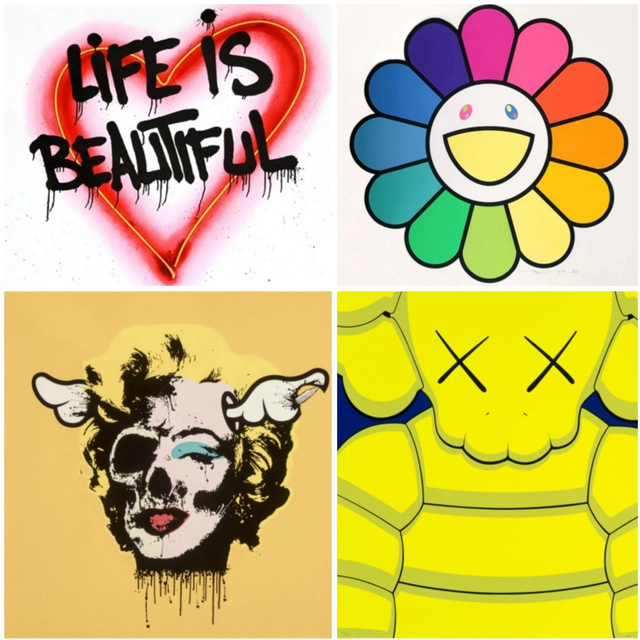
Print Fine Art

8 artworks

  • Indivisible HPM Serigraph Print by Saber

    Saber Indivisible HPM Serigraph Print by Saber

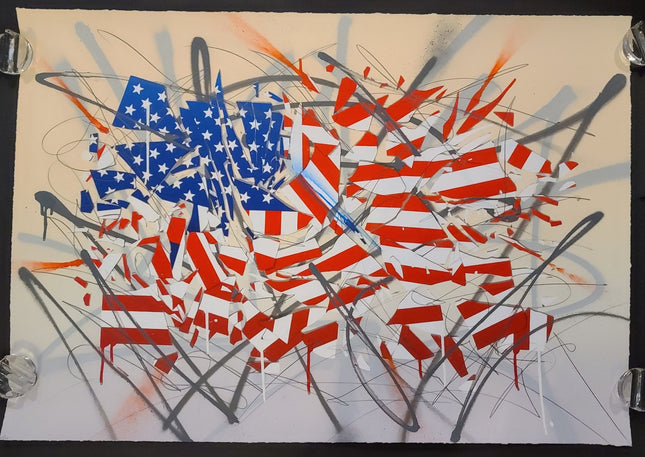
    Indivisible HPM Limited Edition Hand Pulled 4-Color Serigraph Print on Coventry Rag Archival Paper by Saber Graffiti Street Artist Modern Pop Art. This is a large print. -40"x28" in -Serigraph/ mixed media, spray paint, pencil on Coventry Rag archival paper -Each print is unique with spraypaint and pencil -Hand deckled edges "This print was an experiment from start to finish. This is a multi-dimensional mixed media print in the sense the original was created as a conceptual digital-video piece. From this video experiment I was able to capture the final image to be translated into the print format. This was tricky breaking the American Flag that was printed on glass and capturing the right moments as it shattered, but as this process evolved so did the outcome. I really went all out on these with the hand-touching. Within the print layers are raw spray-paint tags buried under multi-colored split fountains. I also penciled and spray-painted on top of the prints weaving these colors and gestures through the image." -Saber

    $803.00

  • Graff Head Slick 6 HPM Unique Silkscreen Print by OG Slick

    OG Slick Graff Head Slick 6 HPM Unique Silkscreen Print by OG Slick

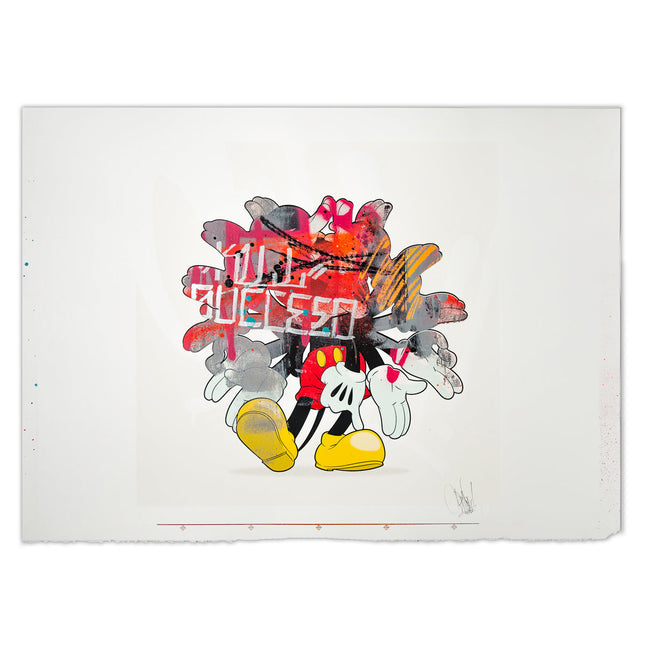
    Graff Head Slick 6 HPM Unique Spray Paint Silkscreen Print by OG Slick Embleshed 1 of 1 Hand-Pulled 11-Color on Untrimmed 250gsm Stonehenge Fine Art Paper Artwork. 2022 Signed Unique 1/1 HPM Spray Paint Artwork Size 40x26 Silkscreen Print of Mickey Mouse Cartoon Guan Yin Throwing Hand Signs With Upper Body and Face Covered in Adstract Spray Paint Graffiti & Words Graffiti, street art, and pop art have always been powerful mediums to convey social, political, and cultural commentary. Within this realm, artists often amalgamate iconic symbols from various spheres to create striking visual stories. A testament to this fusion is the "Graff Head Slick 6 HPM Unique" spray paint silkscreen print by renowned graffiti artist OG Slick. This hand-pulled 11-color masterpiece stands out, not just for its intricate detailing but also for its commentary and interplay of traditional and modern iconography. This art piece is meticulously crafted on 250gsm Stonehenge fine art paper, preserving its vivid colors and sharp lines. The 40x26 artwork showcases Mickey Mouse, an emblematic character synonymous with American pop culture, represented as the Guan Yin, the Chinese Goddess of Compassion. This portrayal of Mickey Mouse, donning the avatar of Guan Yin and striking hand signs, intertwines two cultures while highlighting the universality of certain messages. The upper body and face of Mickey, concealed under a layer of abstract spray paint graffiti and words, further amalgamates traditional art forms with modern graffiti styles. OG Slick's motivation behind this series traces back to his younger days, during his visits to Chinatown. He recalls the presence of small figurines placed near store registers, believed to bring prosperity to the shopkeepers and blessings to those who offered them money. Drawing parallels, the artwork visualizes the same Guan Yin figurine, now juxtaposed in the digital age, where she is showered with digital currency, symbolizing the evolving nature of blessings and prosperity in contemporary times. Through this mesmerizing piece, OG Slick delves into the intricate dance of tradition and modernity, reminding viewers of the transient nature of cultural values and the enduring essence of art.

    $3,705.00

  • 599 Ferrari Archival Print by Camilo Pardo

    Camilo Pardo 599 Ferrari Archival Print by Camilo Pardo

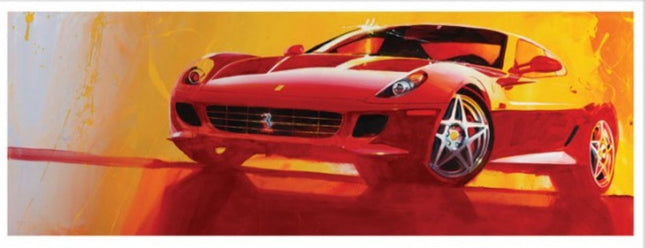
    599 Ferrari Limited Edition Archival Pigment Prints on 310gsm Fine Art Paper by Camilo Pardo Graffiti Street Artist Modern Pop Art. The art that Camilo Pardo has created over the years is all over Detroit. A considerable amount of it is present on our freeways at any given moment of the day. Most recognized for his design work on the Ford GT, Camilo put verve in the steel curves and reminded us that a car's first internal combustion takes place in an artist's mind.

    $533.00

  • On the Shoulders of Tiny Giants I Archival Canvas Print by Dave Pollot

    Dave Pollot On the Shoulders of Tiny Giants I Archival Canvas Print by Dave Pollot

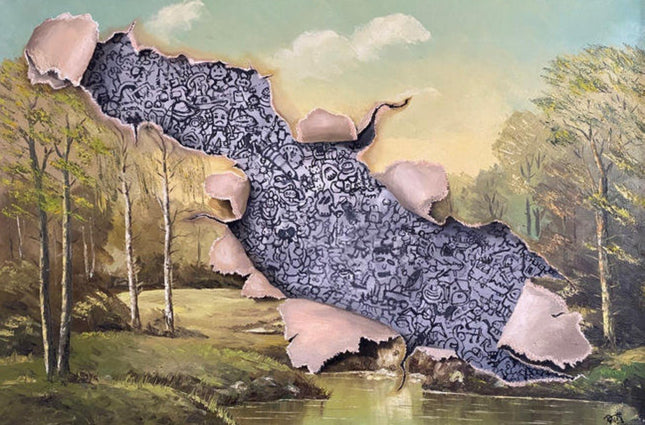
    On the Shoulders of Tiny Giants I Limited Edition Archival Pigment Fine Art Prints on Canvas by Graffiti Street Art and Pop Culture Artist Dave Pollot. 2021 #1/25 Signed & Numbered Limited Edition of 25 Artwork Size 31x40 Large Format Canvas Print on pH neutral 17 mil canvas. 2" of white margin surrounding the image. On the Shoulders of Tiny Giants I: Archival Pigment Fine Art Print by Dave Pollot On the Shoulders of Tiny Giants, I is an archival pigment fine art print on canvas created by the graffiti street art and pop culture artist Dave Pollot. Released in 2021, this piece is a limited edition of 25, signed and numbered by the artist, with the first print (#1/25) measuring a substantial 31x40 inches. Pollot's ability to blend traditional landscape paintings with modern pop art and graffiti elements is showcased in this large-format artwork. The use of pH-neutral 17 mil canvas ensures the longevity of the print, providing both durability and a rich, textured appearance. Exploring the Layers of Tradition and Modernity in Pollot's Work Dave Pollot's work often centers around the playful intersection of classical art forms and contemporary cultural references. In On the Shoulders of Tiny Giants I, Pollot takes what appears to be a traditional landscape painting at first glance and disrupts it with a graffiti-inspired burst of modernity. The foreground of the piece depicts a peaceful, pastoral scene, with trees lining a tranquil river. The colors are muted, evoking the soft, earthy tones characteristic of 19th-century landscape art. The landscape itself seems to invite the viewer into a serene world where time stands still. However, Pollot's signature approach is to blend these traditional elements with a bold, contemporary twist. In the center of the image, the painting seems to tear away, revealing a chaotic, cartoon-like graffiti pattern underneath. This underlayer is filled with abstract doodles and tiny characters, evoking a sense of frenetic energy and urban street art culture. The effect is both jarring and mesmerizing, as if the tranquil surface of the painting has been ripped apart to expose the vibrant and often chaotic world that lies beneath. This contrast between the old and the new, the serene and the chaotic, is a central theme in much of Pollot's work. He invites viewers to question their assumptions about art and culture, asking whether the old and the new can truly coexist or whether one will always dominate the other. In this piece, Pollot seems to suggest that the two are inextricably linked — that modern culture, with all its noise and chaos, is built upon the foundations of the past. The Influence of Street Pop Art and Graffiti Pollot's use of graffiti-inspired visuals in On the Shoulders of Tiny Giants I ties directly into the tradition of street pop art. Street pop art often takes elements of urban graffiti and recontextualizes them within the framework of fine art. In this piece, Pollot does just that, using the ripped-away section of the canvas to reveal an intricate world of graffiti-like doodles and characters. The characters in the underlayer are reminiscent of the playful, sometimes absurd figures often found in street art, lending a sense of humor and whimsy to the piece. At the same time, the graffiti element serves as a commentary on the tension between high and low art forms. Traditional landscape paintings are often seen as part of the "high art" canon, while graffiti is typically associated with street culture and countercultural movements. By combining the two, Pollot challenges the viewer to question the hierarchies that exist within the art world. Is one form of art inherently more valuable or legitimate than the other, or do both have something important to offer? Pollot's choice to depict the graffiti layer as something hidden beneath the surface of the traditional painting also raises interesting questions about what is visible and what is concealed in art and culture. Graffiti is often created in public spaces, yet it is frequently painted over or removed, its presence deemed undesirable in certain contexts. In On the Shoulders of Tiny Giants I, Pollot brings this hidden layer to the forefront, forcing the viewer to confront the vibrant, chaotic world that is often just out of sight. The Technique and Materiality of the Print Pollot's attention to detail is evident not only in the composition of the piece but also in the materials and techniques used to create it. The archival pigment printing process ensures that the colors remain vibrant and true to the artist's vision over time. This is particularly important for a piece like On the Shoulders of Tiny Giants I, where the contrast between the muted tones of the landscape and the bold, colorful graffiti layer is central to the overall impact of the artwork. The use of pH-neutral 17 mil canvas provides a sturdy, high-quality surface for the print, allowing the texture of the canvas to enhance the richness of the image. The size of the print, at 31x40 inches, makes it a statement piece. The large format allows the viewer to fully appreciate the intricate details of both the landscape and the graffiti elements. Pollot's use of a 2-inch white margin surrounding the image further enhances the sense of depth and space, drawing the viewer's eye inward toward the center of the piece. This margin also serves a practical purpose, making it easier to frame the print while maintaining the integrity of the image. The Evolution of Modern Art in Pollot's Work On the Shoulders of Tiny Giants I is a prime example of how modern artists like Dave Pollot are rethinking the boundaries of art. Pollot's work is part of a larger movement within contemporary art that seeks to break down the distinctions between high and low culture, tradition and modernity, fine art and street art. By blending these elements together, Pollot creates a visual dialogue that speaks to the complexity of modern life. Pollot's decision to incorporate graffiti elements into a traditional landscape also reflects the growing influence of street art within the world of contemporary fine art. Artists like Banksy and Shepard Fairey have brought street art into the mainstream, challenging conventional ideas about what art is and where it belongs. Pollot's work builds on this tradition, using the language of street art to disrupt the conventions of classical painting. On the Shoulders of Tiny Giants I is a testament to Pollot's ability to navigate the complex terrain of modern art. His work is both a celebration of the past and a commentary on the present, inviting viewers to reconsider their assumptions about art, culture, and the world around them. The limited edition nature of the print, combined with Pollot's signature style, makes this piece a valuable addition to any collection of contemporary art, particularly for those who appreciate the intersection of street pop art and graffiti culture with traditional fine art forms.

    $589.00

  • Inspiration Wave Giclee Print by Matt Gondek

    Matt Gondek Inspiration Wave Giclee Print by Matt Gondek

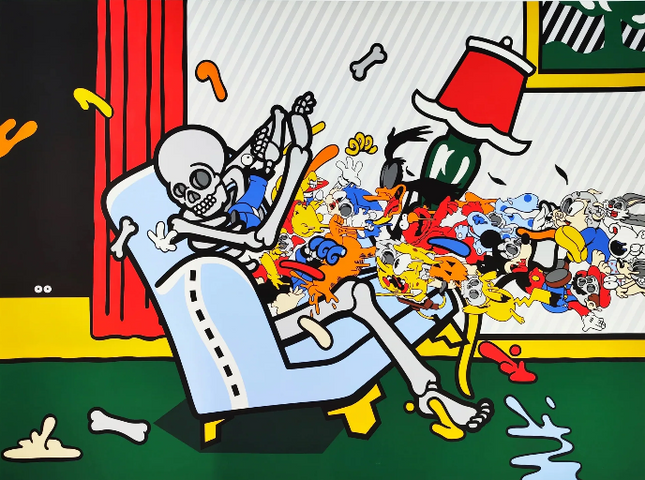
    Inspiration Wave Giclee Print by Matt Gondek Artwork Limited Edition Print on 255gsm Cotton Fine Art Paper Graffiti Pop Street Artist. 2023 Signed & Numbered Limited Edition of 500 Artwork Size 40x30 Skeleton Sitting At House Exploding with Cult Classic and Pop Culture Iconography. Decoding Matt Gondek's "Inspiration Wave" Matt Gondek's "Inspiration Wave" emerges as a striking addition to the landscape of street pop art and graffiti artwork, carrying his signature motif of deconstruction into the realm of limited edition prints. This 2023 piece is a giclee print on 255gsm cotton fine art paper, encompassing a limited series of 500 signed and numbered editions. Measuring 40x30 inches, the artwork features a skeleton sitting in a house, explosively surrounded by cult classic and pop culture iconography. Artistic Expression in "Inspiration Wave" The artwork vibrantly captures the essence of Gondek's approach to pop art. He deconstructs familiar figures from popular culture, recontextualizing them in chaotic yet meticulously structured compositions. The skeleton, often a symbol of mortality, is juxtaposed with the destruction of lively, animated characters, possibly reflecting on the transient nature of pop culture itself. Technical Craftsmanship and Symbolism Gondek's "Inspiration Wave" demonstrates his technical craftsmanship in fine art printing and embodies the more profound symbolism often associated with street pop art. Giclee printing indicates a dedication to quality and longevity, ensuring that the vividness of the acrylic paint colors and bold lines are preserved. Cultural Resonance of Gondek's Work Gondek's work resonates with a modern audience by taking elements of nostalgia and reimagining them with a contemporary twist. The artwork becomes a cultural artifact that speaks to the influence of pop and street art in today's society, marking Gondek as a pivotal figure in these art movements.

    $978.00

  • Graff Head Slick 14 HPM Unique Silkscreen Print by OG Slick

    OG Slick Graff Head Slick 14 HPM Unique Silkscreen Print by OG Slick

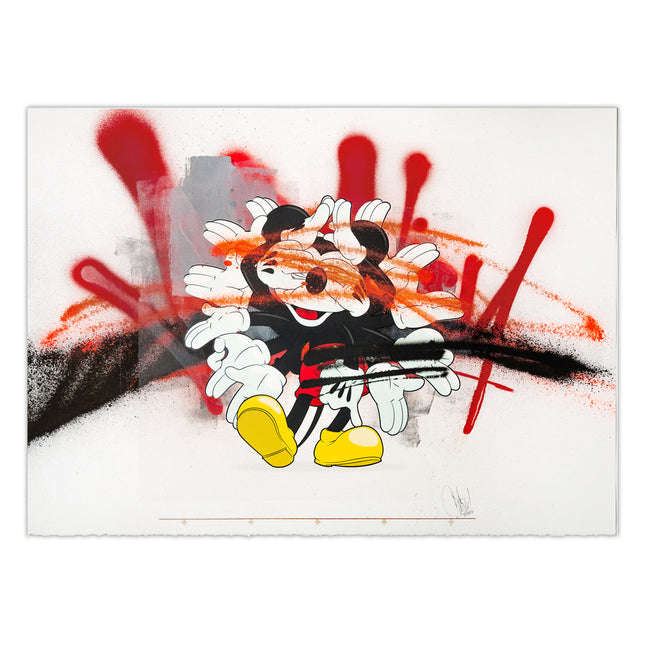
    Graff Head Slick 14 HPM Unique Spray Paint Silkscreen Print by OG Slick Embleshed 1 of 1 Hand-Pulled 11-Color on Untrimmed 250gsm Stonehenge Fine Art Paper Artwork. 2022 Signed Unique 1/1 HPM Spray Paint Artwork Size 40x26 Silkscreen Print of Mickey Mouse Cartoon Guan Yin Throwing Hand Signs With Upper Body and Face Covered in Red & Black Spray Paint. Pop art, street art, and graffiti often transcend traditional boundaries, embracing contemporary cultural themes, and seeking inspiration from the world around us. The "Graff Head Slick 14 HPM Unique" spray paint silkscreen print, meticulously crafted by OG Slick, embodies this spirit of artistic transcendence. Crafted on untrimmed 250gsm Stonehenge Fine Art Paper, this artwork is an emblem of precision with its 11-color hand-pulled technique, standing as a testament to the craftsmanship in the realm of modern art. This unique piece, signed and dated 2022, seamlessly merges the familiar with the profound. At first glance, the iconic visage of Mickey Mouse captures the attention. However, deeper introspection reveals the Mickey Mouse character reimagined as the Guan Yin, the Goddess of Compassion. With an upper body and face drenched in hues of red and black spray paint, the imagery strikes a balance between the nostalgic and the spiritual, while also resonating with the rebellious tones of street art. Drawing inspiration from his childhood forays into Chinatown, OG Slick presents an intriguing narrative through this artwork. Stores in Chinatown often had figurines at their registers, believed to usher in good fortune for both the owner and the generous patrons. Reflecting this tradition, the Mickey Mouse Guan Yin in this silkscreen print is portrayed being showered with digital currency, symbolizing the merging of ancient beliefs with the digital age. It's a commentary on how tradition finds its place in the modern world, and how even revered symbols like Guan Yin can be seen through fresh, contemporary lenses. Through this print, OG Slick not only celebrates his roots and memories but also challenges viewers to question and redefine the symbols that populate our collective consciousness. Unique run of 25.

    $3,705.00

  • Carga Fragile Mural Lithograph Print by Shepard Fairey- OBEY

    Shepard Fairey- OBEY Carga Fragile Mural Lithograph Print by Shepard Fairey- OBEY

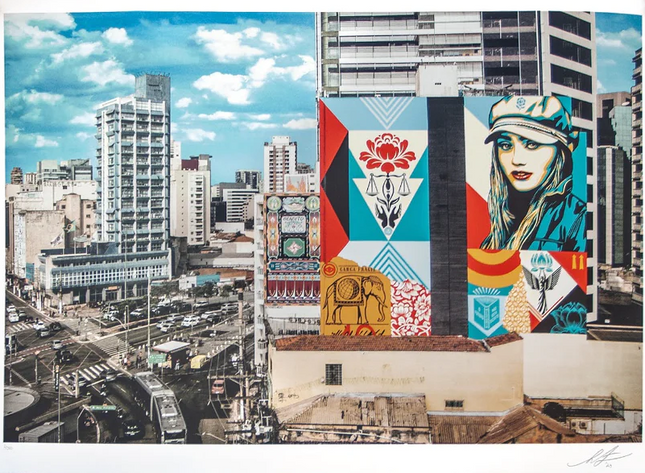
    Carga Fragile Mural 18-Color Lithograph Print by Shepard Fairey- OBEY Hand-Pulled Print on 270gsm BFK Rives Fine Art Paper Limited Edition Graffiti Street Pop Artwork. 2023 Signed & Numbered Limited Edition of 300 Artwork Size 40x28 Fine Art Large Format Lithograph "Carga Frágil" Mural in São Paulo, Brazil. This 18-color lithograph, measuring 40 by 28 inches, is printed on BFK Rives 270g paper featuring deckled edges. Created at the historic Idem Studio in Paris using a Marinoni press, it is based on an original illustration inspired by a photograph captured by Jon Furlong. The piece is signed by the artist, Shepard Fairey, and is a numbered edition limited to 300 prints. A portion of the proceeds will be donated to Greenpeace USA. Each print is accompanied by a digital certificate of authenticity provided by Versiart and features the Idem publishing chop in the lower left corner. The Idem Studio was established within a 15,000-square-foot, two-story workshop at 49 rue de Montparnasse. Originally built in 1881 by printer Eugene Dufrenoy, the workshop was designed to house his lithographic presses. In its early days, the facility relied on 19th-century flat machines powered by belt-driven propeller shafts and a steam boiler. The space was later occupied by the Michard Printing Company, which specialized in crafting vibrant, special edition maps. In 1976, Fernand Mourlot acquired the workshop and transformed it into a fine art printshop. Throughout its history, the workshop has seen a revival of lithography, with craftsmen collaborating closely with esteemed artists such as Pablo Picasso, Henri Matisse, Alberto Giacometti, Joan Miró, and Marc Chagall. Today, the printshop is dedicated to contemporary artists like Sophie Calle, JR, William Kentridge, David Lynch, Paul McCarthy, and Raymond Pettibon. Lithographs at Idem Studio are created by drawing an image on a flat stone or transferring it onto aluminum plates. The image is then treated with water and an oil-based ink that is rolled across the surface. Paper is placed atop the matrix and run through a press, transferring the ink onto the paper to form the final lithograph. The process results in a rich, dense layer of ink, producing an exceptional final piece. Now known as Idem, the Mourlot company stands as one of the oldest printing houses still utilizing traditional lithography techniques.

    $3,915.00

  • Viva La Raza Archival Print by The Perez Bros

    The Perez Bros Viva La Raza Archival Print by The Perez Bros

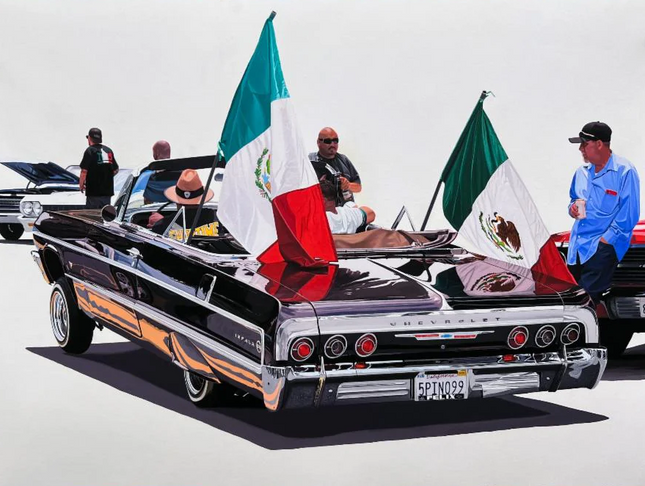
    Viva La Raza Archival Print by The Perez Bros Limited Edition on Hand Deckled 290gsm Moab Entrada Fine Art Paper Pop Graffiti Street Art Artist Modern Artwork. 2023 Signed & Numbered Print Limited Edition of 25 Artwork Size 40x30 Archival Pigment Fine Art by The Perez Bros

    $705.00

Print Fine Art Graffiti Street Pop Artwork

Print Art in the Context of Street Pop Art and Graffiti Artwork

Concerning Street Pop Art and Graffiti Artwork, print art represents a dynamic and influential medium that has played a crucial role in the dissemination and evolution of these art forms. Historically, printmaking has been a vital tool for artists to reproduce their work efficiently and accessibly, allowing them to reach a broader audience. In street and pop art, print art encompasses various techniques, including screen printing, stencil printing, and lithography, each offering unique possibilities for artistic expression and mass distribution. This medium has enabled artists to challenge traditional notions of art, bringing their work from the streets to the galleries and vice versa.  


Evolution and Techniques of Print Fine Art in Street and Pop Art

The evolution of print art within the street and pop art genres is marked by its adoption by iconic artists like Andy Warhol and Keith Haring, who utilized screen printing techniques to create vibrant, high-impact images. This approach allowed for the repetition of bold graphics and bright colors, typical of pop art aesthetics. In street art, printmaking techniques, especially stenciling, became instrumental for artists like Banksy and Shepard Fairey. Stencils allowed for quick, reproducible designs that could be executed rapidly in public spaces. These techniques not only facilitated a more efficient way of producing art but also contributed to the signature styles of these artists, making their work instantly recognizable. The journey of print art within street and pop art has been one of innovation, adaptation, and significant influence. Iconic figures like Andy Warhol and Keith Haring played pivotal roles in this evolution. Warhol, a leading figure in the pop art movement, revolutionized the concept of art production through his use of screen printing. His technique, characterized by the repetition of photographic images and the use of bold, vivid colors, challenged traditional notions of originality and artistic genius. This approach was perfectly aligned with the pop art movement's ethos, which sought to blur the lines between 'high' art and 'low' cultural imagery, often derived from mass media and consumer culture. Keith Haring, another seminal artist, leveraged print art to create dynamic, high-energy works that were accessible and relatable. His art, often filled with simple yet impactful imagery, was rooted in the street culture of New York City. Haring's use of bold lines and bright colors became synonymous with the visual language of the 1980s and left a lasting imprint on the pop art landscape. His work also exemplified the democratizing power of print art, as he often produced prints of his work to make it more accessible to a broader audience.

Print Art's Impact on Accessibility and Distribution

One of the most significant impacts of print art in Street Pop Art and Graffiti Artwork is its role in democratizing art. By enabling mass production, print art has allowed street and pop artists to distribute their work widely, challenging the exclusivity of traditional art forms and galleries. This accessibility has been essential in shaping public perception of street and pop art, transforming them from subcultural expressions to respected and sought-after art forms. Furthermore, the affordability of prints has made it possible for a broader audience to own and engage with art, breaking down barriers between the artists and the public. Print art has served as a vehicle for mass communication and cultural critique in street and pop art. The ability to produce multiple copies of a single image has allowed artists to reach a wider audience, spreading their visual messages far and wide. This aspect of print art aligns well with the ethos of street and pop art, which often comment on consumerism, political issues, and societal norms. The replication of images in print art echoes the mass-produced nature of consumer goods and media imagery that these art movements often critique.

Print Fine Art Contemporary Trends and Future Directions

Print art stands at the crossroads of tradition and innovation in the current artistic milieu. Digital technology has ushered in a new era for printmaking, allowing artists to infuse time-honored techniques with cutting-edge processes. This fusion has created hybrid works that blur the lines between analog and digital, handcrafted and machine-produced, tangible and virtual. Such innovations reflect the fluid nature of Street Pop Art and Graffiti Artwork, where staying static is not an option, and evolution is the norm. Artists entrenched in street pop art and graffiti are redefining the scope of print art by incorporating elements of 3D modeling, digital collage, and algorithmic design. The textures, colors, and forms that were once exclusive to the digital realm are now being translated into physical prints, expanding the artists' visual vocabulary and offering new experiences to the audience. As these digital techniques become more sophisticated, the ability to manipulate images and create complex layers has resulted in prints that are not only artworks but also technical marvels. Integrating augmented reality (AR) and virtual reality (VR) with traditional print art is another frontier being explored. AR-enabled prints can transform static images into interactive experiences, engaging viewers in a multisensory journey.

Similarly, VR can take the essence of a print and expand it into an immersive environment, allowing the audience to step into a world crafted by the artist. These developments are expanding the canvas for artists and redefining the relationship between the artwork and the viewer. Environmental sustainability is also shaping the future of print art. As the world becomes more ecologically conscious, artists are seeking ways to reduce the environmental impact of their work. This has led to exploring eco-friendly inks, recycled materials, and alternative energies in creating prints. The street pop art and graffiti scenes, which have always had a dialogue with the urban environment, are now extending this conversation to the planet's wellbeing, making art that speaks to societal issues and treads lightly on the earth. The democratization of art through digital platforms has significantly impacted print art. Social media and online galleries have made it easier for artists to showcase their work and for collectors to discover and acquire new pieces. This accessibility breaks down the barriers between artists and audiences, fostering a global community of creators and enthusiasts. The ease of sharing and selling prints online not only boosts the visibility of artists but also contributes to the cultural and economic vitality of the art market.

Looking forward, print art is poised to embrace even more radical transformations. Biotechnology and materials science advances could lead to living prints that change over time, grow, or even respond to their environment. Exploring space and celestial bodies as new canvases for art is another realm that printmaking could venture into. The ethos of street pop art and graffiti, with their roots in challenging the status quo and pushing boundaries, aligns perfectly with these forward-thinking prospects. In the grand tapestry of Street Pop Art and Graffiti Artwork, print art continues to be a thread that weaves the past and future together. It stands as a testament to the resilience and adaptability of these art forms, evolving to meet the moment while never losing sight of their foundational principles. As technology progresses and society changes, print art will undoubtedly remain at the forefront of artistic innovation, capturing the imagination of artists and audiences alike for generations to come. 

The Enduring Legacy of Print Art in Modern Art Movements

The enduring legacy of print art in Street Pop Art and Graffiti Artwork lies in its ability to amplify the artist's voice and reach a diverse audience. Its influence extends beyond art creation to social and political activism, where prints have often been used for communication and protest. As artists continue to explore and reinvent printmaking techniques, the medium remains a vital component of these vibrant and ever-evolving art forms. Print art, with its rich history and innovative future, continues to be a testament to the power of art to transcend boundaries and connect people across different cultures and backgrounds. Print art's continued evolution and adaptation within street and pop art underscore its significance in these genres. As new technologies and materials emerge, artists find innovative ways to incorporate printmaking into their work, pushing the boundaries of what can be achieved visually and conceptually. Digital printing, for example, has opened up new possibilities for complexity, precision, and experimentation in color and form. The journey of print art in street and pop art is a testament to these artistic movements' dynamic and ever-changing nature. From Warhol's screen prints to Banksy's stenciled walls, print art has been instrumental in defining the visual and conceptual landscape of street and pop art. It continues to be a vital medium for artists to express their visions, engage with audiences, and comment on the world around them.
Footer image

© 2025 Sprayed Paint Art Collection,

    • Amazon
    • American Express
    • Apple Pay
    • Bancontact
    • Diners Club
    • Discover
    • Google Pay
    • iDEAL
    • Mastercard
    • PayPal
    • Shop Pay
    • Visa

    Login

    Forgot your password?

    Don't have an account yet?
    Create account