
Activism & Protest

1 artwork

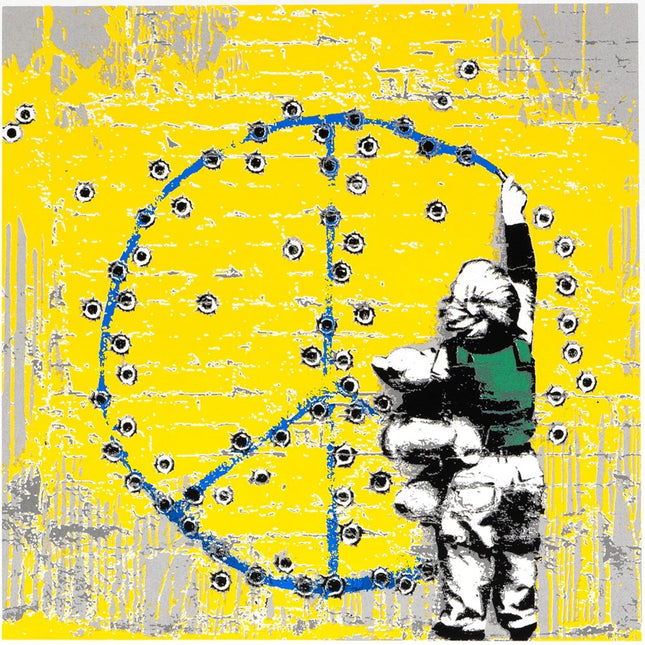
  • War Child Silkscreen Print by Hijack

    Hijack War Child Silkscreen Print by Hijack

    War Child 5-Color Hand-Pulled Limited Edition Silkscreen Print on Fine Art Paper by Hijack Rare Street Art Famous Pop Artwork Artist. 2022 Signed Edition of 75 16x16 Ukraine War Protest Print. "When adults wage war, children suffer." War Child by Hijack: A Powerful Statement in Street Pop Art & Graffiti Artwork The War Child silkscreen print by Hijack is a striking piece of street pop art & graffiti artwork, using a five-color hand-pulled technique to create a bold and emotionally charged image. Released in 2022, this signed, limited edition print of 75 captures the devastating impact of war through the lens of innocence. Measuring 16x16 inches, this fine art print is a direct protest against the war in Ukraine, highlighting the suffering endured by children in conflict zones. Symbolism and Message Behind War Child Hijack’s artwork is known for its ability to communicate strong social and political messages, often using stenciled imagery reminiscent of early graffiti movements. In War Child, a young girl stands before a bullet-riddled wall, drawing a peace symbol with what appears to be the holes left by gunfire. The choice of a bright yellow background contrasts with the dark imagery, making the scene both visually arresting and emotionally powerful. The child clutches a stuffed teddy bear, a universal symbol of childhood, emphasizing innocence and vulnerability amidst destruction. This print echoes a fundamental reality of war—the youngest and most innocent suffer the most. The image is a call to awareness, urging viewers to reflect on the human cost of armed conflicts. It speaks to the resilience of children, showing that even in the face of violence, they cling to symbols of hope and peace. The Influence of Hijack in Street Pop Art & Graffiti Artwork Hijack has established a strong presence in the street pop art & graffiti artwork world, using a combination of stenciling, mixed media, and traditional silkscreen techniques. His works often draw influence from activist street art, satirical graffiti, and urban social commentary, making them both thought-provoking and visually engaging. War Child follows in the footsteps of artists who have used public art as a means of social protest, calling attention to issues that are often ignored or underrepresented in mainstream discourse. Hijack’s visual style is reminiscent of stencil-based political street art, often associated with protest movements and anti-war messaging. His ability to translate global conflicts into emotionally charged urban artwork has earned him recognition as a contemporary voice in activist-driven street pop art. The Role of War Child in Modern Protest Art War Child fits within a broader tradition of street pop art & graffiti artwork that challenges authority, exposes injustice, and provides commentary on contemporary issues. The Ukraine war has generated a global response from artists, many of whom have used their platforms to speak out against violence and humanitarian crises. By creating limited-edition prints like War Child, Hijack ensures that the message reaches collectors, activists, and art enthusiasts who share a passion for socially conscious urban art. This piece is more than just a print—it is a statement, a protest, and a call to action. Through the visual language of street pop art & graffiti artwork, Hijack turns walls into megaphones, amplifying voices that might otherwise go unheard. War Child stands as a testament to the power of art to challenge, provoke, and inspire change, making it an essential addition to the evolving narrative of art as activism.

    $2,500.00

Activism & Protest Graffiti Street Pop Artwork

Activism & Protest in Street Pop Art & Graffiti Artwork

Activism and protest have been central themes in the evolution of Street Pop Art & Graffiti Artwork, transforming public walls, abandoned structures, and gallery spaces into platforms of social resistance. From anti-authoritarian messages sprayed on city infrastructure to vividly illustrated demands for justice in silkscreen editions, this genre has long been a visual voice for the voiceless. Artists from diverse backgrounds have used their creative skills to spotlight issues such as war, police brutality, gender inequality, environmental degradation, and systemic racism. The potency of the work comes from its placement, language, and accessibility. Art tied to activism often appears outside conventional museum settings, making its message immediate and unavoidable for those navigating urban landscapes. The democratic nature of graffiti and the reproducibility of pop art techniques have allowed artists to disseminate politically charged imagery across cities and continents.

The Visual Language of Dissent

Street Pop Art & Graffiti Artwork uses a distinct visual language to communicate urgency and resistance. Symbols such as raised fists, barbed wire, chains, riot shields, megaphones, and bold typography are frequently integrated into murals, posters, and stencils. Artists utilize repetition, contrast, and iconography to achieve maximum impact with minimal elements. A single stencil of a child holding a sign, or a mass-produced silkscreen poster declaring freedom or revolution, can provoke thought, galvanize action, and attract media attention. This visual shorthand makes the art instantly recognizable and resonates with audiences regardless of language. Shepard Fairey, Banksy, JR, and other internationally known figures have used these methods to inject their political views into mainstream conversations while maintaining the raw edge of graffiti and street culture.

Historical Movements and Urban Resistance

Throughout the decades, activist street art has mirrored and amplified grassroots movements around the world. During the 1960s and 1970s, protest art surged with anti-Vietnam War imagery and calls for civil rights in the United States. In South Africa, slogans and anti-apartheid murals emerged under great risk. More recently, movements such as Occupy Wall Street, Black Lives Matter, and climate justice campaigns have drawn strength from graffiti artists and street pop printmakers who create bold visuals that spread rapidly through social media and public installations. Walls and subway tunnels have been reclaimed as spaces of dialogue where art acts as both a megaphone and a historical document. The street itself becomes a gallery, archive, and battleground for competing narratives of power and resistance.

The Role of the Artist as Agitator and Ally

Street Pop Art & Graffiti Artwork does not just reflect activism; it actively shapes public consciousness. Artists become agitators, allies, and educators, often blurring the line between creator and protester. By embedding messages in neighborhoods, on apparel, and in limited edition prints, they create a continuity between street-based activism and contemporary fine art. Many artists work collaboratively with communities, contributing visual support to rallies, printing posters for marches, and painting murals that honor victims or amplify demands for justice. The urgency and repetition found in protest chants find visual parallels in repeated motifs and layered wheat-paste campaigns. This dynamic relationship between activism and visual art underscores how deeply connected public creativity is to political action, and how Street Pop Art & Graffiti Artwork continues to influence culture through direct confrontation with injustice.

Footer image

© 2025 Sprayed Paint Art Collection,

    • Amazon
    • American Express
    • Apple Pay
    • Bancontact
    • Diners Club
    • Discover
    • Google Pay
    • iDEAL
    • Mastercard
    • PayPal
    • Shop Pay
    • Visa

    Login

    Forgot your password?

    Don't have an account yet?
    Create account