Ron English- POPaganda

2 artworks

  • Lincoln Obama 15 President Barrack Vinyl Art Sculpture by Ron English

    Ron English- POPaganda Lincoln Obama 15 President Barrack Vinyl Art Sculpture by Ron English

    Lincoln Obama 15 President Barrack Vinyl Art Sculpture by Ron English- POPaganda Limited Edition Collectible Sculpture Figure Fine Artwork by Graffiti Pop Street Artist. 2008 Limited Edition of 50 Artwork Size 10x15 New In Box Stamped Vinyl Fine Art Toy Figure Sculpture. Ron English- POPaganda – Abraham Obama Vinyl Sculpture in Street Pop Art & Graffiti Artwork Ron English- POPaganda’s Abraham Obama vinyl art sculpture is one of the most audacious and conceptually layered pieces in the evolution of Street Pop Art & Graffiti Artwork. Created in 2008 during the height of President Barack Obama’s first campaign, this limited edition collectible (edition of 50) merges two of America’s most culturally significant presidents—Abraham Lincoln and Barack Obama—into a singular hybrid bust. Standing 10 inches tall by 15 inches boxed, and produced in vinyl by MINDstyle, this figure embodies Ron English- POPaganda’s signature approach: visual collision, political parody, and cultural remix, all filtered through the lens of pop surrealism and graffiti-inspired fine art. The sculpture presents Obama with Lincoln’s iconic facial hair and historical attire, challenging the viewer to reexamine not only the legacy of leadership but also the collective symbols of American hope and progress. The packaging reinforces this fusion with a bold, saturated yellow and green colorway and English’s graffiti-styled hand lettering. It’s equal parts street culture artifact and fine art satire. With this work, English transforms campaign-era idealism into a collectible statement piece, collapsing timelines and creating a new icon meant to provoke, amuse, and unsettle. Visual Satire and Political Remix in 3D Form This sculpture is more than a mashup—it’s a sculptural commentary on how America constructs its heroes. By merging Lincoln, the president who ended slavery, with Obama, the first Black president of the United States, Ron English- POPaganda uses Street Pop Art’s remix culture to speak directly to race, legacy, and the mythology of leadership. The fusion is visually seamless yet conceptually jarring, forcing viewers to ask whether America’s dreams of progress are genuine or simply surface-level branding. English has long employed pop culture icons in his work—Mickey Mouse, Ronald McDonald, superheroes—manipulating them into grotesque or exaggerated versions of themselves. In Abraham Obama, however, the satire is more refined, bordering on reverence while still critiquing the idealization of political figures. It questions whether Obama’s image was being mythologized in real time, turning him into an icon before history could judge the substance of his presidency. That complexity is central to graffiti and pop-infused art: using popular imagery not to worship, but to dissect. Street Culture Meets Designer Toy Aesthetic As part of the collectible art toy movement, Abraham Obama also bridges the gap between street-level art and gallery collectible culture. The piece follows a lineage of vinyl sculpture rooted in graffiti aesthetics, lowbrow art, and limited edition consumer drops. Much like street art stickers and mural culture, these figures carry the urgency of ephemera and rebellion—but rendered in high-quality materials with gallery-level craft. The use of vinyl makes the work accessible in both material and tone, a tactile evolution of street pop's visual ethos. These types of sculptures are the three-dimensional cousins of stenciled posters and wheatpasted satire, designed to occupy the same cultural headspace while entering private collections. Like a Banksy piece pulled from a wall, Abraham Obama is designed to be portable without losing its streetwise edge. Legacy of Political Pop in Urban Visual Culture Ron English- POPaganda’s Abraham Obama is one of the most definitive statements of political remix in the contemporary art landscape. It belongs to a genre that not only challenges political narratives but also reframes how visual culture mythologizes leadership. In the hands of a graffiti pop veteran like English, the sculpture becomes more than a novelty—it becomes an archive of American hopes, contradictions, and media-driven spectacle. Within the expanding lexicon of Street Pop Art & Graffiti Artwork, Abraham Obama stands as a hybrid icon—part toy, part bust, part satire, part prayer. It encapsulates the power of street-level aesthetics to shape and reflect the nation’s deepest cultural tensions, all while making it possible to hold a piece of visual revolution right in your hands.

    $500.00

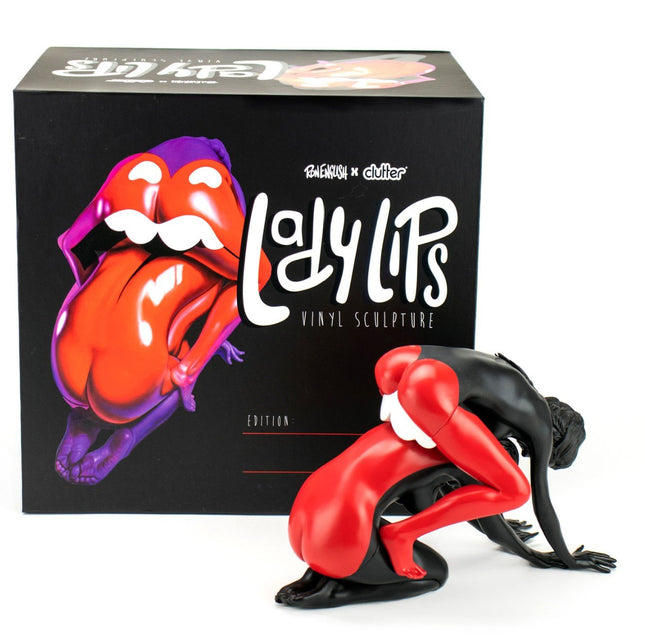
  • Lady Lips OG Sculpture Art Toy by Ron English

    Ron English- POPaganda Lady Lips OG Sculpture Art Toy by Ron English- POPaganda

    Lady Lips- OG Limited Edition Vinyl Sculpture Artwork by Legendary Fine Art Graffiti Street Artist Ron English- POPaganda. 2022 Limited Edition of 100 Solid Vinyl 10x7 Sculpture Rolling Stones Style Kiss Lips Artwork OG Colorway “Every few years, I come upon something that just blows up and becomes way bigger than me… Lady Lips is everything that ever needs to be said about Rock and Roll” – Ron English- POPaganda

    $664.00

Ron English- POPaganda> Pop Artist Graffiti Street Artworks

Ron English – POPaganda in Street Pop Art & Graffiti Artwork

Ron English is one of the most important and subversive voices in contemporary Street Pop Art & Graffiti Artwork, and his self-coined term POPaganda defines an entire movement built on the collision between mass culture and political critique. Born in the United States in 1959, English began his career as an underground billboard liberator—hijacking corporate advertising spaces and replacing them with hand-painted, hyper-saturated visual counterstatements. Through his work, he has turned familiar icons—such as Ronald McDonald, Mickey Mouse, and Abraham Lincoln—into mutated, surreal, and often unsettling images that challenge the viewer’s relationship to media, authority, and consumption. POPaganda is not just a clever pun. It is English’s direct response to the influence of consumerism and mass messaging on culture. It merges the visual vocabulary of American advertising with the iconoclasm of graffiti and the intensity of pop surrealism. His works often feature twisted versions of brand mascots or public figures, rendered in slick, comic-like detail that masks deeper messages about health, capitalism, politics, and identity. This is Street Pop Art at its most loaded—art that is loud, funny, grotesque, and unafraid to confront uncomfortable truths.

Billboard Liberation and Street-Level Disruption

English gained notoriety in the 1980s and 1990s through his billboard interventions, particularly across Texas and New York City. These pieces—often hand-painted with professional-grade precision—would be installed overnight on existing commercial signage, blending seamlessly at a glance but shocking the viewer upon closer inspection. A smiling fast-food mascot with skull teeth, a Disney character with bloated limbs, or a corporate logo dripping with sarcasm—these interventions were not just vandalism, but philosophical statements against the omnipresence of brand control and media saturation. This method mirrors the ethos of graffiti culture: reclaiming public space and turning passive visual environments into battlegrounds of meaning. English’s billboard takeovers combined the spontaneity of street bombing with the layered critique of conceptual art, bridging the raw energy of graffiti with the tactical sharpness of street pop commentary.

POPaganda Characters and Reconstructed Icons

Central to Ron English’s visual universe are his recurring figures—like MC Supersized (an obese Ronald McDonald), the Grin series (featuring skull-grinning versions of pop icons), and his reinterpretations of political and religious figures. These characters are not simply caricatures; they are symbolic vehicles. They hold up a mirror to modern America’s obsession with branding, distortion, and visual consumption. In his Abraham Obama sculpture, for example, English merged two presidents into one surreal hybrid—highlighting the media mythmaking around American leadership and the blur between reverence and commodification. These figures appear across murals, canvases, vinyl toys, designer sculpture, and limited-edition prints—each format allowing English to reach different audiences. This multi-platform presence mimics the very system he critiques, embedding his message into the same cultural flow that shapes mass identity.

Fine Art Meets the Streets in the POPaganda Machine

Despite working in gallery settings and producing museum-level work, English has maintained his connection to the tactics and principles of street art. His murals appear on city walls from Los Angeles to Tokyo, often alongside graffiti legends and contemporary pop surrealists. He collaborates across formats—from vinyl sculpture to apparel—demonstrating how street pop art can infiltrate mainstream culture while retaining its critical edge. Ron English’s POPaganda is more than a visual style—it is a philosophy of resistance through familiarity. By hijacking the images people trust most—mascots, heroes, presidents—he disrupts comfort and forces reflection. In doing so, he embodies the essence of Street Pop Art & Graffiti Artwork: bold, confrontational, visually addictive, and grounded in the urgency to wake people up. In the canon of modern art, Ron English stands as both a trickster and a truth-teller, using the tools of pop to expose the lies within it. Through POPaganda, he turns the language of commerce into a vocabulary of dissent—and that transformation is at the heart of what makes street pop art so vital.

Footer image

© 2025 Sprayed Paint Art Collection,

    • Amazon
    • American Express
    • Apple Pay
    • Bancontact
    • Diners Club
    • Discover
    • Google Pay
    • iDEAL
    • Mastercard
    • PayPal
    • Shop Pay
    • Visa

    Login

    Forgot your password?

    Don't have an account yet?
    Create account