Russia

1 artwork

  • War Child Silkscreen Print by Hijack

    Hijack War Child Silkscreen Print by Hijack

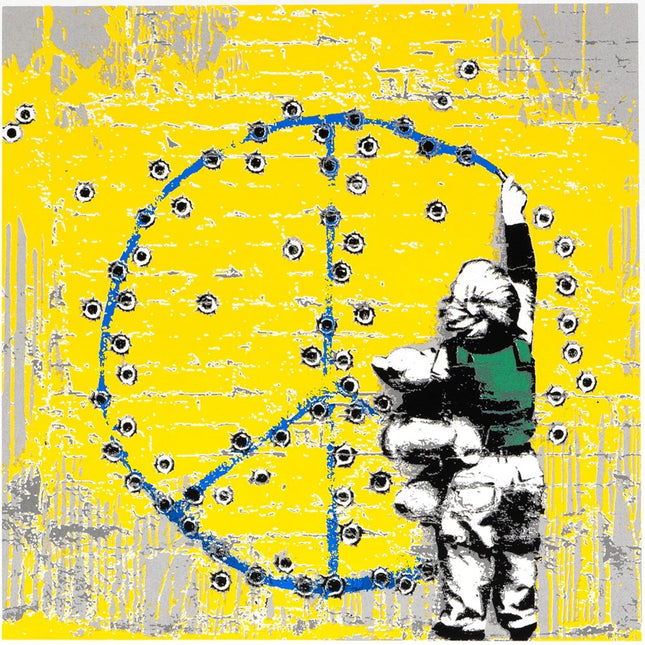
    War Child 5-Color Hand-Pulled Limited Edition Silkscreen Print on Fine Art Paper by Hijack Rare Street Art Famous Pop Artwork Artist. 2022 Signed Edition of 75 16x16 Ukraine War Protest Print. "When adults wage war, children suffer." War Child by Hijack: A Powerful Statement in Street Pop Art & Graffiti Artwork The War Child silkscreen print by Hijack is a striking piece of street pop art & graffiti artwork, using a five-color hand-pulled technique to create a bold and emotionally charged image. Released in 2022, this signed, limited edition print of 75 captures the devastating impact of war through the lens of innocence. Measuring 16x16 inches, this fine art print is a direct protest against the war in Ukraine, highlighting the suffering endured by children in conflict zones. Symbolism and Message Behind War Child Hijack’s artwork is known for its ability to communicate strong social and political messages, often using stenciled imagery reminiscent of early graffiti movements. In War Child, a young girl stands before a bullet-riddled wall, drawing a peace symbol with what appears to be the holes left by gunfire. The choice of a bright yellow background contrasts with the dark imagery, making the scene both visually arresting and emotionally powerful. The child clutches a stuffed teddy bear, a universal symbol of childhood, emphasizing innocence and vulnerability amidst destruction. This print echoes a fundamental reality of war—the youngest and most innocent suffer the most. The image is a call to awareness, urging viewers to reflect on the human cost of armed conflicts. It speaks to the resilience of children, showing that even in the face of violence, they cling to symbols of hope and peace. The Influence of Hijack in Street Pop Art & Graffiti Artwork Hijack has established a strong presence in the street pop art & graffiti artwork world, using a combination of stenciling, mixed media, and traditional silkscreen techniques. His works often draw influence from activist street art, satirical graffiti, and urban social commentary, making them both thought-provoking and visually engaging. War Child follows in the footsteps of artists who have used public art as a means of social protest, calling attention to issues that are often ignored or underrepresented in mainstream discourse. Hijack’s visual style is reminiscent of stencil-based political street art, often associated with protest movements and anti-war messaging. His ability to translate global conflicts into emotionally charged urban artwork has earned him recognition as a contemporary voice in activist-driven street pop art. The Role of War Child in Modern Protest Art War Child fits within a broader tradition of street pop art & graffiti artwork that challenges authority, exposes injustice, and provides commentary on contemporary issues. The Ukraine war has generated a global response from artists, many of whom have used their platforms to speak out against violence and humanitarian crises. By creating limited-edition prints like War Child, Hijack ensures that the message reaches collectors, activists, and art enthusiasts who share a passion for socially conscious urban art. This piece is more than just a print—it is a statement, a protest, and a call to action. Through the visual language of street pop art & graffiti artwork, Hijack turns walls into megaphones, amplifying voices that might otherwise go unheard. War Child stands as a testament to the power of art to challenge, provoke, and inspire change, making it an essential addition to the evolving narrative of art as activism.

    $2,500.00

Russia
Russia has a multifaceted and intriguing history in the realm of pop art, street art, and graffiti art. Its unique socio-political context has shaped its artistic landscape, enabling a vibrant confluence of traditional and modern, local and global, official and underground styles. Spanning different eras, these art forms have played a crucial role in both mirroring societal trends and driving cultural discourse. In the context of pop art, Russia’s relationship is somewhat paradoxical. Pop art, a movement that originated in the mid-20th century, is typically associated with Western culture's commentary on mass consumerism and popular culture. Given that Russia was under Communist rule during the height of the Pop Art movement, the country didn't directly participate in this artistic trend. However, this doesn't mean that Russian artists were completely untouched by the global phenomenon. Instead, they developed a unique response, known as Sots Art, in the 1970s and 80s. Sots Art could be described as the Soviet version of pop art, a form of artistic expression that parodied the propaganda imagery of the state. Artists like Komar and Melamid played an instrumental role in pioneering this movement, redefining the contours of Russian art. Turning to the realm of street art and graffiti, Russia has a rich and thriving scene that is often overlooked. Cities like Moscow and Saint Petersburg are bedecked with murals, stencils, stickers, and traditional graffiti that add color, vibrancy, and voice to the urban landscape. Street art in Russia is not just about aesthetics, it's a form of protest, a mode of communication, and a canvas for social commentary. One notable figure in this scene is Pasha 183, often dubbed as the 'Russian Banksy'. His works, often charged with political undertones, have garnered international attention. Moreover, Russia’s street art has also been a site of contestation and debate. While the state has traditionally maintained a strict stance against graffiti, considering it as vandalism, there have been shifts in recent years. Street art festivals like the "Best City on Earth" in Moscow or the "ArtOvrag" in Vyksa, as well as municipal initiatives to commission murals, indicate a growing acceptance and institutionalization of street art. Exploring Russian pop art, street art, and graffiti art allows us to delve into the heart of the nation's cultural dynamics. These art forms embody the country's history, its ideological struggles, its societal transformations, and its artistic creativity. As Russia continues to navigate its path in the 21st century, these vibrant artistic expressions will undoubtedly continue to evolve and play an influential role in shaping the nation's cultural identity.
Footer image

© 2025 Sprayed Paint Art Collection,

    • Amazon
    • American Express
    • Apple Pay
    • Bancontact
    • Diners Club
    • Discover
    • Google Pay
    • iDEAL
    • Mastercard
    • PayPal
    • Shop Pay
    • Visa

    Login

    Forgot your password?

    Don't have an account yet?
    Create account