Silkscreen Fine Art Print

2 artworks

  • Tulleries Hand Finished Brass No 3 HPM Silkscreen Print by Fin DAC

    Fin DAC Tulleries Hand Finished Brass No 3 HPM Silkscreen Print by Fin DAC

    Tulleries Hand Finished Brass No 3 HPM Silkscreen Print by Fin DAC 24-Color Screen Print Ink on 1mm Corroded Brass Metal Limited Edition Pop Street Art Findac Artwork. 2022 Signed & Numbered Hand Finished HPM Embellished Limited Edition of 10 Artwork Size 24.4x33.07 Fin DAC's Tulleries Hand Finished Brass No 3 HPM Silkscreen Print In the dynamic domain of street pop art and graffiti artwork, Fin DAC has secured his position as a distinguished artist with his striking, hand-finished brass silkscreen prints. "Tulleries Hand Finished Brass No 3 HPM" is a profound example of his commitment to artistry, blending traditional screen printing techniques with innovative materials. This 2022 creation is part of a highly exclusive limited edition series, with only ten pieces available, each hand-signed and numbered, emphasizing its rarity and the artist's personal touch. An Exploration of Material and Method in Fin DAC's Work The piece, "Tulleries Hand Finished Brass No 3 HPM," expands the boundaries of street art and pop art. Using 1mm corroded brass as a substrate is unconventional and experimental, a testament to Fin DAC's inventive spirit. The 24-color screen print ink applied to the metal surface creates a textural contrast that is visually stunning and tactile. Each print, measuring 24.4x33.07 inches, is embellished by hand, ensuring that while each piece belongs to a series, it stands alone as a unique work of art. Symbolism and Aesthetics in Tulleries Hand Finished Brass No 3 HPM The artwork is a mesmerizing portrait featuring Fin DAC's characteristic fusion of urban style and classical elegance. The subject, a female figure with a richly detailed hairstyle and holding a ferret, is depicted against a backdrop of stylized script. The juxtaposition of the corroded brass with the vibrant colors used for the figure creates an interplay of decay and beauty, echoing the transient nature of street art. The dripping paint across the subject's eyes, a recurring element in Fin DAC's work, suggests a mask or alter ego, inviting the viewer to delve into the layered meanings of identity and presentation. Cultural Significance of Fin DAC's Artistic Contributions Fin DAC's "Tulleries Hand Finished Brass No 3 HPM" is a collector's piece and a significant cultural artifact within the street pop art movement. It represents the high level of craftsmanship and thematic depth that street art can achieve. The limited edition nature of the series speaks to the exclusivity often associated with fine art, yet the work retains the accessibility and public-oriented spirit of street art. Fin DAC's "Tulleries Hand Finished Brass No 3 HPM" is a vibrant testament to the artist's innovative approach to street pop art. By marrying the edginess of street art with the sophistication of fine art printmaking, Fin DAC continues to push the envelope, challenging perceptions and inviting art lovers to reconsider the boundaries of contemporary art.

    $10,501.00

  • Sneak Peek Silkscreen Print by Martin Whatson

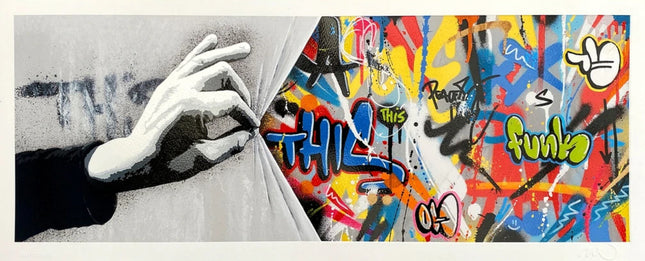
    Martin Whatson Sneak Peek Silkscreen Print by Martin Whatson

    Sneak Peek 7-Color Hand-Pulled Limited Edition Silkscreen Print on 300gsm Somerset Satin Paper by Martin Whatson, a Rare Street Famous Pop Artwork Artist. 2021 Embossed Stamp Limited Edition Artwork Size 24.4x9.84. Paper embossed around the curtain edge for a 3D effect with the graffiti in the background. It was stamped by Martin Whatson & Graffitiprints. Artistic Elements of "Sneak Peek" "Sneak Peek" is a limited edition silkscreen print by Norwegian artist Martin Whatson, known for his distinctive fusion of grayscale imagery with vibrant street art elements. This piece, created in 2021, is a 7-color hand-pulled print on 300gsm Somerset Satin paper, noted for its smooth finish and high quality, a favored medium for fine art prints. The artwork features an embossed stamp and is 24.4 inches by 9.84 inches. One of the most striking aspects of "Sneak Peek" is the embossed paper around the curtain edge, which lends a 3D effect to the graffiti showcased in the background. This technique highlights Whatson's innovative approach to printmaking, combining precision with traditional techniques' tactile quality. Martin Watson Signature Style Whatson's art is a visual commentary on the stark contrasts between the urban landscape and the human experience. In "Sneak Peek," the use of grayscale to depict the hand and the curtain symbolizes the often monochrome and mundane aspects of life. At the same time, the colorful graffiti in the background represents the vibrant, often hidden layers of the city and its expressive street art culture. Integration of Street Pop Art & Graffiti Artwork "Sneak Peek" embodies the spirit of street pop art and graffiti through its combination of classical art references and contemporary graffiti techniques. Martin Whatson and Graffitiprints, a hallmark of authenticity and a nod to the collaborative nature of street art, stamp the piece. Whatson's work is a dialogue between the traditional and the new, and this print is a testament to that ongoing conversation. In conclusion, "Sneak Peek" is a collectible piece that encapsulates Martin Whatson's unique perspective within the street pop art and graffiti movement. It showcases his skillful blending of different art forms to create something that is both accessible and complex, offering a window into the layered world of street art.

    $504.00

Stencil FIne Art Graffiti Street Pop Artwork

Emergence and Influence of Silkscreen in Street Pop Art and Graffiti

Silkscreen printing is synonymous with vibrant versatility and has profoundly influenced street pop art and graffiti artwork. This method, also known as screen printing, involves pushing ink through a mesh screen onto a substrate, except in areas made impermeable to the ink by a blocking stencil. Its origins trace back to China during the Song Dynasty, but in the 20th century, silkscreen found its foothold in the art world. The technique gained prominence with the rise of the pop art movement, with artists like Andy Warhol and Roy Lichtenstein using it to create their iconic works. These artists utilized silkscreen to replicate and manipulate images from popular culture, a practice that resonated powerfully within the burgeoning street art scene. In the context of street pop art and graffiti artwork, silkscreen printing has been embraced for its ability to efficiently reproduce images, allowing artists to share their messages widely and quickly. The essence of street art and graffiti lies in their accessibility and often transient nature. Using silkscreen techniques, street artists can produce multiple copies of their work, extending their reach beyond the physical limitations of street walls and into galleries, exhibitions, and private collections. This has played a critical role in the democratization of art, making it accessible and relatable to a broader audience. Silkscreen printing allows for the layering of colors and textures, offering street artists a unique way to add depth and complexity to their work.

Techniques and Evolution in Street Art

The use of silkscreen in street pop art and graffiti has evolved over the years, with artists continually experimenting with new methods and materials. This evolution has led to a diverse range of styles and techniques within the genre. Some artists combine silkscreen with other mediums like spray paint or hand-drawn elements, combining traditional and contemporary methods. The flexibility of silkscreen printing also enables artists to play with scale, creating everything from small prints to large murals. This versatility has made it an essential tool in the street artist's repertoire, bridging the illicit thrill of graffiti and the more accepted domain of fine art. The cultural impact of silkscreen fine art prints in street pop art and graffiti is profound. These artworks often serve as social commentary, reflecting the artist's perspective on politics, societal norms, or consumer culture. The ability of silkscreen prints to be mass-produced has also played a crucial role in disseminating these messages, allowing them to reach and engage a wider audience. This art form has challenged traditional perceptions of fine art and given marginalized communities and viewpoints a voice. The recognition and commercial success of these prints have further validated street art as a legitimate and vital artistic expression. 

Future Trajectories in Artistic Expression

Looking ahead, the future of silkscreen in street pop art and graffiti artwork appears vibrant and dynamic. The intersection of digital technology with traditional silkscreen techniques opens new frontiers for artistic expression. Artists are now exploring digital silkscreen printing, combining the precision of digital design with the tactile quality of screen printing. This hybrid approach expands street artists' creative possibilities, allowing them to experiment with more complex and detailed imagery. As the boundaries between street art, pop art, and fine art continue to blur, silkscreen printing remains a vital tool, enabling artists to push the limits of creativity and expression. Silkscreen fine art prints have significantly impacted the development and evolution of street pop art and graffiti. This medium has provided artists with a powerful means to reproduce and disseminate their work, bridging the gap between street art's ephemeral nature and fine art's enduring quality. As the art world continues to evolve, the role of silkscreen in street art and graffiti will undoubtedly remain pivotal, driving innovation and artistic exploration in the years to come.
Footer image

© 2025 Sprayed Paint Art Collection,

    • Amazon
    • American Express
    • Apple Pay
    • Bancontact
    • Diners Club
    • Discover
    • Google Pay
    • iDEAL
    • Mastercard
    • PayPal
    • Shop Pay
    • Visa

    Login

    Forgot your password?

    Don't have an account yet?
    Create account