

Smile
-
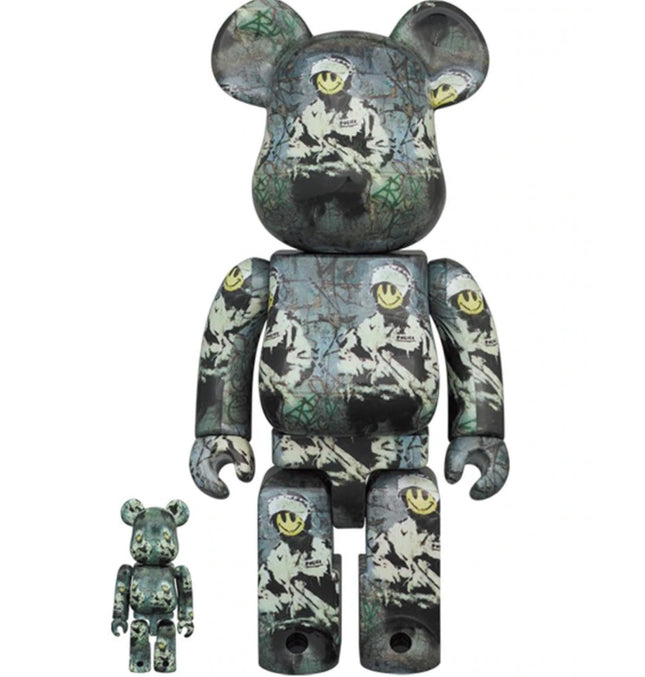
Brandalism & Brandalised Riot Cop 100% & 400% Be@rbrick by Brandalised x Medicom Toy x Banksy
Riot Cop 100% & 400% BE@RBRICK Limited Edition Medicom Vinyl Artwork Toy Collectable Art Figure by Brandalism. 2022 New In Box Brandalised x Medicom Toy x Banksy 2022 Medicom Toy Popular artist Banksy returns with the Riot Cop Bearbrick! This is the third collaboration between Medicom Toy and Brandalism. Water transfer technology ensures unique print placements. The 100% and 400% size Bearbricks stand at 7cm and 28cm tall respectively.
$305.00
-

Ron English- POPaganda Iron Skin Grin Battle Damage Art Toy by Ron English- POPaganda
Iron Skin Grin- Battle Damage Limited Edition Vinyl Art Toy Collectible Artwork by Artists Ron English- POPaganda x Made By Monsters 2021 Stamped/Printed Limited Edition of 500- Grin Smiley Boba Fett Star Wars with Battle Damage Colorway Pop Art Series. Displayed With Bag Ron English – Iron Skin Grin Battle Damage in Street Pop Art & Graffiti Artwork Iron Skin Grin – Battle Damage is a limited edition vinyl art toy created in 2021 by Ron English in collaboration with Made by Monsters, released as part of his larger POPaganda universe. Limited to just 500 pieces, this collectible features a stylized, battle-worn version of Boba Fett, reimagined through English’s iconic Grin series. With detailed helmet dents, bold color blocking, and the unmistakable skeletal grin visible beneath the visor, this piece fuses fan culture with subversive street aesthetics. It’s not just a figure—it’s a commentary on icon worship, war culture, and the plastic mythology of modern America, all through the lens of Street Pop Art & Graffiti Artwork. This figure belongs to Ron English’s long-running exploration of pop culture distortion. The Grin motif—a skeletal smile embedded within famous characters—is used here to deconstruct the legendary Star Wars bounty hunter. English does not merely replicate Boba Fett, he fractures him. By inserting the skull-teeth grin and painting damage onto the armor, English forces a conversation about what lies beneath the mythology of heroism and violence. It turns a beloved sci-fi figure into an eerie effigy of consumer nostalgia—and critique. Star Wars Meets Graffiti Mutant Aesthetic Street Pop Art thrives on remix culture, and Ron English’s Iron Skin Grin figure exemplifies this approach. It pulls from one of the most commercially successful narratives in American media—Star Wars—and injects it with graffiti-born irreverence and symbolic decay. The character design retains its pop appeal: clean vinyl, bold lines, slick finishes. But the injection of the Grin skull beneath the mask mutates Boba Fett into something uncanny, almost undead. The figure's sculpted dents and wear patterns mimic real combat damage, which juxtapose perfectly against the cartoonish structure and toy-grade polish. This creates tension between authenticity and illusion—between the glorified violence of media icons and the real consequences of power and identity. That’s where the graffiti logic kicks in: take what’s familiar, mark it, break it, and remake it with your own truth. Vinyl Collectibles as Subversive Street Sculpture Ron English’s vinyl toys, including Iron Skin Grin, are direct descendants of street art’s rebellious spirit. These figures are made for shelves, but they speak with the voice of murals, stencils, and tags. Each figure is essentially a 3D print of a philosophy—accessible in form, but densely layered with cultural critique. Much like a throw-up on a corporate billboard or a wheatpasted poster of a politician’s distorted face, these vinyl sculptures take dominant narratives and twist them into satire. This collectible is also part of a growing tradition where designer toys become artifacts of graffiti culture’s evolution—portable street sculptures for a post-graffiti world. Ron English, alongside artists like Sket-One and KAWS (Brian Donnelly), helped shape this fusion between character design, political parody, and collectible art, showing that street-level energy can thrive within manufactured form factors. POPaganda and the Weaponized Smile The Iron Skin Grin – Battle Damage figure is deeply embedded in Ron English’s POPaganda series—his personal art universe where capitalism, consumerism, and pop mythology are both celebrated and deconstructed. The Grin characters are central to this universe, each one a cracked mask that reveals the hollow laughter beneath American pop culture. By giving Boba Fett the Grin, English rewires the character’s mystique into something more sinister: a consumer product shaped by violence, nostalgia, and the endless hunger of fandom. This makes Iron Skin Grin more than a toy. It’s a miniature revolution—a physical embodiment of Street Pop Art & Graffiti Artwork’s mission to expose the glossy surfaces of culture and show what’s really grinning underneath. Through this vinyl figure, Ron English again proves that subversion can wear armor, carry a blaster, and still smirk at the system that made it legendary.
$450.00
-

Atomik Hungry Eyes Original Pen Pencil Paint Drawing by Atomik
Hungry Eyes Original Pen Pencil Paint Drawing by Atomik Modern Street Pop Artwork. 2025 Signed Original Ink Paint Pencil Graphite on Paper Drawing Size 5x8 of the Famous Miami Florida Atomik Orange. Hungry Eyes Original Drawing by Atomik: A Raw Expression of Graffiti Culture in Street Pop Art The 2025 piece titled Hungry Eyes by Miami-based graffiti artist Atomik is a potent example of raw Street Pop Art & Graffiti Artwork captured in traditional media. Known globally for his animated orange character, Atomik channels his origins from the streets of Florida into this expressive 5x8 inch work executed in pen, pencil, ink, and white paint on paper. The drawing preserves the energetic curves, exaggerated facial features, and strong iconography that define his visual language, yet it diverges by focusing on depth, texture, and mood rather than public wall space or train cars. This signed original holds particular weight because it brings Atomik’s explosive style into a more intimate and tactile dimension, highlighting the same mischievous gaze and stylized emotion that viewers typically encounter on a city wall or boxcar. The Miami Influence and the Evolution of Atomik’s Orange Atomik, born and based in Miami, Florida, has been a key figure in the visual evolution of graffiti across the southeastern United States. His signature orange character was born out of a tribute to a lost local landmark—the Miami Orange Bowl—and has since morphed into a universal symbol of urban rebellion, humor, and resilience. Hungry Eyes strips down that icon into its most fundamental parts. Drawn with ballpoint pen, graphite, and accented with sharp white strokes, this piece introduces nuance and technique often overlooked in outdoor works. Swirls and crosshatch marks surround and define the facial contours, merging classical drawing skills with street sensibility. The background of kraft-tone paper gives the composition a raw, unpolished energy, consistent with the artist’s handstyle and sense of immediacy. Even in this format, the image demands attention as if it were wheatpasted across a city block. Street Pop Art Translated to Fine Drawing While Atomik’s graffiti legacy is built upon bright enamel hues and fatcap spray lines across highly visible surfaces, Hungry Eyes functions as an alternate lens into the graffiti psyche—quiet, detailed, and full of coded visual emotion. The angular ink strokes channel years of tagging and can control, while the whimsical circular gradients embedded in the eyes mimic bubble letters and aerosol flares. The use of hand-drawn highlights instead of reflective gloss draws from a comic-book aesthetic while simultaneously staying grounded in graffiti's DIY tradition. This drawing proves that Street Pop Art & Graffiti Artwork can exist with just as much presence and weight on paper as it does on steel or concrete. Signature and Collectibility in Contemporary Street Art The reverse of the artwork is inscribed in pencil with the artist’s signature, a stylized flourish of the name Atomik and the date 25. This mark authenticates the piece not only in terms of authorship but also as a deliberate object within the continuum of street artist editions and originals. Collectors and fans of graffiti culture recognize works like Hungry Eyes as evidence that street artists are not limited to spray paint and murals. Atomik’s ability to transfer his identity onto fine art media makes this piece a collector-worthy addition for any serious archive of modern graffiti or pop-inspired street visuals. The drawing stands as a reminder that graffiti is not only about location or defiance—it is about mark-making, identity, and the ability to repurpose commercial and personal symbols into resonant visual statements.
$300.00