Smiley Face

6 artworks

  • Face Invader Pork Chop HPM Print by Bask

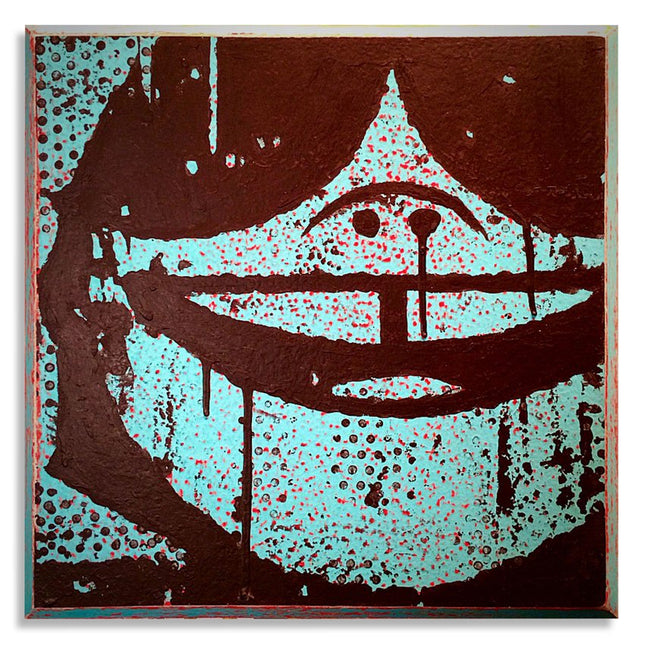
    Bask Face Invader Pork Chop HPM Print by Bask

    Face Invader- Pork Chop Original Hand-Painted Multiple (HPM) on Wood Cradled Panel ready to hang by Bask Graffiti Street Artist Modern Pop Art. “I wanted to do something special for the run that was going to coincide with the show. So the idea came to mind to not just offer a hand embellished print, but actually make a series of pieces in sets that were all hand-painted. No stencils or silkscreens, I wanted to offer actually painted pieces that are affordable to anyone who wants one. But as excited as I was about this idea, I then had to figure out how to make this happen within a reasonable time frame. Not to mention, coming up with 10 images that I would be able to duplicate almost identically 20 times over. Then the idea of bringing back some of the faces that have appeared in past works. Characters that Detroit inspired me to create. I have to add that this has been one of the most labor-intensive projects I've taken on. There are over 500 hours in these between myself and my assistant. Each panel was painstaking worked over.” - BASK

    $533.00

  • Face Invader Sugar High HPM Print by Bask

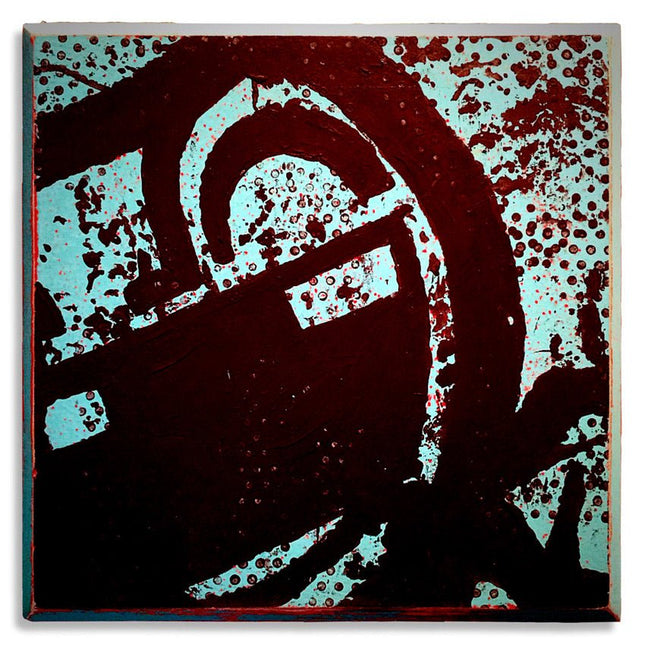
    Bask Face Invader Sugar High HPM Print by Bask

    Face Invader- Sugar High Original Hand-Painted Multiple (HPM) on Wood Cradled Panel ready to hang by Bask Graffiti Street Artist Modern Pop Art. “I wanted to do something special for the run that was going to coincide with the show. So the idea came to mind to not just offer a hand embellished print, but actually make a series of pieces in sets that were all hand-painted. No stencils or silkscreens, I wanted to offer actually painted pieces that are affordable to anyone who wants one. But as excited as I was about this idea, I then had to figure out how to make this happen within a reasonable time frame. Not to mention, coming up with 10 images that I would be able to duplicate almost identically 20 times over. Then the idea of bringing back some of the faces that have appeared in past works. Characters that Detroit inspired me to create. I have to add that this has been one of the most labor-intensive projects I've taken on. There are over 500 hours in these between myself and my assistant. Each panel was painstaking worked over.” - BASK

    $533.00

  • Untitled III Original Acrylic Painting by Atomik

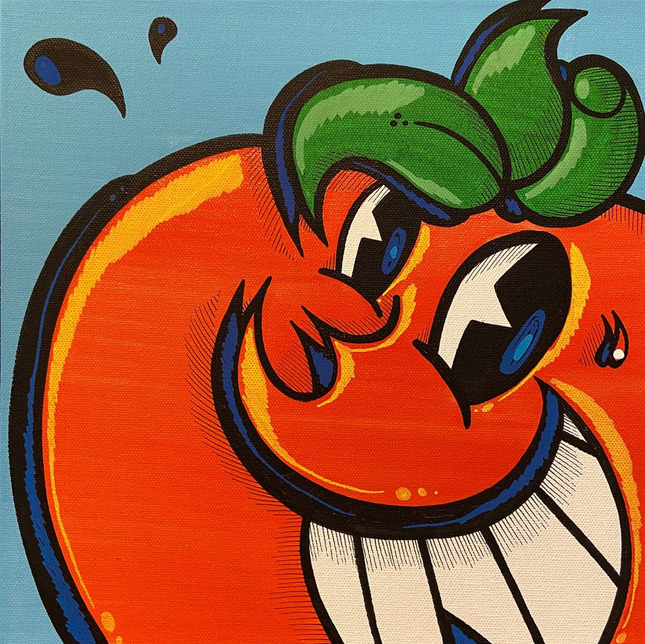
    Atomik Untitled III Original Acrylic Painting by Atomik

    Untitled III Original Acrylic Painting by Atomik One of a Kind Artwork on Canvas by Street Art Pop Artist. 2020 Signed Acrylic Painting Original Artwork Size 12x12 Smiling Atomik Orange Untitled III by Atomik: The Smiling Orange as Icon of Street Pop Art & Graffiti Artwork Untitled III is a 12 x 12 inch original acrylic painting on canvas by Atomik, a Miami-based artist widely recognized for his recurring character—the grinning orange with exaggerated features and slick green leaves. Created in 2020, this one-of-a-kind signed piece captures the energy and wit that defines Atomik’s work in the worlds of Street Pop Art & Graffiti Artwork. The subject, affectionately known as the Atomik Orange, emerged as a response to the demolition of Miami’s Orange Bowl in 2008 and has since evolved into a vibrant symbol of community memory, local pride, and artistic defiance. In Untitled III, the orange character is presented in a tightly cropped view, its cartoonish grin stretched across the lower canvas, eyes glinting with thick, comic-style highlights. The paint is layered with precision, bold black linework creating a crisp barrier between vivid orange and lime green tones. Shades of blue and white bring depth to the character’s eyes and smile, while the use of directional hatching nods to print-era comic illustrations. The background, rendered in a calm sky blue, allows the character’s electric palette to explode off the canvas. This color relationship enhances the orange’s buoyant personality, which is humorous, manic, and defiant all at once. The Atomik Orange and the Language of Urban Reclamation The character at the center of Untitled III represents more than just visual branding—it is a reclamation of space and memory. When the Orange Bowl was razed, a piece of Miami’s identity was lost. Atomik, born and active in the United States, responded with a visual intervention that turned grief into vibrancy. His orange character began to appear across the city on walls, mailboxes, rooftops, and abandoned buildings, acting as both a tribute and a defiant marker of presence. In canvas form, as seen here, the character retains all of its street energy while transitioning into a collectible artifact. The cheeky grin and raised brow act as visual shorthand for Miami’s blend of attitude, warmth, and creative resistance. Atomik’s work embodies the style and function of Street Pop Art & Graffiti Artwork, where characters serve as symbolic graffiti tags, social commentary, and public avatars. His orange exists in multiple states—rebel, clown, mascot—and its simplicity is its power. The use of expressive line, exaggerated proportion, and strategic highlights is directly linked to the language of muralism and comic book art, both of which feed into graffiti’s visual vocabulary. From Street to Canvas: Atomik’s Expansion into Gallery Culture Untitled III represents an important aspect of Atomik’s practice: the movement of street-born characters into formal art spaces without sacrificing edge or identity. By bringing his orange to canvas, Atomik maintains the same boldness and accessibility found on city walls. The work is not diluted but concentrated, focusing all its pop intensity into a contained format. The painting retains the urgency and charm of its graffiti roots, made sharper through studio technique and acrylic detail. This transition from public wall to private collection is central to many Street Pop Art & Graffiti Artwork artists, who continue to operate in both spheres simultaneously. Atomik remains prolific in Miami’s streets, but his gallery pieces like Untitled III allow collectors to engage with the movement in intimate, long-lasting ways. These pieces become cultural documents, embodying not only the energy of a character but the broader movement it represents. Visual Identity and Cultural Commentary in the Work of Atomik Atomik’s orange is more than an aesthetic motif—it is a cultural signal. The bold grin, the splash of citrus color, and the playful features all contribute to a language of visual activism. It communicates joy while remembering loss, mischief while asserting presence. Untitled III, with its clean composition and signature style, preserves this energy on canvas in a way that invites repeated viewing. The piece pulses with the same character-driven ethos that has defined pop art figures since the mid-twentieth century, while remaining grounded in graffiti’s rebellious tradition. As a singular work of Street Pop Art & Graffiti Artwork, Untitled III captures a moment in time when characters were not just imagined but lived across a city’s architecture. Atomik’s orange continues to smile—on walls, on canvases, in print, and in spirit—reminding viewers that personality and protest often share the same line.

    $655.00

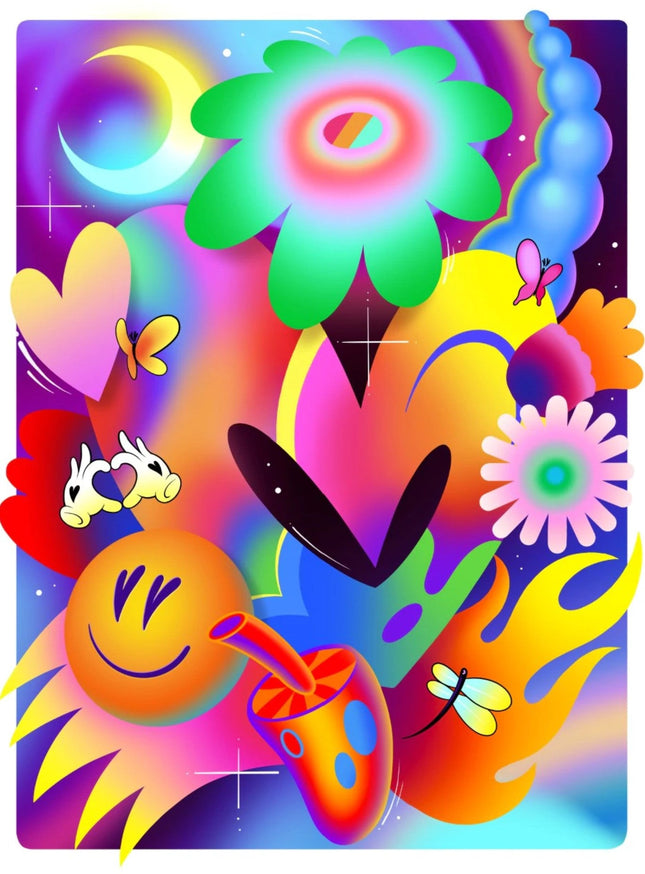
  • My Blossoming Heart Giclee Print by Jason Naylor- OPN Heart

    Jason Naylor- OPN Heart My Blossoming Heart Giclee Print by Jason Naylor- OPN Heart

    My Blossoming Heart Pop Street Artwork Limited Edition Giclee Print on Fine Art Paper by Urban Graffiti Modern Artist Jason Naylor. 2022 Signed "My Blossoming Heart" by Jason Naylor Giclée Print on Paper Measures Mothership's Lonely Hearts Club~ 16" tall x 12" wide Edition of 30. Numbered and Signed by the Artist.

    $214.00

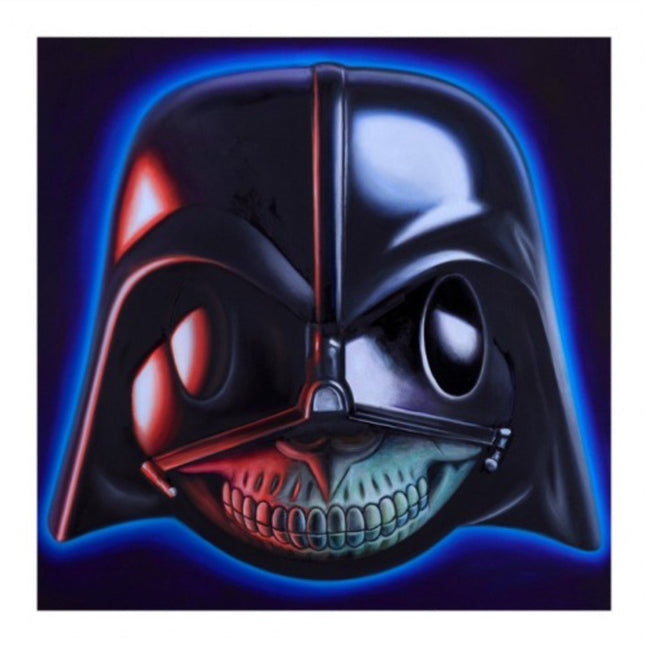
  • Vader Grin Archival Print by Ron English

    Ron English- POPaganda Vader Grin Archival Print by Ron English- POPaganda

    Vader Grin Limited Edition Archival Pigment Prints on 290gsm Moab Fine Art Paper by Ron English- POPaganda Graffiti Street Artist Modern Pop Art. 2020 Signed & Numbered #2 (Originally Reserved As PP Printers Proof) Limited Edition of 100 Artwork Size 12x12 Star Wars Darth Vader Skeleton Grin Smiley. Ron English's Vader Grin and the Warped Language of Iconography Ron English’s Vader Grin fuses dystopian sci-fi symbolism with the subversive vocabulary of Street Pop Art & Graffiti Artwork. Released in 2020 as a limited edition archival pigment print, the piece measures 12x12 inches and was produced on 290gsm Moab fine art paper. This particular edition, originally held as Printer’s Proof #2, forms part of a 100-print run, each signed and numbered by the artist. The work reimagines the helmeted visage of Darth Vader—one of cinema’s most recognizable figures—by seamlessly embedding English’s trademark skeletal grin beneath the mask. The result is a jarring yet alluring hybrid that simultaneously honors and mocks the power of cultural icons. The work relies on visual contradiction. The hyper-glossy black helmet, reflecting cool blues and menacing reds, feels ominous and theatrical. Yet the grin beneath it introduces grotesque levity. It is not merely a skull, but a warped, cartoonish smile that undermines the mythic power typically associated with the character. English uses this visual tension to create discomfort, inviting viewers to question what lies beneath their cultural obsessions. By merging a corporate media character with his skeletal smile, English distills themes of decay, commodification, and spectacle. Visual Tactics Rooted in Street Pop and Graffiti Art Ron English built his career on hijacking visual systems. His approach combines photorealism with absurdity, blending polished fine art techniques with aesthetics borrowed from street murals and graffiti culture. Vader Grin sits at the intersection of these traditions. Though the print is created with archival precision, the electric glow surrounding the helmet mimics the energy of neon street lighting or aerosol fades. The blue halo contrasts sharply with the blood-red reflections on one side of the mask, giving the image a radioactive aura that feels both synthetic and urgent. English’s background in billboard takeovers and illegal mural work informs every detail of the piece. His choice to deface an archetype of cinematic villainy with a smile nods to graffiti’s function as cultural resistance. It reflects the artist’s long-standing interest in how images dominate urban space and public imagination. Street Pop Art & Graffiti Artwork often collapses the barrier between fine art and mass media, and Vader Grin thrives in that collapse. It operates as both parody and portrait, critique and celebration. Skeletal Symbols and the Politics of Satire The skeletal grin, a recurring motif throughout Ron English’s body of work, serves as more than a visual joke. It operates as a critique of power, often layered over figures who symbolize authority, consumer manipulation, or mythologized violence. In Vader Grin, the deathly smile strips the character of gravitas, revealing a hollowed-out husk beneath layers of narrative and merchandising. The mask is no longer a tool of intimidation—it becomes a vessel of emptiness, the face of a brand designed for mass appeal but drained of human substance. The work fits into a broader history of Street Pop Art where artists interrogate the allure of media-generated heroes and villains. English’s satire does not merely poke fun at pop culture—it exposes how symbols are consumed without critical engagement. The skeletal transformation represents the erosion of meaning beneath constant reproduction. In Vader Grin, the viewer is left to contend with a familiar face turned alien, a symbol of evil turned into a smirking relic, smiling through the collapse of its own mythology.

    $550.00

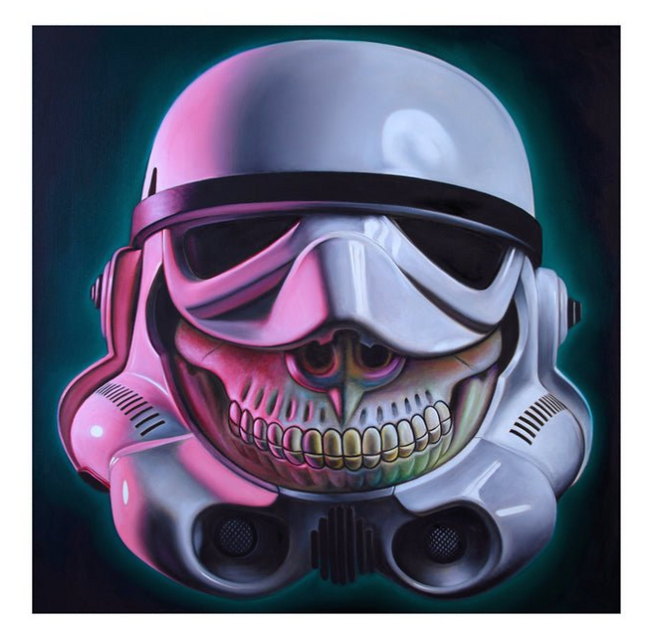
  • Stormtrooper Grin PP Archival Print by Ron English

    Ron English- POPaganda Stormtrooper Grin PP Archival Print by Ron English- POPaganda

    Stormtrooper Grin PP Printer Proof Limited Edition Archival Pigment Prints on 290gsm Moab Fine Art Paper by Ron English- POPaganda Graffiti Street Artist Modern Pop Art. PP Printers Proof 2020 Signed & Marked PP Limited Edition Artwork Size 12x12 Dissecting "Stormtrooper Grin" by Ron English- POPaganda "Stormtrooper Grin" is a provocative work by Ron English- POPaganda, a revered name in modern pop art, street art, and graffiti art. This Printer's Proof (PP) limited edition archival pigment print from 2020, signed and marked in English, is a testament to his signature fusion of high art and street culture. Presented on 290gsm Moab Fine Art Paper, this print, measuring 12x12 inches, captures the essence of English's impactful aesthetic. Known for his use of color and distortion, English transforms familiar imagery from popular culture into something new, often with a subversive twist. Ron English- POPaganda's Vision in Pop Art and Street Culture English's "Stormtrooper Grin" reimagines the iconic helmet of the Stormtrooper from the Star Wars franchise, overlaying it with a human skull. This juxtaposition is emblematic of English's style, often combining a bright, almost cartoonish palette with darker themes. His work is recognized for its critical commentary on consumerism, corporate strategies, and idolizing popular culture icons. By placing a skeletal grin within the context of a symbol associated with conformity and the loss of individuality, English invites viewers to reflect on the nature of identity and mortality within the seemingly benign trappings of entertainment. Impact of Ron English- POPaganda's Work on Street Pop Art Ron English- POPaganda is credited with the proliferation of "culture jamming," a practice where familiar visual symbols are altered to challenge the status quo. His "Stormtrooper Grin" directly reflects this, taking a ubiquitous symbol from science fiction and turning it into a conversation piece that questions the narratives we consume and the ideologies they perpetuate. The print embodies the transformative potential of street pop art and graffiti artwork, where the lines between commercial and countercultural are blurred, creating a space for dialogue and dissent. The meticulous craftsmanship in "Stormtrooper Grin" is evident in the precision of the archival pigment print, a method chosen for its fidelity to the artist's original vision. This technique allows for a wide range of vibrant colors and deep blacks, ensuring that the work is a piece of street pop art and a fine art collectible. English's choice of fine art paper and archival pigments serves to solidify the permanence of a piece that, in another context, might have been a temporary fixture on a city wall. Through "Stormtrooper Grin," Ron English- POPaganda continues to challenge perceptions, using his art to provoke thought and encourage a deeper examination of the symbols that permeate our culture. His ability to bring street art sensibilities into the realm of fine art printmaking has established him as a pivotal figure in the street pop art movement. Like much of English's oeuvre, this artwork serves as a stark reminder of the power of visual language in articulating, critiquing, and redefining the narratives fed to society by mass media and entertainment conglomerates.

    $563.00

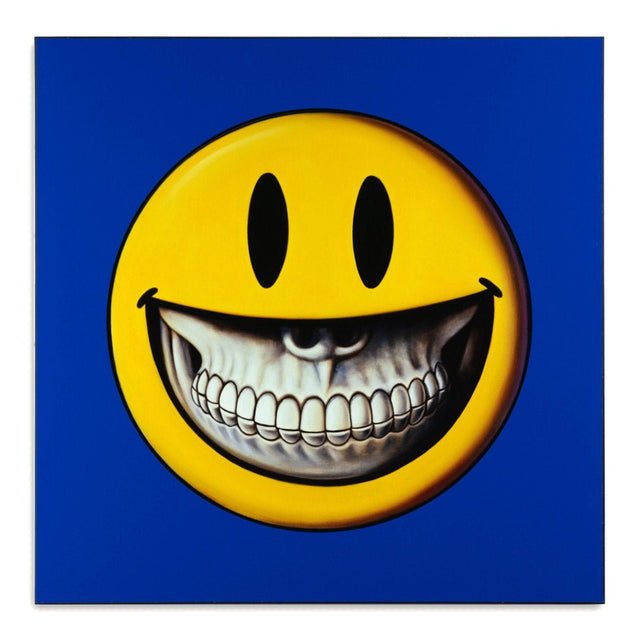
Smiley Face Graffiti Street Pop Artwork

Smiley Face: A Universal Emblem in Street Pop Art and Graffiti Artwork

The Smiley Face, a universal symbol of happiness and positivity, has permeated various art forms, including graffiti and street art. Its presence in the urban landscape, represented through a simple yet powerful icon, has garnered attention and admiration from artists and audiences alike. Graffiti and street art prints incorporating the Smiley Face demonstrate the power of this symbolic design and the way it has transcended its origins to become an enduring fixture of modern art. The emergence of the Smiley Face in graffiti art can be traced back to the counterculture movement of the 1960s and 1970s. As a symbol of happiness and peace, it was embraced by artists who wished to convey messages of optimism and unity amidst the social and political unrest of the era. As street art and graffiti became more prevalent, the Smiley Face naturally found its way onto the walls of urban environments, often as part of a larger artistic narrative or as an independent, standalone image. In contemporary graffiti and street art prints, the Smiley Face has evolved to take on various forms, reflecting the diverse styles and approaches of the artists themselves.
Some artists opt for a minimalist approach, utilizing simple lines and shapes to depict the iconic design. In contrast, others may incorporate more complex patterns, textures, or abstract elements to create unique interpretations. This adaptability has allowed the Smiley Face to flourish in street art, as it can be seamlessly integrated into a wide range of artistic styles. The smiley face, a simple depiction of a smiling face with two dots for eyes and a curved line for a mouth, has become one of the most ubiquitous symbols in modern culture. Its journey from a mere mood-lifter to a significant icon in street pop art and graffiti artwork is a testament to its versatile appeal and power as a means of communication. The smiley face transcends languages and cultures, embodying a universal message of happiness and goodwill that various art movements, including pop art, street art, and graffiti, have embraced. In street pop art, the smiley face has often been used to bring a sense of joy and whimsy to the urban landscape. Graffiti artists have adopted this icon to inject a playful character into their work, contrasting the cityscape's often severe and gritty nature. The simplicity of the smiley allows for quick recognition and direct emotional response, making it an effective tool for artists to connect with a broad audience. Whether splashed across a brick wall, stickered on a lamppost, or stenciled onto a sidewalk, the smiley face in graffiti artwork often serves as an unexpected interruption to the mundane, prompting passersby to pause and engage with their surroundings with a lighter heart.

The Evolution of the Smiley Face in Modern Art Forms

The evolution of the smiley face within modern art forms such as street pop art and graffiti has mirrored societal changes and the shifting tides of emotional expression in public spaces. From its inception, the smiley has been reimagined and recontextualized to fit the messages artists wish to convey. It has been depicted in many variations, from the classic bright yellow circle to more elaborate and sometimes subversive adaptations. The smiley face can often be found in street art as a standalone symbol and incorporated into larger pieces that address themes ranging from peace and love to irony and social critique. The versatility of the smiley face means that it can be both a nostalgic reference to the past and a contemporary commentary. Some artists have used it to invoke the carefree spirit of the 1960s and 70s, while others have adapted it to critique the commercialization of happiness and the pressures of modern life. In this way, the smiley face serves as a canvas upon which artists can project various narratives, making it a powerful and adaptable element in the visual language of street art. One of the most iconic examples of the Smiley Face in street art can be found in the works of renowned British artist Banksy. His satirical approach to street art often incorporates the Smiley Face in provocative and thought-provoking contexts. In one of his most famous pieces, a rioter is depicted wearing a Smiley Face mask, juxtaposing the symbol of happiness with the chaotic scene unfolding around it. This clever use of the Smiley Face challenges viewers to question the true nature of happiness in modern society.
Street artists like Shepard Fairey, creator of the Obey Giant, have reimagined the Smiley Face in their works. Fairey's version, called "Andre the Giant Has a Posse," is a hybrid of the Smiley Face and the visage of Andre the Giant, a professional wrestler. The piece is a commentary on the power of mass media and its ability to create influential symbols. By incorporating the Smiley Face into his work, Fairey effectively highlights the significance and omnipresence of such icons in popular culture. Graffiti and street art prints featuring the Smiley Face are highly sought after by collectors and enthusiasts alike. These works often embody a sense of optimism, resilience, and defiance despite the challenges faced in the modern world. The Smiley Face, in its various forms, continues to serve as a potent reminder that happiness can be found even amidst the most chaotic and unexpected circumstances. The Smiley Face has left an indelible mark on graffiti and street art prints. Its simple, universally recognized design and ability to adapt to various artistic styles make it a favorite subject among artists and collectors. As a symbol of happiness, peace, and positivity, the Smiley Face brings joy and inspiration to those who encounter it in the streets and on the walls of our urban landscapes.

The Smiley Face as a Cultural Icon in Street Art

As a cultural icon, the smiley face occupies a unique position within the world of street art. It symbolizes the counterculture and a mainstream motif, embraced by artists who appreciate its history and ability to speak to a broad audience. The smiley face has been used to foster a sense of community, to challenge the status quo, and to express solidarity or dissent. It is a symbol that can be found in the works of seasoned street artists and the scribbles of anonymous individuals alike, highlighting its democratic nature and its resonance with a diverse range of voices within the urban environment. In street pop art and graffiti, the smiley face often reflects the artist's intent and the cultural moment in which it is created. It connects the mood of a society or offers a counterpoint to it. As such, the smiley face in street art is not merely decorative; it is a potent means of expression, loaded with the potential to inspire, provoke, and connect. The enduring legacy of the smiley face in street pop art and graffiti artwork lies in its simplicity and depth. It is a motif that has been embraced and reinterpreted countless times, yet it retains its core message of happiness and positivity. The smiley face is a reminder of the power of art to influence mood and perspective, to bring light to dark places, and to offer a moment of connection in the fast-paced and often isolating urban environment. Through its various incarnations in street art, the smiley continues to engage with audiences, to challenge and delight, and to serve as a beacon of universal communication in the visual tapestry of the city.
Footer image

© 2025 Sprayed Paint Art Collection,

    • Amazon
    • American Express
    • Apple Pay
    • Bancontact
    • Diners Club
    • Discover
    • Google Pay
    • iDEAL
    • Mastercard
    • PayPal
    • Shop Pay
    • Visa

    Login

    Forgot your password?

    Don't have an account yet?
    Create account