Smiley Face

4 artworks

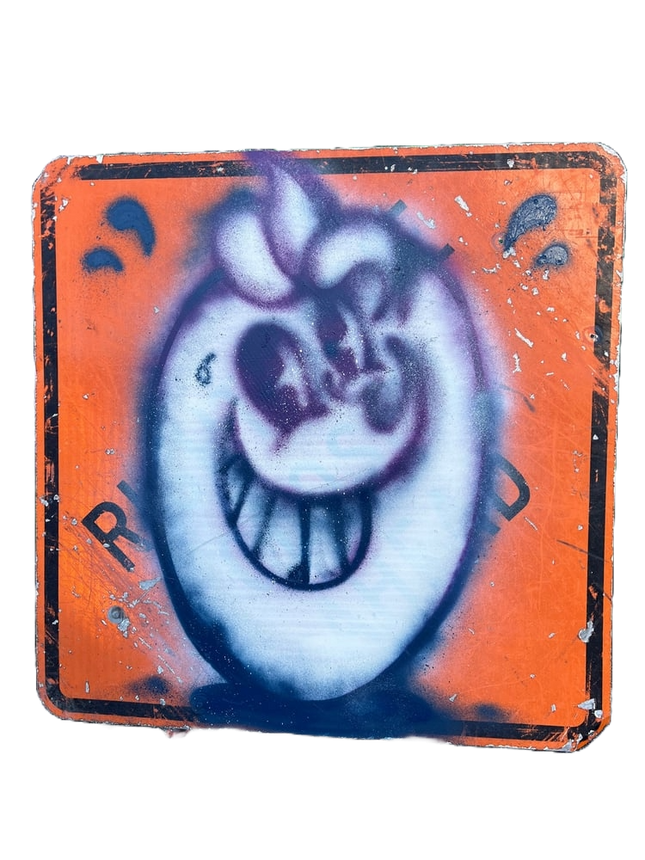
  • Sale -15% Lagos Original Street Sign Spray Painting by Atomik

    Atomik Lagos Original Street Sign Spray Painting by Atomik

    Lagos Original Street Sign Spray Painting by Atomik Mixed Media Modern Graffiti Paint Pop Art on Real Metal Ready To Hang. 2023 Signed Original Painting on Reclaimed Metal City Road Construction Sign Artwork Size 36x36 of Spray Painted Smiling Atomik Orange In the vibrant world of modern graffiti and pop art, Atomik emerges as a unique voice, creating pieces that resonate deeply with art aficionados and street art enthusiasts alike. His 2023 artwork, titled "Lagos," is a prime example of his genius. Made on a reclaimed metal city road construction sign, this piece is not just a painting but a marriage of art and urban elements. Measuring 36x36 inches, "Lagos" is an ode to the urban environment from which Atomik draws inspiration. The centerpiece, the spray-painted smiling Atomik Orange, is instantly recognizable and evokes a sense of familiarity, bridging the gap between the street and the art gallery. The backdrop, a real metal city road construction sign, adds layers of authenticity and rawness to the piece. Its weathered appearance, marked with signs of wear and age, tells a story of its own, setting a contrasting stage for the vibrant and playful Atomik Orange. This painting does more than just showcase Atomik's technical prowess with a spray can. It challenges the boundaries of traditional art forms, blurring the lines between graffiti, pop art, and found object art. By choosing a reclaimed metal sign as his canvas, Atomik comments on the transient nature of urban life and the ever-evolving face of cities. For those who appreciate art that speaks to contemporary issues while staying rooted in traditional techniques, "Lagos" is a testament to Atomik's ability to capture the zeitgeist of modern urban culture. It's not just a piece of art; it's a conversation starter, a narrative, and a reflection of the times we live in.

    $1,174.00 $998.00

  • Hello There Orange Original Spray Paint Art Can by Atomik

    Atomik Hello There Orange Original Spray Paint Art Can by Atomik

    Hello There Orange Original Spray Paint Art Can by Atomik Sculpture Drawing Artwork by Iconic Pop Culture Modern Artist.  2025 Signed Original Magic Marker Atomik Orange Smiling Face Reclaimed Spray Paint Can Painting Artwork Size 3x8 Hello There, Orange Original Spray Paint Art Can by Atomik The Hello There Orange Original Spray Paint Art Can by Atomik is a distinct piece of Street Pop Art & Graffiti Artwork that exemplifies the artist’s commitment to transforming ordinary objects into personalized statements of identity and expression. Created in 2025 and signed by the artist, this artwork is drawn directly on a reclaimed spray paint can using a magic marker. The work features the iconic grinning orange face that has become synonymous with Atomik’s visual language. With bold black linework over a used Montana spray can, the piece merges the raw energy of graffiti materials with the intimate immediacy of a hand-drawn illustration. Atomik’s instantly recognizable orange face peeks forward with oversized, cartoonish eyes and a mischievous smile, encapsulating the spirit of his Miami-based street art heritage. Reclaiming the Tools of Expression as Art Objects Spray paint cans are a staple in graffiti and street art culture. They are tools of resistance, freedom, and self-expression. Atomik’s decision to turn a spray can into the canvas itself reflects a deeper ethos in Street Pop Art & Graffiti Artwork. Rather than discarding the medium once emptied, he reclaims it—transforming the functional into the collectible. The resulting artwork stands as both an homage to graffiti’s tactile process and a rebellion against traditional notions of fine art. Every dent, scratch, and warning label on the can becomes part of the finished aesthetic, grounding the orange character in the lived reality of street-level artmaking. This practice not only preserves a piece of graffiti history but recasts it as a standalone object worthy of admiration and discourse. The Smiling Orange and the Miami Identity The smiling orange has its roots in Atomik’s personal response to the demolition of Miami’s beloved Orange Bowl stadium, a landmark of civic pride. Atomik reimagined the orange as a graffiti character that pays tribute while asserting a uniquely Floridian flavor. Over the years, it has appeared on freight trains, abandoned buildings, and murals, becoming one of the most widely recognized characters in contemporary graffiti. On this specific spray paint can, the orange floats in contrast against a sea of fine print, warnings, and hazard symbols. This juxtaposition of regulatory text and unruly character speaks to the tension between control and freedom, legality and expression. It also reflects the artist’s ongoing commentary on reclaiming space and materials for cultural storytelling. Graffiti as Sculpture and Collectible Commentary This hand-drawn reclaimed can is not only a visual piece but a sculptural one. The cylindrical form allows the artwork to live in three dimensions, giving viewers the opportunity to see how street art evolves when it enters a more permanent and collectible format. Unlike traditional canvas or digital prints, the use of the spray can physically and conceptually connects the viewer to the graffiti process. Atomik’s signature on the base further authenticates the piece, anchoring it in his artistic lineage and practice. As Street Pop Art & Graffiti Artwork continues to push boundaries, works like the Hello There Orange Spray Can stand at the forefront, showing that even a once-discarded object can become a celebrated artifact when touched by the right artist’s hand.

    $225.00

  • Hungry Eyes Original Pen Pencil Paint Drawing by Atomik

    Atomik Hungry Eyes Original Pen Pencil Paint Drawing by Atomik

    Hungry Eyes Original Pen Pencil Paint Drawing by Atomik Modern Street Pop Artwork. 2025 Signed Original Ink Paint Pencil Graphite on Paper Drawing Size 5x8 of the Famous Miami Florida Atomik Orange. Hungry Eyes Original Drawing by Atomik: A Raw Expression of Graffiti Culture in Street Pop Art The 2025 piece titled Hungry Eyes by Miami-based graffiti artist Atomik is a potent example of raw Street Pop Art & Graffiti Artwork captured in traditional media. Known globally for his animated orange character, Atomik channels his origins from the streets of Florida into this expressive 5x8 inch work executed in pen, pencil, ink, and white paint on paper. The drawing preserves the energetic curves, exaggerated facial features, and strong iconography that define his visual language, yet it diverges by focusing on depth, texture, and mood rather than public wall space or train cars. This signed original holds particular weight because it brings Atomik’s explosive style into a more intimate and tactile dimension, highlighting the same mischievous gaze and stylized emotion that viewers typically encounter on a city wall or boxcar. The Miami Influence and the Evolution of Atomik’s Orange Atomik, born and based in Miami, Florida, has been a key figure in the visual evolution of graffiti across the southeastern United States. His signature orange character was born out of a tribute to a lost local landmark—the Miami Orange Bowl—and has since morphed into a universal symbol of urban rebellion, humor, and resilience. Hungry Eyes strips down that icon into its most fundamental parts. Drawn with ballpoint pen, graphite, and accented with sharp white strokes, this piece introduces nuance and technique often overlooked in outdoor works. Swirls and crosshatch marks surround and define the facial contours, merging classical drawing skills with street sensibility. The background of kraft-tone paper gives the composition a raw, unpolished energy, consistent with the artist’s handstyle and sense of immediacy. Even in this format, the image demands attention as if it were wheatpasted across a city block. Street Pop Art Translated to Fine Drawing While Atomik’s graffiti legacy is built upon bright enamel hues and fatcap spray lines across highly visible surfaces, Hungry Eyes functions as an alternate lens into the graffiti psyche—quiet, detailed, and full of coded visual emotion. The angular ink strokes channel years of tagging and can control, while the whimsical circular gradients embedded in the eyes mimic bubble letters and aerosol flares. The use of hand-drawn highlights instead of reflective gloss draws from a comic-book aesthetic while simultaneously staying grounded in graffiti's DIY tradition. This drawing proves that Street Pop Art & Graffiti Artwork can exist with just as much presence and weight on paper as it does on steel or concrete. Signature and Collectibility in Contemporary Street Art The reverse of the artwork is inscribed in pencil with the artist’s signature, a stylized flourish of the name Atomik and the date 25. This mark authenticates the piece not only in terms of authorship but also as a deliberate object within the continuum of street artist editions and originals. Collectors and fans of graffiti culture recognize works like Hungry Eyes as evidence that street artists are not limited to spray paint and murals. Atomik’s ability to transfer his identity onto fine art media makes this piece a collector-worthy addition for any serious archive of modern graffiti or pop-inspired street visuals. The drawing stands as a reminder that graffiti is not only about location or defiance—it is about mark-making, identity, and the ability to repurpose commercial and personal symbols into resonant visual statements.

    $300.00

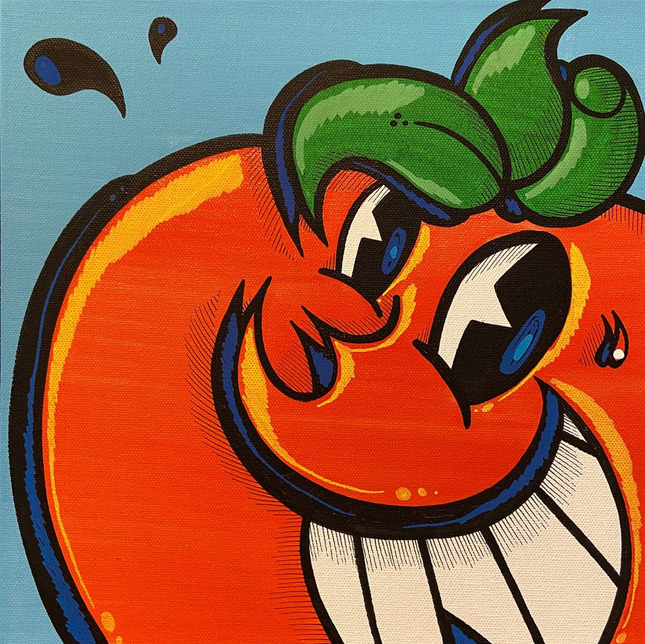
  • Untitled III Original Acrylic Painting by Atomik

    Atomik Untitled III Original Acrylic Painting by Atomik

    Untitled III Original Acrylic Painting by Atomik One of a Kind Artwork on Canvas by Street Art Pop Artist. 2020 Signed Acrylic Painting Original Artwork Size 12x12 Smiling Atomik Orange Untitled III by Atomik: The Smiling Orange as Icon of Street Pop Art & Graffiti Artwork Untitled III is a 12 x 12 inch original acrylic painting on canvas by Atomik, a Miami-based artist widely recognized for his recurring character—the grinning orange with exaggerated features and slick green leaves. Created in 2020, this one-of-a-kind signed piece captures the energy and wit that defines Atomik’s work in the worlds of Street Pop Art & Graffiti Artwork. The subject, affectionately known as the Atomik Orange, emerged as a response to the demolition of Miami’s Orange Bowl in 2008 and has since evolved into a vibrant symbol of community memory, local pride, and artistic defiance. In Untitled III, the orange character is presented in a tightly cropped view, its cartoonish grin stretched across the lower canvas, eyes glinting with thick, comic-style highlights. The paint is layered with precision, bold black linework creating a crisp barrier between vivid orange and lime green tones. Shades of blue and white bring depth to the character’s eyes and smile, while the use of directional hatching nods to print-era comic illustrations. The background, rendered in a calm sky blue, allows the character’s electric palette to explode off the canvas. This color relationship enhances the orange’s buoyant personality, which is humorous, manic, and defiant all at once. The Atomik Orange and the Language of Urban Reclamation The character at the center of Untitled III represents more than just visual branding—it is a reclamation of space and memory. When the Orange Bowl was razed, a piece of Miami’s identity was lost. Atomik, born and active in the United States, responded with a visual intervention that turned grief into vibrancy. His orange character began to appear across the city on walls, mailboxes, rooftops, and abandoned buildings, acting as both a tribute and a defiant marker of presence. In canvas form, as seen here, the character retains all of its street energy while transitioning into a collectible artifact. The cheeky grin and raised brow act as visual shorthand for Miami’s blend of attitude, warmth, and creative resistance. Atomik’s work embodies the style and function of Street Pop Art & Graffiti Artwork, where characters serve as symbolic graffiti tags, social commentary, and public avatars. His orange exists in multiple states—rebel, clown, mascot—and its simplicity is its power. The use of expressive line, exaggerated proportion, and strategic highlights is directly linked to the language of muralism and comic book art, both of which feed into graffiti’s visual vocabulary. From Street to Canvas: Atomik’s Expansion into Gallery Culture Untitled III represents an important aspect of Atomik’s practice: the movement of street-born characters into formal art spaces without sacrificing edge or identity. By bringing his orange to canvas, Atomik maintains the same boldness and accessibility found on city walls. The work is not diluted but concentrated, focusing all its pop intensity into a contained format. The painting retains the urgency and charm of its graffiti roots, made sharper through studio technique and acrylic detail. This transition from public wall to private collection is central to many Street Pop Art & Graffiti Artwork artists, who continue to operate in both spheres simultaneously. Atomik remains prolific in Miami’s streets, but his gallery pieces like Untitled III allow collectors to engage with the movement in intimate, long-lasting ways. These pieces become cultural documents, embodying not only the energy of a character but the broader movement it represents. Visual Identity and Cultural Commentary in the Work of Atomik Atomik’s orange is more than an aesthetic motif—it is a cultural signal. The bold grin, the splash of citrus color, and the playful features all contribute to a language of visual activism. It communicates joy while remembering loss, mischief while asserting presence. Untitled III, with its clean composition and signature style, preserves this energy on canvas in a way that invites repeated viewing. The piece pulses with the same character-driven ethos that has defined pop art figures since the mid-twentieth century, while remaining grounded in graffiti’s rebellious tradition. As a singular work of Street Pop Art & Graffiti Artwork, Untitled III captures a moment in time when characters were not just imagined but lived across a city’s architecture. Atomik’s orange continues to smile—on walls, on canvases, in print, and in spirit—reminding viewers that personality and protest often share the same line.

    $655.00

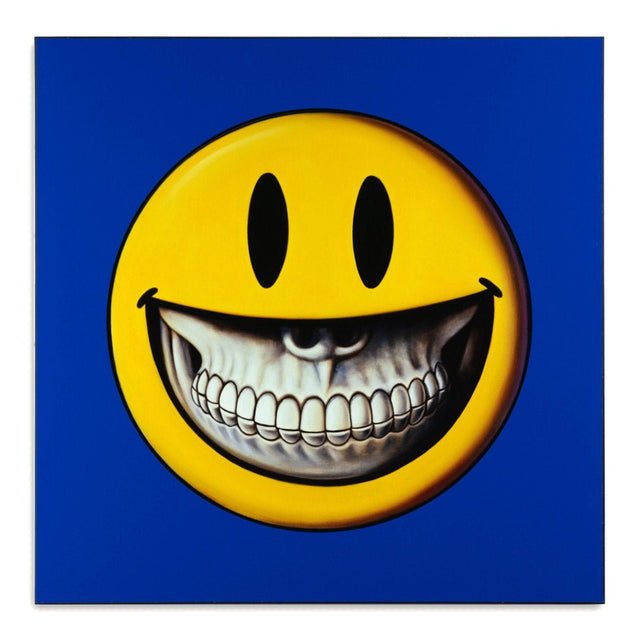
Smiley Face Graffiti Street Pop Artwork

Smiley Face: A Universal Emblem in Street Pop Art and Graffiti Artwork

The Smiley Face, a universal symbol of happiness and positivity, has permeated various art forms, including graffiti and street art. Its presence in the urban landscape, represented through a simple yet powerful icon, has garnered attention and admiration from artists and audiences alike. Graffiti and street art prints incorporating the Smiley Face demonstrate the power of this symbolic design and the way it has transcended its origins to become an enduring fixture of modern art. The emergence of the Smiley Face in graffiti art can be traced back to the counterculture movement of the 1960s and 1970s. As a symbol of happiness and peace, it was embraced by artists who wished to convey messages of optimism and unity amidst the social and political unrest of the era. As street art and graffiti became more prevalent, the Smiley Face naturally found its way onto the walls of urban environments, often as part of a larger artistic narrative or as an independent, standalone image. In contemporary graffiti and street art prints, the Smiley Face has evolved to take on various forms, reflecting the diverse styles and approaches of the artists themselves.
Some artists opt for a minimalist approach, utilizing simple lines and shapes to depict the iconic design. In contrast, others may incorporate more complex patterns, textures, or abstract elements to create unique interpretations. This adaptability has allowed the Smiley Face to flourish in street art, as it can be seamlessly integrated into a wide range of artistic styles. The smiley face, a simple depiction of a smiling face with two dots for eyes and a curved line for a mouth, has become one of the most ubiquitous symbols in modern culture. Its journey from a mere mood-lifter to a significant icon in street pop art and graffiti artwork is a testament to its versatile appeal and power as a means of communication. The smiley face transcends languages and cultures, embodying a universal message of happiness and goodwill that various art movements, including pop art, street art, and graffiti, have embraced. In street pop art, the smiley face has often been used to bring a sense of joy and whimsy to the urban landscape. Graffiti artists have adopted this icon to inject a playful character into their work, contrasting the cityscape's often severe and gritty nature. The simplicity of the smiley allows for quick recognition and direct emotional response, making it an effective tool for artists to connect with a broad audience. Whether splashed across a brick wall, stickered on a lamppost, or stenciled onto a sidewalk, the smiley face in graffiti artwork often serves as an unexpected interruption to the mundane, prompting passersby to pause and engage with their surroundings with a lighter heart.

The Evolution of the Smiley Face in Modern Art Forms

The evolution of the smiley face within modern art forms such as street pop art and graffiti has mirrored societal changes and the shifting tides of emotional expression in public spaces. From its inception, the smiley has been reimagined and recontextualized to fit the messages artists wish to convey. It has been depicted in many variations, from the classic bright yellow circle to more elaborate and sometimes subversive adaptations. The smiley face can often be found in street art as a standalone symbol and incorporated into larger pieces that address themes ranging from peace and love to irony and social critique. The versatility of the smiley face means that it can be both a nostalgic reference to the past and a contemporary commentary. Some artists have used it to invoke the carefree spirit of the 1960s and 70s, while others have adapted it to critique the commercialization of happiness and the pressures of modern life. In this way, the smiley face serves as a canvas upon which artists can project various narratives, making it a powerful and adaptable element in the visual language of street art. One of the most iconic examples of the Smiley Face in street art can be found in the works of renowned British artist Banksy. His satirical approach to street art often incorporates the Smiley Face in provocative and thought-provoking contexts. In one of his most famous pieces, a rioter is depicted wearing a Smiley Face mask, juxtaposing the symbol of happiness with the chaotic scene unfolding around it. This clever use of the Smiley Face challenges viewers to question the true nature of happiness in modern society.
Street artists like Shepard Fairey, creator of the Obey Giant, have reimagined the Smiley Face in their works. Fairey's version, called "Andre the Giant Has a Posse," is a hybrid of the Smiley Face and the visage of Andre the Giant, a professional wrestler. The piece is a commentary on the power of mass media and its ability to create influential symbols. By incorporating the Smiley Face into his work, Fairey effectively highlights the significance and omnipresence of such icons in popular culture. Graffiti and street art prints featuring the Smiley Face are highly sought after by collectors and enthusiasts alike. These works often embody a sense of optimism, resilience, and defiance despite the challenges faced in the modern world. The Smiley Face, in its various forms, continues to serve as a potent reminder that happiness can be found even amidst the most chaotic and unexpected circumstances. The Smiley Face has left an indelible mark on graffiti and street art prints. Its simple, universally recognized design and ability to adapt to various artistic styles make it a favorite subject among artists and collectors. As a symbol of happiness, peace, and positivity, the Smiley Face brings joy and inspiration to those who encounter it in the streets and on the walls of our urban landscapes.

The Smiley Face as a Cultural Icon in Street Art

As a cultural icon, the smiley face occupies a unique position within the world of street art. It symbolizes the counterculture and a mainstream motif, embraced by artists who appreciate its history and ability to speak to a broad audience. The smiley face has been used to foster a sense of community, to challenge the status quo, and to express solidarity or dissent. It is a symbol that can be found in the works of seasoned street artists and the scribbles of anonymous individuals alike, highlighting its democratic nature and its resonance with a diverse range of voices within the urban environment. In street pop art and graffiti, the smiley face often reflects the artist's intent and the cultural moment in which it is created. It connects the mood of a society or offers a counterpoint to it. As such, the smiley face in street art is not merely decorative; it is a potent means of expression, loaded with the potential to inspire, provoke, and connect. The enduring legacy of the smiley face in street pop art and graffiti artwork lies in its simplicity and depth. It is a motif that has been embraced and reinterpreted countless times, yet it retains its core message of happiness and positivity. The smiley face is a reminder of the power of art to influence mood and perspective, to bring light to dark places, and to offer a moment of connection in the fast-paced and often isolating urban environment. Through its various incarnations in street art, the smiley continues to engage with audiences, to challenge and delight, and to serve as a beacon of universal communication in the visual tapestry of the city.
Footer image

© 2025 Sprayed Paint Art Collection,

    • Amazon
    • American Express
    • Apple Pay
    • Bancontact
    • Diners Club
    • Discover
    • Google Pay
    • iDEAL
    • Mastercard
    • PayPal
    • Shop Pay
    • Visa

    Login

    Forgot your password?

    Don't have an account yet?
    Create account