Smiley Face

3 artworks

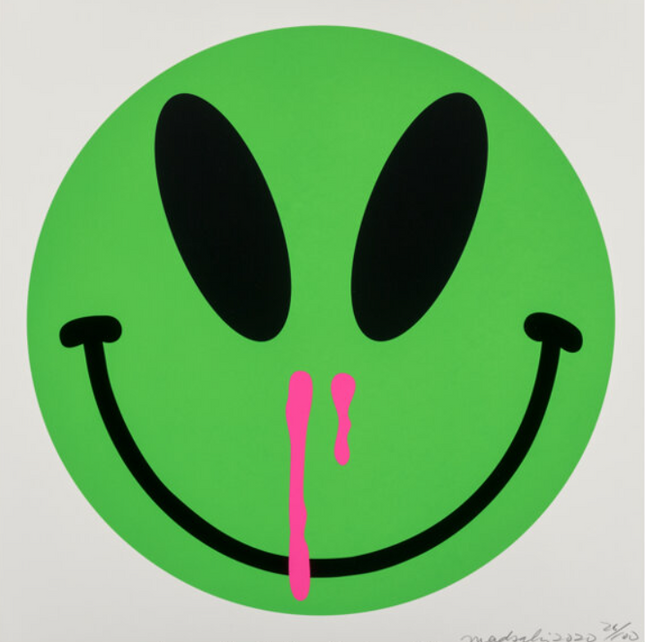
  • Cosmic Overdose_P Offset Lithograph Print by Madsaki

    Madsaki Cosmic Overdose_P Offset Lithograph Print by Madsaki

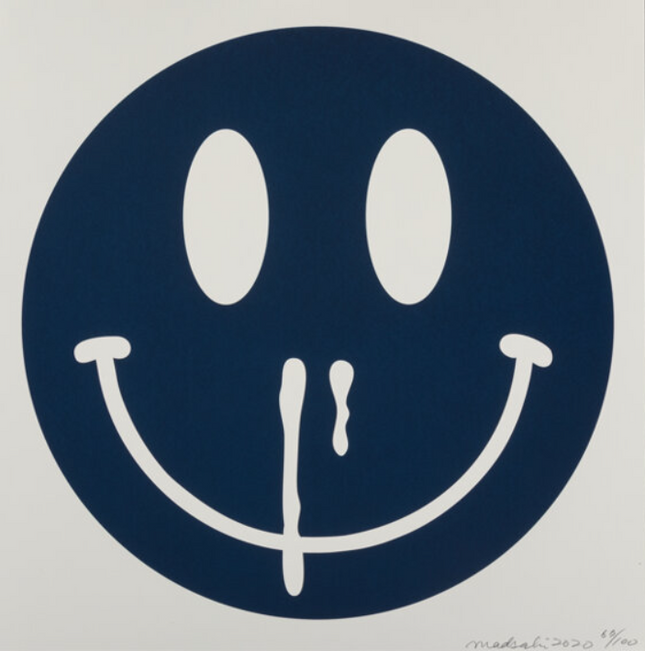
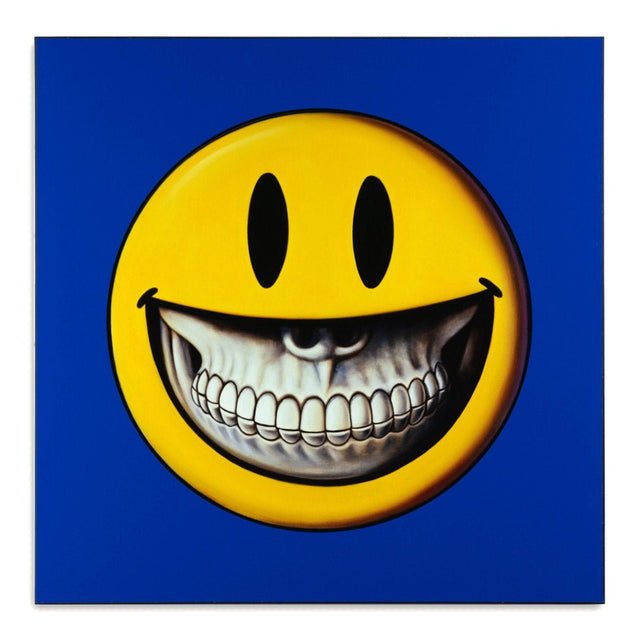
    Happiness Overdose Azul Mariano_P Offset Lithograph Print by Madsaki Print on Wove Fine Art Paper Limited Edition Hand-Pulled Street Pop Artwork Graffiti. 2020 Signed & Numbered Limited Edition of 100 Offset Lithograph Artwork Print Size 19.75x19.75 Smiley Face With Bloody Nose in Blue. Kaikai Kiki Co. Ltd, Tokyo. Unconventional Aesthetics of Madsaki's Artwork Madsaki's artwork, characterized by its distinctive use of color and form, critiques modern society's obsession with happiness and the often ironic underpinnings of this pursuit. The "Happiness Overdose Azul Mariano_P" print showcases a smiley face—a universally recognized symbol of joy—juxtaposed with a bloody nose, suggesting an overdose of happiness to the point of harm. This striking imagery, rendered in bold blue on fine art paper, invites viewers to question the true nature of joy and the cost of its excess. The resurgence of pop art in the contemporary art scene is epitomized by the creative convergence of street art and graffiti, with artists like Madsaki at the forefront. "Happiness Overdose Azul Mariano_P," a limited edition offset lithograph print by Madsaki, exemplifies this trend, blending the rebellious spirit of street art with the vibrant aesthetics of pop art. Madsaki's artwork, characterized by its distinctive use of color and form, critiques modern society's obsession with happiness and the often ironic underpinnings of this pursuit. The "Happiness Overdose Azul Mariano_P" print showcases a smiley face—a universally recognized symbol of joy—juxtaposed with a bloody nose, suggesting an overdose of happiness to the point of harm. This striking imagery, rendered in bold blue on fine art paper, invites viewers to question the true nature of joy and the cost of its excess. The Cultural Significance of Offset Lithograph Prints Offset lithography, a common technique for fine art reproduction, allows artists like Madsaki to reach a wider audience by creating multiple copies of original works. This print's size of 19.75x19.75 inches is substantial yet accessible, fitting the urban environments that often inspire street pop art. Hand-pulling each print ensures that every piece retains a touch of the artist's hand despite being part of a limited edition series. The choice of woven fine art paper as the medium further signifies a blend of street art's immediacy and fine art's enduring quality. In the context of street pop culture, limited edition artworks such as "Happiness Overdose Azul Mariano_P" reflect the exclusivity and collectibility that street art has gained in the art market. The limited edition of 100 pieces, each signed and numbered by Madsaki, speaks to the artist's personalized connection with his work and collectors. It represents a shift from the transient nature of traditional graffiti to a more permanent, revered form of artistic expression. Integration of Street Art into Mainstream Art Galleries Madsaki's collaboration with Kaikai Kiki Co. Ltd, Tokyo, a company known for its role in promoting contemporary artists, underscores the increasing integration of street pop art into mainstream art galleries and the broader art world. This partnership illustrates the potential for street-inspired artworks to be celebrated alongside more traditional acceptable art forms, signaling a shift in cultural perceptions and the breaking down of barriers between high art and popular culture. The impact of "Happiness Overdose Azul Mariano_P" extends beyond its visual composition; it encapsulates the evolution of street art into a form that is both a critical commentary on society and a coveted acceptable art commodity. Through his work, Madsaki challenges viewers to reassess their understanding of happiness, consumerism, and the role of art in modern culture. His street pop art & graffiti artwork continue to resonate with audiences around the globe, bridging the gap between underground art movements and the polished white walls of galleries.

    $2,188.00

  • Happiness Overdose Azul Mariano_P Offset Lithograph Print by Madsaki

    Madsaki Happiness Overdose Azul Mariano_P Offset Lithograph Print by Madsaki

    Happiness Overdose Azul Mariano_P Offset Lithograph Print by Madsaki Print on Wove Fine Art Paper Limited Edition Hand-Pulled Street Pop Artwork Graffiti. 2020 Signed & Numbered Limited Edition of 100 Offset Lithograph Artwork Print Size 19.75x19.75 Smiley Face With Bloody Nose in Blue. Kaikai Kiki Co. Ltd, Tokyo. Blending Iconography with Contemporary Critique "Happiness Overdose Azul Mariano_P" is a captivating example of Madsaki's work, exemplifying the essence of Street Pop Art and graffiti Artwork through its graphic simplicity and poignant symbolism. This 2020 offset lithograph print on wove fine art paper, signed and numbered as a limited edition of only 100, showcases a unique blend of street art's rawness with the mass appeal of pop art. The artwork, measuring 19.75x19.75 inches, presents a stylized smiley face with a blue hue and a notable addition: a bloody nose. This visual twist plays with the universally recognized symbol of happiness, the smiley face, subverting it to convey a more profound, more complex message. Madsaki's choice to depict the smiley with a bloody nose might be interpreted as a commentary on the excesses of contemporary society, where the pursuit of happiness can sometimes lead to self-destructive behaviors. The use of a singular bold color, Azul Mariano, lends the piece a striking visual presence, with the blue acting as both a backdrop and a critical element of the artwork. The color choice may invoke various emotional responses, from calmness to melancholy, further enriching the artwork's interpretive layers. Artistic Expression in Street Pop Art & Graffiti Artwork Madsaki's "Happiness Overdose Azul Mariano_P" is a testament to the power of Street Pop Art and graffiti Artwork to communicate complex ideas through seemingly simple imagery. The expressive capacity of the work is amplified by its minimalist approach, where the absence of intricate details forces the viewer to confront the unsettling juxtaposition of the smiley's cheerful connotations with the graphic indication of distress. As with much of Street Pop Art and graffiti Artwork, there's an inherent accessibility in Madsaki's lithograph. The smiley face, a pervasive icon of modern digital communication, becomes a canvas for social commentary, allowing the artwork to resonate with a diverse audience. The limited-edition nature of "Happiness Overdose Azul Mariano_P" elevates it from a piece of street art to a sought-after collectible, bridging the gap between graffiti's ephemeral nature and fine art's permanence. In conclusion, the piece serves as a work of art and a cultural critique, encapsulating the dualities in pursuing happiness in the modern age. The choice to produce a limited run of prints ensures that each piece remains a unique and valuable addition to contemporary art discourse. Madsaki's "Happiness Overdose Azul Mariano_P" stands as a compelling intersection of pop iconography and street art sensibility, a visual exploration of the highs and lows of the human condition.

    $2,188.00

  • Madsaki Mona Lisa 3 Dharma Green Spray Paint Can Artwork by Montana MTN

    Madsaki Madsaki Mona Lisa 3 Dharma Green Spray Paint Can Artwork by Montana MTN

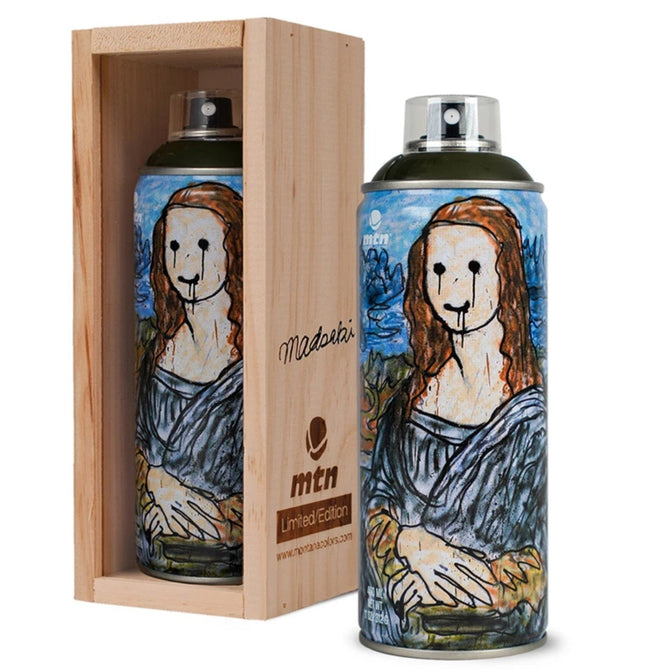
    Madsaki- Mona Lisa 3 Dharma Green Limited Edition Rare Spray Paint Can Artwork Crossover by famous graffiti paint maker Montana MTN. Mona Lisa 3 Spray Paint Can, 2021 MNT Colors Spray Paint, Low Pressure Can in Wood and Acrylic Case Spray Paint Color: Dharma Green 400ml. Limited Edition of 500 Madsaki Mona Lisa 3 Dharma Green Spray Can in Street Pop Art & Graffiti Artwork The Mona Lisa 3 Dharma Green spray paint can by Japanese artist Madsaki is a limited edition collectible released in 2021 as part of the Montana Colors artist series. Created in collaboration with the iconic graffiti paint brand Montana MTN, this edition transforms a 400ml can into a crossover artwork that bridges classical painting with the raw aesthetic of street expression. The artwork features Madsaki’s reinterpretation of the Mona Lisa, executed in his signature irreverent style with smeared eyes and a dripping smile. Known for challenging traditional art values through parody and graffiti energy, Madsaki reimagines one of the most recognized portraits in history by layering over it with his visual language of distortion, repetition, and satire. This edition was capped at 500 units and includes a Dharma Green paint fill, housed in a custom wood display case, making it both a functioning paint tool and a contemporary sculptural object. Visual Style and Conceptual Fusion Madsaki’s reworking of the Mona Lisa is emblematic of his broader practice, where he recontextualizes canonical works from art history through a graffiti-informed lens. His version on the Dharma Green can depicts the Mona Lisa with vacant eyes and a haunting grin rendered with black paint that bleeds downward, invoking both humor and discomfort. The brushwork mimics crude spray lines and hand-drawn texture, celebrating imperfection and emotional intensity over traditional beauty. This graffiti-infused rendition replaces reverence with raw energy, transforming a Renaissance icon into a modern pop symbol. Montana Colors used high-resolution printing technology to wrap this expression around the cylindrical form, reinforcing the unity between the artist’s visual narrative and the object’s street-level functionality. Each can serves as a portable canvas, allowing collectors to hold in hand a version of Madsaki’s bold and challenging artistic statement. Artist Background and Cross-Medium Innovation Madsaki, born in Osaka, Japan and raised in the United States, is internationally known for his ability to navigate fine art, graffiti, and pop culture. His career includes collaborations with galleries across Asia, Europe, and North America. Though trained at Parsons School of Design in New York, his artistic voice is rooted more in subversion than formalism. He frequently paints figures from Western art and mass media, overlaying them with emotive distortions and graffiti aesthetics. Madsaki's pieces often blur the lines between parody and homage, combining critique with cultural celebration. The Mona Lisa 3 can exemplifies this hybrid voice, drawing from art history and injecting it with street culture’s unfiltered pulse. His involvement in the Montana MTN series marks a fusion of museum-grade vision with urban materials, expanding the boundaries of Street Pop Art & Graffiti Artwork. Collectible Value and Presentation Each Mona Lisa 3 Dharma Green can arrives sealed with Montana’s factory-fill low pressure paint and is encased in a wooden and acrylic box stamped with the artist’s signature. This dual presentation reinforces the piece’s status as both an art object and a practical tool of graffiti. The display-ready nature of the packaging elevates the can beyond utility, while retaining the cultural edge of a spray can as a symbol of resistance, autonomy, and creation. As part of a limited series of 500, it has become a coveted object among collectors of street art, pop art, and contemporary crossovers. The work holds significance in the evolution of spray paint culture, encapsulating the idea that tools once considered part of a counterculture can be reclaimed as works of art in their own right. Madsaki’s Mona Lisa 3 spray can is a direct challenge to the hierarchy of fine art, using humor and raw form to restage history in a new urban light.

    $175.00

Smiley Face Graffiti Street Pop Artwork

Smiley Face: A Universal Emblem in Street Pop Art and Graffiti Artwork

The Smiley Face, a universal symbol of happiness and positivity, has permeated various art forms, including graffiti and street art. Its presence in the urban landscape, represented through a simple yet powerful icon, has garnered attention and admiration from artists and audiences alike. Graffiti and street art prints incorporating the Smiley Face demonstrate the power of this symbolic design and the way it has transcended its origins to become an enduring fixture of modern art. The emergence of the Smiley Face in graffiti art can be traced back to the counterculture movement of the 1960s and 1970s. As a symbol of happiness and peace, it was embraced by artists who wished to convey messages of optimism and unity amidst the social and political unrest of the era. As street art and graffiti became more prevalent, the Smiley Face naturally found its way onto the walls of urban environments, often as part of a larger artistic narrative or as an independent, standalone image. In contemporary graffiti and street art prints, the Smiley Face has evolved to take on various forms, reflecting the diverse styles and approaches of the artists themselves.
Some artists opt for a minimalist approach, utilizing simple lines and shapes to depict the iconic design. In contrast, others may incorporate more complex patterns, textures, or abstract elements to create unique interpretations. This adaptability has allowed the Smiley Face to flourish in street art, as it can be seamlessly integrated into a wide range of artistic styles. The smiley face, a simple depiction of a smiling face with two dots for eyes and a curved line for a mouth, has become one of the most ubiquitous symbols in modern culture. Its journey from a mere mood-lifter to a significant icon in street pop art and graffiti artwork is a testament to its versatile appeal and power as a means of communication. The smiley face transcends languages and cultures, embodying a universal message of happiness and goodwill that various art movements, including pop art, street art, and graffiti, have embraced. In street pop art, the smiley face has often been used to bring a sense of joy and whimsy to the urban landscape. Graffiti artists have adopted this icon to inject a playful character into their work, contrasting the cityscape's often severe and gritty nature. The simplicity of the smiley allows for quick recognition and direct emotional response, making it an effective tool for artists to connect with a broad audience. Whether splashed across a brick wall, stickered on a lamppost, or stenciled onto a sidewalk, the smiley face in graffiti artwork often serves as an unexpected interruption to the mundane, prompting passersby to pause and engage with their surroundings with a lighter heart.

The Evolution of the Smiley Face in Modern Art Forms

The evolution of the smiley face within modern art forms such as street pop art and graffiti has mirrored societal changes and the shifting tides of emotional expression in public spaces. From its inception, the smiley has been reimagined and recontextualized to fit the messages artists wish to convey. It has been depicted in many variations, from the classic bright yellow circle to more elaborate and sometimes subversive adaptations. The smiley face can often be found in street art as a standalone symbol and incorporated into larger pieces that address themes ranging from peace and love to irony and social critique. The versatility of the smiley face means that it can be both a nostalgic reference to the past and a contemporary commentary. Some artists have used it to invoke the carefree spirit of the 1960s and 70s, while others have adapted it to critique the commercialization of happiness and the pressures of modern life. In this way, the smiley face serves as a canvas upon which artists can project various narratives, making it a powerful and adaptable element in the visual language of street art. One of the most iconic examples of the Smiley Face in street art can be found in the works of renowned British artist Banksy. His satirical approach to street art often incorporates the Smiley Face in provocative and thought-provoking contexts. In one of his most famous pieces, a rioter is depicted wearing a Smiley Face mask, juxtaposing the symbol of happiness with the chaotic scene unfolding around it. This clever use of the Smiley Face challenges viewers to question the true nature of happiness in modern society.
Street artists like Shepard Fairey, creator of the Obey Giant, have reimagined the Smiley Face in their works. Fairey's version, called "Andre the Giant Has a Posse," is a hybrid of the Smiley Face and the visage of Andre the Giant, a professional wrestler. The piece is a commentary on the power of mass media and its ability to create influential symbols. By incorporating the Smiley Face into his work, Fairey effectively highlights the significance and omnipresence of such icons in popular culture. Graffiti and street art prints featuring the Smiley Face are highly sought after by collectors and enthusiasts alike. These works often embody a sense of optimism, resilience, and defiance despite the challenges faced in the modern world. The Smiley Face, in its various forms, continues to serve as a potent reminder that happiness can be found even amidst the most chaotic and unexpected circumstances. The Smiley Face has left an indelible mark on graffiti and street art prints. Its simple, universally recognized design and ability to adapt to various artistic styles make it a favorite subject among artists and collectors. As a symbol of happiness, peace, and positivity, the Smiley Face brings joy and inspiration to those who encounter it in the streets and on the walls of our urban landscapes.

The Smiley Face as a Cultural Icon in Street Art

As a cultural icon, the smiley face occupies a unique position within the world of street art. It symbolizes the counterculture and a mainstream motif, embraced by artists who appreciate its history and ability to speak to a broad audience. The smiley face has been used to foster a sense of community, to challenge the status quo, and to express solidarity or dissent. It is a symbol that can be found in the works of seasoned street artists and the scribbles of anonymous individuals alike, highlighting its democratic nature and its resonance with a diverse range of voices within the urban environment. In street pop art and graffiti, the smiley face often reflects the artist's intent and the cultural moment in which it is created. It connects the mood of a society or offers a counterpoint to it. As such, the smiley face in street art is not merely decorative; it is a potent means of expression, loaded with the potential to inspire, provoke, and connect. The enduring legacy of the smiley face in street pop art and graffiti artwork lies in its simplicity and depth. It is a motif that has been embraced and reinterpreted countless times, yet it retains its core message of happiness and positivity. The smiley face is a reminder of the power of art to influence mood and perspective, to bring light to dark places, and to offer a moment of connection in the fast-paced and often isolating urban environment. Through its various incarnations in street art, the smiley continues to engage with audiences, to challenge and delight, and to serve as a beacon of universal communication in the visual tapestry of the city.
Footer image

© 2025 Sprayed Paint Art Collection,

    • Amazon
    • American Express
    • Apple Pay
    • Bancontact
    • Diners Club
    • Discover
    • Google Pay
    • iDEAL
    • Mastercard
    • PayPal
    • Shop Pay
    • Visa

    Login

    Forgot your password?

    Don't have an account yet?
    Create account