
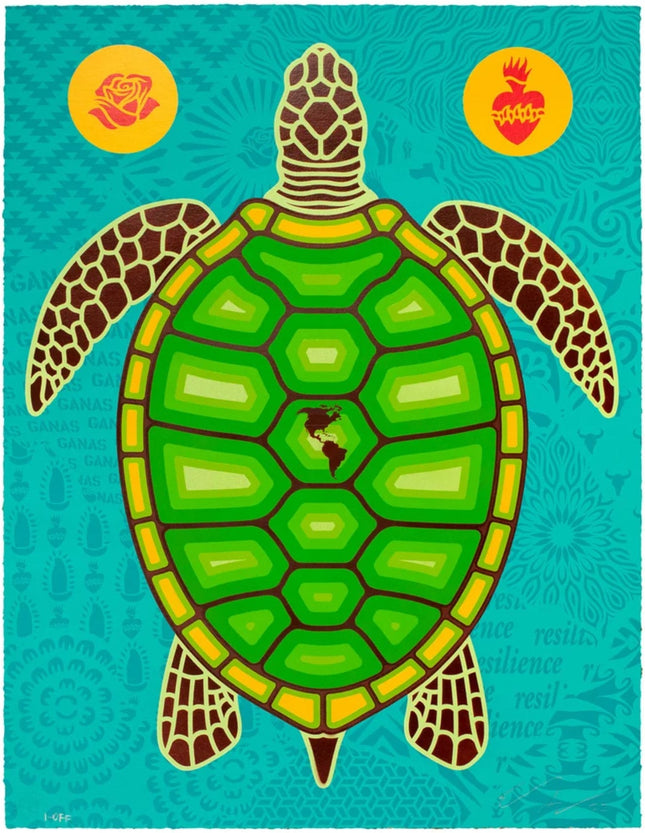

South America as a Global Influence in Street Pop Art & Graffiti Artwork
South America has long served as fertile ground for socially charged visual expression, where art intersects with resistance, identity, and urban culture. From the Andean highlands to the dense cityscapes of São Paulo, Bogotá, Lima, and Buenos Aires, the region's rich cultural diversity and tumultuous political histories have made walls into stages for public storytelling. Street Pop Art & Graffiti Artwork across South America often emerges from economic inequality, post-colonial narratives, and grassroots activism. Murals are not just decorative but act as socio-political commentary—depicting indigenous struggles, governmental critique, and everyday life in ways that transcend traditional gallery spaces. The continent’s deep Indigenous, African, and European heritage has shaped a visual language that is both regionally unique and globally impactful.
Artists and Movements Rising from the Streets
South American artists have used public walls to assert identity, reclaim spaces, and build global recognition. Os Gêmeos, twins Otávio and Gustavo Pandolfo from Brazil, brought their surrealist, yellow-toned characters from São Paulo’s favelas to international acclaim, blending hip-hop culture with Brazilian folklore and street symbolism. In Argentina, the duo Jaz and Ever inject classical painting styles into large-scale murals layered with local myth and political satire. Street Pop Art & Graffiti Artwork in South America remains deeply engaged with the communities where it lives, often made in collaboration with locals or influenced by regional folk traditions. Artists like Cekis from Chile and Stinkfish from Colombia fuse stencil techniques with bright indigenous iconography and photographic portraits, creating work that celebrates the diversity and resilience of their roots.
Cities as Canvases and Cultural Archives
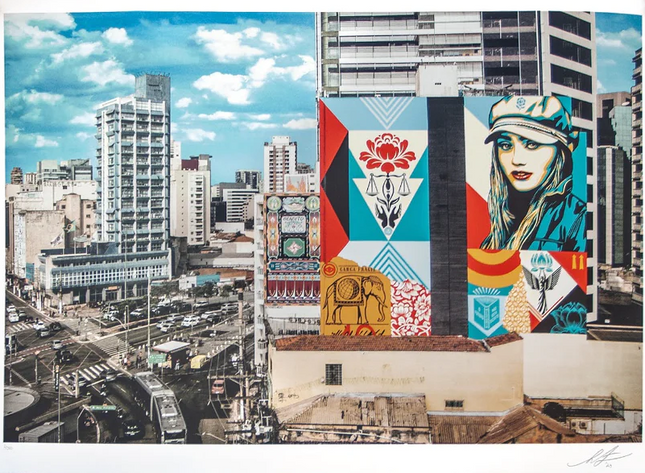
Urban environments across South America serve as dynamic and constantly evolving canvases. Cities like Valparaíso in Chile or Medellín in Colombia are internationally recognized for their public art scenes, where entire neighborhoods have been transformed through mural festivals and cultural initiatives. The political nature of much Street Pop Art & Graffiti Artwork in these areas is inextricably tied to memory and protest. During times of dictatorship or civic unrest, graffiti became a critical method of resistance—slogans, imagery, and unauthorized murals were used to document events that were otherwise silenced. This context still shapes the work being created today, with street art continuing as a medium for civic engagement, remembrance, and education.
South America’s Global Footprint
The impact of South America on Street Pop Art & Graffiti Artwork extends beyond its borders through international exhibitions, mural exchanges, and limited-edition art toy and print releases. Artists from the region often collaborate with global brands or participate in worldwide street art festivals, exporting a voice that is distinctly South American in tone, color, and message. Whether through aerosol portraits in the Amazon or politically charged paste-ups in urban centers, the continent continues to inspire with its blend of ancestral heritage and bold modernity. South America offers not only visual innovation but a living archive of struggle, joy, and resistance through the language of the street.