Spray Paint Can Fine Art

1 artwork

  • Rascals Silkscreen Print by Flying Fortress

    Flying Fortress Rascals Silkscreen Print by Flying Fortress

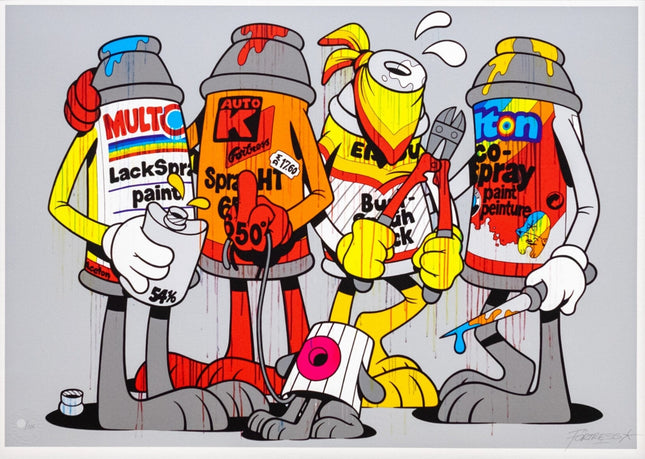
    Rascals Pop Artwork Limited Edition 7-Color Silkscreen Print on Fine Art Paper by Modern Artist Flying Fortress. 2020 Signed & Numbered Limited Edition of 125 Size 27.55x19.68 Rascals Silkscreen Print by Flying Fortress Rascals by Flying Fortress is a powerful statement in the tradition of Street Pop Art & Graffiti Artwork, released in 2020 as a signed and numbered limited edition of 125. The 7-color silkscreen print measures 27.55 by 19.68 inches and is executed on high-grade fine art paper. Known for his distinctive characters and a blend of comic-book wit with urban grit, Flying Fortress delivers another unforgettable piece with this lineup of anthropomorphic spray paint cans, geared up and mischievously unified like a rogue crew ready to bomb the streets. Character Design as Urban Allegory Flying Fortress has long established his reputation as one of the leading figures in European street art, originating from Hamburg. His iconic Teddy Troops and signature illustrative style have pushed boundaries by turning objects into animated characters with stories, personalities, and attitude. In Rascals, he presents a crew of four spray cans transformed into full-bodied figures, each styled after vintage European aerosol brands. They appear mid-action, splashed in vivid color, dripping with expression and holding graffiti tools like a roller, bolt cutter, and sprayer. The anthropomorphic cans are playful but assertive—each one an emblem of rebellion and street identity. Their expressions and poses inject a narrative of camaraderie, resistance, and self-expression, elements central to graffiti history. The layering of color, paint drips, and the inclusion of mock price tags and logos reflect Flying Fortress’ love for parody, branding critique, and nostalgic references. Silkscreen Mastery in a Limited Edition Crafted as a 7-color hand-pulled silkscreen, Rascals reflects expert-level screenprint technique. The colors are bold and highly saturated, with meticulous registration allowing each layer of ink to reinforce the cartoon-style outlines and vibrant character details. The palette includes primary tones and complementary contrasts, with shadows, drips, and ink splashes applied with finesse. The fine art paper stock enhances ink vibrancy while giving the work tactile durability that collectors value. Each print is signed and numbered by Flying Fortress, affirming the authenticity and rarity of the edition. As a physical object, the work speaks directly to the artist’s street roots while showcasing his evolution into gallery-level craftsmanship. The quality and execution hold up not just as wall art, but as a critical collectible in the intersection of graffiti and pop surrealism. Legacy of Humor and Resistance Flying Fortress’ body of work blends humorous visual commentary with subcultural reverence. Rascals is not just a light-hearted cartoon; it’s a portrait of graffiti culture’s defiant spirit. These characters symbolize the hands, hearts, and voices behind urban art movements. With exaggerated expressions and lively postures, they invite the viewer into a world where tools become avatars, and expression is personified. The print balances nostalgia with sharp social wit, much like the artist’s broader practice. Rascals is a prime example of Street Pop Art & Graffiti Artwork that maintains its underground energy while commanding attention as a limited-edition collectible. Flying Fortress continues to redefine how humor, character, and subversion operate within the art world—one can at a time.

    $323.00

Spray Paint Can Fine Art Graffiti Street Pop Artwork

The Evolution and Significance of Spray Paint in Street Pop Art and Graffiti Artwork

Spray paint has played a pivotal role in the evolution of contemporary art, particularly in the domains of Street Pop Art and Graffiti Artwork. Prominently, in the late 20th century, these art forms have continually reshaped public perceptions of urban spaces and artistic expression. Using spray paint in these genres is not just a matter of convenience or rebellion but a deliberate choice that reflects the movements' ethos and aesthetic. The origins of spray paint as an artistic tool can be traced back to the graffiti movements of the 1960s and 1970s, particularly in urban centers like New York City. Here, artists began using spray paint for its quick application and vibrant colors, making bold statements on subway cars and city walls. This form of expression was not merely an act of vandalism; it was a powerful means of communication for marginalized communities, often conveying social and political messages.

The Artistic Techniques and Styles in Spray Paint Art

Over time, the techniques and styles used in spray paint art have evolved dramatically. Artists began to develop unique styles, utilizing the medium to create intricate designs and detailed portraits. The development of different nozzles and caps allowed for greater control over the spray, enabling finer lines and more detailed work. This technical evolution transformed spray paint from a tool for simple tagging to a medium capable of producing complex and sophisticated artwork. In Street Pop Art, spray paint became a medium to merge popular culture with street-level expression. Influenced by pop art icons like Andy Warhol and Keith Haring, street artists used spray paint to create pieces that were both accessible and visually striking. These works often featured bold, graphic images and bright, contrasting colors, making them instantly recognizable and appealing to a broad audience.

The Cultural Impact of Spray Paint in Art

The cultural impact of spray paint in art cannot be overstated. Street Pop Art and Graffiti Artwork have challenged traditional notions of where and how art should be displayed. These movements democratized art by taking art out of galleries and onto the streets, making it accessible to people from all walks of life. This has not only broadened the audience for art but also sparked conversations about the role of art in public spaces and the rights of artists to express themselves freely. Moreover, the use of spray paint in art has had a significant influence on mainstream culture. Graffiti and street art elements have been adopted by the fashion industry, music videos, and advertising, highlighting the widespread appeal of these art forms. This crossover has helped to legitimize spray paint as a profound medium in the art world, with works by renowned street artists fetching high prices at auctions and being displayed in prestigious galleries.

The Future of Spray Paint in Artistic Expression

Looking towards the future, the role of spray paint in artistic expression continues to evolve. New generations of artists are pushing the boundaries of what can be achieved with this medium, incorporating digital technology and mixed media. The continued popularity of street art festivals and legal graffiti spaces is a testament to spray paint art's enduring appeal and relevance. The use of spray paint in Street Pop Art and Graffiti Artwork represents a dynamic and influential chapter in contemporary art history. It is a medium that has broken barriers, challenged conventions, and given voice to those often unheard in the traditional art world. As it continues to evolve, spray paint art is a vibrant testament to the power of creativity and the enduring need for self-expression in our urban landscapes.
Footer image

© 2025 Sprayed Paint Art Collection,

    • Amazon
    • American Express
    • Apple Pay
    • Bancontact
    • Diners Club
    • Discover
    • Google Pay
    • iDEAL
    • Mastercard
    • PayPal
    • Shop Pay
    • Visa

    Login

    Forgot your password?

    Don't have an account yet?
    Create account